|
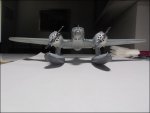
Broplan 1/72 Caproni-Bergamaschi Ca.316 Reconnaissance Seaplane by Richard Mendes |

|

Click the STORMO! Eagle to return to the Gallery |
|
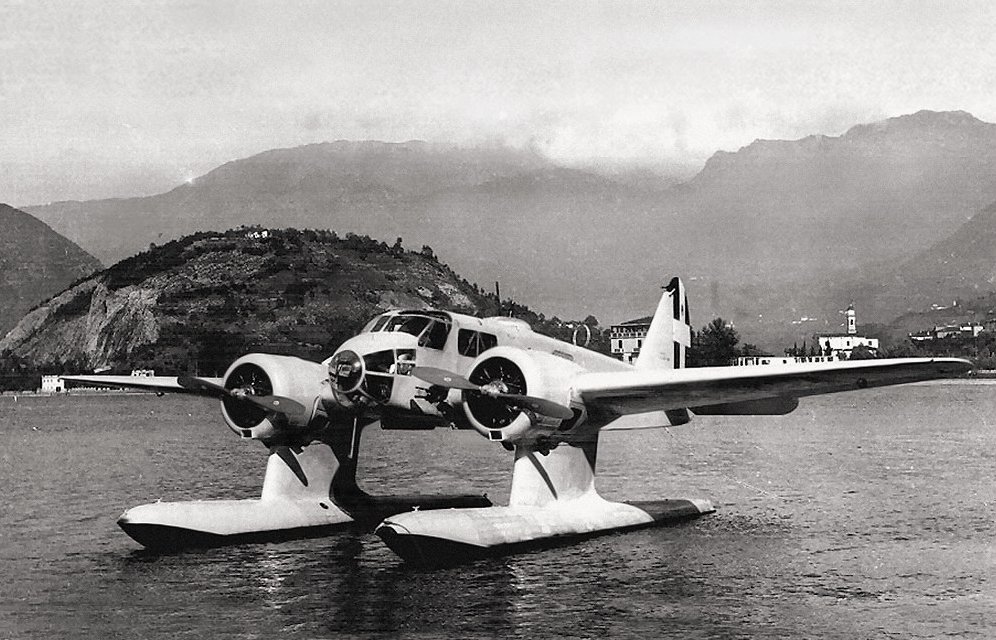
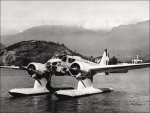
The Caproni Ca.316 was based on the Ca.310 Idro (seaplane) first flying on August 14, 1940, the last of several twin-engine designs derived from the 1935 Ca.308 Borea ("North Wind") airliner. The plane was a reconnaissance aircraft intended for catapult operations from Italian Navy capital ships. The basic Idro design was modified with attachment of large pontoons underneath the engine nacelles and a revised nose with extensive glazing. 14 planes were built although none are known to have entered service. |

|

|
|
|

|

|
|
|
|
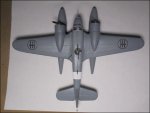
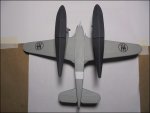
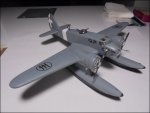
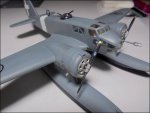
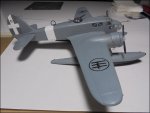
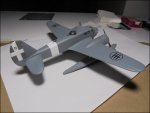
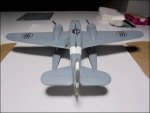
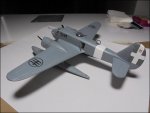
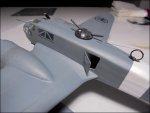
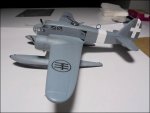
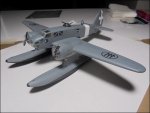
| Ca.316 MM 27193 in overall "Allumina" varnish (possibly a pale grey primer S.Lazzaro). Submerged parts in matt black. White Cross of Savoy on the rudder over a Verde Mimetico background. Black props with Piaggio factory logos. Port side cabin door, light blue/gray. |
|
|
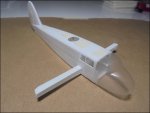
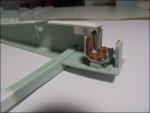
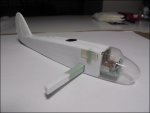
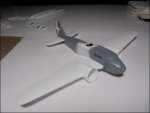
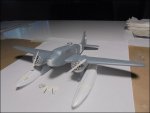
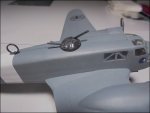
The 1/72nd scale 2000s-vintage BroPlan of Poland MS-158 vacuform styrene plastic kit with injected plastic detail parts is only known one of the Caproni Ca.316. Adequately molded with more cockpit detail than usual for vacuforms kit was relatively easy build, clear one-piece vacuform fuselage nose kept near seamlessly in place with internally-mounted sheet plastic positioning tabs, good float and mainwing engine nacelle pylon head-on and side alignments particularly noteworthy. Not called for on kit instructions the fuselage cabin door was cut out, painted and glued back opened allowing interior viewing. Kit drawbacks include poorly molded mainwing part areas around wing roots and engine nacelles (former’s flimsy, latter’s too long/short), poorly molded engine cowlings (too short and/or wide), no rudder mass balance bar, "T" float mooring posts and mainwing navigation lights these fabricated from sheet plastic, right sideways-splayed float and engine cowlings (latter’s starboard longer than port), unusable clear vacuform Lanciani fuselage dorsal gun turret and injected-plastic gun and mass balance parts replaced with fully injected-plastic spare parts well as missing aft fuselage dorsal D/F ring.
Painting the BroPlan Ca.316 was relatively easy; Humbrol, Testors and Model Masters enamels employed for fuselage and engine nacelle interior painting, exterior painting conundrum photos of solid-colored prototype only ones available on the Internet, BroPlan kit instructions and water decals (unusable) calling for Humbrol 125 Dark Grey Satin + 36% Testors Flat White shading enamels replicating Maritime Grigio Azzurro Scuro 3 aircraft and float topsides, Testors Model Master 1726 Light Sea Grey + 36% Testors Flat White shading enamels replicating Grigio Azzurro Chiaro 1 aircraft undersides, float undersides downwards from waterlines and bows Testors Flat Black and White "special mix" enamels, went with BroPlan’s instructions assuming the 13 production Ca.316s were so painted, Tauro Model 72-546 Ro.37 - Re.2001/2002/2005 Ju-87 Ca.311/13/14 mainwing, fuselage and rudder decals applied afterwards entire model then over-sprayed with Testors Clear Semi-Gloss Lacquer.
|
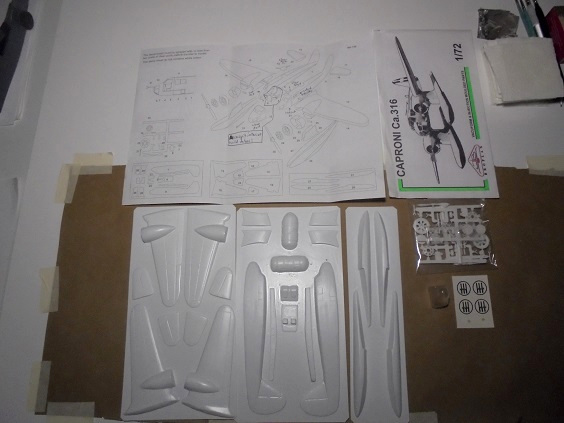

Aircraft: Caproni-Bergamaschi Ca.316 Manufacturer: Caproni Aeronautica Bergamasca Type: Reconnaissance Year: 1940 Engine: Two Piaggio P.VII C.16 7-cyl. air-cooled radial piston engine, 450 hp each Wingspan: 52 ft 1 in (15.87 m) Length: 42 ft 3 in (12.89 m) Height: 16 ft 9 in (5.11 m) Weight: 10,590 lb (4,804 kg) (Loaded) Maximum Speed: 205 mph (328 km/h) Ceiling: 19,680 ft (6,000 m) Range: 1,000 miles (1,600 km) Armament: 12.7mm MG in port wing root + 7.7mm MG in Lanciani turret: 882 lb (400 kg) of bombs or one torpedo Crew: 3 |
|
|
|
|
|


|


|
|
|
|
September, 2021 STORMO! © 2021 |