|
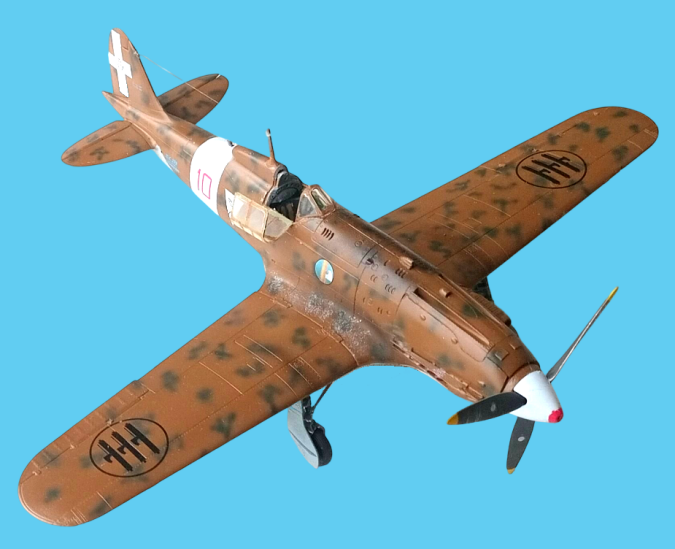
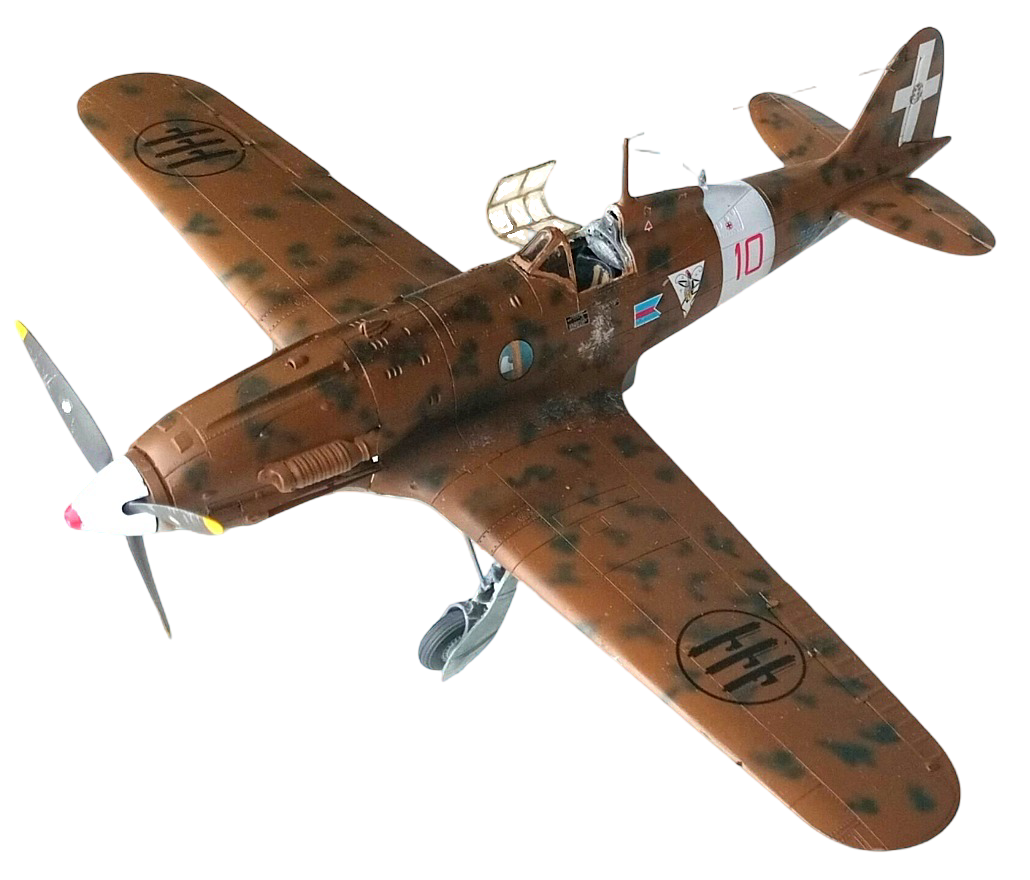
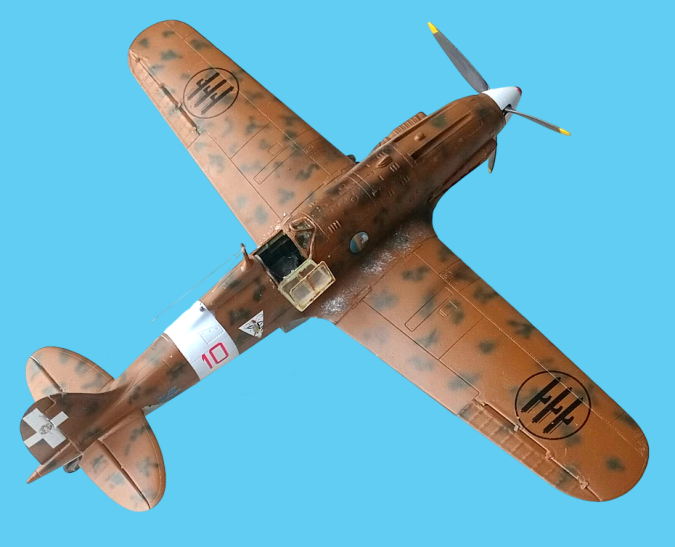
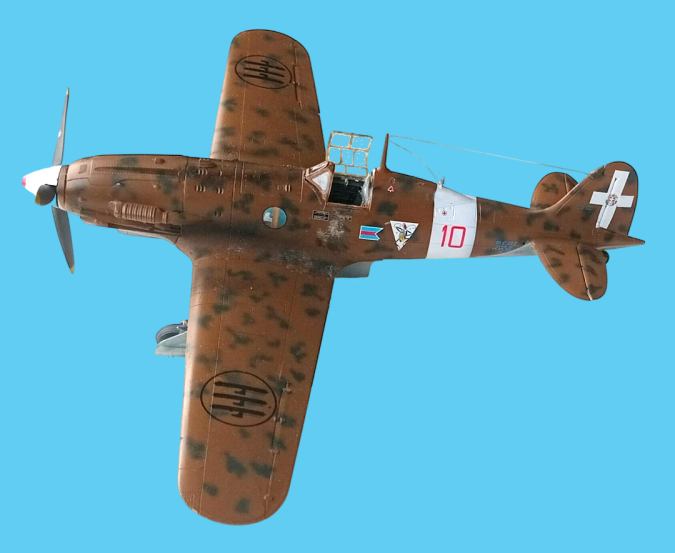
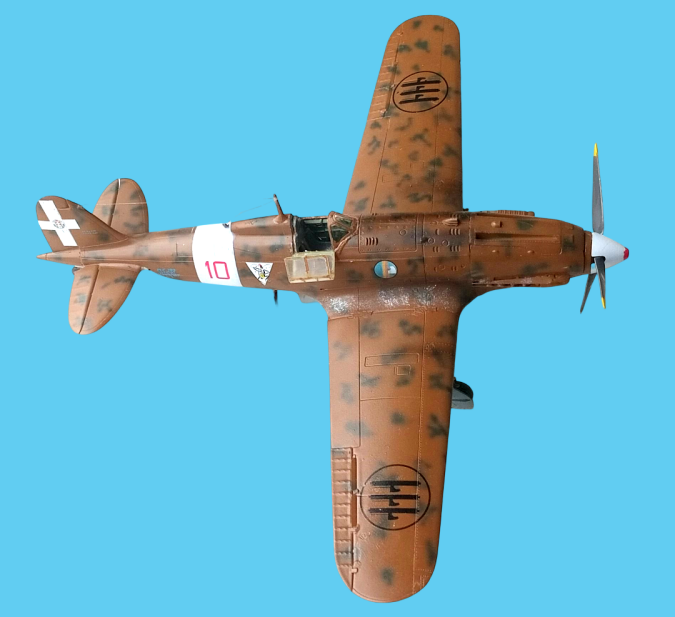
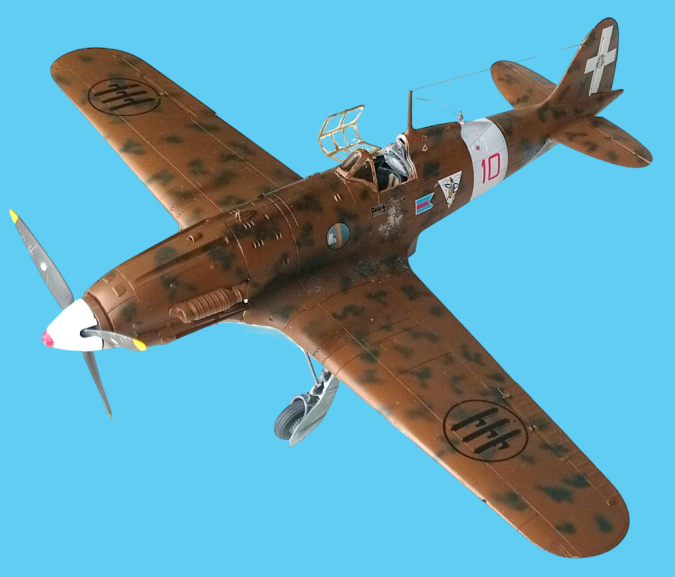
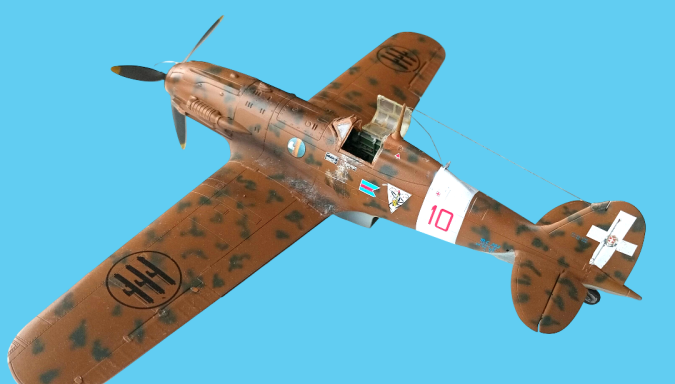
Italeri 1/32 Macchi C.202 Folgore (Thunderbolt) by Vince Fiore |
|

Click the STORMO! Eagle to return to the Gallery |
|
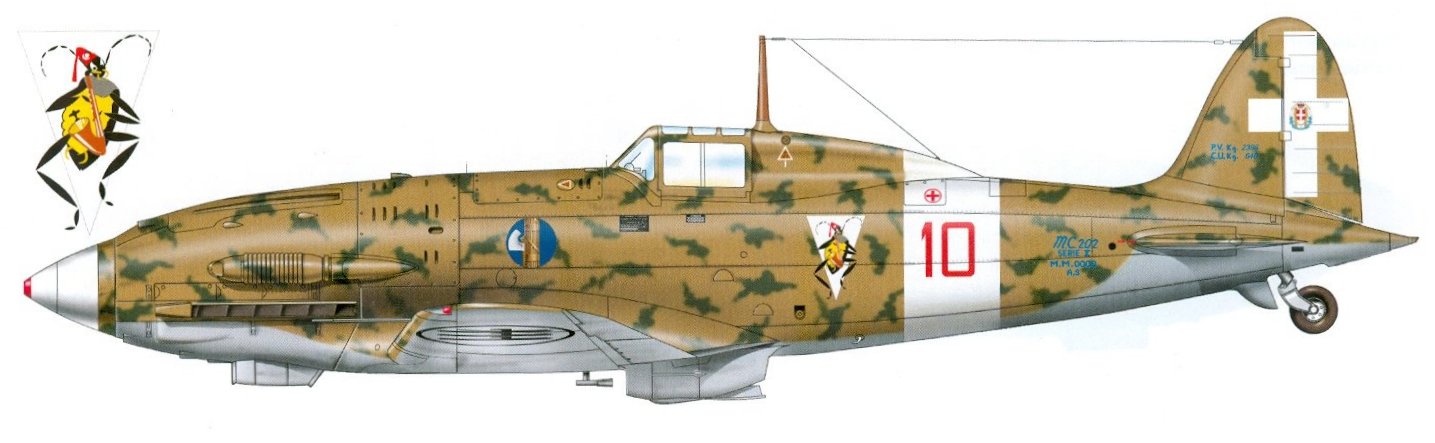
One of the best fighters of World War II, this classic fighter possessed a great rate of climb, high speed and maneuvreability and was a first-rate aircraft on all counts. The Macchi C.202 was the contemporary of the Bf.109F and the Spitfire Mk.V and in certain aspects the aircraft was superior to both, such as in the rate of climb, dive speed and agility. Both the Macchi and the Sptifire shared a common lineage in the Schneider Trophy racers. In fact the Supermarine (Spitfire) designs were largely influenced by the Macchi M.39. The C.202 was used extensively in North Africa, the Soviet Union and in defense of the homeland and was Italy’s best fighter of WWII, although more powerful fighters had been produced later in the war. Over 1,150 C.202s were built in little over two years. Although often overlooked, the two Breda 0.50in caliber SAFATs provided adequate firepower and had double the range of contemporary English fighter 0.303 MGs as well as greater hitting power. In fact no formal request for heavier armament was made until the appearance of the American four-engine heavy bombers. The Folgore was well liked by its pilots and its only shortcoming was that too few were built. 24o Gruppo Originally, the unit had 360 Sq as well, but this disbanded on 28 May 1940. The two squadriglie defended Sardinian naval ports until October when the Gruppo became Autonomo. On transferring to Albania it received G.50 fighters for escorting bombers and transport aircraft. 354 Sq joined the unit in October 1940, bringing its own G.50s and a Ca.111bis traansport plane. Twenty-four G 50s operated from Devoli, for missions over Yugoslavia. 361 Sq went to 154 Gruppo in October and 362 Sq joined 22 Gruppo in December. 355 Sq which operated from Tirana against the Greeks, joined the Gruppo in March or April. After the Yugoslav surrender, 361 Sq returned, also bringing 395 Sq from 154 Gruppo, to help defend the Puglie area. 354 and 355 Sq were at Grottaglie, 361 Sq was at Lecce, and 395 Sq was at Brindisi. In addition, 370 Sq joined in April carrying its distinctive 152o Gruppo badge, "La Cucaracha" having flown CR.32s in Spain. The Gruppo was sent in July 1941 to Sardinia to escort S.79 and S.84 torpedo-bombers. The Fiat G.50 lacked the range, however, so some CR.42s were acquired for the longer missions. 361 and 395 Sq became Autonomo at this time. This still left three squadriglie attached. After the occupation of Corsica a mixed section was sent to Ajaccio in Corsica.
On 30 April a section was detached to Venafiorita to check out the C.205V. The rest of the unit followed on 14 May, but due to the shortage of supply of these potent aircraft it received mainly C.202s. Some bomber intercepts were made while still training. One squadriglia was detached to Alghero from May to August, then to Foligno. To assist the cannon-armed fighters, D.520s were received from 2o Stormo when that unit disbanded on 13 August. The Gruppo reunited at Metato, Lucca, Italy and defended the home skies until the Armistice flying the C.202. References: 1) Chris Dunning, "Courage Alone, The Italian Air Force 1940-1943", Hikoki Publications, Manchester, United Kingdom, 2009. 2) Maurizio Di Terlizzi, "The Macchi MC.202 Folgore, A Technical Guide", Valiant Wings Pub. Ltd., 2015 |
|
|
|
|
|
|
The new 1/32 Macchi 202 by Italeri
Italeri 1/32 Scale Macchi 202 Folgore
is by far the best Italeri kit ever produced. It is on par with the best of Tamiya and, in some respects, better. However,
it has a few things that are problematic. Some parts are so small that they are difficult to put in place. The fit is superb.
Make sure the parts are trimmed to perfection. A common complaint about this kit is the clear parts are very thin and easily broken, as happened in this build (the canopy broke).
Luckily I ordered two kits and was able to complete the project. Study the instructions and follow them very closely. I learned that Lifecolor discovered a variation of the color Nocciola 4. Lifecolor is a water-based paint; therefore, I was a little reluctant to use it. As this was a trial build, I took the chance. It sprayed on beautifully and dried very rapidly - it dried overnight. It was now time to mask for the white areas on the aft section. I applied a coat of Mister Paint white. After several minutes it was time to remove the tape. Again, much to my pleasure, the tape did not lift any of the water-based paint. I applied a coat of Mr. Paint supper gloss. Much to my surprise, when the wing decal was applied, it was almost impossible to place it in the desired location. I was unable to reposition it. I removed it and used some decals from an old Hasegawa kit. The rest of the decals were fine. I sprayed another coat of Supper Clear, then a coat of Semi-Matte. Installed the antenna. I will build another, but this time I will proceed very slowly and with caution. A fantastic kit but very tedious. |
Aircraft: Macchi MC.202 Manufacturer: Aeronautica Macchi S.p.A. Type: Fighter Year: 1941 Engine: Daimler Benz DB 601A-1, 12-cylinder V, liquid-cooled, 1,175hp Wingspan: 34 ft 8 1/2 in (10.57m) Length: 29 ft 1 in (8.85 m) Height: 9 ft 11 1/2 in (3.02 m) Weight: 6,480 lb (2,937 kg) (Loaded) Maximum Speed: 372 mph (600 km/h) at 18,050 ft (5,500 m) Ceiling: 37,700 ft (11,500 m) Range: 475 miles (765 km) Armament: 2 x 12.7 mm SAFATs (0.5 in) Crew: 1 |
|
|
|
|
|
|
|
|
|
|


|


|

|
|
|
|
|
|
October, 2026 STORMO! © 2026 |