|
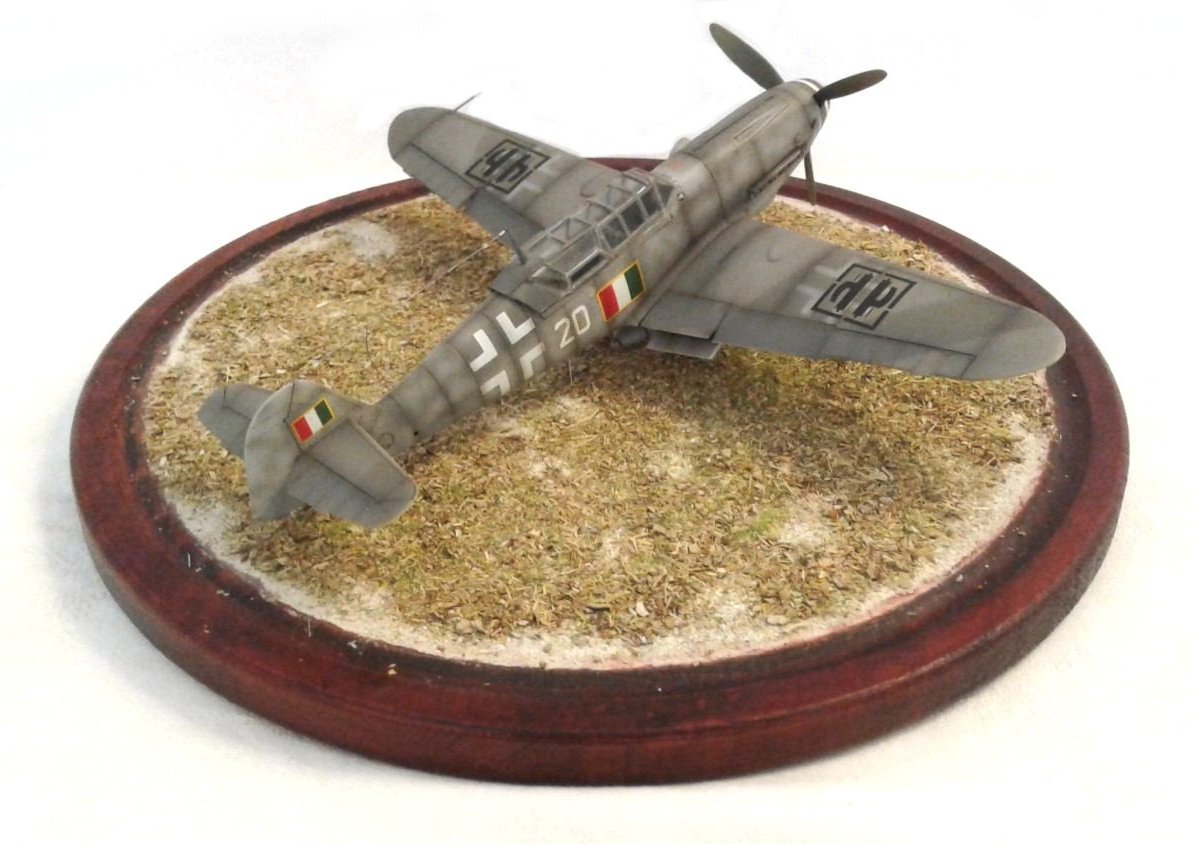
Otaki-Arii 1/48 Messerschmitt Bf.109 G12/R3 Dual-place Trainer by Angelo Battistelli |
|

Click the STORMO! Eagle to return to the Gallery |
|
Before the war, and during the early war years, the Luftwaffe had provided themselves with excellent but leisurely trained pilots, little thought had been given to dual-place trainer versions of operational aircraft like the Bf.109. However with the push for a shorter and shorter training syllabus during 1942-43, it was felt that a dual-place version of the Bf.109G would help considerably. The aircraft, designated Bf.109G12 was not as successful as hoped. Not a purpose-built airframe, but converted from randomly selected G-2, G-4 and G-6 airframes (even a few DB.605AS versions were built). Of the 900 G-12 aircraft projected less than 100 were completed. "The G-12 was arranged so that the student sat in the front seat, he got the exact conditions that the student would get if he were flying alone. He was sitting in the same position in comparison to the wing - it was just like sitting in a G-6 or G-14. When taking off the pilot can see nothing. We had to solo at least twelve times in the G-12 - I tell you I was scared sh**less - I sweat just to think about it." Flieger Officier Herman Leypoldt The G-12 in ANR Service Although the Regia Aeronautica and the Aeronautica Nazionale Repubblicana (ANR) placed a heavy emphasis on training and incorporated many excellent indigenous training types, the ANR obtained two G-12s (taken over from JG 77), both operated by 2o Gruppo: 1) 19319, G-12 (trasformato da G-4), CJ+MG, II Gr. C., 2.7.44. 2) 162331, G-12, 20 bianco, II Gr. C., dann. Aviano 7.3.45 da serg. Taverna. |
|
|
|
|
|
|
|
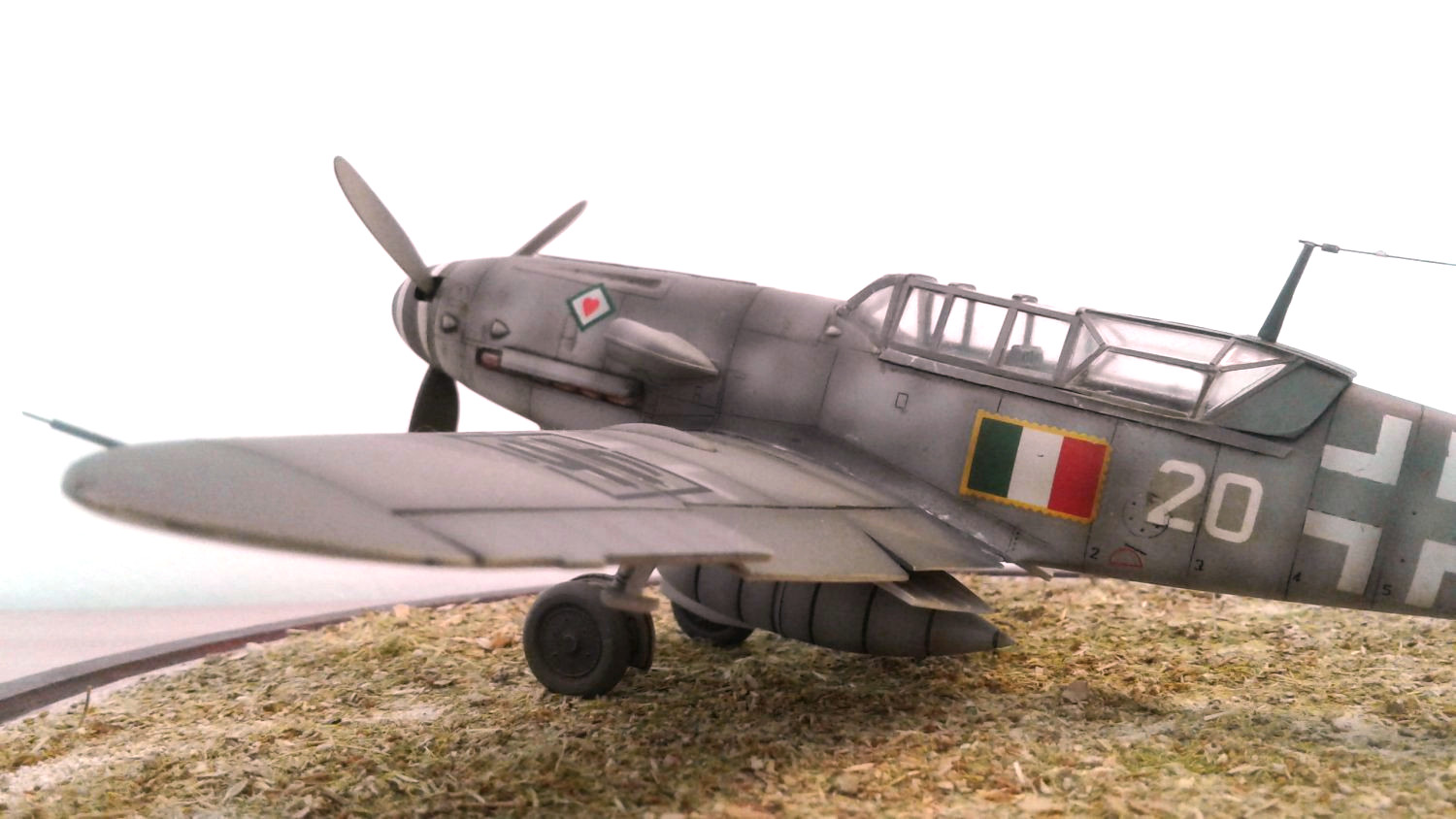
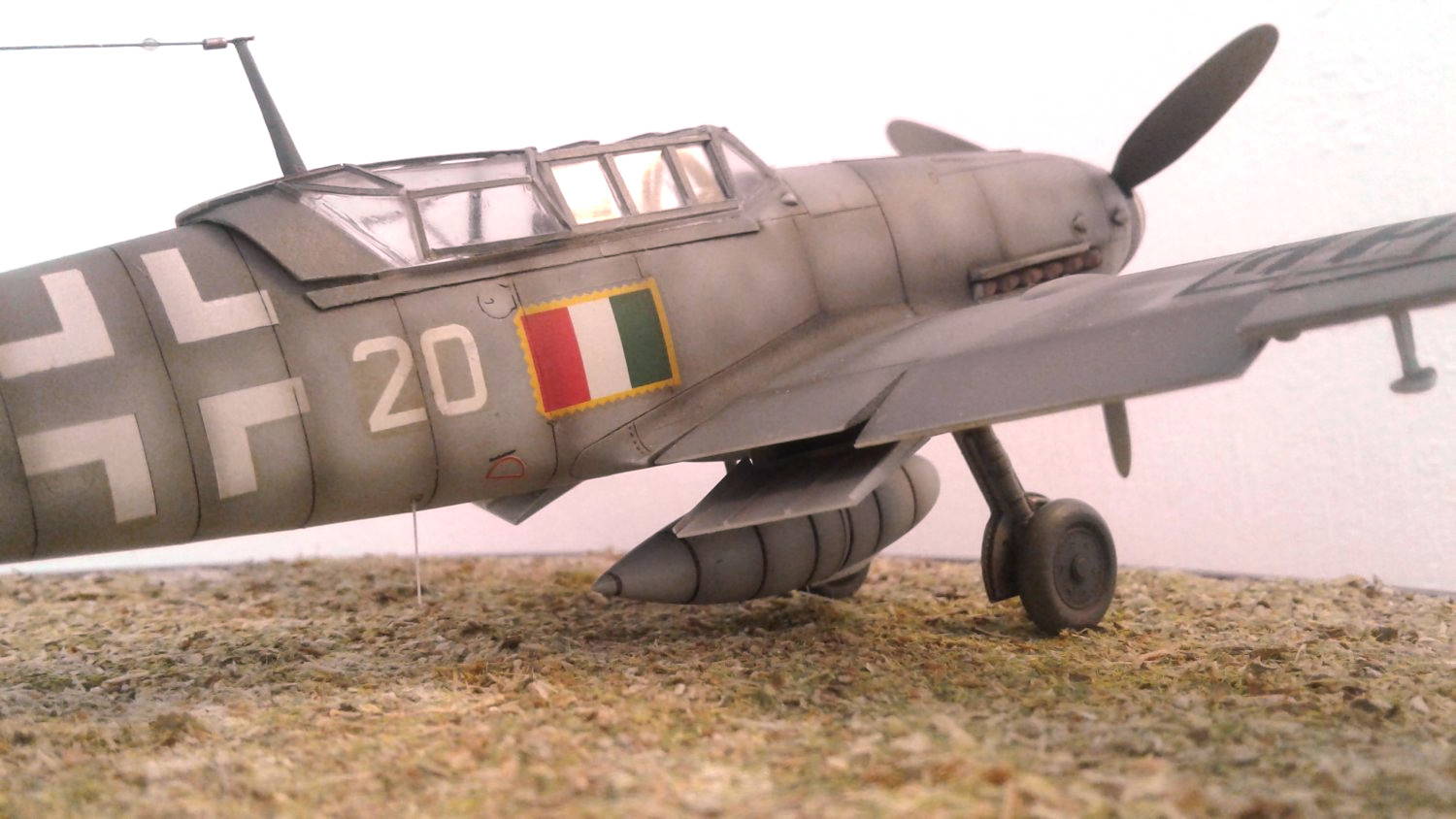
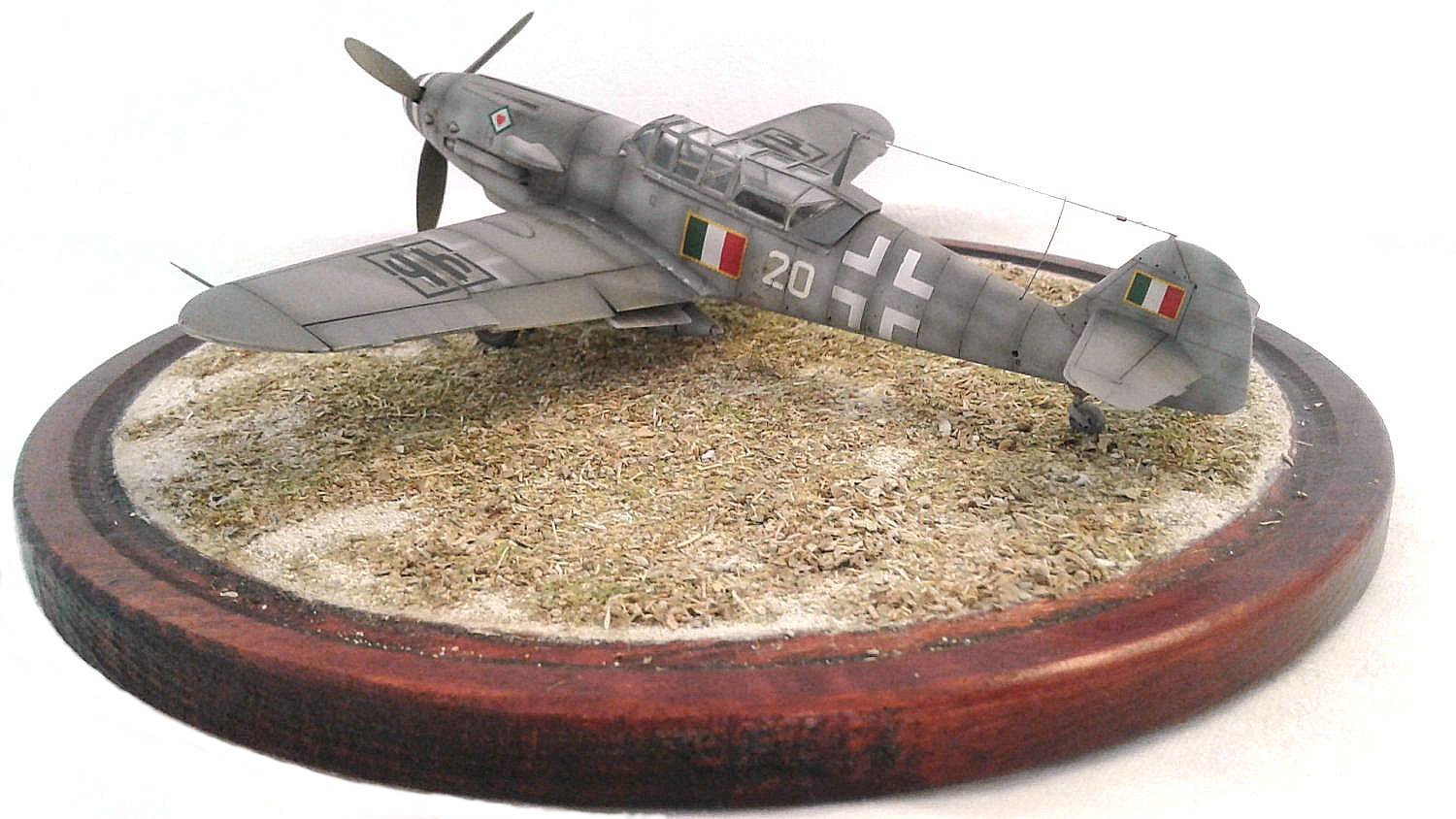
The Model This is the Messerschmitt Me 109 G-12/R3 1/48 Otaki-Arii, Falcon resin kit conversion two-seat trainer Bf.109G-12. Secondo Gruppo Caccia, Aviano (Pordenone), December 1944.
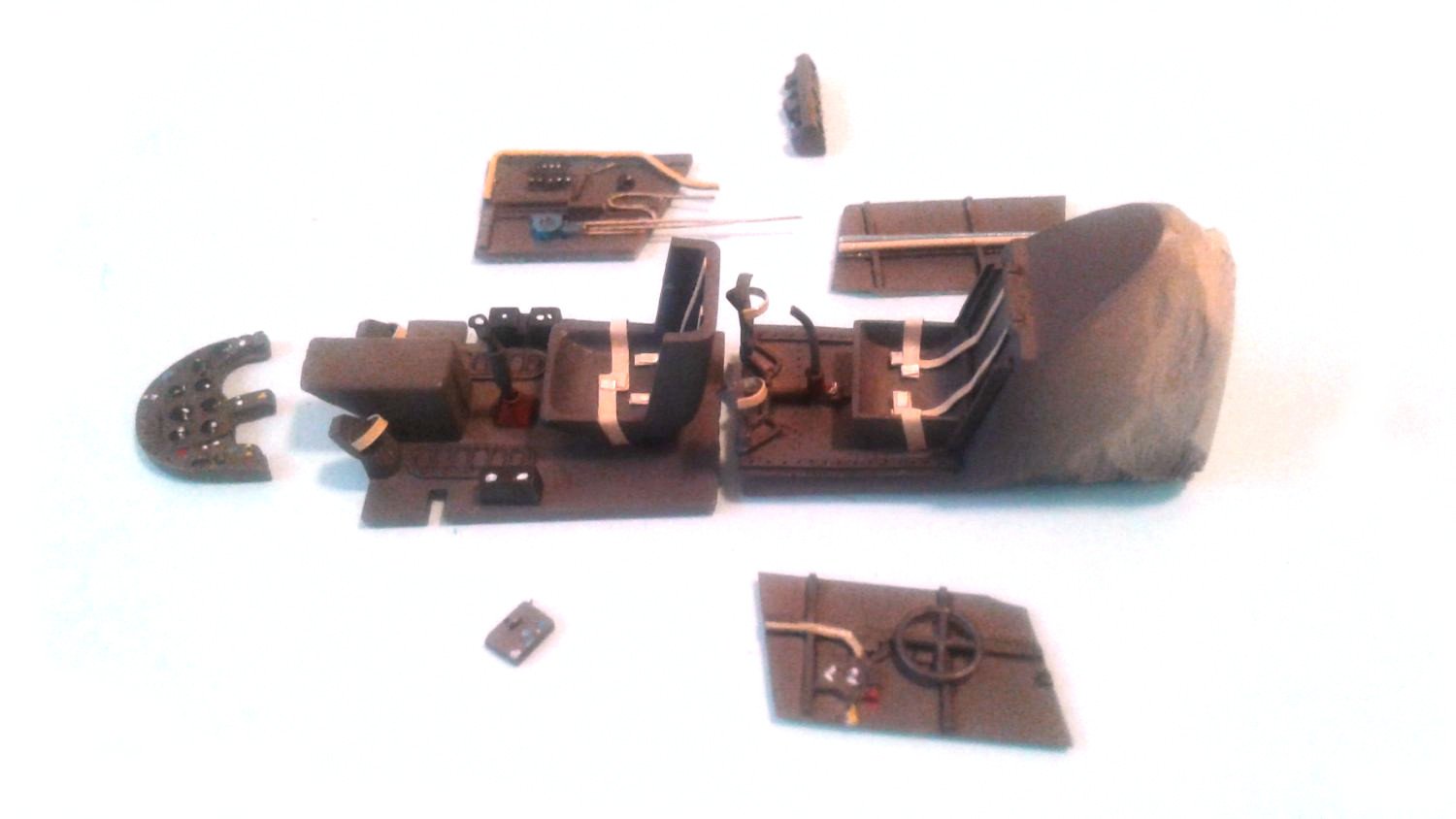
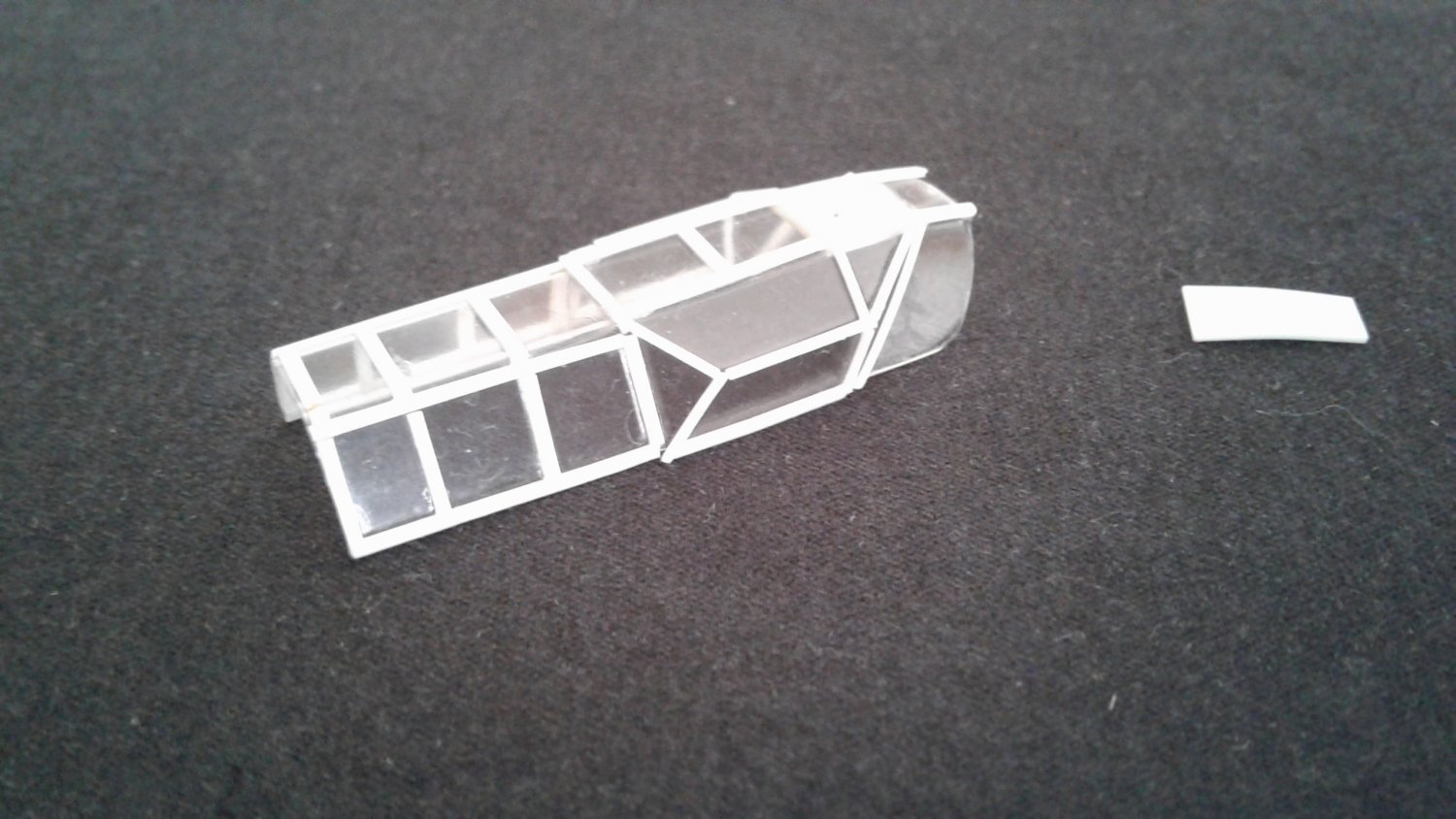
In the early 80'S this kit was a pretty good kit in its time. What we find in this box are three light grey plastic molded sprues and a two part transparent canopy and Revi arming device, engraved panel lines. I didn't like the wheel well, the cockpit area is very poor in details and the canopy window is molded in a single piece. I started work by cutting the back of fuselage out two centimeters of plastic kit for the insertion of the transparent canopy to which I proceded to add the frames made of plasticard.
In order to make the Otaki-Arii Kit more realistic, I cut the flaps and split deflectors of the wing radiators. As for the tires, most of the 109 G Italian adopted those with a smooth tread. To reproduce this detail I used the wheels in the assembly box and with the help of a minidrill and a sharp blade I smoothed the profile to desired shape. Painting Standard three-tone on RLM 74/75/76 Grey scheme with a 2./JG 77 badge (ace of Heart ) painted on the left-hand side of nome. Confirming this plane had been taken over from that unit in October 1944. The white spinner spiral was standard for all German fitghers since the previous summer. Lack of typical nose bumps on one of the two-seaters trainers in force with Secondo Gruppo Caccia. I used acrilic paints Gunze Sangyo thinned and sprayed with airbrush. Spinner spiral white on Green R.L.M. 71 background. Decals TauroModels for all insigna. The small decal on the left side of the cowling engine is self-built.
|
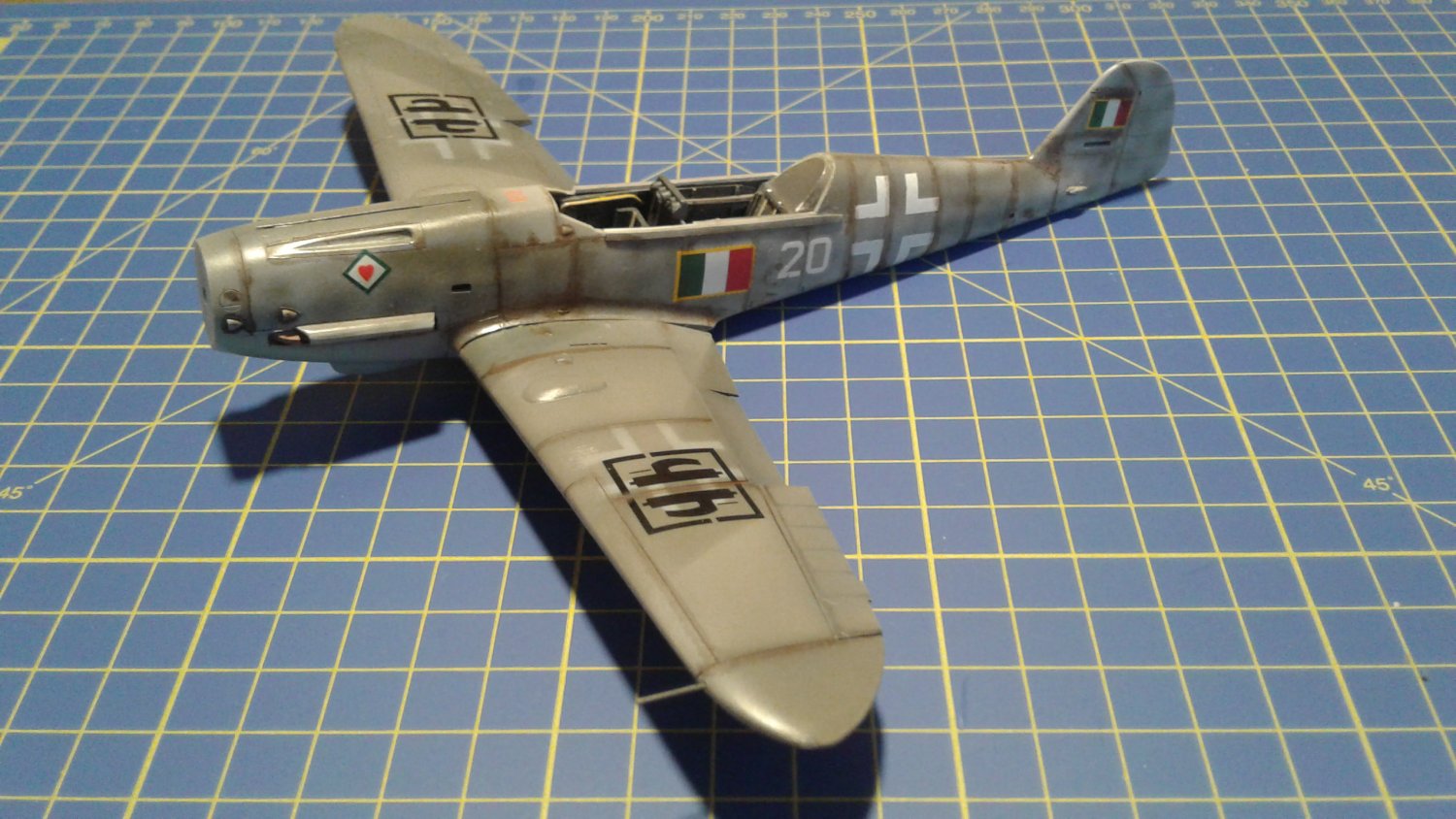
Aircraft: Messerschmitt Bf.109G12 Manufacturer: Messerschmitt A. G. Type: Fighter Year: 1943 Engine: Damiler Benz DB 605A-1, 12-cylinder V, liquid-cooled 1,475hp Wingspan: 32 ft 0 in (9.95m) Length: 31 ft 7 1/8 (8.84m) Height: 8 ft 2 ½ in (2.49m) Weight: 6,900lb (3,130 kg) (Loaded) Maximum Speed: 350 mph Ceiling: 39,370ft (12,000m) Range: 528miles (850km) Armament: 2 x 13mm MG 131 MGs, 1 x MG151/20 mm cannon Crew: 2 |
|
|
|
|
|
|
|


|

|
|
|
|
|
|
January, 2020 STORMO! © 2020 |