|
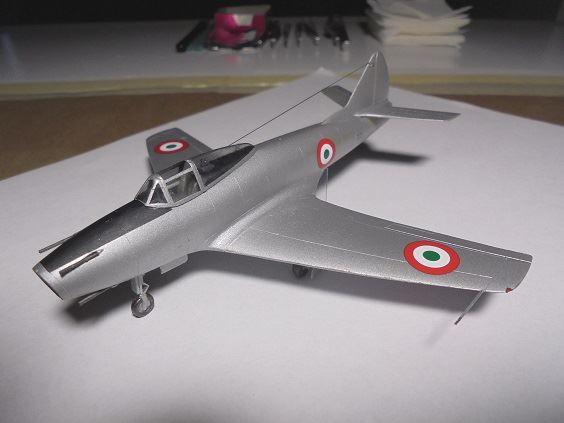
RS Models 1/72 Reggiane Re.2007 Jet Fighter by Richard Mendes |
|

Click the STORMO! Eagle to return to the Gallery |
|
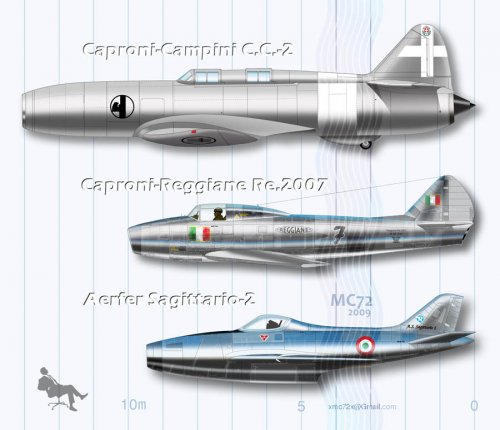
Editors Notes: The origins of the Re.2007 are somewhat murky and shrouded in controversy. The story of the Re.2007 began in the English press after copies of drawings of the plane were circulated after a partially built plane had been transported from Italy to England at the end of WWII. When interviewed about this plane Ing. Roberto Longhi, the former chief-designer of Reggiane, confirmed its existence and also the details regarding the Junkers Jumo engines that were to have powered the plane as well as certain other transport details. Longhi had a long and storied career, his recounting of the facts, must be accepted as generally accurate. Sergio Govi, an Italian author, disputes these facts although it should be stressed that Longhi had no reason to put forth such inaccuracies about the existence of the plane. With this, the Re.2007s origins begin in the wartime Reggiane Re.2005R (Reazione – Reaction) motorjet "paper project" submitted to the Regia Aeronautica Italia Stato Maggiore by Reggiane's top designer Roberto Longhi of a redesigned Daimler-Benz DB.605-powered Re.2005 fuselage fitted with a 460hp FIAT A.20 V-12 engine powering a high pressure compressor pushing air into a tail-mounted fuel combustion chamber providing jet thrust, its sleek post-war swept-winged turbojet-powered design traced to a certain Pellizzola who made drawings of it based upon speculative reconstructions derived from another Reggiane engineer's descriptions of the aircraft concept. The following is the account provided by Ing. Roberto Longhi:After the war Longhi attempted to procure two Junkers Jumo 004B turbojets stored in Udine Ronchi dei Legionari (Trieste – Friuli Venezia today) airport since early 1945 which were transported to Italy as spare engines for Luftwaffe Arado Ar 234 reconnaissance aircraft that were to operate over Italy in 1945. The engines were however purchased by the reformed Società Aeronautica Italiana Ambrosni instead. |
|
|
|
|
|
|
|
|
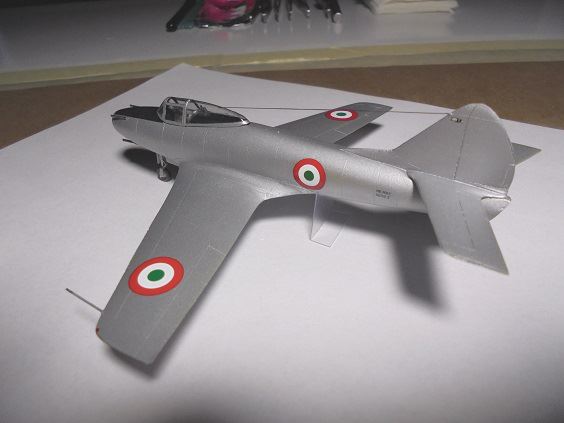
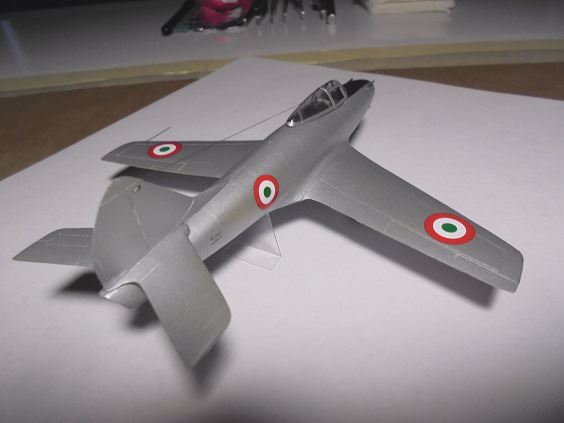
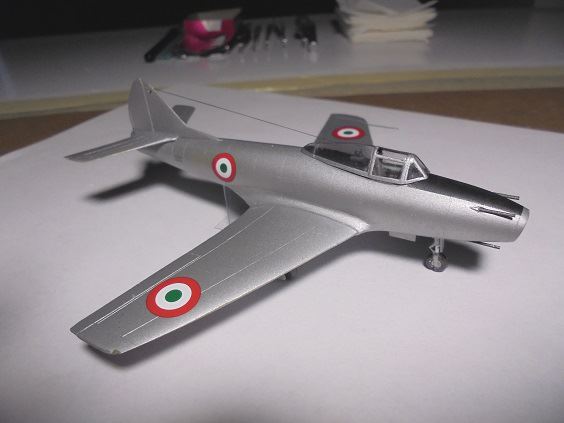
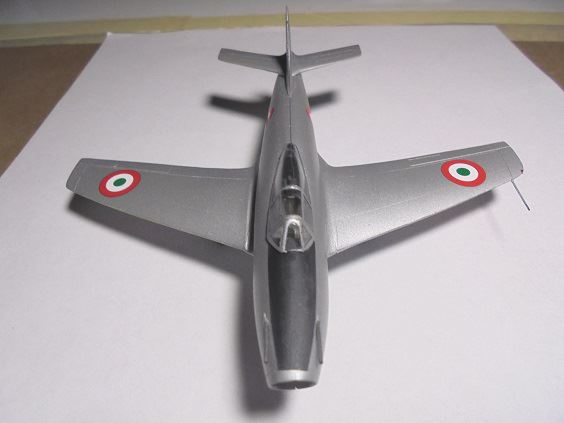
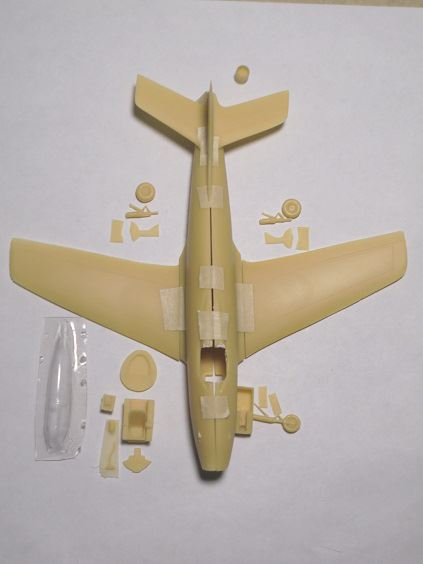
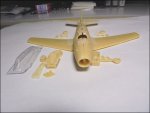
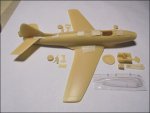
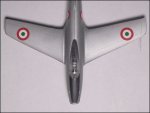
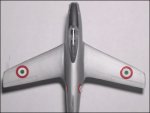
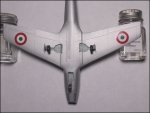
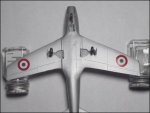
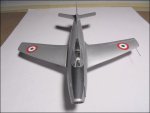
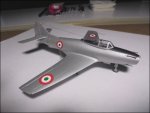
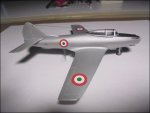
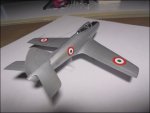
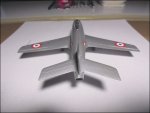
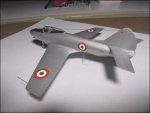
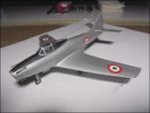
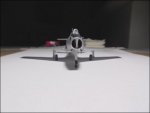
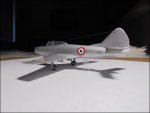
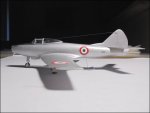
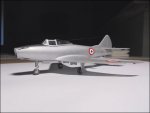
Amongst the most intriguing “what-if” aircraft subjects ever scale modeled the early 2000s-vintage 1/72 scale RS Models 72123 Reggiane Re.2007 resin kit with vacuform clear plastic canopy is the only one available in this scale. Probably if not likely based on Pellizzola’s post-WWII drawings the kit despite its small size is well casted with molded-in pilot cockpit detail lending itself to extra detailing.
The pilot cockpit "box" centers on u-shaped part with port and starboard outward "wings" joystick and pilot seat placed inside aft bottom, flight instrument panel glued on wings forward of joystick. The kit's joystick disintegrated whilst removing resin flash, fabricated stronger replacement with sheet styrene plastic. The kit lacked rudder control bar, fabricated one from styrene sheet plastic glued it on forward of joystick; kit lacked pilot seatbelts fabricated them from cut off strips of Scotch Magic Mending Tape sprayed over with Humbrol 29 Matt Dark Earth enamel paint buckle ends hand painted Testor Flat Aluminum enamel. The model lacked a gunsight, fabricated generic one well as gyrocompass unit mounted on fuselage aft of pilot seat from styrene sheet plastic. The kit included oxygen bottle and radio parts too large for placement anywhere inside box set them aside.
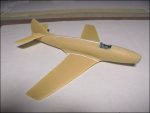
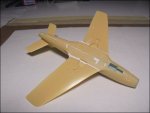
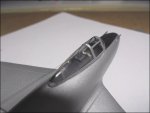
The pilot cockpit box rests atop semi-circular protuberances molded inside fuselage halves with bulkhead aft of box though no aft space to "seat" latter, gouged resin off protuberances and trimmed bulkhead sides to do so. The kit comes with nose landing gear stow box, jet engine nose air intake stake and exhaust tailpipe parts (drilled hole through latter) they, cockpit box and bulkhead were glued in place on inside port fuselage halve. The fuselage halves and mainwings easily glued together and on, much seam puttying well as building up trailing edges around fuselage-mainwing joins necessary, tailplane easily glued on upper rear fuselage, rudder-sail over tailplane and upper rear fuselage, much puttying filling in large gap between rudder-sail and tailplane. The kit lacked a Pitot tube, fabricated it from styrene sheet plastic gluing it on portside mainwing. No Venturi tubes were added, uncertain whether post WWII Italian jets continued using pre-war types. The adequately detailed though brittle vacuform clear plastic cockpit canopy was bear working with, sideways slanting crack formed halfway around it 2 millimeters from aft end whilst trimming flash off starboard side, filled it in with cyanoacetate glue sanding both sides of still visible seam with machine oil soaked fine grit hobby sandpaper, polishing it with plastic cleaning compound followed by extensive size trimming, filing and sanding to snugly fit it over and either side of cockpit. The canopy couldn't be cut apart to glue cockpit portion in open position, closing gaps between it and fuselage cockpit area entailed fabricating and gluing shims on fuselage leaving seam scars, puttying and sanding work to hide them not worth the effort. Painting the model entailed using an assortment of spray or hand painted on enamels:
Rightly being a post WWII aircraft design SKY Models (SM) 72-014 Macchi C.202 Aeronautica Militare Italiana cockades, SM 72-008 and Tauro Models 72/522 Reggiane fighter manufacturer logos and aircraft data water decals were used, not wanting the model to appear toy-like dispensed with over-spraying it with clear lacquer. |

Aircraft: Caproni-Reggiane Re. 2007 Manufacturer: Officine Meccaniche 'Reggiane' S.p.A. (Caproni) Type: Fighter Year: 1944 Engine: Junkers Jumo 004B, 1,980 lb (898 kg) thrust Wingspan: 31 ft 2 1/32 in (9.50 m) Length: 29 ft 6 11/32 in (9.0 m) Height: 9 ft 7 11/32 in (2.93 m) Weight: 7,804 lb (3,540 kg) (Loaded) Maximum Speed: 500+ mph (800+ km/h) Ceiling: 35,000+ ft (11,000+ m) Range: 500+ miles (800+ km) Armament: 4 x 20 mm MG 151 canons Crew: 1
|
|
|
|
|
|
|
|


|


|
|
|
|
|
|
April, 2020 STORMO! © 2020 |