|
Sem Model 1/72 SIAI-Marchetti SM.73 Transport by Richard Mendes |
|

Click the STORMO! Eagle to return to the Gallery |
|
The Savoia-Marchetti S.73 was an Italian three-engine airliner first entering service in March 1935. With an initial production run of 48 aircraft its main customer was the Italian airline Ala Littoria along with Avio Linee Italiane and Československé Státní Aerolinie (Czech State Airlines), four being exported to Belgium, seven others produced by Société Anonyme Belge de Constructions Aéronautiques (SABCA) for Societé Anonyme Belge d'Exploitation de la Navigation Aérienne (SABENA) airline operations, 55 aircraft eventually being built. The S.73 was mixed steel, wood and fabric construction monoplane with braced tailplane and fixed landing gear undercarriage with wind-powered electric generators on each side of the fuselage though numerous period photographs shows only the starboard generator in place. The aircraft developed in parallel with the S.81 Pipistrello (“Bat”) bomber employed the S.55 twin-hulled seaplane’s wings with a conventional fuselage, pilot and co-pilot seated side-by-side in an enclosed cockpit with a compartment for a radio operator and mechanic the main cabin seating 18 passengers in two single-seat rows separated by a narrow walkway. Designed and built in only four months the prototype first flew on July 4, 1934 from Cameri northwest of Torino, Italy at the hands of WW.I Italian Silver Medal of Military Valor winner and fighter ace Adriano Bacula (1894-1938) with a four-blade wooden propeller on the fuselage-mounted engine, two-blade wooden on the wing-mounted ones, production aircraft having three-blade metal props. The S.73 prototype had an unremarkable flight test program compared to its more technically advanced British, American and German airliner contemporaries, ruggedly constructed, easy to fly well as maneuverable on the ground it could safely and cost-effectively fly in and out of short-strip airfields in treacherous terrain despite being under-powered well as lacking leading edge wing slats. Compared to it’s more advanced contemporaries the S.73’s mixed construction and fixed landing gear were indeed shortcomings but nevertheless they’d remained operationally competitive for some years thereafter. Like several other Italian aircraft S.73s were powered by a variety of engines, the prototype 500hp-plus French-built Gnome-Rhône 9Kfr Mistrals, production aircraft 700hp Piaggio Stella P.Xs, 770hp Wright R-1820s, 730hp Walter (Bristol) Pegasus III MR2Vs, Alfa Romeo 125s or Alfa Romeo 126s driving ground adjustable three-blade aluminum-steel propellers. With Wright R-1820s S.73s had cruise/max mph speeds of 170/210 with 620 mile range and 20,700ft ceiling, with 730hp Alfa Romeo 126s maximum speed was 214 mph with 620 mile range and 23,000ft ceiling. SABCA built S.73s sported Gnome-Rhône 14K Mistral Major engines totaling 2,699hp comparable to the S.79 III tri-motors or CANT Z.1018 twins.
Operational History In December 1935 a civil S.73 flew from Italy to Asmara, Eritrea traveling 4,100 miles in four days delivering 200,000-plus letters returning to Rome on January 6, 1936 a 3,790 mile commercial line subsequently being established, SABENA similarly flew between Belgium and the Congo with S.73s they taking several days to transit as well. S.73s also flew with Ala Littoria, Avio Linee Italiane and Czech State Airlines, obsolete by World War II all available Italian aircraft nevertheless were commandeered by the Regia Aeronautica Italiana (RAI) for military operations during the Spanish Civil War well as in Abyssinia five being employed as transports in Eastern Africa those in Italy serving with 148 Gruppo Transbordo’s 605 and 606 Squadriglie. In May 1940 seven Belgian Air Force-commandeered S.73s evading capture by Wehrmacht forces were flown to Britain, impressed into Royal Air Force service they subsequently flew transport missions with Nos 24 and 117 Squadrons around the Mediterranean. Early in 1941 British Commonwealth forces were poised to capture Italian occupied Addis Ababa, Ethiopia, the Duke of Aosta, Viceroy of Italian East Africa, ordering the last three remaining S.73s fitted with extra fuel tanks in the fuselage passenger cabin so as to evacuate 36 Italian government personnel to Kufra, Libya on April 3, 1941. With Commonwealth air forces controlling airspace over southern Egypt and Libya it now was planned to land in Vichy French-controlled Beirut, Lebanon flying via Jeddah, Saudi Arabia but Rommel’s Deutsches Afrika Korps meantime had conquered Benghazi, Libya and it now was the destination. After enduring days of sandstorms in Jeddah one day early in May 1941 two airworthy S.73 embarked on an epic 10 hour, 2,800 mile journey over Commonwealth-controlled southern Egyptian and Libyan airspace all whilst contending with deadly gasoline fumes from the on-board fuel tanks landing in Benghazi after over a month’s travel from Addis Ababa. Of the fifty-five S.73s built during the late 1930s four were still operational by time of the September 8, 1943 Italian armistice three subsequently being flown by Aviazione Cobelligerante Italiana’s 103 Squadriglia out of Roma Centocelle the other (presumably) by the Aeronautica Nazionale Repubblicana all being out of service by war’s end. |
|
|
|
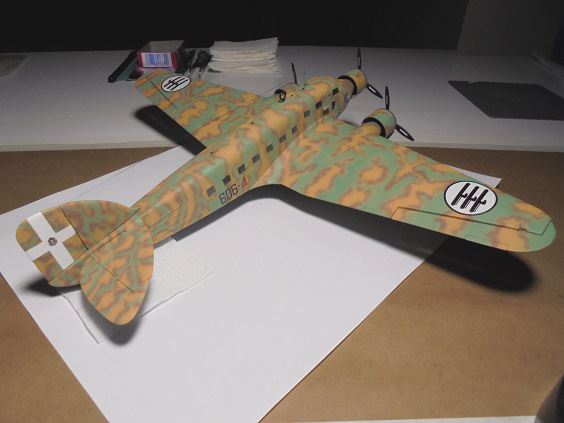
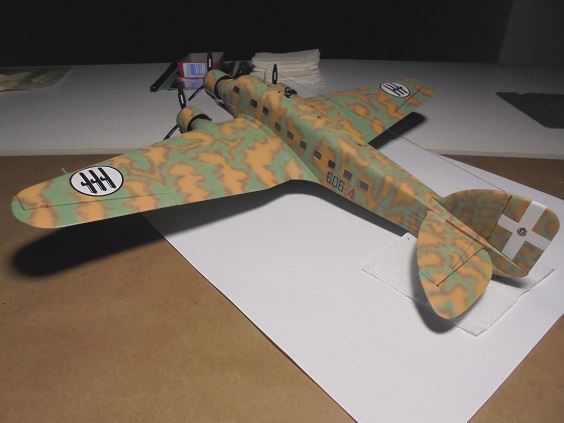
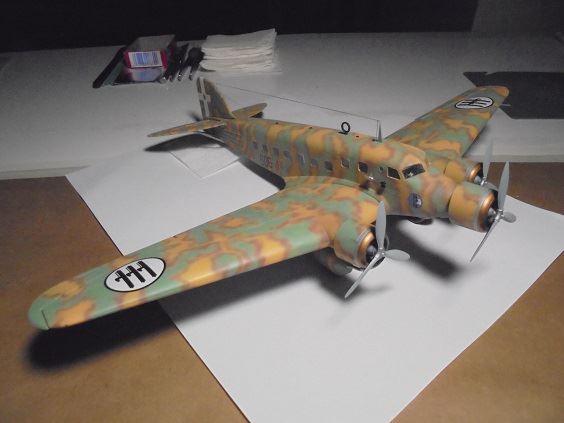
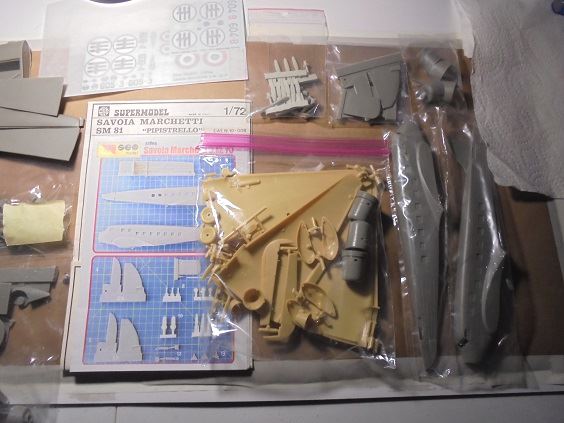
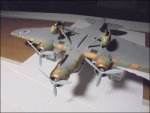
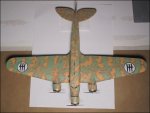
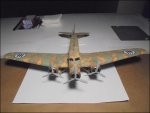
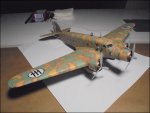
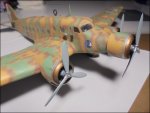
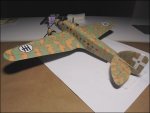
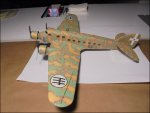
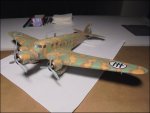
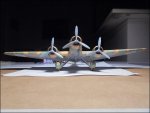
The 2015/2016-vintage 1/72nd scale SEM Model Savoia-Marchetti S.73 72804 military transport, 72805 and 72806 civil airliner conversion kits with resin and vacuform plastic clear parts utilizing SUPERMODEL or Italeri S.81 injected plastic kit donor parts are the only ones available in any scale. In March 2017 I purchased kit 72804 intending to build "606-4" flown by the 148 Gruppo Transpordo later purchasing a resold several times over the decades old SUPERMODEL kit as parts donor. The engine cowlings on "606-4" were similar to those on S.79 tri-motors, not having any early in November 2018 purchased a set of resin Quickboost QB72106 ones replacing those in with the Italeri S.79 kit.
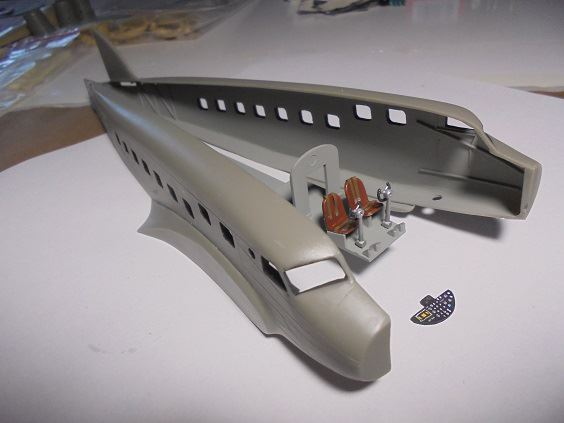
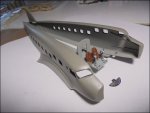
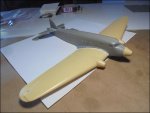
The model build generally went off smoothly thanks to good resin castings well as decent fuselage-wing root joins though those on forward port side are slightly off. Considerable effort was expended gluing on wheel spats and struts, jamming on cowlings over the engines, heart-stopping times for sure! Whilst building the SEM Model S.74 model had inadvertently sliced apart the S.73 resin kit cockpit flight crew-main fuselage cabin deck part, following much cutting, filing and sanding successfully reworked the SUPERMODEL S.81 kit ones to fit within the S.73 fuselage halves all whilst utilizing near all of the S.81 kit cockpit flight deck parts. No flight crew seat straps were provided, fabricated them from sprayed-over and cut to size Scotch Magic Mending Tap strips, no Venturi tubes were provided either, fabricated them from Italeri Caproni Ca.313/314 gun sight spare parts. The S.73 kit’s radio mast wasn’t the right shape nor tall enough per period photographs, fabricated another from sheet plastic. Period photographs showed four protuberances along the fuselage dorsal spine, fabricated them from sheet plastic as well.
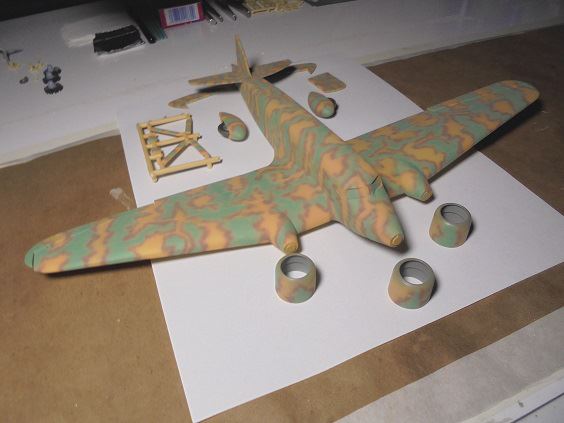
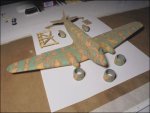
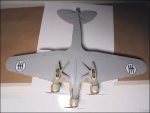
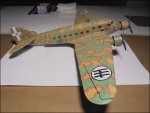
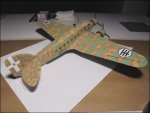
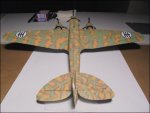
Painting the "606-4" model fuselage well as wheel spat interiors entailed spraying on out-of-bottle Testors Model Master 1726 Light Sea Gray enamel similar to Grigio Azzurro Chiarro 1 per the STORMO Regia Aeronautica and ANR Colors and Camouflage Schemes monograph for Savoia-Marchetti aircraft, Testors Flat Black and White “special mix” enamels subsequently being sprayed and hand painted on over all window edges for visual aesthetics. Painting the model exteriors entailed close examination of two known surviving photos of the Real McCoy, likely taken in 1940 they suggest it was base sprayed Giallo Mimetico 3 in a Schemi C10B and 11 mottle hybrid of Verde Mimetico 53192 and Marrone Mimetico 53193, Humbrol 63 Matt Sand + 10% Testors Flat Yellow + 36% by volume Testors Flat White for scale shading replicating Giallo Mimetico 3, Humbrol 120 Matt Light Green + 36% white replicating Verde Mimetico 53192, 50/50 Humbrol 113 U S Matt Rust + 119 Light Earth + 36% white replicating Marrone Mimetico 53193 enamels being employed. Humbrol 140 Matt Gull Grey + 36% white enamels replicating Grigio Mimetico was sprayed over all undersides.
Landing gear, propellers, several exterior kit parts, Distintivo di Guerra rudder crosses were spray and hand painted on with an assortment of Testors enamel colors the entire model over sprayed with Testors Clear Semi-Gloss Lacquer followed by applying kit decals. |
Aircraft: SIAI-Marchetti SM.73 Manufacturer: SIAI-Marchetti Type: Civil Transport Year: 1934 Engine: Three Alfa Romeo 126 RC 34, 9-cylinder R radial, air-cooled, 750 hp each Wingspan: 78 ft 9 in (24.00 m) Length: 57 ft 3 in (17.44 m) Height: 15 ft 1 in (4.59m) Weight: 23,800 lb (10,800 kg) Cruising speed:174 mph (280 km/h) Ceiling: 23,000 ft (7,000 m) Range: 620 mile (1,000 km) Crew: 4-5 Passengers: 18 |
|
|
|
|
|

|

|
|
|
|
|
|
February, 2020 STORMO! © 2020 |