|
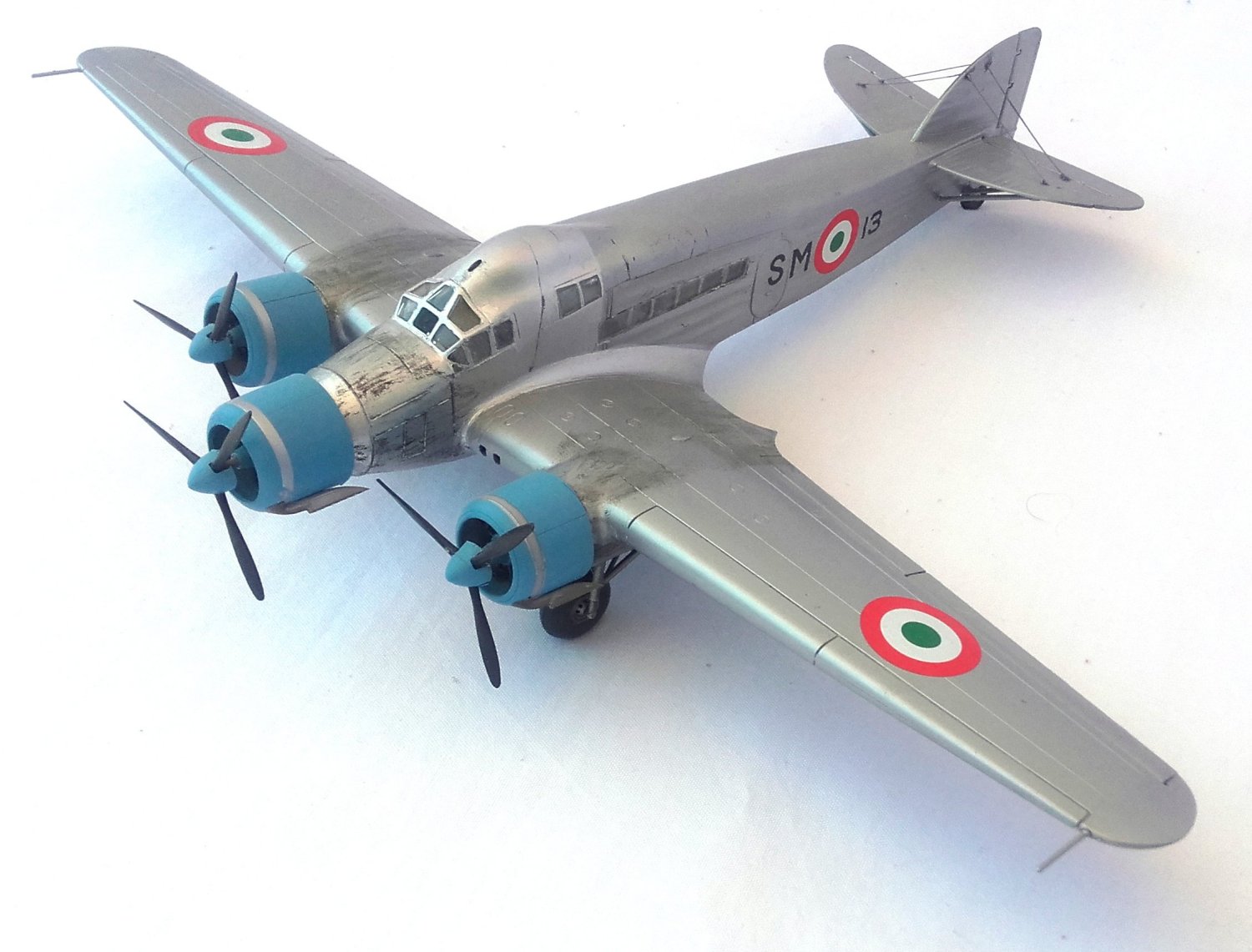
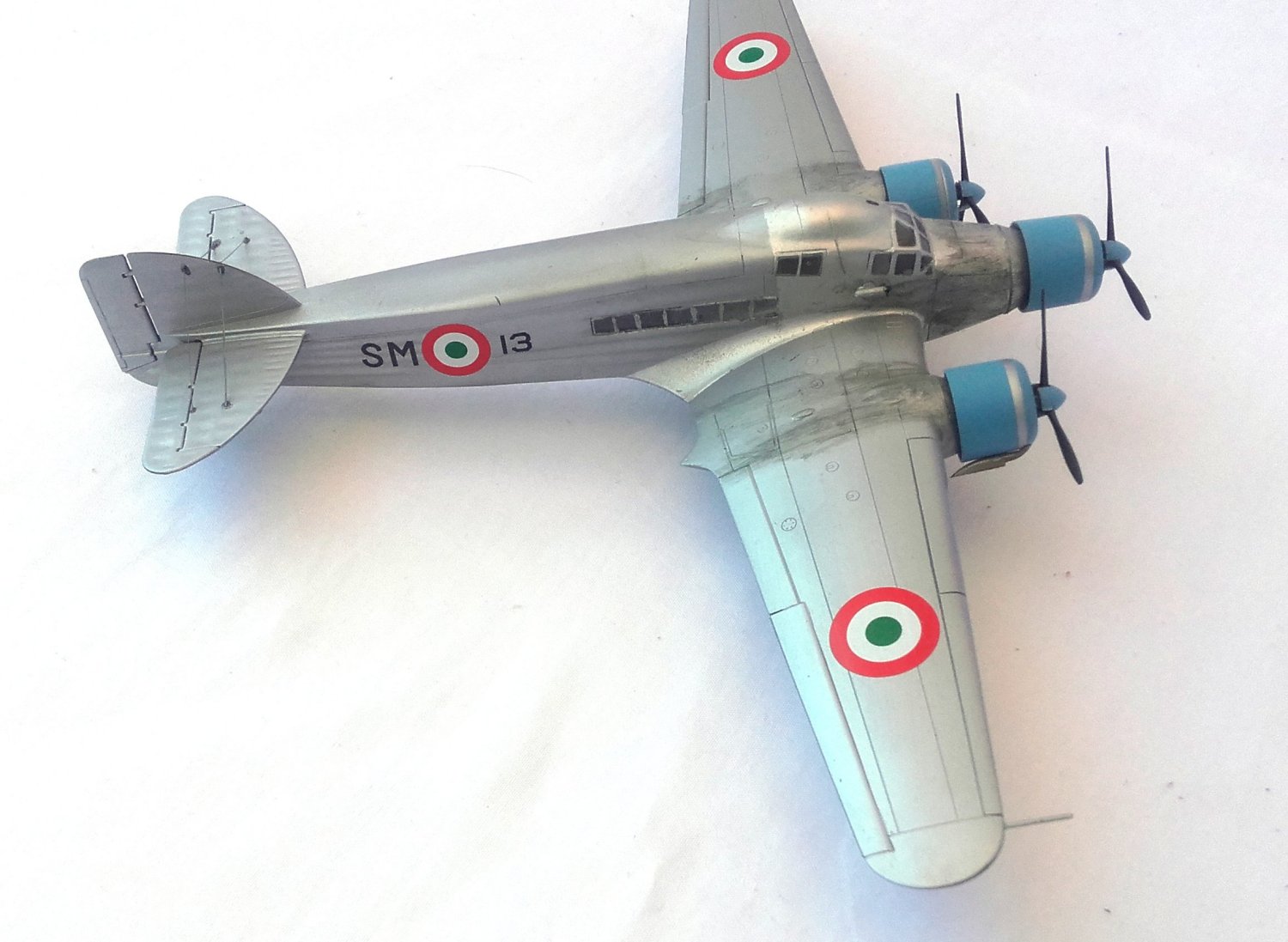
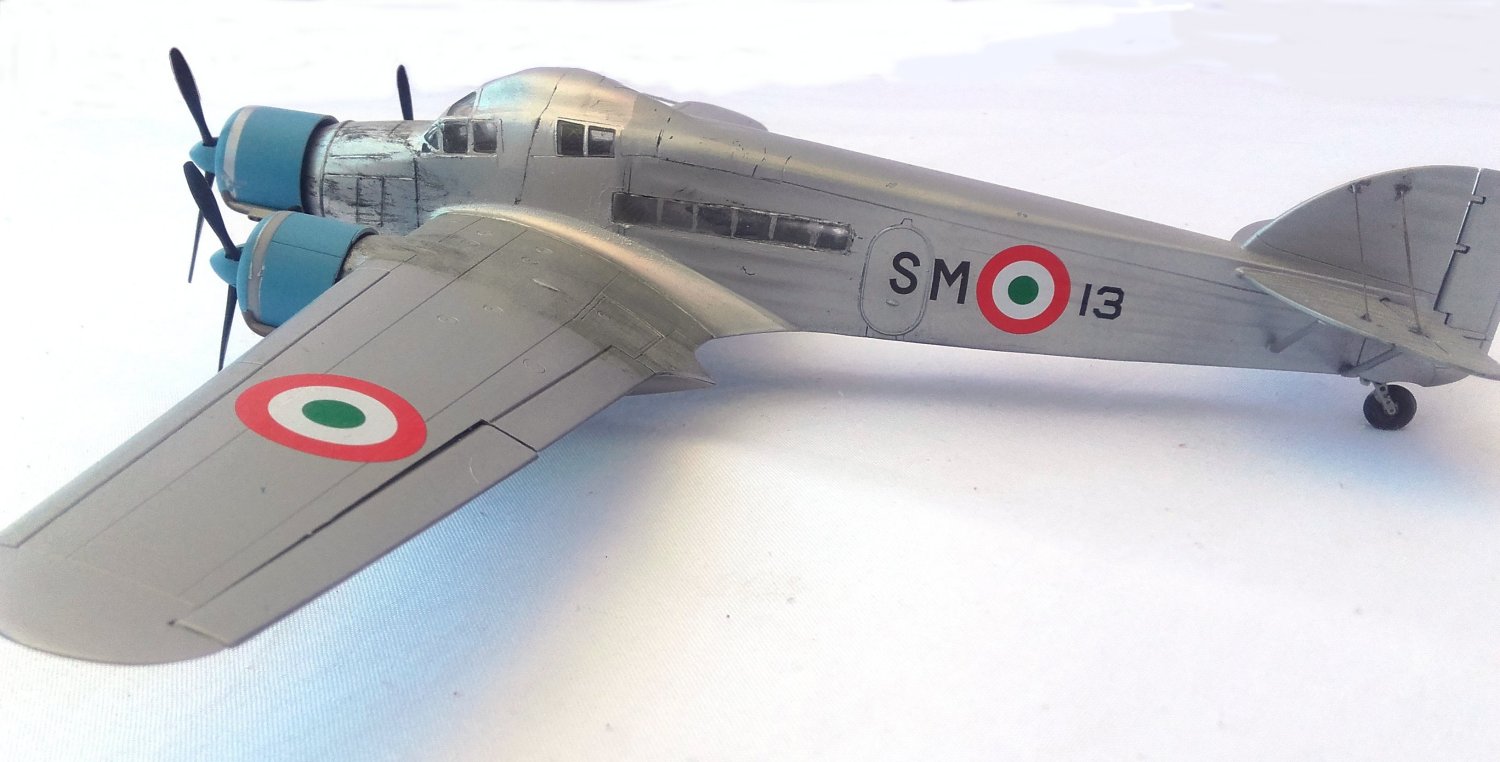
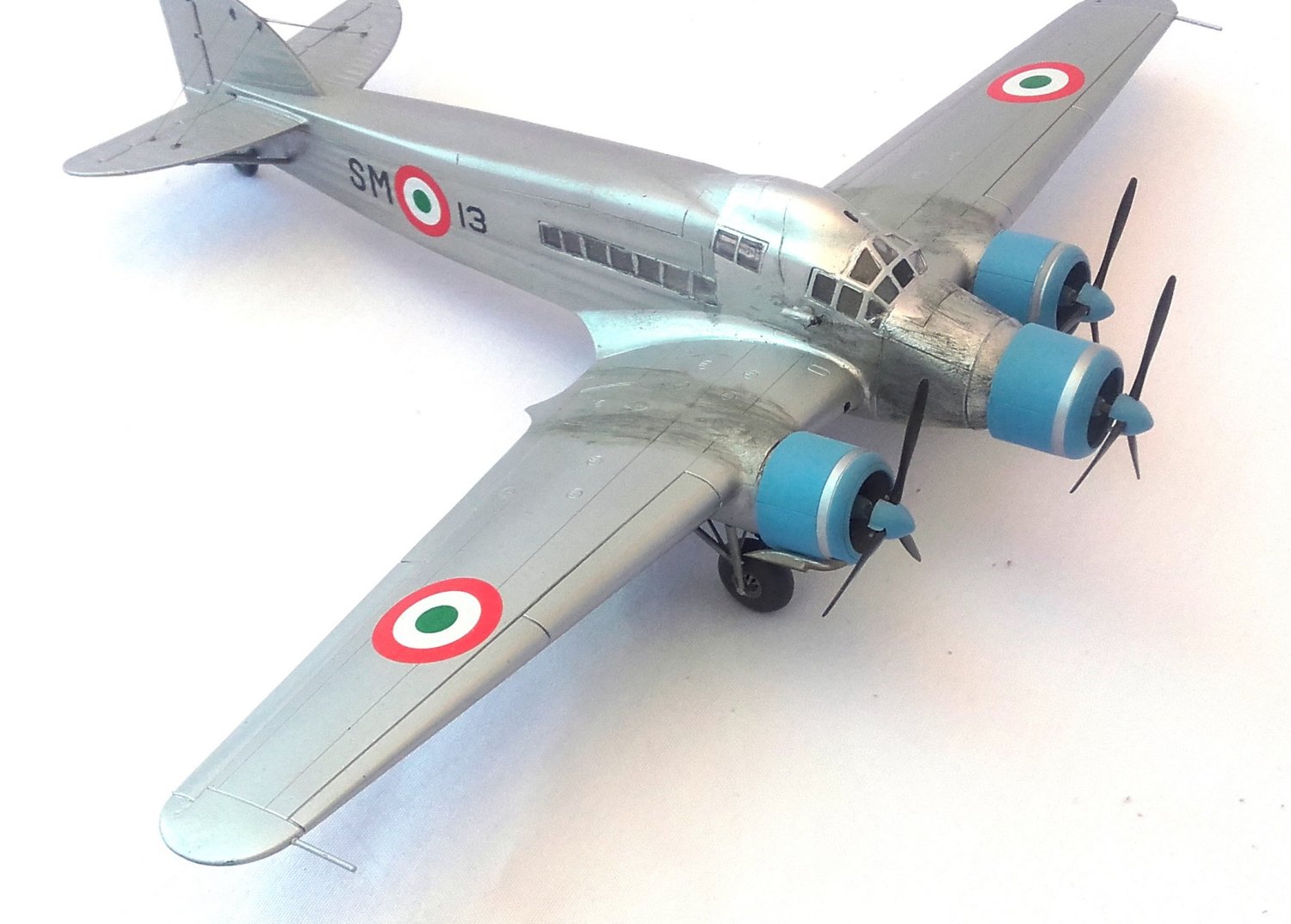
Italeri 1/72 SIAI-Marchetti SM.79P Airliner by Vincent Fiore |
|

Click the STORMO! Eagle to return to the Gallery |
|
In 1934, Savoia-Marchetti commenced work upon what would become the SM.79. The design team was headed by Ing. Alessandro Marchetti. The plane had originally been conceived as a fast monoplane transport aircraft, capable of accommodating eight passengers and to be used in air races. The design, which was initially designated as the SM.79P (P for Passeggeri/Passenger), was originally intended to be a civil derivative of the Savoia-Marchetti SM.81, a militarised transport/bomber aircraft that was itself based upon the Savoia-Marchetti S.73 airliner. The company set about the construction of a single prototype with the intention of entering the London-Melbourne race. A three-engine configuration was adotpted primarily for commercial safety concerns rather than for speed. The prototype c/n 19001 (later MM.260) was to adopt the liquid-cooled 801 hp Isotta-Fraschini Asso XI Ri powerplant, however, it was deceided to use the more reliable, although less powerful 590 hp Piaggio Stella P.IX R.C.40, a derivative of the license-produced French Gnome & Rhone K.9. On 28 September 1934, the prototype SM.79 conducted its maiden flight, piloted by Adriano Bacula. Despite the company's aim to participate in the London-Melbourne race the plane's prepartions were not completed in time. The prototype's registration was I-MAGO which rather allusively meant "Wizard". The plane featured sleek contours and continuous panoramic windows, true to its original intended role as a passenger aircraft. The prototype was able to quickly demonstrate its speed, conducting a flight from Milan to Rome in just one hour and 10 minutes, flying at an average speed of 250 mph (410 km/h). On 20 July 1935, it was awarded its Certificate of Airworthiness. Soon after on 2 August 1935, the prototype established a new speed record flying from Rome to Massawa in Italian Eritrea, in 12 flying hours with a refuelling stop at Cairo, Egypt. Various other world records were established during multiple test flights performed by the prototype. It was determined early on that it was the engines rather than the airframe itself that proved to be its limiting factor and accordingly the prototype was re-engined. During 1935, the P.IX engines that had been originally installed were replaced by Alfa Romeo 125 RC.35s and in 1936, these were replaced by the new and more powerful Alfa Romeo 126 RC.34s. The prototype being used by Generale Valle, the Chief of Staff of the Regia Aeronautica for various trips to East Africa as a fast liaison. The high performance demonstrated by the prototype attracted the attention of the Italian military, who approached Savoia-Marchetti with a request to investigate the prospects of producing a bomber-conversion of the type. |
|
|
|
|
|
|
|
|
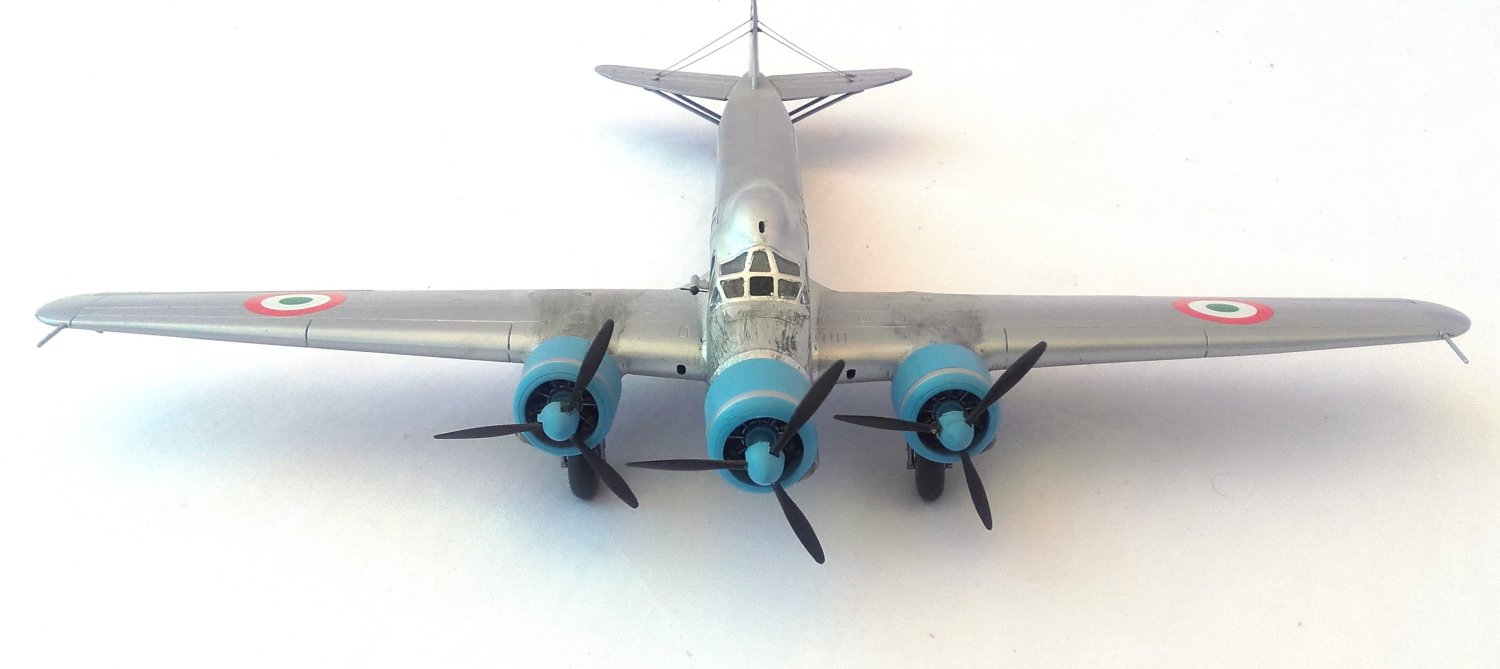
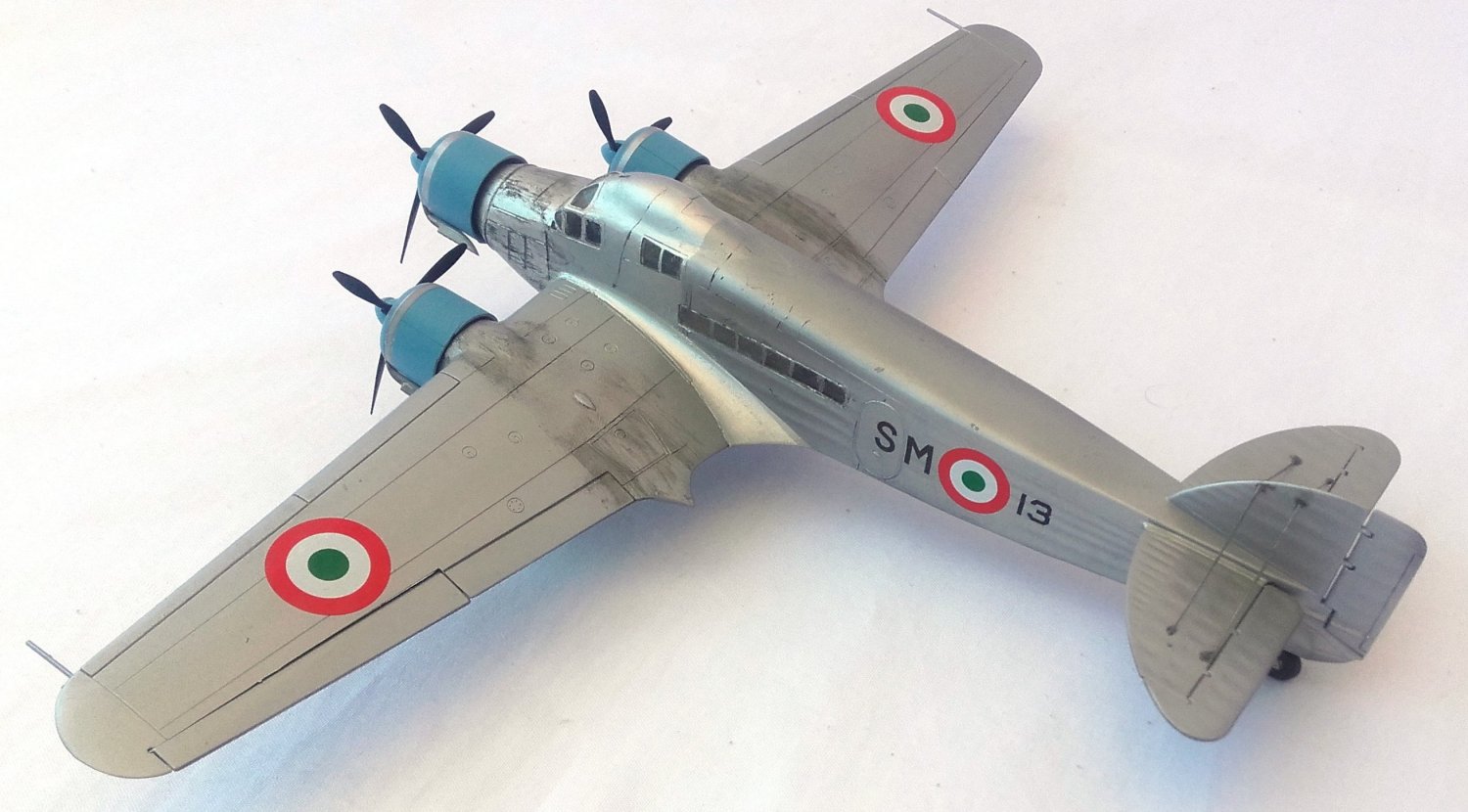
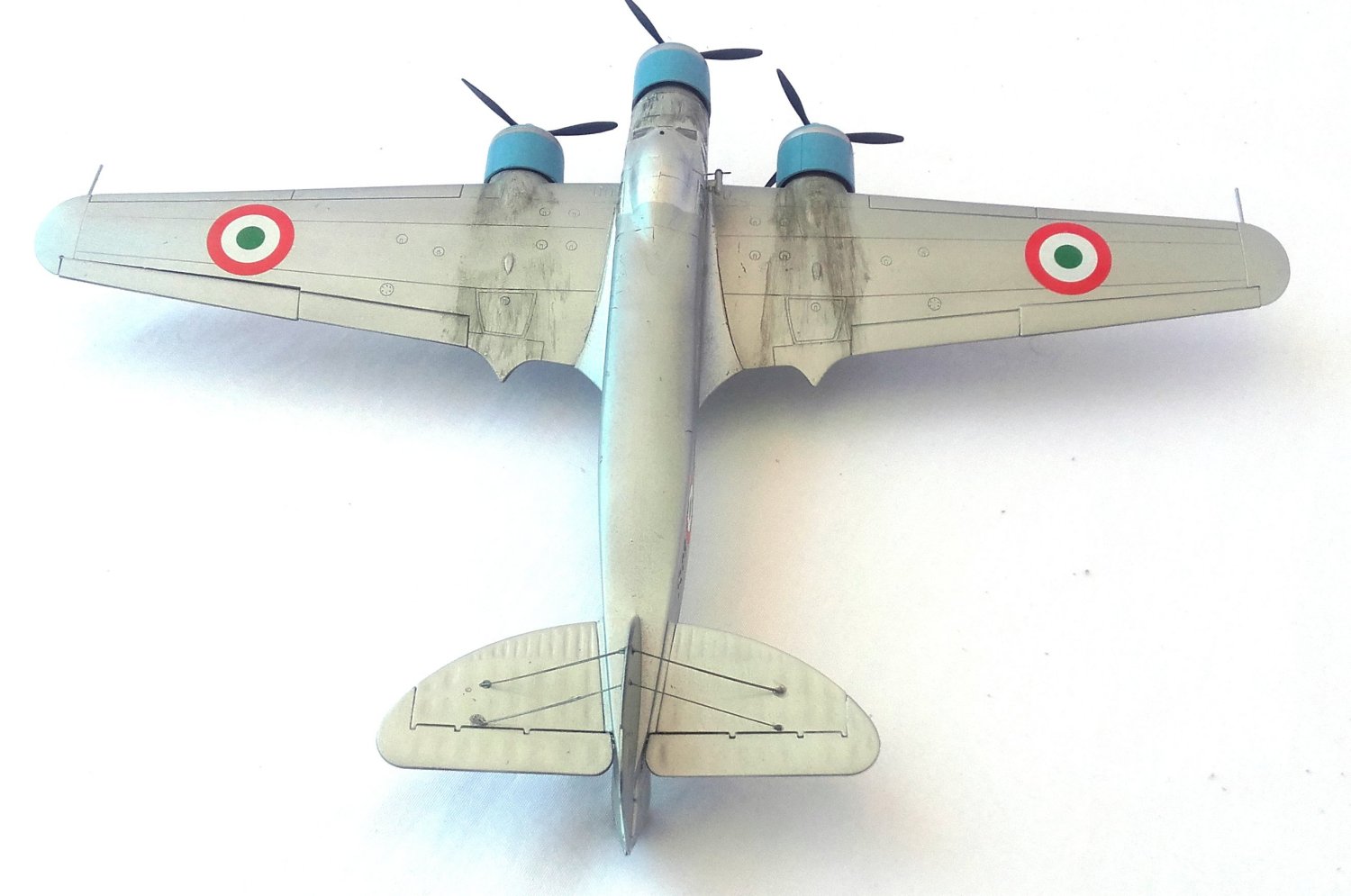
This is the I would imagine every member of Stormo has built at least one so I will not get into the regular part of the build. There is a need to eliminate the bottom gondola becasue this is a S.79P. I cut a clear sheet of thick plastic to the dimensions necessary to represent the cabin windows. Openings were cut into the fuselage sides to accept the windows The fuselage was assembled. From a plastic sheet, I fashioned a panel where the gondola would have been. Glued the piece into place and filled gaps and then sanded. The top gun position had to be enclosed. The kit parts do not allow the gun position to be made closed, I therefore fashioned it to be enclosed. Next the plane was painted to represent the different materials used in construction. The wooden wings and the fabric portions were painted with Tamiya silver LP 11. The aluminum was painted with AK 481. |
|
Aircraft: SIAI-Marchetti SM.79 Prototype (I-MAGO) Manufacturer: SIAI-Marchetti Type: Civil Transport Year: 1934 Engine: Three Piaggio Stella P.IX R.C.40, 9-cylinder radial, air-cooled, 590 hp each Wingspan: 69 ft 7 in (21.20 m) Length: 53 ft 2 in (16.20 m) Height: 13 ft 5t in (4.10 m) Weight: 23,180 lb (10,500 kg) (Loaded) Maximum Speed: 248 mph (400 km/h) Ceiling: 23,294 ft (7,100 m) Range: 1,180 miles (1,900 km) Crew: 4 Passengers: 8
|
|
|


|
|
|
|
|
|
|





|


|
|
|
|
|
|
October, 2022 STORMO! © 2022 |