|
Italian Kits Wings 1/72 Savoia Marchetti SM.89 Ground Attack/Bomber by Richard Mendes |

|

Click the STORMO! Eagle to return to the Gallery |
|
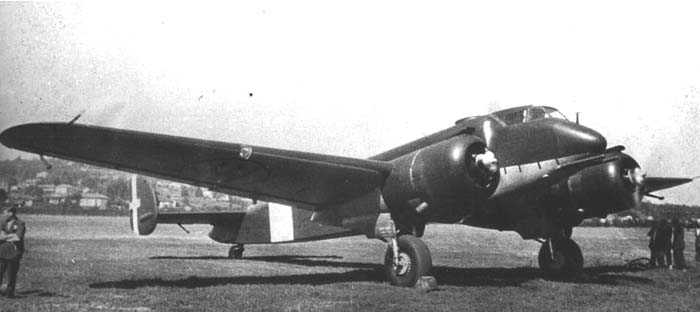
The twin-engine Savoia-Marchetti SM.89 designed by Alessandro Marchetti (1884-1966) was a heavily-armed ground attack aircraft with bombing capability, the sole prototype MM.543 powered initailly by two 1000hp Piaggio P.XI fourteen-cylinder radials, first flying at Vergiate northwest of Milano, Italy in September 1941 with the test pilot Lieutenant G. Algarotti at the controls. A derivation of the SM.84 tri-engine bomber/torpedo bomber the SM.89 employed the wings, aft fuselage and mixed construction of the former with a redesigned nose, narrow forward fuselage housing the pilot, radio operator/ventral turret gunner and dorsal turret gunner made up from a skeleton of steel tubing and wood covered with duralumin up to the dorsal turret, wood and fabric construction aft, wooden plywood-cladded three-spar wings, mix constructed slats, flaps and ailerons latter lowered with flaps to increase lift during takeoffs. The SM.89 had very heavy armor protection. The armor of the front and windscreen areas totalled 660lbs, another 660lbs protected the engines, and a further 180lbs was used in the aft armor. The aircraft was also believed to have even carried a COČ fire surpression system. The SM.89's main armament were two nose-mounted 37mm Breda 37/54 autocannons supplemented by three fixed forward-firing Breda-SAFAT 12.7mm machine guns, two other 12.7mm SAFATS, one each fitted in a manually-operated dorsal turret and one in a remotely-controlled ventral turret. The aircraft could also be equipped with air brakes for dive bombing and could also carry 700 bomblets or 3,090lb of conventional bombs or torpedoes under the belly. As a night bomber-interceptor radar equipment could be installed. The 1000hp Piaggio P.XI engines equipping MM.543 proved insufficient during early flight testing, 1,500hp Piaggio P.XII RC.35 eighteen-cylinder radials subsequently replacing them in a "power egg" installation more compact than those of the Piaggio P.108 and CANT Z.1018. The plane carried 710 US gallons in self-sealing fuel tanks giving it an effective range of 450 miles, adequate for its primary mission.
The aircraft flew in 1941, but it was not until September 1942 that it was sent to Guidonia for evaluation tests. The aircraft was taken into charge on March 1943, seeing service in anti-tank and other roles. The results were quite good, with its firepower was second only to the P.108A. However the plane was underpowered, a problem that may have been rectified with the adoption of more powerful powerplants such as the 1,650hp Piaggio P.XV RC.50/2V or the 1,620hp Alfa Romeo 135 eighteen-cylinder radial, the latter then under development. The plane was then flown to Foligno in central Italy during July 1943 where it eventually fell into German hands after the September 8, 1943 Italian Armistice. |

|
|
|
|
|
|
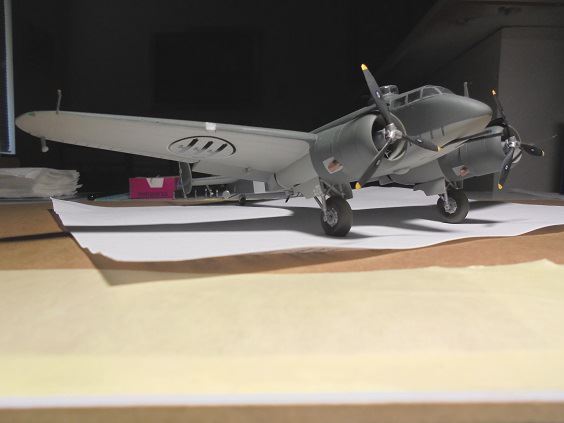
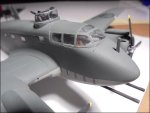
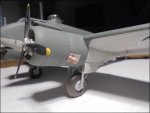
The 1/72 scale early 2000s-vintage Italian Kits Wings (IKW) resin with vacuform plastic parts kit together with the 1980s-vintage KPL Models (presumed) vacuform-plastic kit are the only ones of the Savoia-Marchetti SM.89 in any scale, the latter no longer unavailable. Well molded with good surface detail the IKW kit is heavy for its size, reason enough for them to cleverly mold the main landing gear struts around steel rods though "plugging" them in wheel well mounts required more than a bit of effort. The thickly-casted one-piece mainwings, three-part fuselage and tailplane parts fitted together well though the keel of the lower fuselage part required extensive putty filling, filing and sanding to smooth lumps and bumps out after sprue removal, upper starboard side warping inwards to such an extent soaking it in hot water to push it out would had damaged the entire casting. The thickly-casted one-piece tailplane part laying over the rear lower fuselage part skewed starboard, trimming to align portside would had thrown off alignment with upper fuselage part, not wanting to tempt fate I left it alone as well as the lower fuselage part.
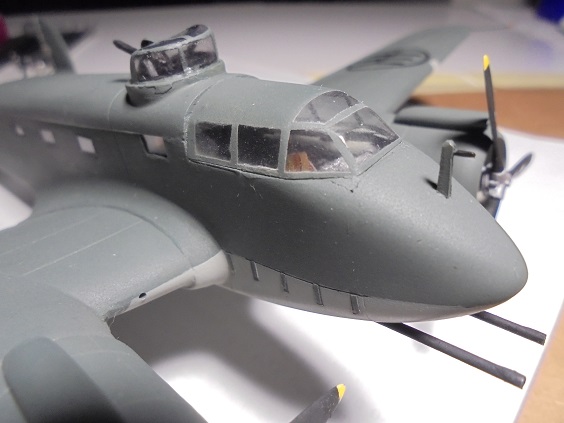
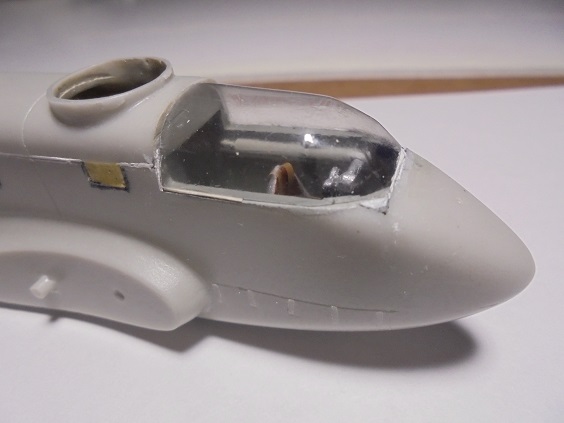
The forward fuselage cockpit included an instrument panel, horizontal control yoke, crew seat parts for pilot and radio operator/dorsal turret gunner, fabricated seat belts from painted over Scotch Magic Mending Tape, guessed at placing the latter aft of turret, no period photos as to exactly where. Gun turret parts were well detailed, thin clear vacuform turret cover difficult to cut, trim, paint glue in place in upper fuselage part turret hole. The kit included clear plastic fuselage window parts, cut and shaped better ones from clear styrene sheet plastic, gluing them in place after painting window sills Testors Flat Black and White "special mix" for better visual aesthetics. The kit included vacuform clear plastic and resin parts for a remotely-operated fuselage ventral gun turret, no kit instructions as to where and how to mount it, period photographs showed it aft of rear fuselage crew entrance door, drilled large hole to slip it in, painted clear vacuform turret part frames per KPL Model "box top" art rendering, no period photos available as to exactly how. Mainwing engine nacelle, wheel well and landing gear parts were well molded, cutting off sprues, trim, sand, paint and assembly work was relatively easy, seam puttying necessary after gluing nacelles on mainwings. The engine parts molded over a resin slab required much sanding to remove them, much sanding as well for engines to fit inside cowlings, rear of engine auxiliary equipment parts inside nacelles - a nice to have though hard to see model feature. The engine exhaust pipes require very little trimming to glue on engine nacelles, engine cowling edges had to be enlarged for them to fit properly however, one-piece propeller parts made for easy trim, sand and paint work. Mainwing flaps (downward-position molded), ailerons, tailplanes, sails and rudders were glued in place with styrene sheet plastic pegs in drilled holes, ailerons outer edges trimmed to fit, port side aileron trimmed too much, built it back up with sheet plastic, starboard side sail-rudder gap built up as well. The kit did not include Pitot tubes on mainwing outer leading edges, fabricated them from sheet plastic. The absolute worst "feature" of the IKW SM.89 kit is the very poorly molded clear styrene plastic cockpit canopy as seen in photos of the build. Aside from making one's own vacuform mold nothing "cosmetically" could be done to improve upon it other than properly seating it over the cockpit vertically, horizontally well as longitudinally.
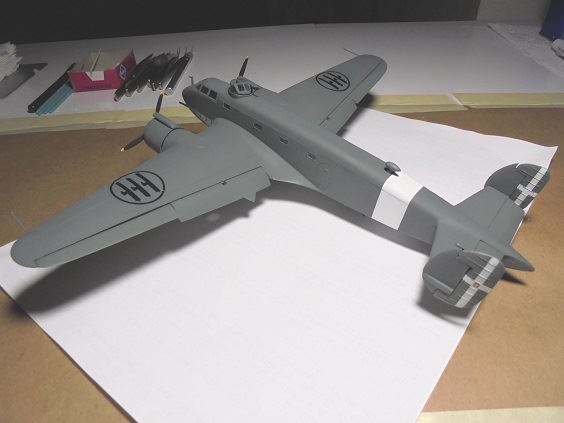
The fuselage halve interiors as well as associated interior parts, cockpit, dorsal and ventral turret frames were sprayed out-of-bottle Testors Model Master 1726 Light Sea Gray enamel similar to Grigio Azzurro Chiarro 1 per the STORMO Regia Aeronautica and ANR Colors and Camouflage Schemes monograph for Savoia-Marchetti aircraft, flight deck seats, instrument panels, horizontal control yoke, rudder pedals, etc. spray and hand painted an assortment of Testors enamel colors, dorsal and ventral turret mounts, cannons and machine guns Testors Flat Black and White "special mix". All upper model exteriors including the ventral gun turret were spray painted Humbrol 91 Matt Black Green + 36% Testors Flat White enamels replicating Verde Oliva Scuro (VOS) 2, lower model exteriors including the ventral turret Testors Model Master 1726 Light Gull Grey + 36% Testors Flat White enamels replicating Grigio Azzurro Chiaro. Landing gear, propellers et. al. exterior kit parts well as a white fuselage identification band were spray and hand painted on with an assortment of Testors enamel colors the entire model over sprayed with Testors Clear Semi-Gloss Lacquer after applying kit House of Savoy crests on the rudder, pneumatic tire pressure data notices on outer landing gear doors and fuselage next to tail wheel decals, large SKY Models 72003 Savoia-Marchetti S.79 outline tri-fasci on mainwings. |

Aircraft: SIAl-Marchetti SM.89 Manufacturer: SIAl-Marchetti Type: Ground Attack Year: 1941 Engine: Two Piaggio P.XII RC.35s, 18-cylinder air-cooled radial engines, 1500 hp each Wingspan: 69 ft 11/32 in (21.04 m) Length: 55 ft 3 in (16.85 m) Height: 14 ft 9 in (4.5 m) Weight: 27,853 lb (12,634 kg) (Loaded) Maximum Speed: 270 mph (440 km/h) Ceiling: 22,000 ft (6,700 m) Range: 450 miles (720 km) Armament:2 x 37mm canons, 5 x 12.7mm SAFAT MGs; 3,090 lb (1,400 kg) of bombs Crew: 3 |
|






|
|
|
|
|

|

|
|
|
|
|
|
April, 2020 STORMO! © 2020 |