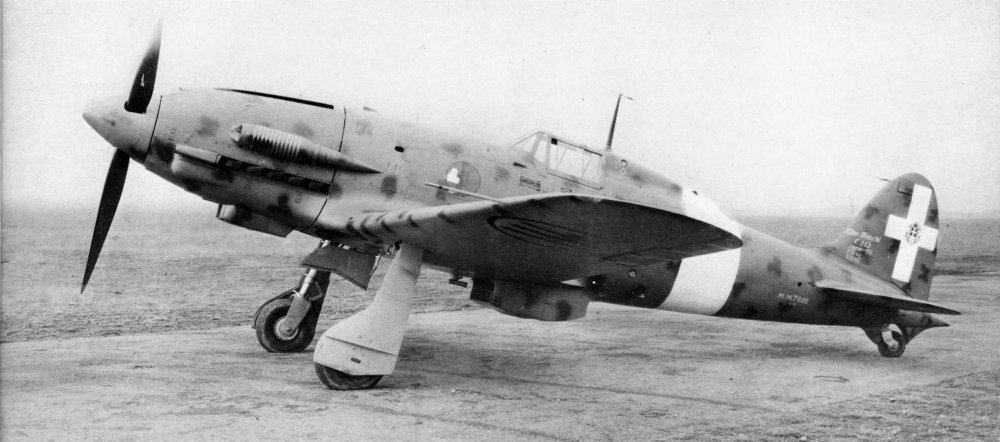
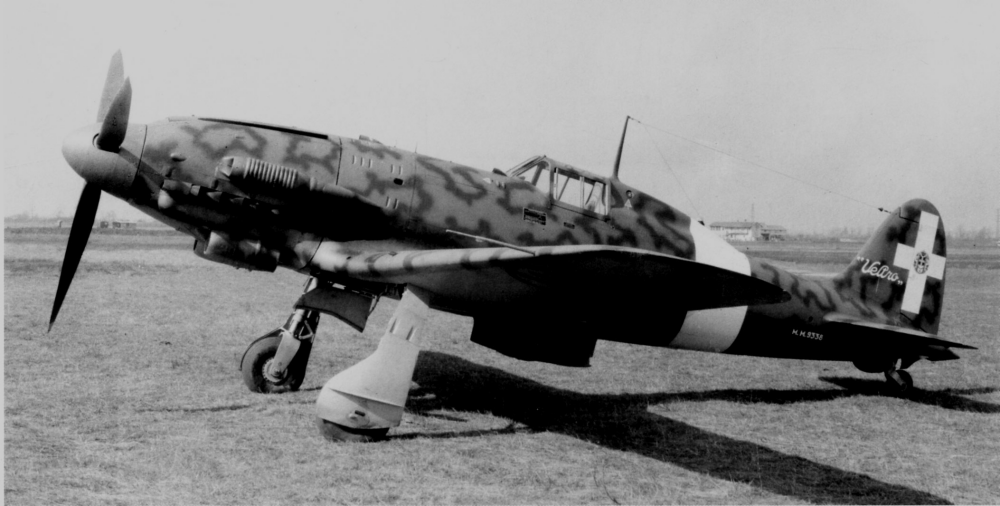
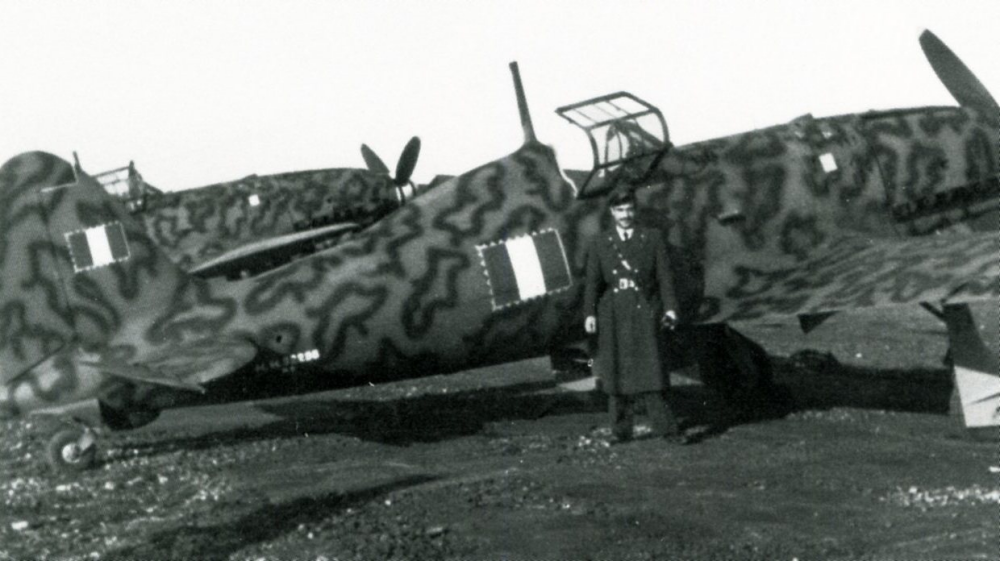
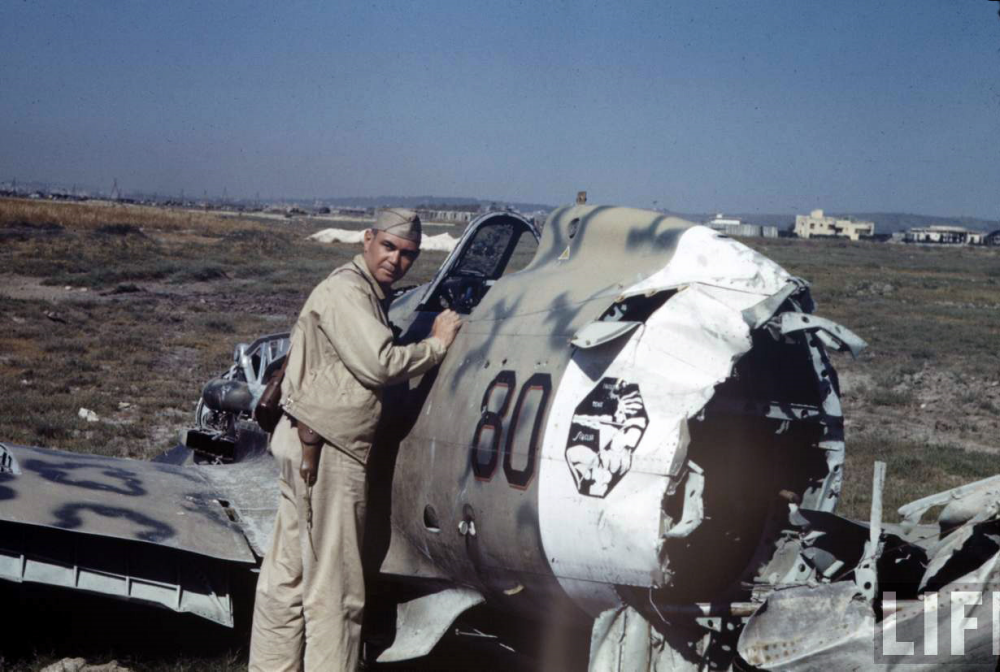
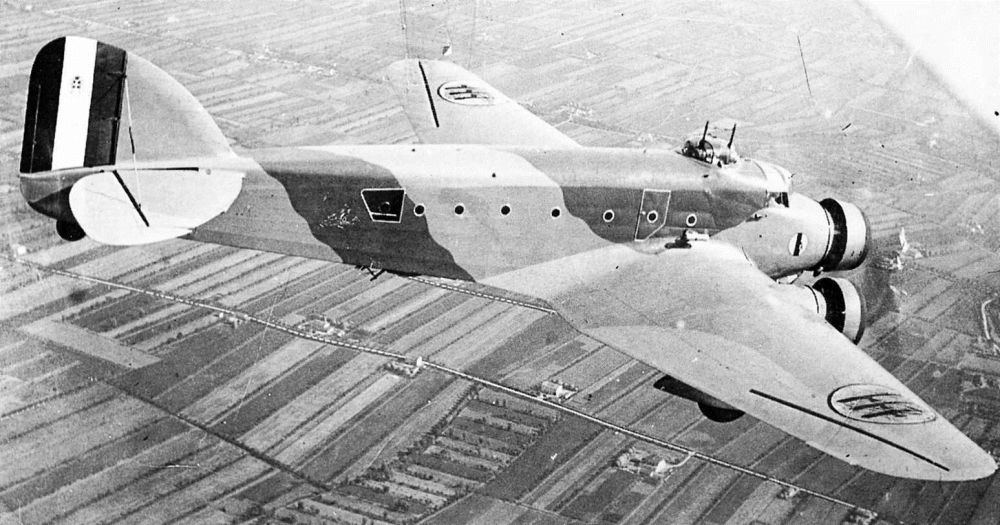
|
|
Colori Ufficialmente Impiegati
Dall'Aviazione Italiana 1916-1943
VITO Charts
Dott. Stefano Lazzaro
April 2020
TABLE OF CONTENTS
TABLES
The popularity of Italian WWII aircraft amongst modelers stems partly from the varied and
interesting color and camouflage schemes on these planes. A mix of green, yellow and brown
colors, each in varying hues and in several patterns, which allow the modeler to choose
from many
liveries, for even a single aircraft type.
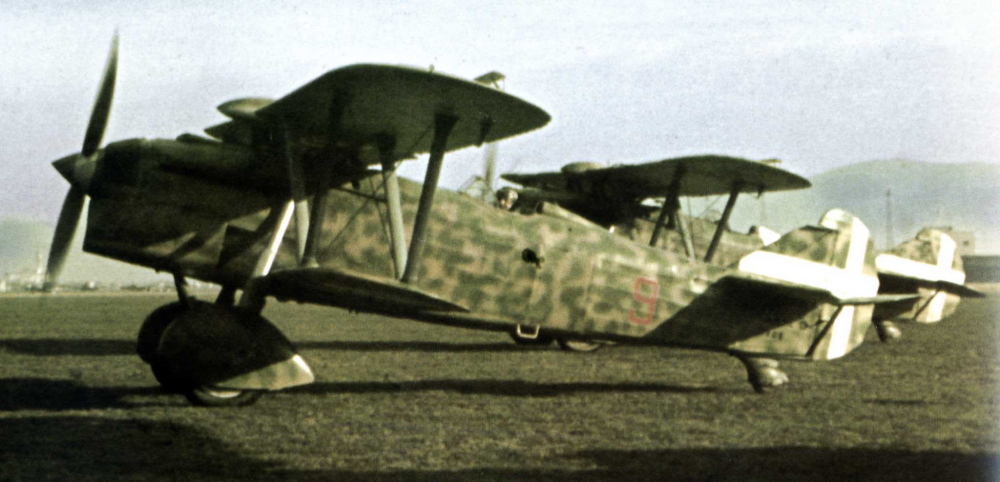
During the 1930s, Italian aircraft were mostly painted silver, as in many other countries. During the
Spanish Civil War, the need to conceal machines from above led to effective ways to do so. Several
experiments were conducted in the field
(see
Alfredo Logoluso's article), and with this experience the Regia Aeronautica set the rules of its
aircraft camouflage, as the environment was similar between Spain and Italy. These rules were general in nature,
and until 1941-42 there was no standardization of the colors, so each aircraft factory used its own
paint producer, and often there were more than one paint supplier per factory.
So, until the publication of the Tavola 10 there wasn't an official standardization in hues, and also
after that, existing stocks of similar paints continued to used until exhausted.
The study of WWII Italian aircraft camouflage arose in the early seventies, with the increased interest
in plastic modelling. By then thirty years had passed after the war, color hues faded by memory of
witnesses and modelers needed to find a way for an accurate replica.
The first debates about the matter arose in those years with articles and discussions in magazines (the web
was then far away), among them Aerei, IPMS Italy magazine and Tuttomodellismo. Two of the students
were Andrea Degl'Innocenti and the late Umberto Postiglioni, who summarized their research in a book published
in 1977 by CMPR1 : Colori e Schemi Mimetici della Regia Aeronautica 1935-1943. The book
contained a precious attachment of 21 enamel chips with Humbrol Authentic references and mixing formulas,
matched according to original specimens.
Since the book soon became unfindable, a second edition was later published in 1995 jointly by GMT2,
the same CMPR and GAVS3, but it didn't add anything new other than some new -and better quality-photos
and a revised classification of camo schemes, but sadly lacked enamel chips, these being replaced by an
unreliable press-on-rough-paper color table.
A scan of the CMPR palette -1st Ed.- is published elsewhere on this site
(
see CMPR Color Chips), but in this study, we'll be analysing each of those chips, with English translation,
FS 595c matches and notes excerpted from the book.
Note: rather than grouping the paints below by their id. number (apart from those of Arson-SISI, identified
by factory code, the others are arbitrary), the mimetic (camo) colors are grouped by brand/manufacturer.
It's sensible that an aircraft factory would purchase a complete set of paints from a single paint supplier,
and then apply those paints together. This could give an idea about the rendering on the aircraft. Of course,
the hues can vary depending on each screen calibration, so consider them as merely indicative.
Table 1. CMPR 1st Ed. Color Chips
|
Color
|
English
Translation
|
FS 595b personally matched on chips in 1st edition
(in brackets as suggested in 2nd edition)
|
Notes
|
Alluminio

|
Aluminium
|
17178
|
Made by DUCO (DGCA no. 1018)
Used by Breda, Caproni (1935-39), CRDA (1935-38), FIAT (1936-38), IMAM (1936-38), Piaggio, Reggiane, SIAI (1935-39)
Found on:
- factory wooden models of CR.32 and Ca.133 (undersides)
- Ro.43 at Vigna di Valle museum
|
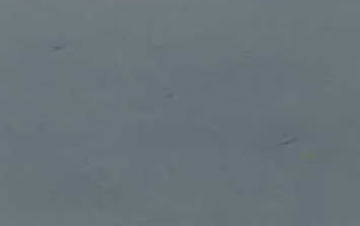
Grigio Mimetico
|
Camo Gray
|
36231 (36293)
|
Used by Breda, Caproni, CRDA, FIAT, IMAM (1939-41), Macchi, Nardi, Piaggio, SIAI
Found on:
- original factory drawing on BR.20
- factory wooden model of CR.42 (undersides)
- original C.200 at Vigna di Valle before restoration (undersides)
|
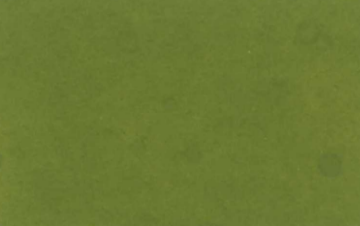
Verde Mimetico 1
|
Camo Green 1
|
14257 (34258)
|
Made by INVES
Used by FIAT and SIAI (1935-39)
Found on:
- original factory drawing on BR.20 (band camo)
- factory wooden model of CR.42 (mottles)
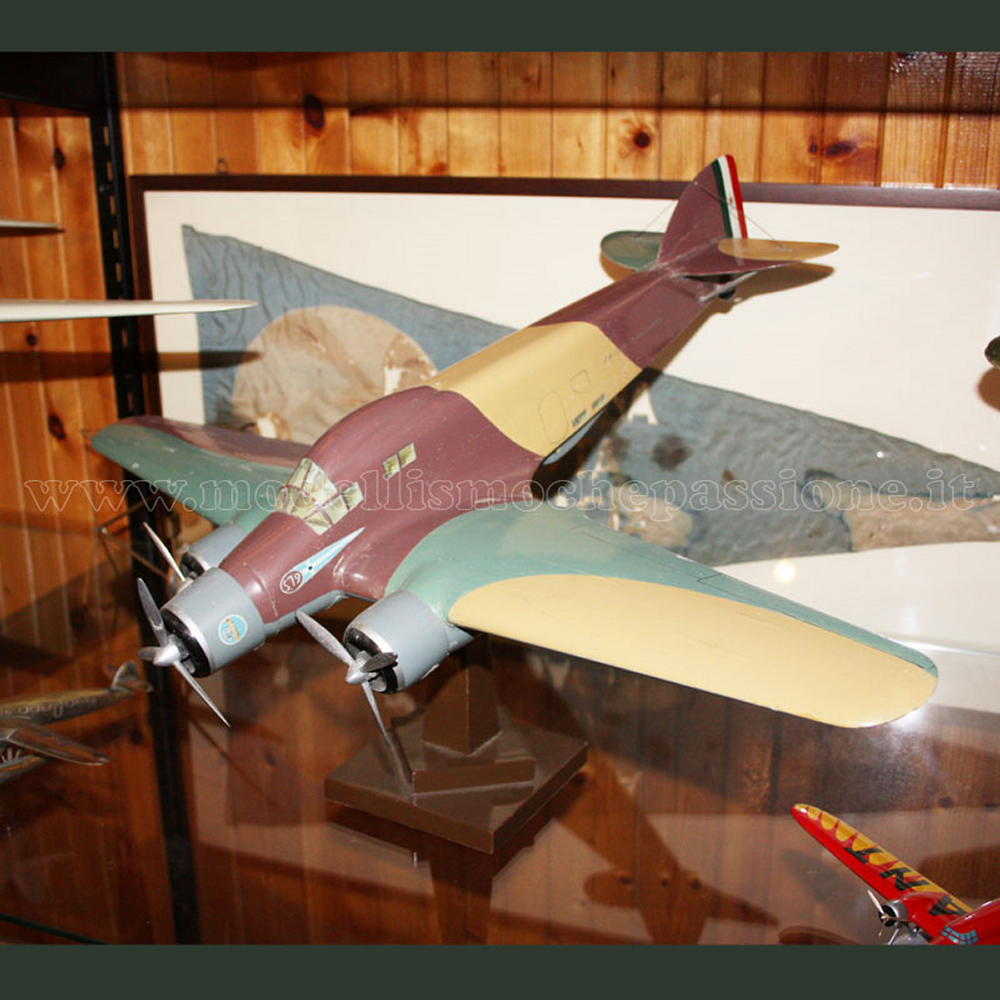
- "very similar" on a factory wood model of S.79 (band camo)
|
Marrone Mimetico 1
|
Camo Brown 1
|
Lighter than 30118
|
Made by INVES
Used by FIAT and Nardi
Found on:
- original factory drawing on BR.20 (band camo)
- "very similar" on a painted fabric patch from SRAM at El Adem (1941)
|
Giallo Mimetico 1

|
Camo Yellow 1
|
23594
|
Made by INVES
Used by FIAT and Nardi
Found on:
- original factory drawing on BR.20 (band camo)
- painted fabric patch from SRAM at El Adem (1941)
|
Verde Mimetico 3
|
Camo Green 3
|
34102
|
Made by Masciadri (DGCA no. 1090)
Used by Avia, Breda, Caproni, FIAT (1939-41), IMAM, Nardi
Found on:
- painted fabric patch from SRAM at El Adem (1941) (mottles)
- rudder of a Ro.37 (mottles)
- "very similar" on factory wood models of C.202 (as mottles or background)
|
Marrone Mimetico 2
|
Camo Brown 2
|
30109 (10076)
|
Made by Masciadri (DGCA no. 1091)
Used by Caproni, FIAT (1939-41), IMAM (1935-38), Piaggio, Reggiane and SIAI (1935-39)
Found on:
- factory wood model of P.32 (band camo)
- "very similar" on a factory wood model of S.79 (band camo)
|
Giallo Mimetico 2
|
Camo Yellow 2
|
33481
|
Made by Masciadri (DGCA no. 1092)
Used by Piaggio
Found on:
- fuselage relic of P.108 MM 22003 (mottles)
- factory wood model of P.32 (band camo)
|
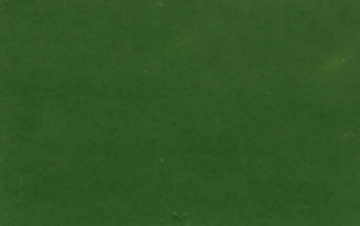
Verde Mimetico 53192
|
Camo Green 53192
|
Similar to 34128
(strangely matched as 34227 in second edition)
|
Made by Arson-SISI
Used by Caproni, CRDA, FIAT (1939-41), Macchi, SIAI (1940-41)
Matched in original Arson SISI paint chip
Found on:
- CZ.1007 gun turret (mottles)
- factory wood model of S.79 (mottles)
- fabric patch from a Ro.37bis (mottles)
- "very similar" on factory wood models of CR.32 and Ca.133 (mottles)
|
Marrone Mimetico 53193

|
Camo Brown 53193
|
30140
|
Made by Arson-SISI
Used by CRDA and SIAI (1940-41)
Matched in original Arson SISI paint chip
Found on:
- CZ.1007 gun turret (mottles)
- factory wood model of S.79 (mottles)
- fabric patch from a Ro.37bis (background in mottle camo)
|
Giallo Mimetico 3
(Giallo Mimetico 53194)

|
Camo Yellow 3
|
33434
|
Made by Arson-SISI (personal note: it's quite surely that firm's Giallo Mimetico 53194,
listed in SIAI documents)
Used by Breda, Caproni, CRDA, FIAT (1939-41), IMAM (1935-38), Reggiane and SIAI
Found on:
- CZ.1007 gun turret (background in mottle camo)
- factory wood model of S.79 (band camo)
- another wood model of S.79 (background in mottle camo)
- "very similar" on factory wood models of CR.32, CR.42 and Ca.133 (background in mottle camo)
|
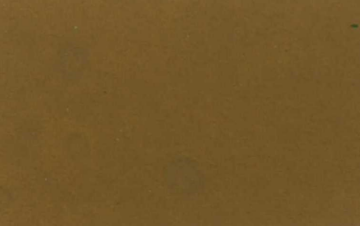
Bruno Mimetico
|
Camo Brown
|
Similar to 30215
(30215)
|
Made by Arson-SISI
Used by Breda, Caproni, CRDA (1935-38), IMAM, Macchi, Piaggio
Matched in original paint chip as official disposition CA 490 (1939)
"very similar" as in table UNI 287 (1934)
Found on:
- fuselage relic of P.108 MM 22003 (mottles)
- C.200 relic (mottles)
- rudder of a Ro.37 (mottles)
|
Verde Mimetico 2

|
Camo Green 2
|
34092
|
Made by Max Meyer
Used by Macchi, Piaggio and Reggiane
Found on:
- fuselage relic of P.108 MM 22003 (mottles)
- factory wood model of P.32 (band camo)
- original C.200 relic (mottles)
|
Giallo Mimetico 4

|
Camo Yellow 4
|
30266
|
Made by Max Meyer
Used by IMAM (1939-41), Macchi, Reggiane
Found on:
- original C.200 at Vigna di Valle before restoration (background in mottle camo)
- rudder of a Ro.37 (mottles)
|
Verde Anticorrosione

|
Anti-corrosion Green
|
34558
|
Found on interiors of Macchi-built C.200 relics
|
Grigio Azzurro Chiaro 1

|
Light Blue-Gray 1
|
36307
|
Matched in the original TAVOLA 10
|
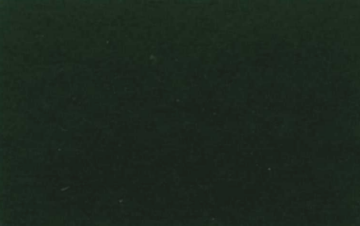
Verde Oliva Scuro 2
|
Dark Olive Green 2
|
34052
|
Matched in the original TAVOLA 10
|
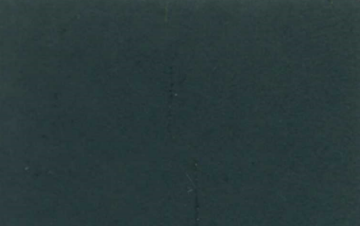
Grigio Azzurro Scuro 3
|
Dark Blue-Gray 3
|
36118
|
Matched in the original TAVOLA 10
|
Nocciola Chiaro 4

|
Light Hazelnut 4
|
30219
|
Matched in the original TAVOLA 10
Found by the Author on a paint chip by an ANR C.205 serie III, painted in D3 scheme, shot down and fallen near Padua in 1944.
|
Bianco Avorio 5

|
Ivory White 5
|
33613
|
Matched in the original TAVOLA 10
Found on a factory wooden model of a S.81
|
Bianco Neve 6
|
Snow White 6
|
|
Actually, represented by white paper support
|
Please note that Arson SISI, INVES, Masciadri and Max Meyer weren't the only firms to refurbish
the aircraft factories: at least Corti and DUCO produced a trio of camo greens, browns and yellows
(the latter for DUCO is called Havana, i.e., a light tobacco brown) while other firms manufactured paint
products for interiors or surface protection: other than those above, SIPA, Castiglioni, Colver,
ICASA, SVI, Brava, etc.
Below are colors are not represented in the CMPR 1st Ed., but FS comparisons are given in
CMPR 2nd Ed., p. 122
Table 2. New Colors in CMPR 2nd Ed.
|
Color
|
English
Translation
|
FS 595b
|
Notes
|
Giallo Cromo 7
|
Chrome Yellow 7
|
23655
|
|
Rosso 8
|
Red 8
|
11105
|
|
Verde 9
|
Green 9
|
14062
|
|
Bruno 10
|
Brown 10
|
30045
|
|
Azzurro 11
|
Blue 11
|
15056
|
|
Nero 12
|
Black 12
|
37038
|
|
Verde Anticorrosione (variante)
|
Anti-corrosion Green (variant)
|
34272
|
Used by Reggiane
|
Verde Prato Anticorrosione
|
Anti-corrosion Meadow Green
|
34230
|
Internal parts in Reggiane fighters: ammo boxes, etc. (it should be paint DGCA no. 1080 "pea green", made by Max Meyer)
|
Though the same authors warned that their work was partly hypothetical and somehow incomplete,
and that they considered it as a proposal for further research, through the years the CMPR reference
has been interpreted, mainly abroad, as a "Holy Grail of Italian WWII Camouflage & Colors".
We all would like this to be true, but it's not, or at least not completely.
In the same year 1977, the Vitocharts were also published, a three-fold chart with 39 chips, also
made from mixing Humbrol Authentic enamels. Due to the hand-made nature, some minor
differences could appear between chips of the same color, in two different sheets. A sheet with
text description and a table with the mixing formulas for all the enamel brands of the time were
attached. Also interestingly, the Vitocharts published several issues of various old and modern air forces,
but all of them are by now long out of print, and are now rare finds. The Vitocharts were
less successful commercially than the CMPR, mainly -I believe- because of their poor appearance and the
fact that they were sold by a single model shop in Rome. Another reason is the text which is hard to
decipher, even by those who know Italian, mainly because it fails to provide information about the
setting of each color or indicates if close hues i.e. (colore 9) and (20) were to be used
jointly or alternatively to each other. However, the orginal text can be summarized as follows
(personal notes are given in square brackets):
Before WWI, Italian aircraft were finished in a yellowish hue of varnished fabric. There was no real need
at the time to camouflage aircraft since enemy air activity was essentially non-existent.
During WWI, Italy purchased French fighters, which were painted with large bands of ochre (25), brown (26),
green (20), oxide red (38) and gray (37). The Pomilio Italian-made aircraft added two more patterns: light
green (20) spots over yellowish (16) fabric, and light green (20) and dark green (8) or dark blue-green (9)
spots over grey-green (13). The Caproni and Ansaldo aircraft later adopted the same pattern. Moreover,
Caproni used a brown (23), or black, or a dark blue close to (COLORE 3) for its night bombers, and often
left varnished fabric (23) for day bombers; the latter varnish darkened/faded in time to a color like (25),
even to (22) or (28). The Ansaldo SVA had natural metal parts (aluminium, brass), while the fuselage was a
clear-varnished wood.
In the period between the wars, the Regia Aeronautica (founded on 28 April 1923), aircraft were painted in
varnished fabric or aluminium (11) or (12), but also "race" red for competition aircraft (Schneider Trophy
and Paris-Damascus-Istres race). Civil transport companies had for instance sky-blue (SANA), ivory and dark
Royal blue (Ala Littoria) or dark garnet red (flying boats).
In 1932, Caproni studied various liveries for its foreign costumers, mainly in South America. They were
longitudinal fuselage large stripes of various colors, according to the duty: yellow (19) and ochre (25) for
transport Ca.111s, gray-green (13) and gray-blue (24) for bomber/recon aircraft, blue (29) and silver gray
(11) for fighters, green (20) and dark brown (26) for night time duties.
During the Ethiopian campaign (1935-36) the only particular scheme was the painting of red bands over the
wings to make it easier to spot downed aircraft. Aircraft were painted ivory (COLORE 5) or aluminium (11).
The same bands, in use since 1919, were to be used also in WWII by air-sea rescue seaplanes.
In 1936, the Ministero dell'Aeronautica ordered that new schemes of large oblique band or large patche schemes.
Each factory used its own paints, so there were as follows:
- FIAT BR.20: gray, yellow (16), brown (26), green (20) and black; for examples sold to Japan: light brown
(21), reddish brown (COLORE 10) or (38) and dark brown (26)
- FIAT G.50: ochre (25), green (20) and brown (22)
- FIAT CR.32: green (COLORE 9), [or?] green (20), ochre (25) and raw umber (30)
- SIAI: gray, green (COLORE 9) or (20), reddish brown (COLORE 10) and yellow (19); [the last two?]
often replaced in S.81 by red oxide (38) and light brown (21)
- IMAM: ochre (25), green (20), [or?] green (COLORE 9), light brown (21) and dark brown (28)
- CRDA: gray-green (13), yellow (19), green (20) and brown (28)
- Breda: ochre (25), light green (14), oxide red (38) and green (COLORE 9)
- Caproni: green (COLORE 9), oxide red (38), ochre (25) and green (20)
In the Spanish Civil War other patterns based on mottles of various colors were tested, with better results.
Form that experience, the Regia Aeronautica set three types of seasonal camouflage:
- Scheme A or Spring: green (COLORE 9) spots over yellow (16) background
- Scheme B or Summer/Autumn: green (COLORE 9) spots over grey-green (13) background
- Scheme C or Autumn/Winter: as Scheme B, with added spots of reddish brown (COLORE 10)
- FIAT CR.32s had instead green (20) spots over raw umber (30) background
At the outbreak of WWII (Italy joined on June 10, 1940), most RA aircraft were painted in Scheme A and
in fewer numbers in Scheme B (mostly S.79s, CZ.1007s and MC 200s). The aircraft of the Corpo Aereo Italiano
(CAI), sent to the Channel Front on October 1940, had the Scheme C, but this was the last time this pattern
was used.
At the beginning of 1941 suggestions were to use various shades of green, and at the end of same year the
seasonal criteria were abolished in favour to a closer adherence to tactical needs. The basic color became
the light hazelnut (COLORE 4), which in Africa had an ochre-similar hue (10) also called "mustard" or "sand".
On it, several types of green and sometimes brown (COLORE 10) were applied. The dark olive green (COLORE 2)
was used even more by the following year. After leaving Lybia brown was replaced by gray, perhaps to imitate
German patterns.
The green [perhaps (39)?] of Macchi 200s was obtained by mixing old stocks of green (14) and the new dark
olive green (COLORE 2).
Seaplanes had dark blue gray (COLORE 3) by 1941, while ivory (COLORE 5) was used in the colonies or on
training aircraft; the latter were also in white (COLORE 6), or fabric yellow (23), or blue (24), or
blue (29) for SAIMAN aircraft.
Summarizing, from the beginning of the conflict, factories used the following colors:
- Breda: green (8) or (14), brown (22) and ochre (25)
- Caproni: ivory (COLORE 5) overall; green (8) and/or (14), and ochre (25)
- Reggiane Re.2000: green (8)
- Reggiane Re.2000cat.: blue (29)
- Reggiane Re. 2001: green (8) or (COLORE 2) topside, or black overall
- Reggiane Re.2005: dark olive green (COLORE 2)
- SIAI: green (14) and dark brown (22) or (28). From 1942 torpedo-bombers S.79s and S.84s in dark green (colore 2) or dark blue green (9), sometimes with front parts with light blue gray (COLORE 1) or gray (37)
- FIAT CR.32: green (14) and ochre (25)
- FIAT CR.42: sand (10) with green (20) or (COLORE 9), or black overall; towards the end of the war green (8) and ochre (25)
- FIAT G.50; green (8) overall (Greece); hazel (COLORE 4), green (20) and brown (22) (North Africa); towards the end of the war green (8) and ochre (25)
- FIAT G.55: dark blue green (9) and green (20) ()
- FIAT BR.20: brown (26) spots over gray-green (15) background [and/or?] ochre (25); towards the end of the war green (8) overall
- FIAT G.12: dark green (COLORE 2) overall and experimental infra-red paints (COLORE 2), (COLORE 3) and (9)
- CANT Z.1007: light blue gray (7) and dark blue green (9) (CAI); light blue gray (7) and green (8) (Greece); ochre (16), green (8) and dark blue green (9) (Aegean and Homeland)
- IMAM: light blue gray (15), blue (29) and brown (21) or (22) with ochre (16) and green (8) or (20)
- Piaggio P.108: dark blue green (9) and ochre (16)
- Macchi C.200: green (39) or (8) and light green (20); hazel (COLORE 4) and green (14) or (8)
- Macchi C.202: hazel (COLORE 4) or brown (22) or sand (10) with green (8)
- Macchi C.205: hazel (COLORE 4) and green (8); gray with green (8) or (14)
- Transport aircraft: ochre (16) and green (20) (all); sand (10), green (20) and brown (22)
(S.73, G.12, S.81 in Lybia); green (20) and green (8) (Russia)
- Sea aircraft: dark blue gray (COLORE 3)
- Night fighters: black (COLORE 12)
Undersurfaces were at the start painted aluminium (11) and by 1938 in pale blue (18) or light blue (24).
SIAI, until late 1941, used a dull aluminium (12), sometimes also on engine cowlings; the latter these surfaces
were painted white (COLORE 6) on all aircraft, then yellow (COLORE 7), and so were fuselage or wings insignia,
according to the various theatres of operation.
Undersurfaces then passed to light blue gray (COLORE 1), or (7), or rarely to light blue (29).
Finally, in 1942 SIAI experimented with the S.84 by wrapping bands camo of dark blue gray (COLORE 3), dark
blue green (9) and black (COLORE 12).
© "VITOCHARTS" - 1977
Sadly, the Vitochart text gives only approximate indications about the use of colors, patterns, camo etc.,
because these were later to be published in a separate publication, but never published as far as is known.
There do exist 'official' FS matches on CMPR chips, but not in the Vitocharts, so we need
to know the hue of those paint chips in order to compare these two palettes. So, I matched also
the Vitochart chips with Federal Standard. I checked the colors under direct sunlight, in
clear day, with chips perpendicular to my eyes and sunbeam behind me.
Now, as above let's analyse the colors of the Vitocharts, with FS matches and summarizing notes next to
each description (with personal observations in italics).
Note: To avoid confusion, Tavola 10 colors in the Vitochart palette are indicated as
"COLORE #", other colors are identified by the chart's number in bold.
Table 3. Vito Chart Colors and CMPR 1st Ed. Equivalents
|
VITO Color
|
CMPR Equivalent
|
English
Translation
|
VITO Color
FS 595b
|
Notes
|
COLORE 1 - Grigio Azzurro (1941)

|
Grigio Azzurro Chiaro 1
|
Blue Gray
|
36473
|
Undersides
Front parts on some S.79 torpedo-bombers
|
COLORE 2 - Verde Oliva Scuro (1941)

|
Verde Oliva Scuro 2
|
Dark Olive Green
|
14056
|
Uppersides overall
C.200 (mixed with 14: see 39)
Re.2001 (an alternative to 8)
Re.2005
G.12 (an alternative to 8 or 9)
Torpedo-bombers S.79 and S.84 (an alternative to 9)
|
COLORE 3 - Grigio Azzurro Scuro Marino (1941)

|
Grigio Azzurro Scuro 3
|
Dark Sea Blue Gray
|
36118
|
Uppersides overall
Floatplanes
G.12
Band camo
Experimental camo on S.84 (1942): with 9 and COLORE 12
|
COLORE 4 - Nocciola (1941)
|
Nocciola Chiaro 4
|
Hazelnut
|
30140
|
Mottle scheme
G.50 (North Africa): as background, with spots of 20 and 22
C.200: as background, with spots of 8 or 14
C.202 and 205: as background, with spots of 8
|
COLORE 5 - Bianco Avorio (1930) (1941)

|
Bianco Avorio 5
|
Ivory White
|
Halfway between 33798 and 33695
|
Overall
Colonial Caproni (in the Thirties)
Training aircraft (by 1941)
|
COLORE 6 - Bianco Neve (1941)

|
Bianco Neve 6

|
Snow White
|
17886
|
Used to mark oxygen device, in rudder flag or cross, and various insignia and codes
Engine cowlings and fuselage band
Overall
Medical aircraft (with Red Cross insignia)
|
7 - Colore 1 in variante (Macchi - Reggiane)

|
No close match
|
Variant of Colore 1 (Macchi - Reggiane)
|
Slightly lighter than 35414
|
Mottle scheme
Z.1007: spots on 9 (CAI) or 8 (Greece) background (or vice versa?)
Undersides
Macchi and Reggiane
|
8 - Verde Mimetico Scuro (1940)

|
Verde Mimetico 3
|
Dark Camo Green
|
34094
|
Similar to Verde Mimetico 3
Mottle scheme
Breda
Caproni
Late CR.32 and G.50: spots on 25 background; or as background, with large mottles
in 25 (D1A5 - green lizard scheme)
BR.20, BR.20bis and R.23: spots on 13 background
Z.1007 (Greece): spots on 7 background, or vice versa
Z.1007 (Aegean and Homeland): dense spots with 20 on 16 background
C.200: spots on 20 background
C.200 and 205: spots on COLORE 4 background
C.202: spots on COLORE 4, 10 or 22 background
C 205: spots on 37 background (maybe respectively RLM 74 and RLM 75 used on
late ANR Veltros?)
Uppersides overall
Re.2000
Re.2001 (an alternative to COLORE 2)
G.50 (Greece)
G.12: an alternative to COLORE 2 or 9
|
9 - Verde Azzurro Scuro (SIAI 1940) (FIAT 1943)

|
Verde Mimetico 2
|
Dark Blue Green
|
34094
|
More bluish than Verde Mimetico 2
Band camo
CR.32: with 20, 25 and 30
Experimental camo on S.84 (1942): with COLORE 3 and COLORE 12
Mottle camo
SIAI (1940)
Z.1007 (CAI): spots on 7 background, or vice versa
(Prototype?) G.55: as background, with large mottles in 20 (D1A - green lizard scheme)
Uppersides overall
CR.42
G.55
G.12: an alternative to COLORE 2 or 9
torpedo-bombers S.79 and S.84: an alternative to COLORE 2
|
10 - Colore 4 in variante sabbia

|
Giallo Mimetico 4
|
Colore 4 in Sand variant
|
33448
|
Lighter and more grayish than Giallo
Mimetico 4
Mottle camo
Breda (as background, at least on this factory-built fighters, pre-Tavola 10)
CR.42: as background, with 20 spots, or vice versa (in D1A - green lizard scheme)
S.73, G.12 and S.81 (Lybia): as background, with spots of 20 and 22
C.202: as background, with spots of 8
|
11 - Alluminio

|
|
Aluminium
|
17178
|
Undersides
Most aircraft at least until 1940
|
12 - Alluminio SIAI subalare

|
|
Underwing SIAI Aluminium
|
Similar to 37200
|
As Alluminio, but with a point of blue-gray
Undersides
SIAI: until 1941
Overall
Some floatplanes (i.e. CZ.501 and CZ.506)
|
13 - Verde Mimetico (1916) (1936) (FIAT C.A.I.6 1940)

|
No direct match
|
Camo Green
|
34227
|
Used by Caproni
Band camo
Export bomber Ca.111: with 24
CZ.1007 Asso: with 19, 20 and 28
Mottle camo
"Official Scheme B" (Summer/Fall): as background, with COLORE 9 spots
"Official Scheme C" (Fall/Winter): as background, with COLORE 9 and COLORE 10 spots
BR.20, BR.20bis and R.23: as background, with 8 spots
|
14 - Verde Mimetico Chiaro (1940)

|
Verde Mimetico 1
|
Light Camo Green
|
A bit less yellowish than 34151
|
Similar to Verde Mimetico 1
Band camo
Breda: with COLORE 9, 25 and 38
Mottle camo
Breda
Caproni
SIAI: as background (?) with spots 22 and (or an alternative to) 28
CR.32: spots on 25 background
C.200: spots on COLORE 4 background
C.205: spots on 37 background
Uppersides overall
C.200 (mixed with COLORE 2: see 39)
|
15 - Verde Azzurro Chiaro (FIAT O.M.S.7 e C.A.I. 1940) (IMAM 1941)

|
No direct match
|
Light Blue Green
|
Darker than 24241
|
Mottle camo
BR.20 (CAI): as background, with 26 (and 25?) spots
Overall (?)
IMAM
|
16 - Giallo Mimetico (1938)

|
Giallo Mimetico 3
|
Camo Yellow
|
Halfway between 33275 and 33434
|
A bit darker than Giallo Mim. 3 and almost identical to 25
Band camo
BR.20: with 20, 26, 37 and COLORE 12
Mottle camo
"Official Scheme A" (Spring): as background, with COLORE 9 spots
CR.32 (WWII): as background, with 20 spots
Z.1007 (Aegean and homeland): as background, with dense spots of 8 and 20
Transport aircraft: as background with 20 spots, or vice versa
(color photo evidence at least in Ca.133)
|
17 - Vernice Anticorrosiva Trasparente su Alluminio

|
No direct match
|
Transparent, anticorrosive lacquer for aluminium
|
Darker than 34554 (transparent over metal)
|
Hard to define chromatically, the chip is a transparent, matt layer over a
silver base. The effect is a greenish-yellowish gray. The Vitochart give a Humbrol
mixing formula (see below)
|
18 - Vernice per interni (anche FIAT O.M.S. subalare 1937)

|
No direct match
|
Interior paint (also underwing FIAT O.M.S. 1937)
|
34516 with a point of blue
|
Interiors
Possibly also as a protective coat for Piaggio propeller blades, until 1941
Undersides
From 1938, an alternative to 24
|
19 - Giallo Mimetico (1936)

|
Giallo Mimetico 1
|
Camo Yellow
|
23594
|
Lighter than Giallo Mimetico 1
Used by Caproni
Band camo
Export transport Ca.111: with 25
SIAI: with COLORE 9 or 20, COLORE 10 and 37
CZ.1007 Asso: with 13, 20 and 28
|
20 - Verde Mimetico (1916) (anche Verde Mimetico FIAT 1940)

|
Verde Mimetico 53192
|
Camo Green (1916) (also FIAT Camo Green 1940)
|
Halfway between 34108 and 34138
|
A bit lighter than Verde Mimetico 53192
Band camo
Caproni: with 25, 38 and (or in alternative to?) COLORE 9
SIAI: with COLORE 10, 19 and 37, and an alternative to COLORE 9
IMAM: with 21, 25, 28, and COLORE 9
Export night Ca.111: with 26
BR.20: with 16, 26, 37 and COLORE 12
CR.32: with 9, 25 and 30
G.50: with 22 and 25
CZ.1007 Asso: with 13, 19 and 28
Mottle camo
CR.32 (Spain): spots on 30 background
CR.32 (WWII): spots on 16 background
CR.42: spots on 10 background
G.50 (North Africa): with 22 on COLORE 4 background
(Prototype?) G.55: large patches on 9 background (in D1A - green lizard scheme)
Z.1007 (Aegean and Homeland): dense spots with 8 on 16 background
C.200: background, with 8 spots
S.73, G.12 and S.81 (Lybia): with 22, on 10 background
Transport aircraft: spots on 16 background, or vice versa (color photo evidence at least on Ca.133)
|
21 - Rosso Mimetico (O.M.S. 1936)

|
Bruno Mimetico
|
Camo Red
|
10115
|
Lighter and more orange than Bruno Mimetico
Band camo
IMAM: with 20, 28, 25 and COLORE 9
S.81: an alternative (?) to COLORE 10
Japanese BR.20: with 26 and COLORE 10 or 38
|
22 - Colore 10 Bruno Chiaro in Variante

|
Marrone Mim. 53193
|
Colore 10 Light Brown, variant
|
Lighter than 30108
|
Very close to Marrone Mimetico 53193
Band camo
Prototype G.50: with 20 and 25
Mottle camo
Breda
SIAI: spots on 14 background (?) with (or in alternative to?) 28
G.50 (North Africa): with 20 on COLORE 4 background
S.73, G.12 and S.81 (Lybia): with 20, on 10 background
C.202: as background, with spots of 8
|
23 - Trasparente Anticorrosiva

|
|
Anticorrosive transparent varnish (for fabric)
|
33637
|
Fabric surfaces in WWI and training aircraft
|
24 - Azzurro Subalare (O.M.S. 1937)

|
Grigio Mimetico
|
Underwing Blue
|
Lighter than 25237 and bluer than 26329
|
Lighter and less gray than Grigio Mimetico
Used by Caproni, SAIMAN (?)
Band camo
Export Ca.111 bombers (with 13)
Undersides
From 1938, an alternative to 18
|
25 - Giallo Mimetico (1916) Ocra O.M.S. (1936)

|
Giallo Mimetico 3
|
Camo Yellow (1916) O.M.S. Ochre (1936)
|
A bit darker than 33434
|
A bit darker than Giallo Mimetico 3 (see above (16))
Band camo
CR.32: with 9, 20 and 30
G.50: with 20 and 22
IMAM: with 20, 21, 28 and COLORE 9
Breda: with COLORE 9, 14 and 38
Caproni: with COLORE 9 and/or 20, and 39
export transport Ca.111: with 19
Mottle camo
Breda (as background in early factory-built C.200s and C.202s - photo evidence)
Caproni
CR.32: as background with 14 spots
BR.20 (CAI): possibly spots with 26 on 15 background
Late CR.42 and G.50: as background, with 8 spots; or large mottles on
8 background (D1A - green lizard scheme)
Overall
Caproni (an alternative to COLORE 5?)
|
26 - Bruno Mimetico (1936)

|
No direct match
|
Camo Brown
|
20062
|
Band camo
Export night Ca.111: with 20
BR.20: with 16, 20, 37 and COLORE 12
Japanese BR.20: with 21, and COLORE 10 or 38
Mottle camo
BR.20 (CAI): spots (with 25?) on 15 background
|
27 - Giallo Cromo per interni e fregi

|
|
Chrome Yellow for interiors and insignia
|
33655
|
Engine cowlings and fuselage bands in Russia. Interior parts at least in G.55s.
It matches almost perfectly RLM Gelb 27.
|
28 - Colore 10 Bruno (SIAI)

|
Marrone Mimetico 2
|
Colore 10 - SIAI Brown
|
30108
|
Darker and less reddish than Marrone Mimetico 2
Band camo
IMAM: with 20 and/or COLORE 9, 25 and 21
CZ.1007 Asso: with 13, 19 and 20
Mottle camo
SIAI: spots on 14 background (?) with (or an alternative to?) 22
|
29 - Azzurro Celeste O.R.8 (Reggiane 1940-41)

|
No direct match
|
Sky Blue O.R.
|
35240
|
Used by SAIMAN
Rarely, undersurfaces on unspecified aircraft
Band camo
Export Ca.111: with 11
Uppersides overall
catapult-launched Re.2000 MM 8381
IMAM (?)
|
30 - Terra d'ombra (FIAT O.M.S. 1936)

|
Giallo Mimetico 2
|
Raw Umber
|
A bit greener than 33440
|
Darker than Giallo Mimetico 2
Band camo
CR.32: with 25 and COLORE 9 or 20
Mottle scheme
CR.32 (Spain): as background, with 20 spots
|
COLORE 7 - Giallo Cromo per esterni

|
No direct match
|
Exterior Chrome Yellow
|
33538
|
Used to mark fuel tubes and device. Almost identical to RLM Gelb 04.
Engine cowlings and fuselage bands in Russia
|
COLORE 8 - Rosso

|
No direct match
|
Red
|
11120
|
Used as rudder flag color in pre-war insignia, various insignia and codes,
individual aircraft numbers in fuselage unit codes, and to mark fire extinguishers
|
COLORE 9 - Verde (anche Verde Mimetico 1936)

|
No direct match
|
Green (also Camo Green 1936)
|
14110
|
Used as rudder flag color in pre-war insignia and to mark water cooling tubes
Band camo
Caproni: with 25, 38 and (or an alternative to) 20
SIAI: with COLORE 10, 19 and 37, and an alternative to 20
Breda: with 25, 38 and 14
IMAM: with 20, 21, 25, and 28
Mottle camo
"Official Scheme A" (Spring): spots on 16 background
"Official Scheme B" (Summer/Autumn): spots on 13 background
"Official Scheme C" (Autumn/Winter): spots with COLORE 10 on 13 background
|
COLORE 10 - Bruno Rossiccio (anche Bruno Mimetico 1936)

|
|
Reddish Brown (also Camo Brown 1936)
|
A bit lighter than 10075
|
Darker than Marrone Mimetico 2
Used to mark lubricating oil pipes
Band camo
SIAI: with COLORE 9 or 20, 19 and 37
Japanese BR.20: with 21 and 26, and an alternative to 38
Mottle camo
"Official Scheme C" (Winter): spots with COLORE 9 on 13 background
North Africa: seldom used in spots on COLORE 4 or 10 background
(BR.20Ms of 13° Stormo in North Africa?)
|
COLORE 11 - Azzurro

|
No direct match
|
Azure blue
|
25095
|
Used to mark compressed air tubes and devices, writings, etc.
|
COLORE 12 - Nero

|
|
Black
|
37038
|
Used to mark engine exhausts
Band camo
BR.20: with 16, 20, 26 and 37 (originally intended for undersides, that in actual aircraft were painted gray)
Experimental camo on S.84 (1942): with COLORE 3, and 9
Overall
night CR.42
night Re.2001
other night aircraft
|
37 - Grigio (1916) (1936)

|
Grigio Azzurro Chiaro 1
|
Gray
|
A bit darker than 36307
|
More neutral hue than Grigio Mimetico, but close to Grigio Azzurro Chiaro 1
Band camo
BR.20: with 16, 20, 26 and COLORE 12
SIAI: with COLORE 9 or 20, COLORE 10 and 19
Mottle camo
Front parts on some S.79 torpedo-bombers
Suggested to have replaced brown tones in 1943:
C.205: as background, with 8 or 14 spots (no evidence)
|
38 - Rosso Ossido (1916) (1936)

|
Marrone Mimetico 2
|
Oxide Red
|
30109
|
Almost identical to Marrone Mimetico 2
Band camo
Breda: with COLORE 9, 14 and 25
SIAI: an alternative (?) to COLORE 10
Japanese BR.20: with 21 and 26, and an alternative to COLORE 10
Caproni: with COLORE 9 and/or 20, and 25
|
39 - Verde Scuro Mimetico (Macchi 1940)

|
Verde Mimetico 3
|
Dark Camo Green (Macchi 1940)
|
34096
|
Almost identical to Verde Mimetico 3
Uppersides overall
C.200
|
In the nineties, two Italian modelers, Stefano Zaghetto and Giuseppe Verde, had the opportunity
to examine painted relics of Italian WWII aircraft, and gathered colors that weren't in the
CMPR list. Recalling the Vitocharts, they realized that some of these original paints matched
with chips of the latter. In 1999, they published their observations in an article in Italian magazine
Model Wings no. 9 (see article translation).
Some years later, they visited the author of the Vitocharts, Virginio Tosco (ViTo), who worked in
his youth as a drawing artist at FIAT. Tosco studied original aircraft colors by copying them with
lacquers, or taking specimens of the original paints.
By directly comparing the two palettes, we can say that Vitocharts' Tavola 10 colors are very
similar to the CMPR chips, and differences could well be within individual eye sensitivity,
color degradation, differences among production batches, different dilution, etc. Only Bianco
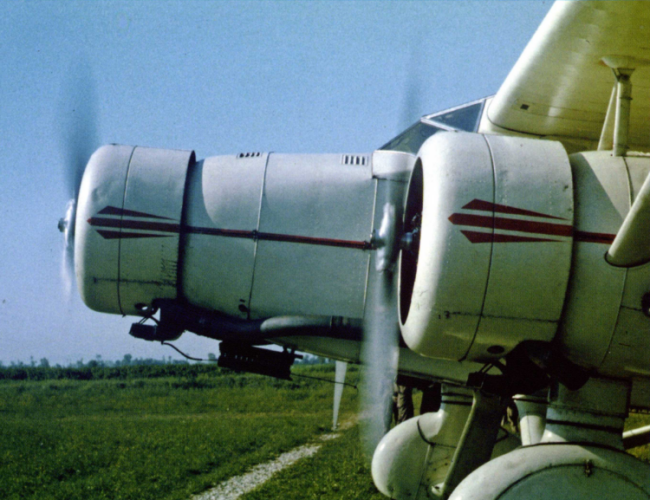
Avorio 5 seems more yellow than pink as it appears in Tavola 10. The following image of a
Caproni 133 could confirm this yellow hue, at least for Capronis and before the
introduction of Tavola 10. Also, Zaghetto and Verde observed that the Vito color exactly
matched a piece of fabric from a CR.32 (see). It
should be mentioned that Bianco Avorio 5 of Tavola 10 was intended for use on training aircraft after
1941 (Nardi 305, etc.), and doesn't necessarily match the previous Ivory color for colonial use.
|
|
|
Img. 1 - A colonial Ca.133 (Ref. Ali d'Italia No.20)
|
|
Chip (7). This is the first color not present in the CMPR palette. According to the text, it
was used by Macchi and Reggiane, as an alternative to Grigio Azzurro Chiaro 1. All post-1941
Macchi and Reggiane fighter color images show undersides of a light gray close to the classic
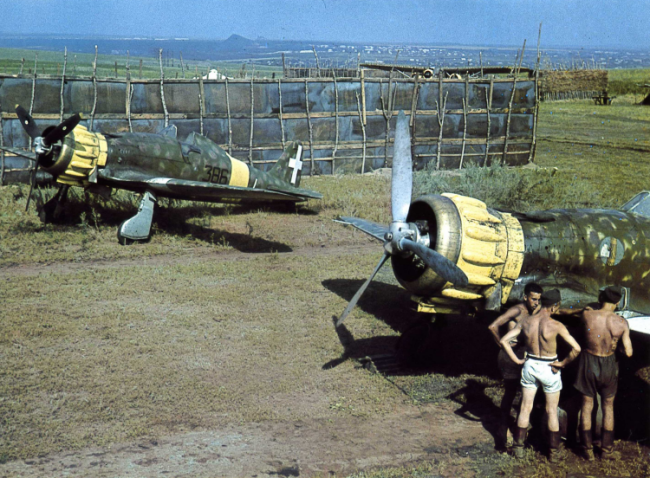
Grigio Azzurro Chiaro 1, but a color photo of a Macchi-built MC. 200 (386-4, formerly of 359ª
Squadriglia) in Ukraine, Summer 1942, clearly shows pale blue undersides, in contrast with the
gray of a Breda-built MC. 200 in the foreground (see undercarriage door between groundcrewmen
legs).
|
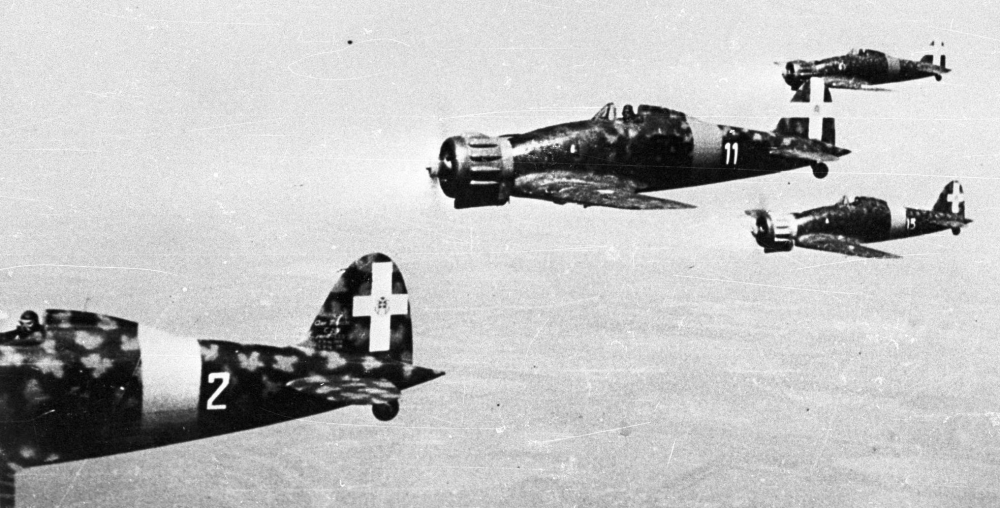
|
|
Img. 2 - C.200s of 21° Gruppo in Ukraine (Apostolo)
|
|
This could mean that this color was also used before the introduction of Tavola 10 other than
as a possible alternative to the "official" Grigio Azzurro Chiaro 1. Indeed, this color is on
the undersides of the C.200 relic in Museo Caproni at Trento, under a layer of overpainted "true"
Grigio Azzurro Chiaro 1 (FS 36307).
For Reggiane fighters, color photos show pale gray undersides (near FS 36622), so evidence is
lacking. It's possible that this paint was used for undersides of catapult-launched Re.2000
MM 8381, which had been experimentally painted blue uppersides (see chip (29)).
Chip (8) similar to Verde Mimetico 3. According to the Vitocharts it was used also on CZ.1007s.
Chip (9). According to Vitocharts, it was used by FIAT on monochrome aircraft and "green
lizard" FIAT fighter scheme (D1A scheme), possibly as a variant of Verde Oliva Scuro 2.
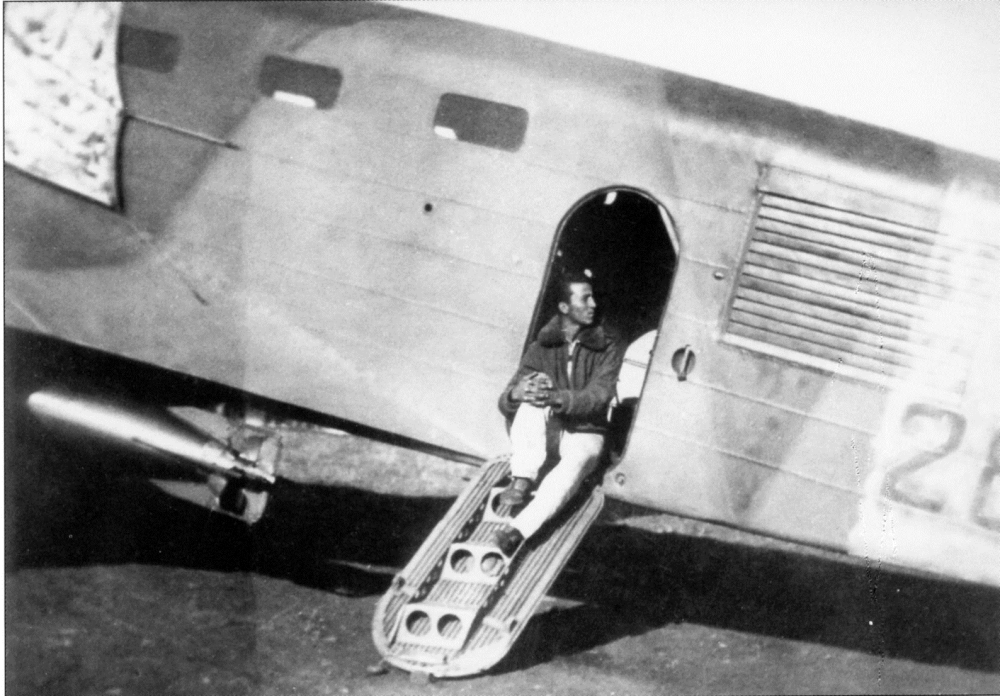
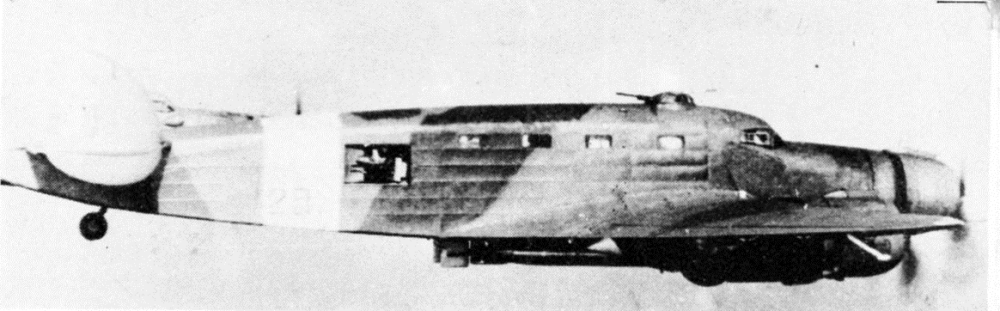
About its use in an experimental band camo scheme for S.84, the only pictures available I know
for such a pattern are the following, representing an aircraft of 282ª Squadriglia. Umberto
Postiglioni, in 1976, supposed that those three colors were the classic, pre-war green-yellow-brown,
while according to the Vitochart colors were (9), COLORE 3/Grigio Azzurro Scuro 3 and COLORE 12/Nero
12. No details by other sources are known for these colors.
|
Img. 3 and Img. 4 - A S.84 with an unusual band camo scheme. (Ermanno Albertelli)
|
Chip (10) is one of the more controversial, yet interesting colors. The chip caption suggests
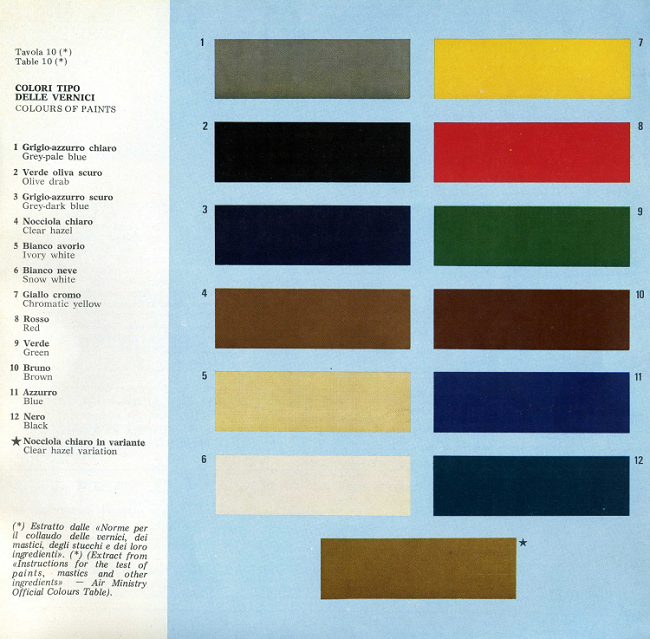
that it has been used as a sand-shade alternative to Nocciola Chiaro 4. A lighter version of the
latter had been previously proposed by Nino Arena and Giorgio Pini in a booklet on RA colors in
1975, but such a variant wasn't considered by CMPR.
|
|
Img. 5 - Tavola 10 palette colors in Arena-Pini's booklet (1975). Note
the Nocciola Chiaro 4 variant marked with an asterisk (*). (STEM-Mucchi)
|
The study of b/w pictures of Macchi fighters in 1942 and 1943 shows that in the early period this
paint appears somewhat lighter than in the late period (note the gray contrast of each with
respective undersides).
|
Img. 6 - (left) Brand new Macchi C.202 MM 7806 (serie III), early 1942. It was later
coded 90-1 and assigned to ace Cap. Ranieri Piccolmini in North Africa. (Apostolo)
|
|
Img. 7 - (right) Same view for a new Macchi C.205V MM 9338 (Serie I), April 1943.
This example enjoyed a good career, becoming soon after 360-4 then 85-1 with RA, and
then serving with II/JG77 and after the Armistice was passed to 2ª Squadriglia,
I Gruppo ANR (piloted by Ten. Oddone Colonna). (Apostolo)
|
|
Img. 8 and Img. 9 - A SAI-Ambrosini-built C.200 at Castelvetrano (Sicily) in Spring 1943 (left).
A Macchi C.205 Serie III MM 92298, ready to be delivered to the ANR, 1943 (right). The
darkness of the background in the latter is better evident by comparing respective colors with
the skin of the airmen. (Apostolo, D'Amico-Valentini)
|
|
Img. 10 and Img. 11 - A color comparison between a Breda-built C.202 of 1° Stormo
(left, note (Macchi-built) replaced wing) and a detail of C.205 Serie I 352-2
(MM 9244, right). Notwithstanding the differences in saturation and light incidence,
some color difference are evident. (LIFE, D'Amico-Valentini via Di Terlizzi)
|

Very close variants of this color are found on relics of Macchi-built fighters (FS 33473),
and on a rudder of a G.50bis in D1A scheme, owned by a private collector (FS 33303). We can
suppose they were the same paint, in which the hues had faded over time.
Chip (10) also has a good match with Giallo Mimetico 4, and since it was tested by CMPR on
the C.200 currently at the Museo dell'Aeronautica Militare at Vigna di Valle (Rome), before
its restoration, we could say that Giallo Mimetico 4 and (10) also possibly represent the
same paint.
|
Img. 12 - A CR.42 Serie X, camouflaged with D1A scheme. The lightness of the
blotches is evident. (Apostolo)
|
This was surely a standard paint: Umberto Postiglioni recalled that painters in Macchi factory nicknamed it
as 'mustard' ('senape' in Italian), and this was later confirmed by Riccardo Trotta in an article in
IPMS-Italy Magazine. In common sense, a brown like FS 30219 could hardly be coupled with a mustard hue. In
my opinion this lighter color wasn't a variant of FS 30219, but the 'true' Nocciola Chiaro 4, later replaced
by a darker version. Indeed, Nino Arena pointed out that after the loss of North Africa the use of a sand-like
camo had no further use, and a medium brown better matched the contintental environment. The only gathered
example of Tavola 10 is dated postwar (showing the mark of the Aeronautica Militare), so it's possible that
there was an early edition with a lighter hazel color.
In the following picture we can see C.200/202 fighters incidentally of all three builders
(Macchi/Breda/Ambrosini): a rudder of a Breda-built (D2A scheme), SAI Ambrosini-built
C.200 377-9 (C2 scheme) and a wing with a classic Aermacchi "smoke rings" or "amoebae"
(D3 scheme). All three wear standard post-Tavola 10 patterns, and all had the same background
paint: this indicates that this Nocciola Chiaro 4 variant was yet a standard paint.
|
Img. 13 - Overhaul in the open. This photo was taken in Palermo, Sicily, in Summer
1943. (Ermanno Albertelli)
|
This rare color photo has some other interesting points for discussion: the overturned wing in
the foreground has pale blue undersides (see above Chip (7)) and the aluminium-made wheel well
seems painted with a transparent gray-greenish paint (see below Chip (17)). Most of all, the
structural frame (internals) of the wing seems to be painted in Nocciola Chiaro 4 variant. Though
there is still no official evidence for such use in the war period, in Arena & Pini's book there are
documents suggesting it happened at least in 1948, so possibly painting the internals of the
aicraft could have occured sooner, as an expedient.
Among the colors of either the CMPR and Vitocharts, this is the one which better matches the
common sense of 'sand'. Probably, this same sand/mustard color was used 'in the field' to
cover darker camouflages of CR.32s (160ª Squadriglia of Cap. Fanali) and CMASA-built G.50s
(20° and 155° Gruppo), early in the war in North Africa.
|
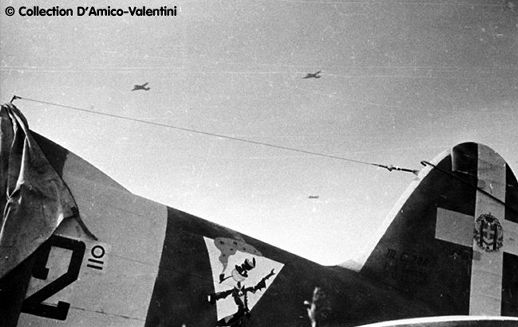
Img. 14 - CR.32quater 160-6 in North Africa, 1940. Note the small and dense spots to
cover the previous darker camouflage. (Garello)
|
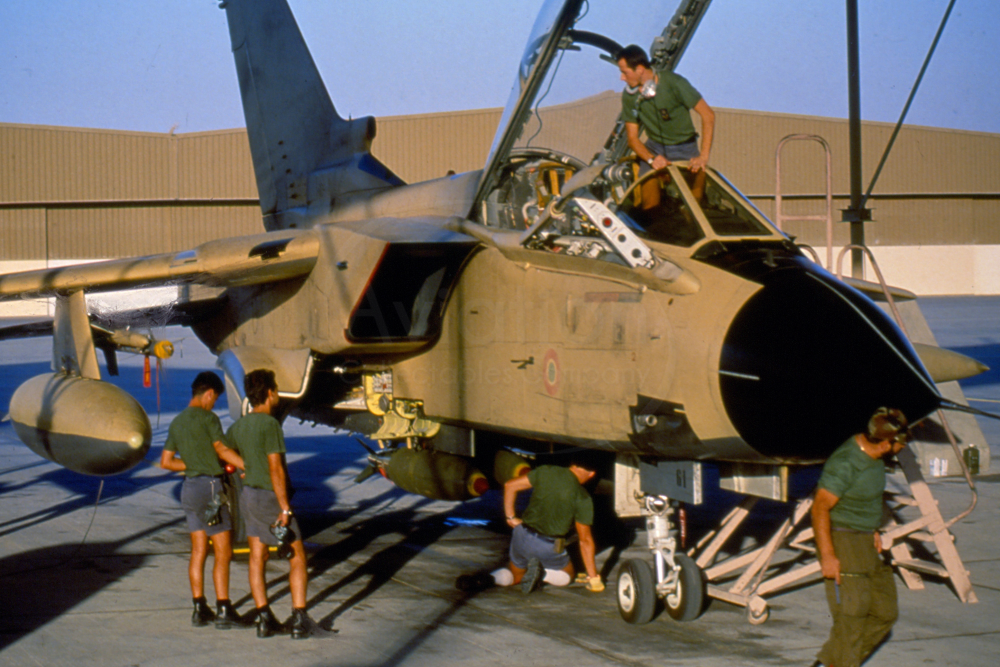
Lastly, and perhaps not a coincidence, the same FS 33448 is the current color No. 29 Giallo
Sabbia (sand yellow), an official paint (AA-M-P100/e) used by the Aeronautica Militare Italiana
to camouflage its Tornados during the Gulf War in 1991.
|
Img. 15 - Al Dhafra (UAE), February 1991. Tornado MM 7061 of Aeronautica Militare
Italiana (AMI) is armed for a mission during the Gulf-War. Usual payload was five 'slick'
Mk. 83s. (Aviation Collectibles Company)
|
Chip (11) and Chip (12) remind us that their use on undersurfaces in the first
period was wider than believed before, as it was applied for instance to the CR.42s at least
until the Serie V, but also to S.79s, early G.50s and C.200s; just in March-April 1941, in fact,
an order of Direzione Generale Costruzioni Armamenti prohibited it in favour to light gray. By
that date, as we will see, each factory adopted its own paint for undersides: pale blue (FIAT?),
light blue-gray (Macchi), medium bluish gray (CANT), light neutral gray. The latter could have
been kept and standardized by Tavola 10 as Grigio Azzurro Chiaro 1.
It's not known for sure why those two aluminium chips have been reproduced, both being very similar to each
other. As we will see, this is not a lone case in the Vito Chart palette.
Chip (13) and Chip (15) are very similar and partly with the same indications about
their use on the Channel front, a use which has still to be shown. Chip (15) is slightly darker
than (13). They both have a distinct gray or blue component, and either should represent a Verde
Salvia (sage green) color, widely witnessed by contemporaries and discussed until mid-70s, but
forgotten by then. This kind of color wasn't considered by CMPR, because it was possibly
mismatched with Verde Mimetico 1, which instead leans towards yellow. Even if the Vito Chart
text didn't indicate it for SIAI, there is some evidence that a graysh/bluish green did exist
and was used for S.79 for band-camouflaged early examples, as shown by the following original
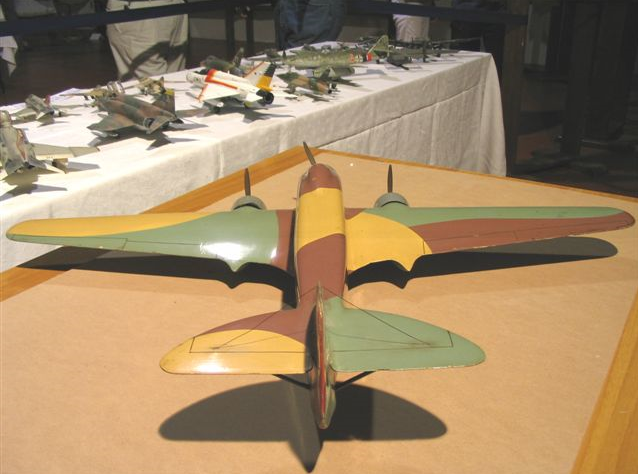
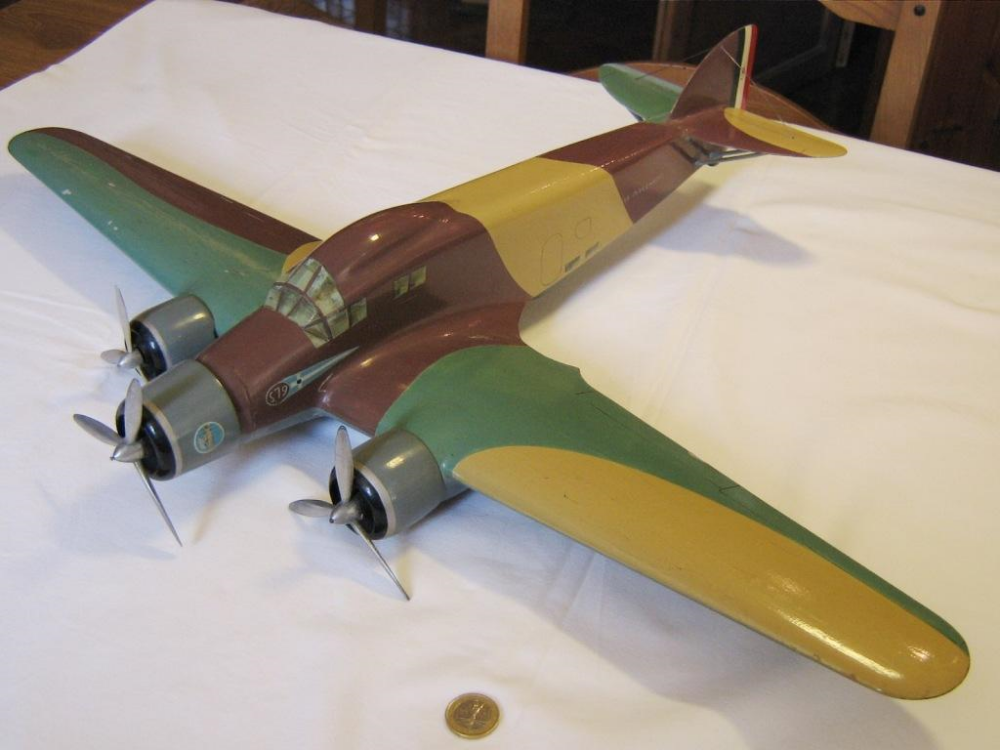
factory wood model, perhaps the same analysed by CMPR authors.
|
Imgs. 16, 17 and 18 - Views of an original wooden model of a S.79, in a band camo
scheme and painted with actual factory paints. (by the web)
|
About this model, CMPR stated that the yellow was Giallo Mimetico 3 -and this seems confirmed-
and found that the green was "very similar" to Verde Mimetico 1 and brown "very similar" to
Marrone Mimetico 2, but we can see that the green is surely bluish and closer to (13), and brown
is darker and less reddish than Marrone Mimetico 2, and it's closer to Vitocharts COLORE 10 or
better (28 - Bruno SIAI) with its purplish shade. Also, the gray seems more likely as (37)
and less bluish than Grigio Mimetico.
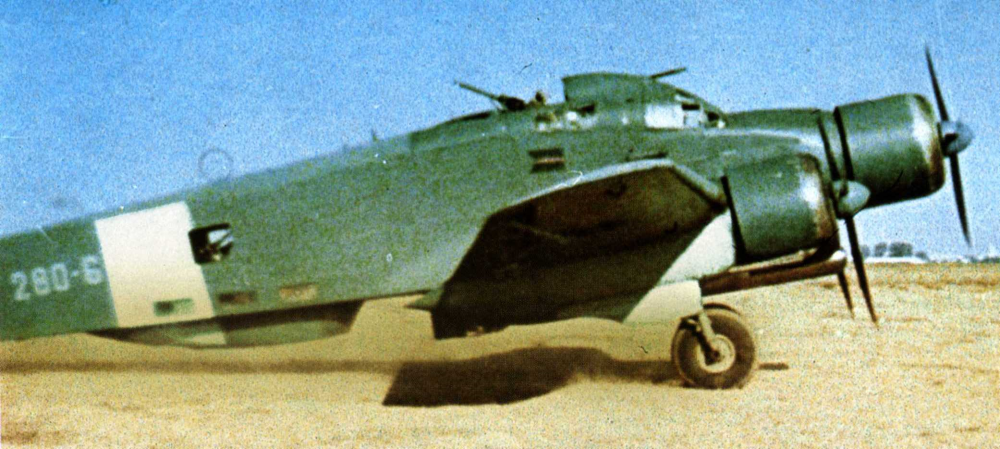
Moreover, a blue-green close to (15) was surely applied to 280ª Squadriglia's S.79 torpedo bombers,
as shown by this picture on 130° Gruppo CO's mount. A careful examination reveals that it didn't
wear the original factory finish, but had been repainted, surely to better match the sea color
of the Mediterranean. Pierluigi Moncalvo suggests that this paint could have also been field applied,
by simply mixing, for instance, standard Verde Oliva Scuro 2 and Grigio Azzurro Chiaro 1.
|
Img. 19 - Torpedo-bomber S.79 280-6 MM 23973. Piloted by legendary torpedo ace
Magg. Massimiliano Erasi who shared in the sinking of the sloop HMS Ibis at Algeri
harbour, on 10 November 1942. (Apostolo)
|
Chip (14) corresponds to Verde Mimetico 1, but the Vitocharts indicate its use also by
Breda and Caproni, other than SIAI and FIAT (CMPR). A possible application of this color can be
seen below on an early-serie Breda-built C.202s, which show bright green spots over ochre yellow.
It's interesting to compare those colors with the standard Verde Oliva Scuro 2 and Nocciola
Chiaro 4 (lighter variant) in the D3 scheme of the replaced wing.
|
Img. 20 - A color shot of a Breda-built C.202 Serie I 377-3 (formerly 168-11) MM 7948,
which shows the early Breda paints of ochre yellow (Giallo Mimetico 3/Vitocharts (25))
and bright green (Verde Mimetico 1/Vitocharts (14)). Note: the Breda-built
C.202 Serie I were at first painted green overall, then the yellow was sprayed over
leaving small 'worm-like' spots of green: watch the convexity of the yellow spray!
(via Moncalvo)
|
Chip (15): see (13).
Chip (16) and Chip (25) are virtually the same, the second being a bit darker,
and are equivalent to Giallo Mimetico 3. The indications about their use by factories matches
well, but CMPR states it also for CRDA, Reggiane and SIAI.
Chip (17) is hard to define chromatically, but the Vitocharts provide a formula to make it:
three parts of Humbrol 95 (Concrete) and one part of Humbrol 81 (Pale Yellow Matt). Its use
is confirmed by this image of the internal windshield frame of a Breda-built C.200
(note: Macchi-built planes were painted black). According to Zaghetto and Verde, it should be a
zinc-chromate varnish, also found in ANR G.55 relics and in Reggiane fighters.
|
Img. 21 - C.200 365-1 in Sicily, Summer 1941. (D'Amico-Valentini)
|
Chip (18) is a pale blue-green color, but less green than Verde Anticorrosione. In a
document by Caproni in the mid-thirties that provided steps for preparing interior metal parts:
- Thorough cleaning with sandpaper
- Washing with Methyl-Acetate
- One-layer spray of [Arson-SISI] Giomar transparent blue
- Kiln-dry until blue turns to green.
Could it be possible that variations in heat and treatment time of kiln-drying process led to various
degrees between blue and green? This is just a guess.
About its use on undersurfaces in FIAT fighters in Spain, stated by the Vitocharts, the only
explanation offered here is that Spanish skies are more often blue than gray.
Another possible clue comes from the camo description of the BR.20s of 13° Stormo in
June 1940 that stated: "The BR.20s [...] had a hazelnut brown background with dense spots of
green more or less dark. The undersurfaces of the fuselage and wings were painted with a metallic
sky blue."
By the way, in Img. 2 the C.200 in the foreground, the Piaggio P.1001 propeller blade shows a
pale blue similar to (18), as well as (7). Until at least 1941, indeed, propeller blades were
covered with a protective paint, sometimes gray, or silver, but mainly blue. This was not
standard in hue, and the color varied according to the factories: for instance, Fiat-Hamilton had
a light blue like FS 35448, while Alfa Romeo had a paler FS 35526 (this one personally checked
on a specimen). Rear faces of the blades were always matt black, but by 1941, propeller blades were
painted all black with (27) - or rarely with Colore 8- tips.
Chip (19) is similar to Giallo Mimetico 1. The Vitocharts indicate its use for band camo
in Caproni, SIAI and CANT, CMPR by FIAT (BR.20 band camo) and Nardi.
Chip (20) matches well with Verde Mimetico 53192, and is just a bit lighter than
COLORE 9. Both sources indicate its use by Caproni, CRDA, FIAT, Macchi and SIAI; Vitocharts
indicate it was also used for IMAM (band/patches camo).
Its use suggested by Vito, in the yet-seen "green lizard scheme" (in Italian, schema ramarro, D1A)
on G.55 prototype is however denied by the following color photo, which shows large spots of
Nocciola Chiaro 4 lighter variant.
|
Img. 22 - G.55 prototype. (Apostolo)
|
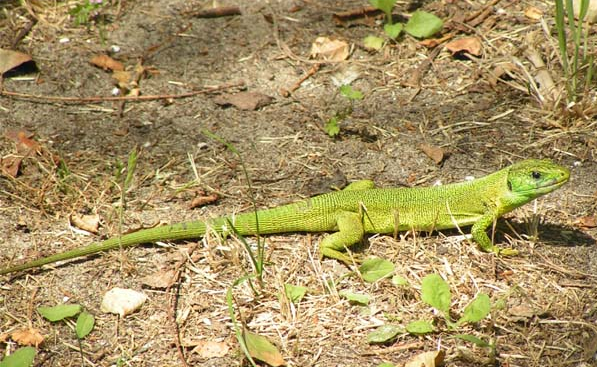
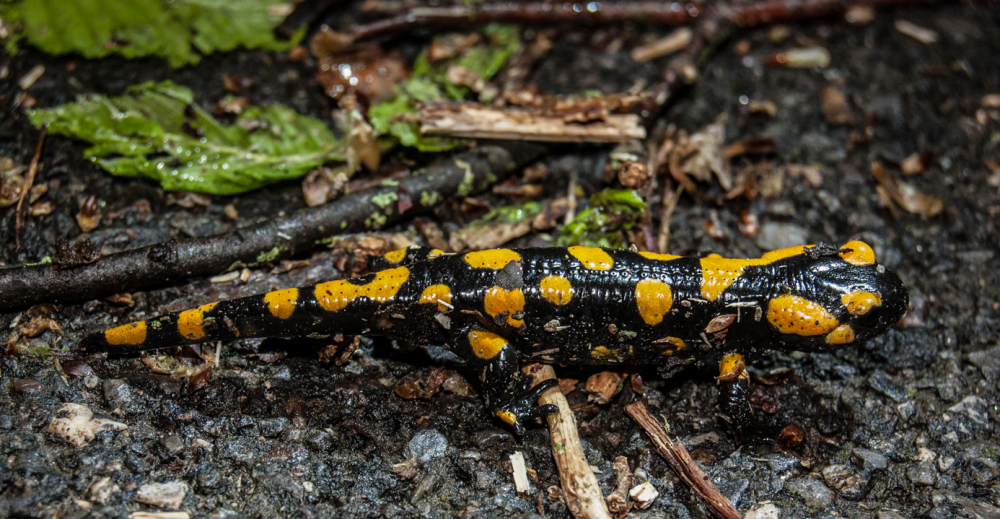
As a side note, whomever named this camo 'ramarro' surely wasn't an expert in zoology. In Europe, the
green lizard has nothing to share with that livery. Instead probably intending to refer to a salamander,
ignoring the differences between reptiles and amphibians.
|
Img. 23 and Img. 24 - Left: a ramarro (green lizard, Lacerta viridis), it lives in
Western Europe. (Wikipedia). Right: A salamander (Salamandra salamandra), common in
all of Continental Europe. (by the web)
|
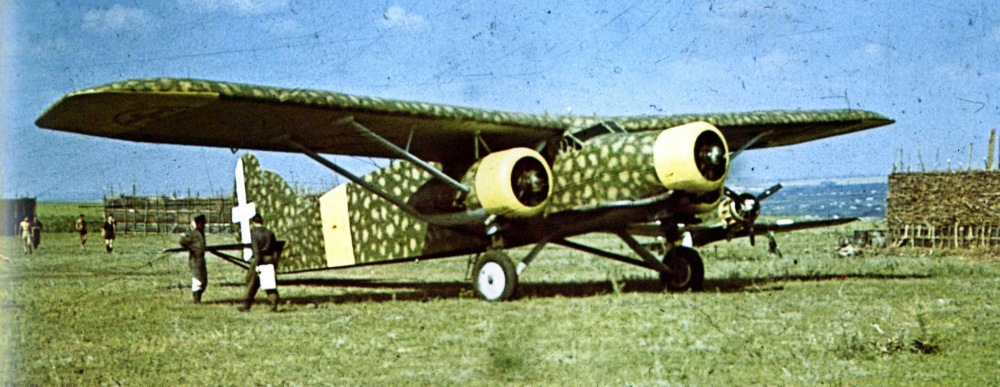
Another use of (20), this time with (16), has been suggested by Vitocharts for transport
aircraft; below we can see it on a Ca.133 in the Ukraine.
|
Img. 25 - A Ca.133 in Ukraine. The same plane is half-hidden in the background of
Img. 2 (Apostolo)
|
Though CMPR suggests Giallo Mimetico 3 and Verde Mimetico 3, I find the latter is a little too
dark, and (20)/Verde Mimetico 53192 is more suitable with this medium green. My opinion is
confirmed by the same CMPR book (2nd Ed.): reading the Tabelle II and III (pages
62 to 65) it appears that an original factory wooden model of a Ca.133 is camouflaged with Giallo
Mimetico 3 and Verde Mimetico 53192, i.e., respectively the Vitochart colors (16) and (20).
Chip (21) is similar to Bruno Mimetico, and, according to Vitocharts, it was used by IMAM,
SIAI and BR.20s sold to Japan (see Table 3). Other than
IMAM, CMPR suggests the use of Bruno Mimetico by Breda, Caproni, CRDA (1935-38), Macchi and Piaggio.
Chip (22) is close to Marrone Mimetico 53193. This range of color was used by FIAT, Breda
and SIAI (Vitocharts), and/or CRDA and SIAI (CMPR).
Chip (23) WWI related.
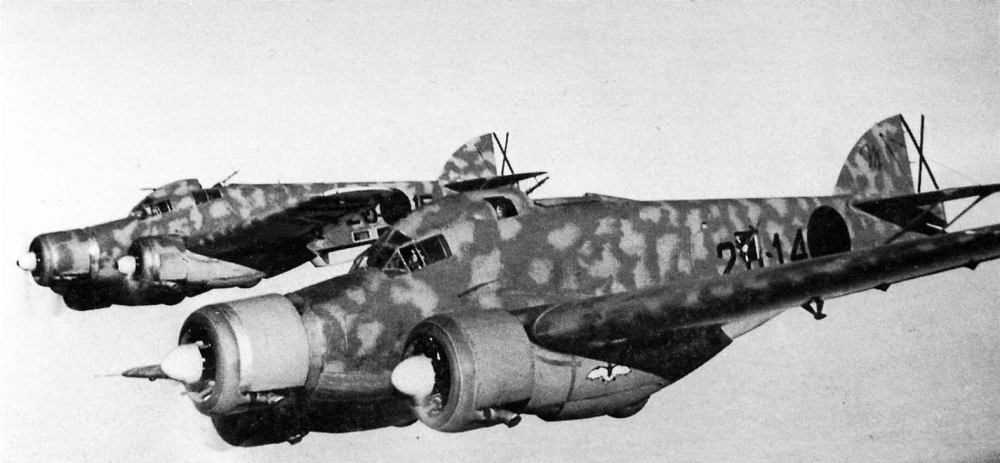
Chip (24). The comparison between it and Grigio Mimetico -the latter being just a bit
darker and less blue- suggests these colors could have been the same. Evidence of
not-so-light undersurfaces in some Aviazione Legionaria's aircraft is shown in several
pictures.
|
Img. 26 - S.79s over Spain (Pedriali/Aeronautica Militare)
|
|
Img. 27 - Viterbo (Italy), May 1941. CANT Z.1007s of 59ª Squadriglia show bluish gray undersides. (Apostolo)
|
Chip (25): see (16).
Chip (26) has no direct match with the CMPR. It's a very dark brown. According to Vitocharts,
it was used by Caproni and FIAT, but a further, possible use can be seen in Img. 2, where the
brown spots on the foreground, Breda-built C.200 are so dark that they could not be compared
with other chips, in both CMPR and Vito, than (26) (by the way, the other two colors should be
Verde Mimetico 3/(8) and Giallo Mimetico 3/(25), both suggested either by CMPR and Vitocharts
for Breda aircraft). About its use on band-camo of BR.20s, see below Chip (37).
Chip (27) and COLORE 7 are two insignia yellows. The first one is a lemon yellow,
whose FS comparison makes it closer to original Tavola 10's Giallo Cromo 7 than the Vitochart name.
We can also note that (27) is identical to the RLM 27 Gelb, as
represented in Michael Ullmann's book chip. Also, COLORE 7 is a darker, orange yellow
close to RLM 04. We can see (27) on the two Macchi 200s in Img. 2, and COLORE 7 in another
Saetta in Img. 21. It seems that both these yellows were used for the same purpose, depending
upon availability. Evidence of this comes from the following images, the first one
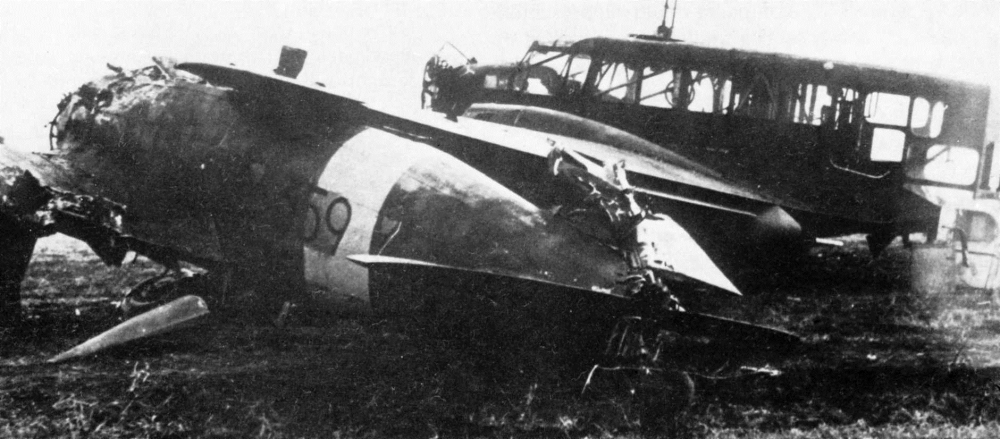
showing a C.200 damaged from a crashed landed Ca.311 at Kriwoy Rog on 19 October 1941. Due to its
red component, COLORE 7 appears darker than (27) in orthochromatic, unfiltered b/w films.
|
Img. 28 - The relic of C.200 359-4 MM 5148, probably the mount of ace Ten. Giovanni
Bonet. (Malizia)
|
Note that a new band color had been applied, contouring the Squadriglia digits which
had a darker background. Since there was no reason for a white band to have been applied
on the Eastern Front, it comes that (27) was painted over on the original COLORE 7. The
contrary happened on Magg. Borzoni's aircraft in Img. 29 (ordinal 2).
|
Img. 29 - The C.200 of Magg. Borzoni, CO of 22° Gruppo in Ukraine (D'Amico-Valentini)
|
Also, the following image shows two yellows on different aircraft: the two Macchis at the top have
darker cowlings and bands.
|
Img. 30 - C.200s of 21° Gruppo in flight over Ukraine. The two at the top are wing
camera-equipped C.200s, inherited by Sezione Cinematografica; in the very background
it's the former 81-12 MM 6867, previously flown by ace Cap. Maurizio Ruspoli.
(Istituto LUCE)
|
About the use of (27) for interiors, until a few years ago it seemed strange that zinc
chromate yellow was used in RA aircraft internal surfaces, as it seemed more suitable to a Mustang than
to a Regia Aeronautica fighter. The discovery of three ANR G.55 relics flown by Cap. Giulio
Torresi, Mar. Ennio Tarantola and Serg.M. Lucio Biagini, which were all shot down near Turin
on 25 April 1944, confirmed its use at least on G.55s' as a cockpit interior color, as shown in
the restored Centauro at Vigna di Valle museum.
Chip (28): no direct match with CMPR, other than COLORE 10 of Tavola 10, mentioned but
not reproduced. Its use by SIAI seems confirmed by an original model in Imgs. 16, 17 and 18.
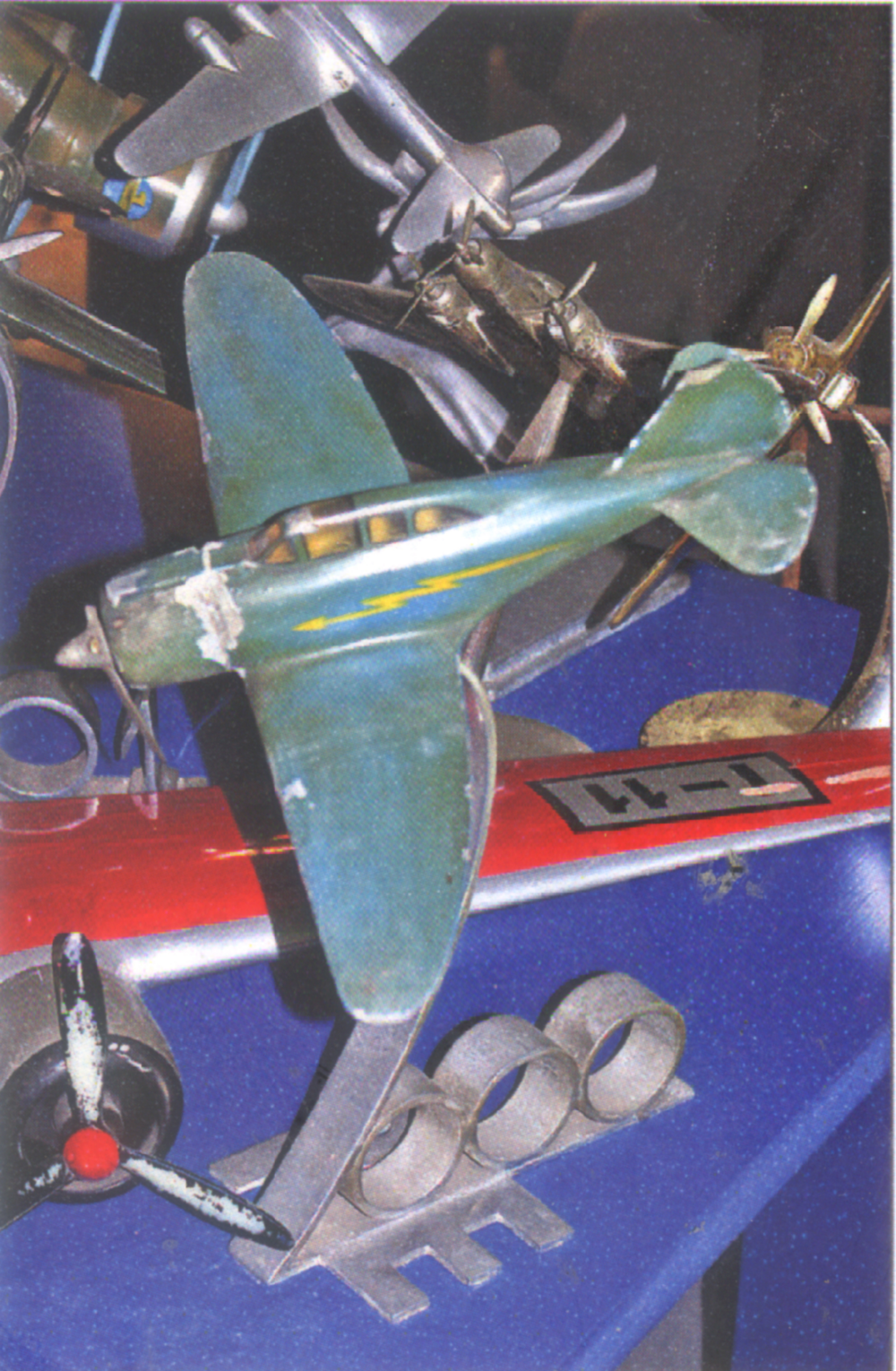
Chip (29): the use of a light blue color on catapult-launched Re.2000 MM 8381 has been
widely witnessed by the personnel who worked on the project, but this color wasn't considered
at all by CMPR. Possibly evidence of a blue for catapult-launched Re.2000s is an original
model currently on display at the Museo Caproni at Trento, Italy. This shows a blue paint which
matches FS 35177, indeed very close to (29).
|
Img. 31 - An original factory model of a Re.2000, painted blue, on display at
the Museo Caproni at Trento. Note the Futuristic-style stand (Michele Raus via
Riccardo Trotta)
|
Chip (30). This is another interesting color, with no direct match with CMPR although
it is somewhat similar, but darker, than Giallo Mimetico 2 and more grayish/greenish than Giallo
Mimetico 3. It's very similar to (10), but with a distinct green component. Its use is suggested,
with (20), for CR 32s in Spain...
|
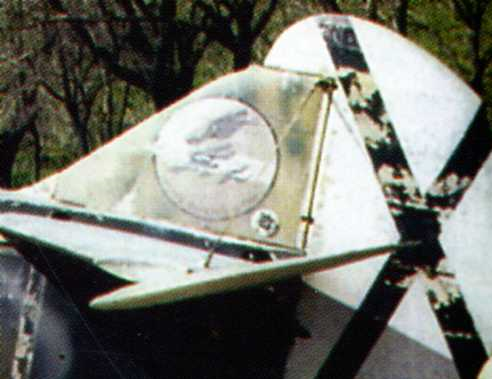
Img. 32 - The rudder of a Spanish CR.32 (Aerofan)
|
... but also used by Regia Aeronautica, as shown below.
|
Img. 33 - A CR.32 of a Flight School (Apostolo)
|
It should have been applied also on some CR.42 batches, and this goes to RAF Crash Enemy Aircraft
Report (see
Steven Eisenman's article) which mentions a "greenish yellow" color on CR.42 95-13
MM 5701 that crash-landed in Great Britain. This color is found also on a piece of fabric by
a CR.42 (MM still unknown) crashed in Asmara in October 1940. However, as suggested by
Pierluigi Moncalvo and Riccardo Trotta, this green hue could also have been applied by a soft overspray
of green over sand yellow.
|
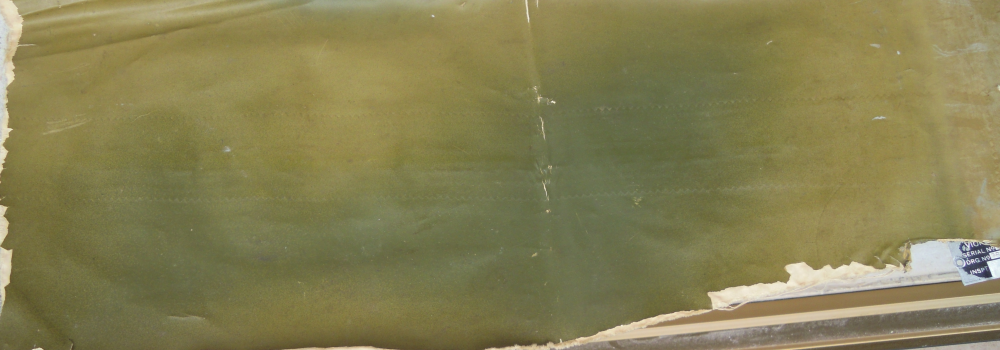
Img. 34 - A patch of fabric by a CR.42 crashed in Asmara, 1940. That FIAT was
flown by Serg. Gastone Simonetto (KiFA). (via Riccardo Trotta)
|
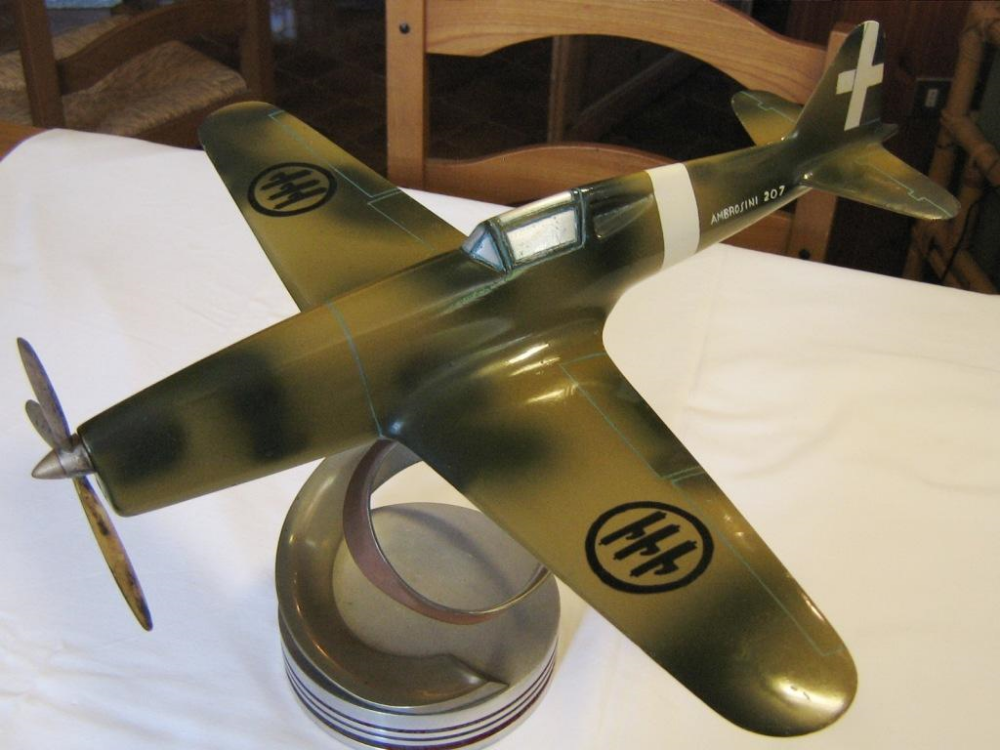
A greenish yellow color is also on an original wooden model of an Ambrosini 207 (a fighter which
actually never wore such a pattern).
|
Img. 35 - An original wooden model of a SAI-Ambrosini 207 (by the web).
|
COLORE 7: see (27).
COLORE 9: see (20).
COLORE 10. The existence of Vito's suggested all-brown band camo for
Japanese BR.20s cannot be proved. Gray tones in b/w pictures of them are similar to
Italian band-camouflaged examples.
|
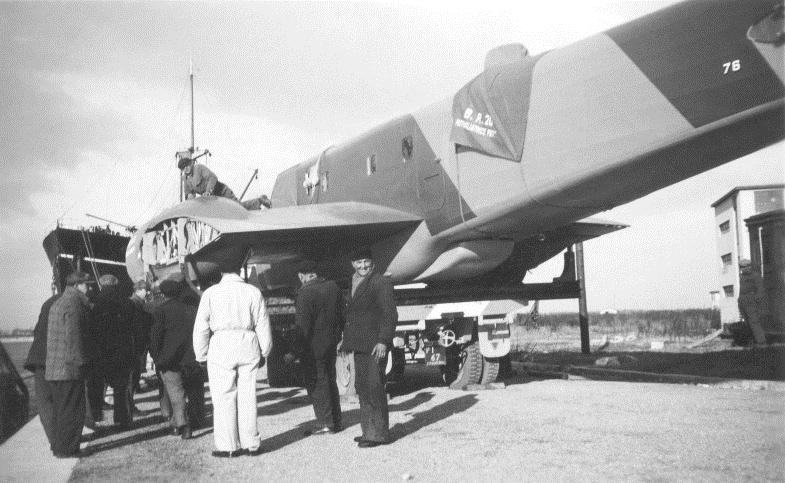
Img. 36 and Img. 37 - A band-camouflaged BR.20 is being shipped to Japan (left)
and a rare colour picture of an Italian example (right) (courtesy of Pierluigi
Moncalvo). Compare the latter with the scheme in Img. 39; for it, CMPR suggests
Verde Mimetico 1, Marrone Mimetico 1 and Giallo Mimetico 1, with Grigio Mimetico
or Alluminio undersides; Vito instead states (16), (20), (26), (37) and black.
|
Chip (37). This is a neutral gray, rather different by the bluish Grigio Mimetico and
rather close to the classic Grigio Azzurro Chiaro 1 chip in the Tavola 10; the latter, despite
its name, has no blue at all in its hue. This similarity should be not surprising, as a note of
20 March 1941, describing the painting of floatplanes with the colors of Tavola 10, ordered to
"use Grigio Azzurro Chiaro matt paint (Cat. No. 1008), yet in use, for undersides".
As we've seen, a gray like (37) can be seen on the undercarriage door between the personnel
legs in Img. 2.
Its use in band-camouflaged SIAI aircraft is hard to see in b/w photos, but it's clearly visible
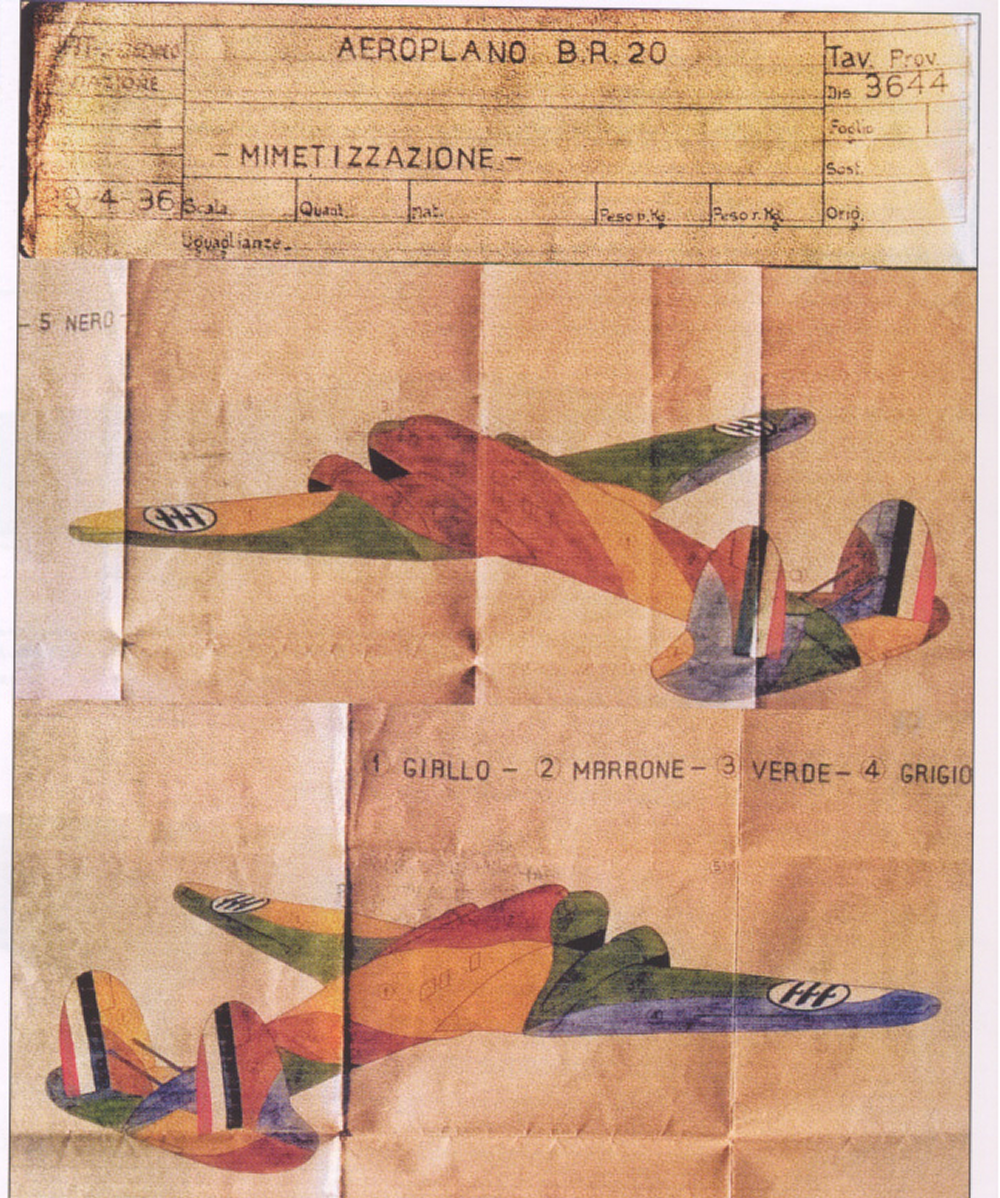
on the fin in Img. 37. However, the following image of a S.81 clearly shows a four-color band
scheme (see the starboard wing), whose pattern is the same as an official colored drawing for
BR.20 Img. 39. Note that the Vitocharts stressed that the hues varied for each factory, but the
application pattern was stated by the Authorities. According to CMPR, colors were Marrone
Mimetico 2 (the darker) Verde Mimetico 1 and Giallo Mimetico 3, with the adding of Grigio
Mimetico. The Vitocharts say the colors were COLORE 10, (19), (20) or COLORE 9, and "gray", often
(21) and (38), these perhaps as replacement respectively for (19) and COLORE 10. If we
logically consider the paints of the band-camouflaged S.81 seen above, colors should have been
(13), (16), COLORE 10 and (37). Indeed, the green areas seem very light.
|
Img. 38 - A band-camouflaged S.81 in the thirties. Compare this scheme with the following drawing. (CMPR)
|
|
Img. 39 - FIAT original drawing for a banded camouflage BR.20, possibly drawn
by the same Virginio Tosco. (IPMS Italy via Riccardo Trotta)
|
Chip (38): Same as Marrone Mimetico 2. Used by Breda, FIAT, SIAI and Caproni according
to Vitocharts, also by Piaggio, Reggiane and IMAM (but not by Breda), according to CMPR.
Chip (39): According to the text it was a mix used by Macchi. It's impossible to
differentiate it from Verde Oliva Scuro 2 in b/w photos.
CONCLUSIONS
In this study the CMPR and Vitochart chips have been discussed and compared where matches
were possible. We can say that most of the colors can be positively coupled. The Vitocharts provide
some paints that were ignored by CMPR, the existence of most of them can now be proved. The 'new'
colors are:
- A different Ivory hue for Avorio Chiaro 5
- A 'true' light blue-gray for at least Macchi (and Reggiane?) undersides, a color
which probably preceded Tavola 10's Grigio Azzurro Chiaro 1 and, possibly, later an
alternative to it
- Another type of Aluminum paint for undersides
- Two types of sage green, a color ignored or mismatched by CMPR
- A transparent, anticorrosive lacquer for aluminum, for interior parts
- Two types of light blue for undersides
- Two types of yellow, one of them used for interiors (zinc chromate)
- More variants of reddish brown
- A dark chocolate brown
- The blue used for catapult-launched Re.2000, witnessed by contemporaries and whose hue
was just guessed at
Of course, this study is far from conclusive, and its primary aim is to convey that published
treatments of this topic such as the CMPR should not be treated as dogma. The CMPR study is still
valid, but perhaps incomplete. And perhaps additional research into this topic should commence to
improve our knowledge still further.
REFERENCES
1 Club Modellismo Plastico Ravenna (Plastic Model Club in Ravenna)
2 Gruppo Modellistico Trentino (Model Group of Trento)
3 Gruppo Amici Velivoli Storici (Historical Aircraft Friends Group, an
Italian association to recover and restore historical aircraft)
4 CMPR book found this document (STATAEREO, n. 33815 of 8/7/1937), but lacking of the
attachments with the schemes, it supposed the following patterns: "A/Spring" green, brown and yellow; "B/summer-autumn" green and yellow; "C/autumn-winter" green and brown.
5 Reference to CMPR book, 2nd ed. (see article)
6 Corpo Aereo Italiano - Italian Air Force [Expeditionary] Corp (to the Channel front)
7 Operazioni Militari in Spagna - Military Operations in Spain
8 Organizzazione Roma - the Italian project for ship-launched fighters
BIBLIOGRAPHY
[1] Nino Arena-Giorgio Pini, Schemi e Colori Mimetici dell'Aeronautica Militare Italiana, STEM-Mucchi, Modena, 1975
[2] Umberto Postiglioni-Andrea Degl'Innocenti, Colori e Schemi Mimetici della Regia Aeronautica 1935-1943, CMPR, Ravenna, 1977
[3] Francesco Romanelli, 13° Stormo - Cronistoria del reparto dal 1924 al 1943, Ufficio Storico Stato Maggiore Aeronautica, Rome, 1978
[4] Nicola Malizia, Ali nella steppa, Edizioni dell'Ateneo, Rome, 1987
[5] Nino Arena, Macchi 205 "Veltro", STEM Mucchi, Modena, 1994 (reprint)
[6] Umberto Postiglioni-Andrea Degl'Innocenti, Colori e Schemi Mimetici della Regia Aeronautica 1935-1943, 2nd edition, revised by Gregory Alegi-Marco Gueli-Paolo Varriale, CMPR-GAVS-GMT, Trento, 1994
[7] Michael Ullmann, Luftwaffe Colors 1935-1945, Hikoki Publications, Ottringham, 2002, ISBN 1-902109-34-1
[8] IPMS Italy via Riccardo Trotta
|