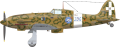
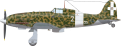
Welcome Crazyflytox/Thierry,
We’re very happy you joined us, and of your interest in RA aircraft too, as your artworks are superb and with an amazing detail care.
I hope you’ll appreciate some notes and suggestions on the subjects you kindly sent us, even for future references.
Here is the picture of original G.50 bis 378-8, whose the MM was 6384 (serie VII built by CMASA)
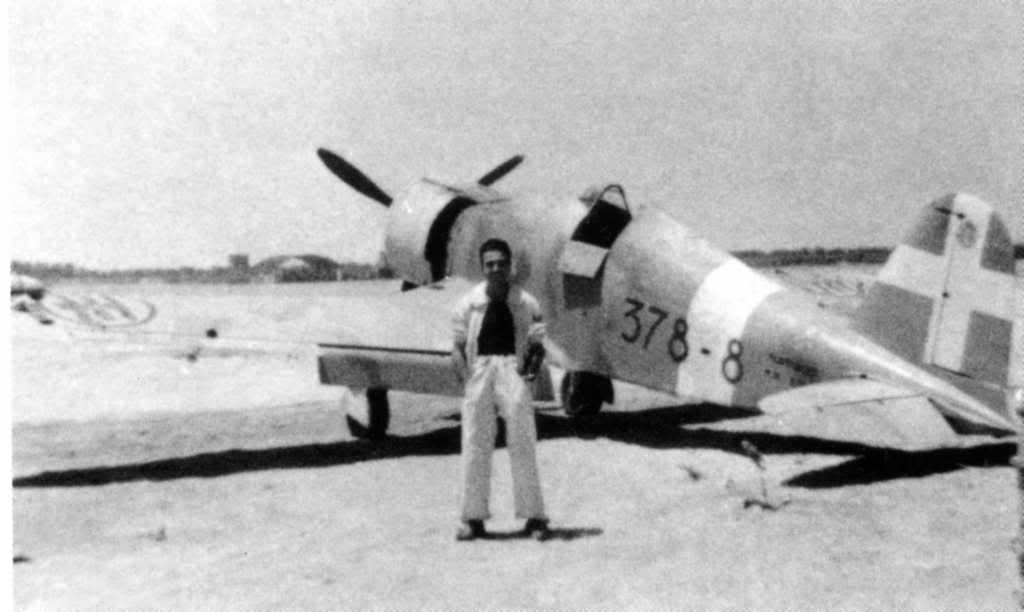
(source: Bussi-Raucci, Pantere)
The subject has yet been discussed in this forum:
http://stormomagazine.com/phpbb2/viewto ... ght=buvoli
After four years by my post, and further researches, I changed some opinions about the colours applied. That’s why. There is evidence that CMASA-built aircraft (mainly in 155° Gruppo, but also some of 20°) in North Africa were oversprayed with sand, while FIAT- built (mainly in the fellow 20° Gruppo) in the same theatre and time were not. The reason was likely because the first had a dark appearance, for a more dense and round-shaped dark green and reddish brown spots over sand or light green background (there is a colour photo evidence for the latter). The FIAT-built, instead, had thin, long, oblique mottling of dark green and neutral or reddish brown over ochre yellow, that better matched the desert environment. Here is a comparison between those original liveries: the FIAT…
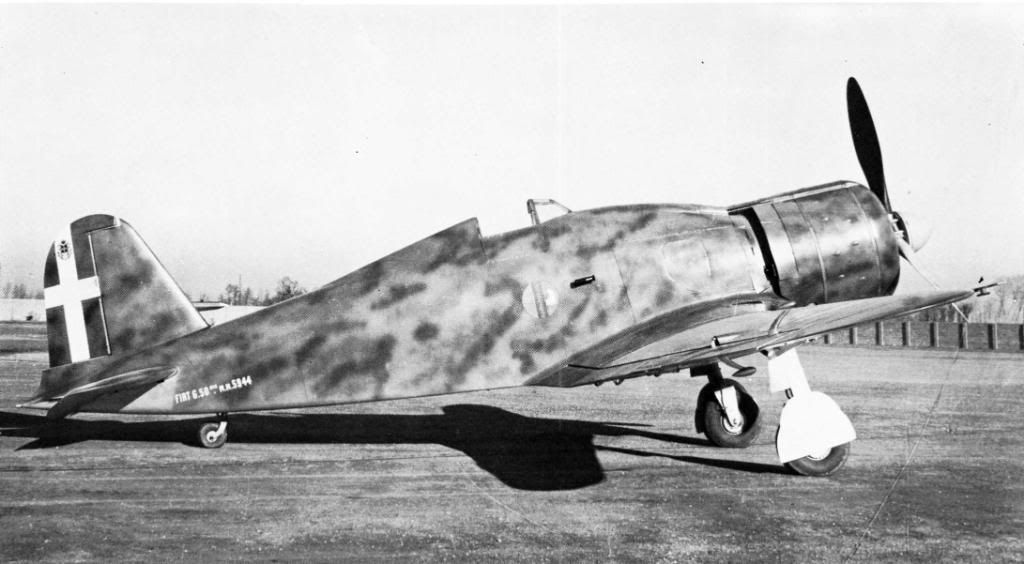
(source: Aerofan 1/84)
…and the CMASA serie VII in its original livery
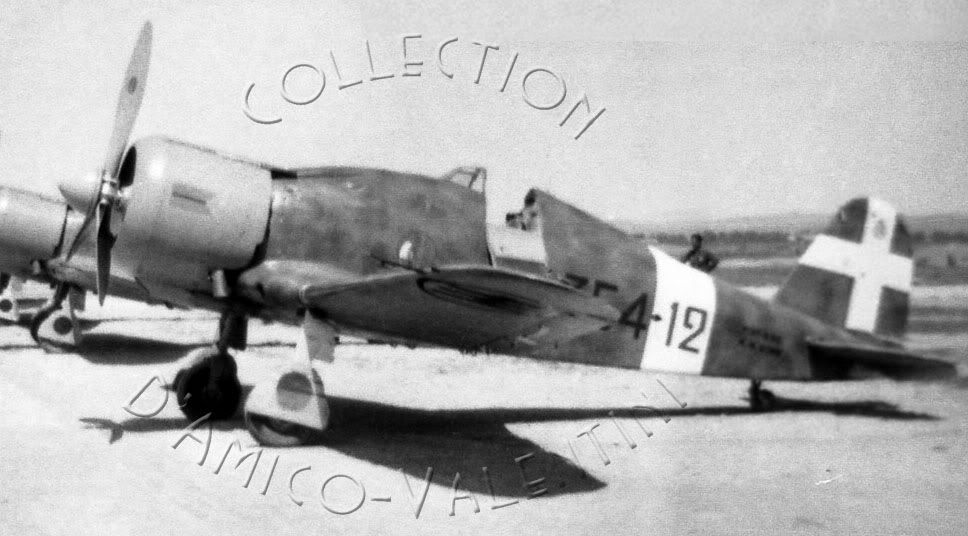
(courtesy of Ferdinando D’Amico)
The pattern of overspraying varied according to personnel skill; in Buvoli’s aircraft it left long streaks of underlying colour, that likely wasn’t homogeneous for the reasons as above. As for the exact hue of the sand colour, I think it’s useless to guess it among the CMPR chips, as in late 35 years several colours not listed had been discovered. Logically, it’s not wrong to think that they possibly used Regio Esercito paints: I think that Giallo Sabbia Chiaro (Lifecolor UA217, sorry no standard reference) could be a credible option. Anyway, I believe that the sand colour in your profile is a good choice.
Referring again to my post, I’m now still not sure in white wingtips, as other examples of the unit hadn’t them.
The spinner in the original photo is not visible, but in fellow 20° Gruppo they were in the original light blue, as well as the front face of propellers blades were. Checking other images, I’ve seen that even in other units the spinners weren’t yellow, when the cowlings did were, so I suppose that this was a common practice for G.50s. In b/w pictures, however, light blue and yellow are often hardly distinguishable. Propeller blades had each a logo: here is it, by a relic of a CR.42 (propellers were the same). Note the light blue. Words are ELICHE FIAT A PASSO VARIABLE (Variable Pitch FIAT Propellers)
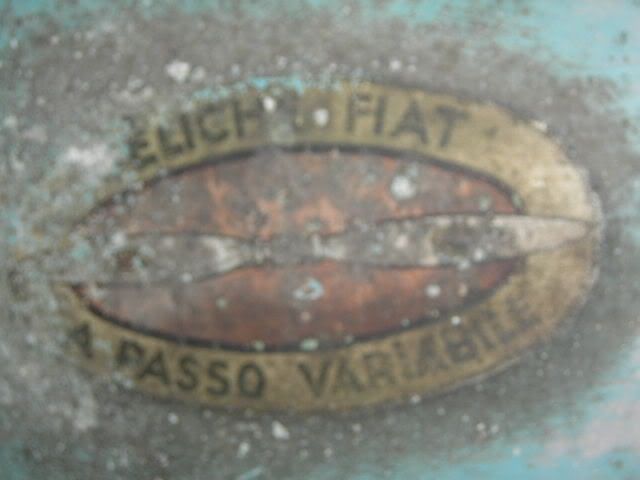
(source: internet)
A modern reproduction of the logo
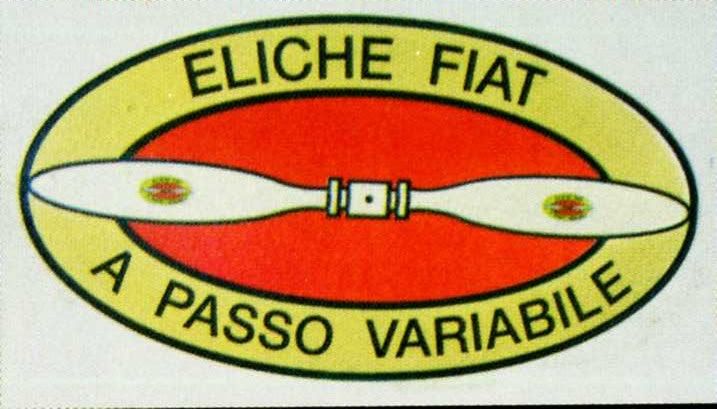
(source: Air Kit News no. 25)
I agree with the lacking of MG flash suppressor tubes. Sorry, I didn’t realize it before.
A note on the fuselage fascio, that was applied on the aircraft as a decal. The light blue background was used before- or early in the war. The background became quite soon dark lead gray, see picture below.
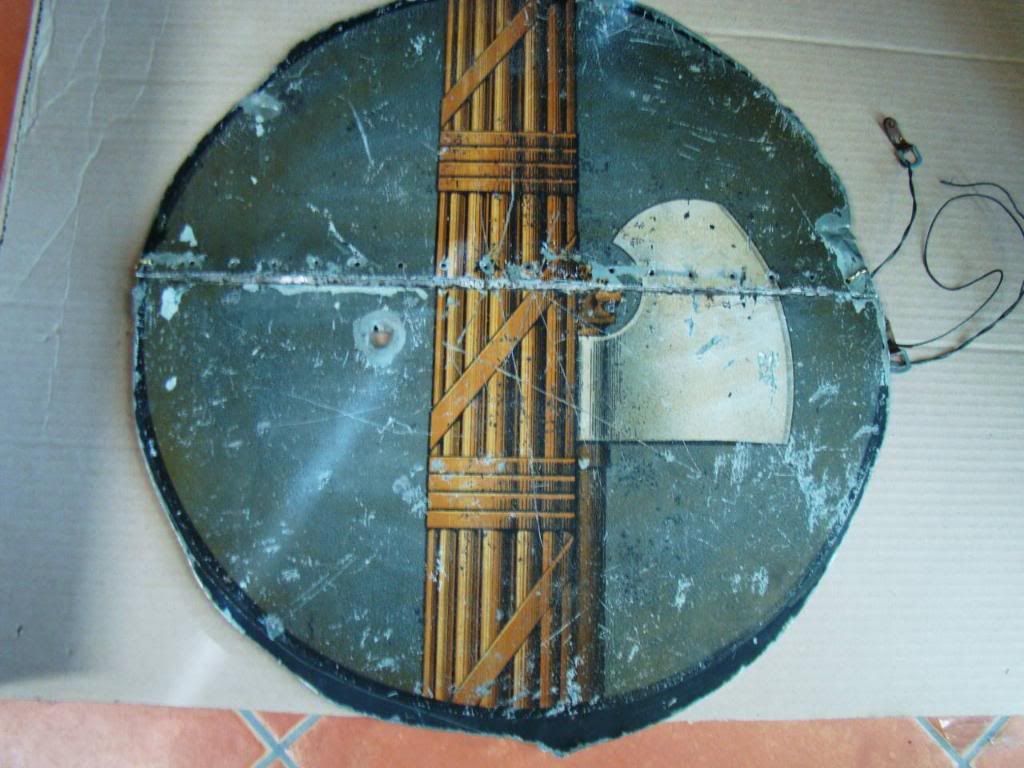
(source: forum in
www.150gct.it)
Here is a picture of original MC.200 372-5.
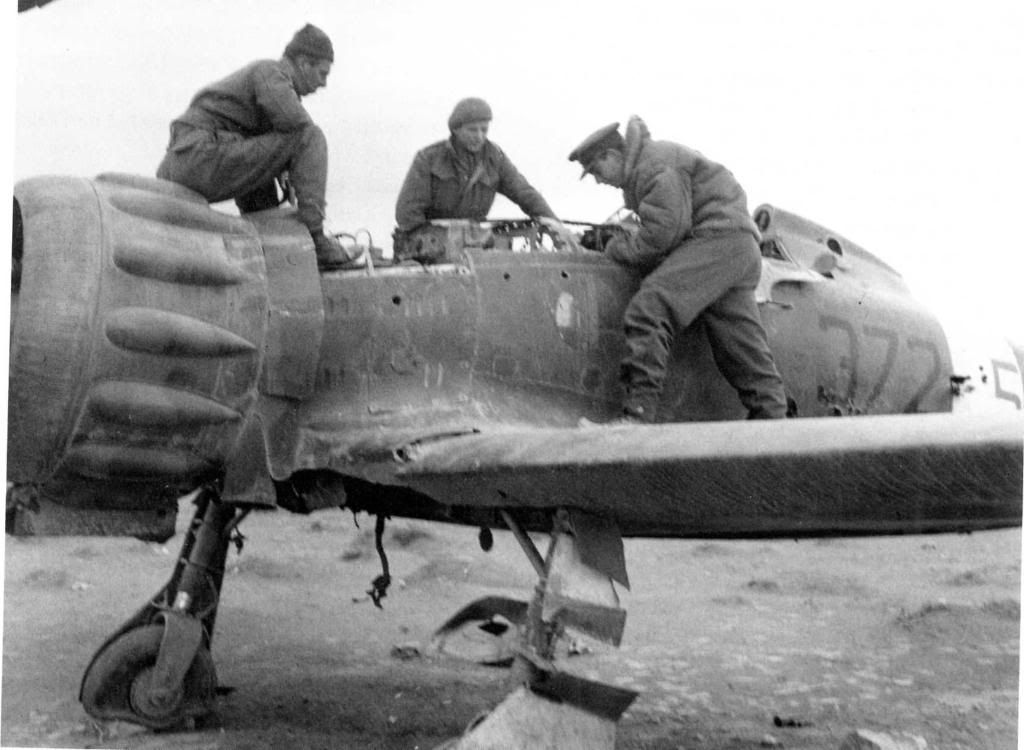
(Source: IWM via Aerofan no. 83)
The main question is whether it was a Breda- or a SAI Ambrosini-built. They were distinguishable through the shape of tail cross: vertical arms shorter in Breda, and as you depicted it in SAI. In the picture above the tail is sadly not visible.
Here are pictures of ‘200s by both factories, same unit.
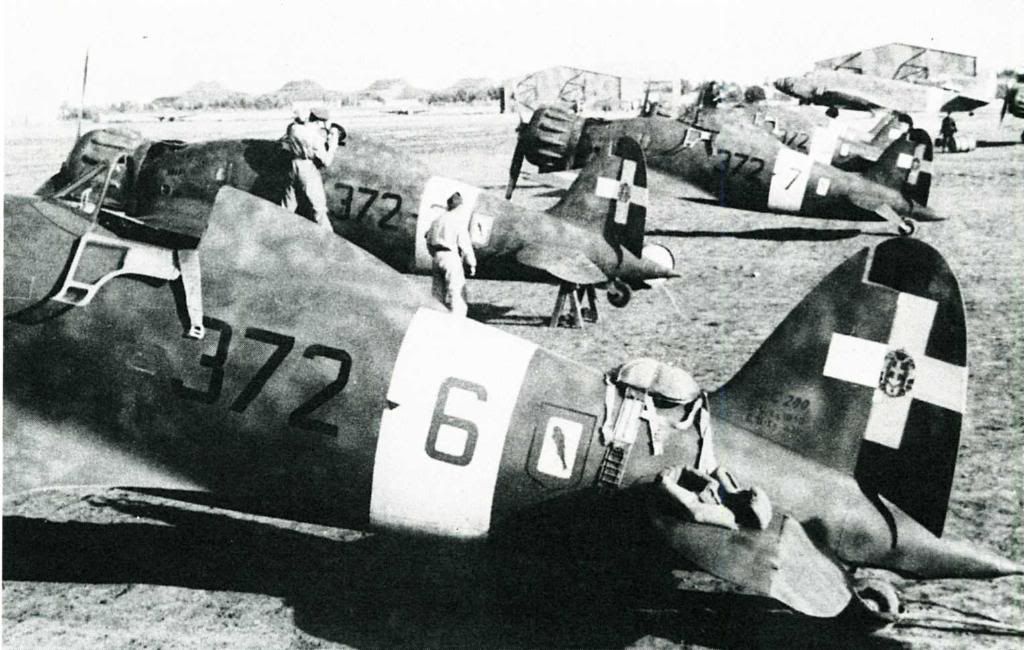
(source: M. Di Terlizzi, Macchi MC.200 Saetta part 1, ISBN 88-86815-70-0)
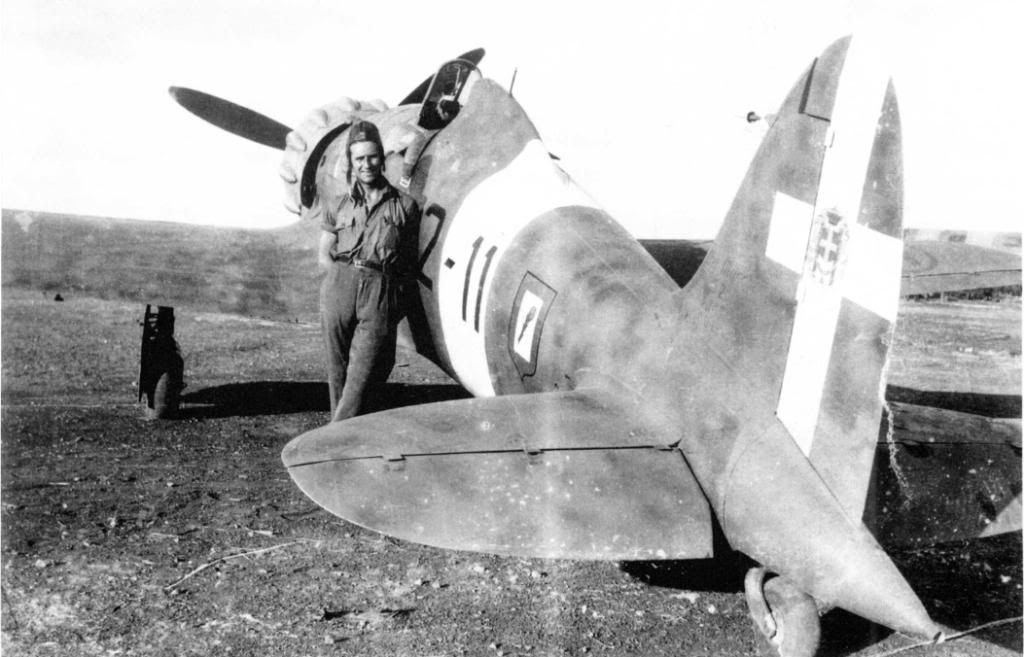
(source: Aerofan no. 83)
Also the fin writings were different: you depicted the Breda-style, while SAI were similar to Macchi-built aircraft (weights varied according to the serie).
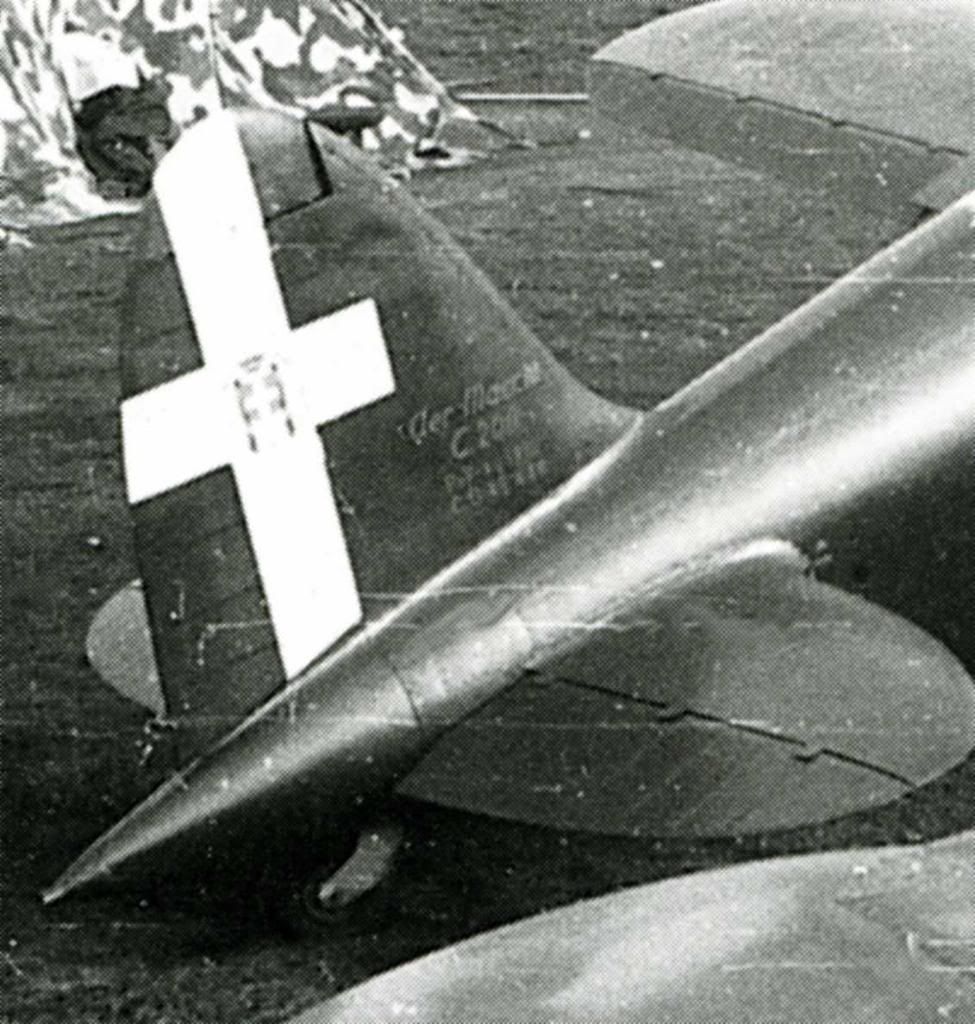

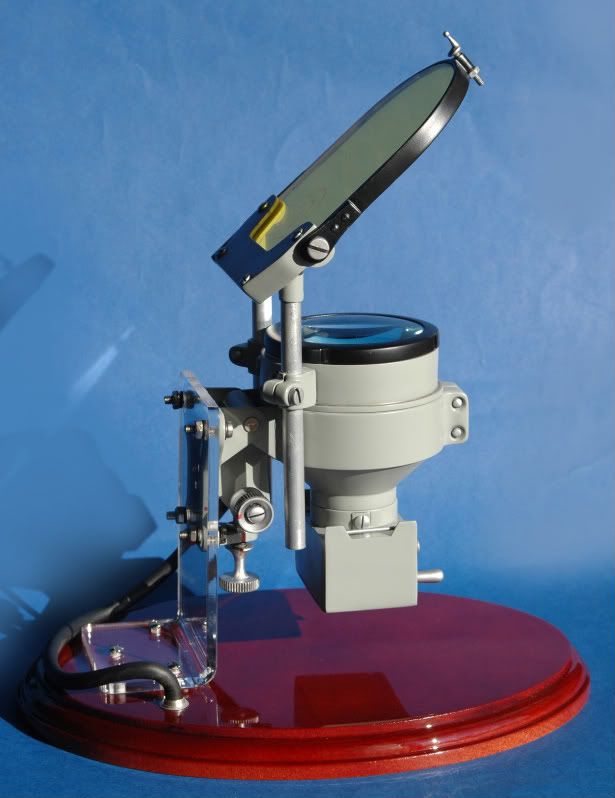
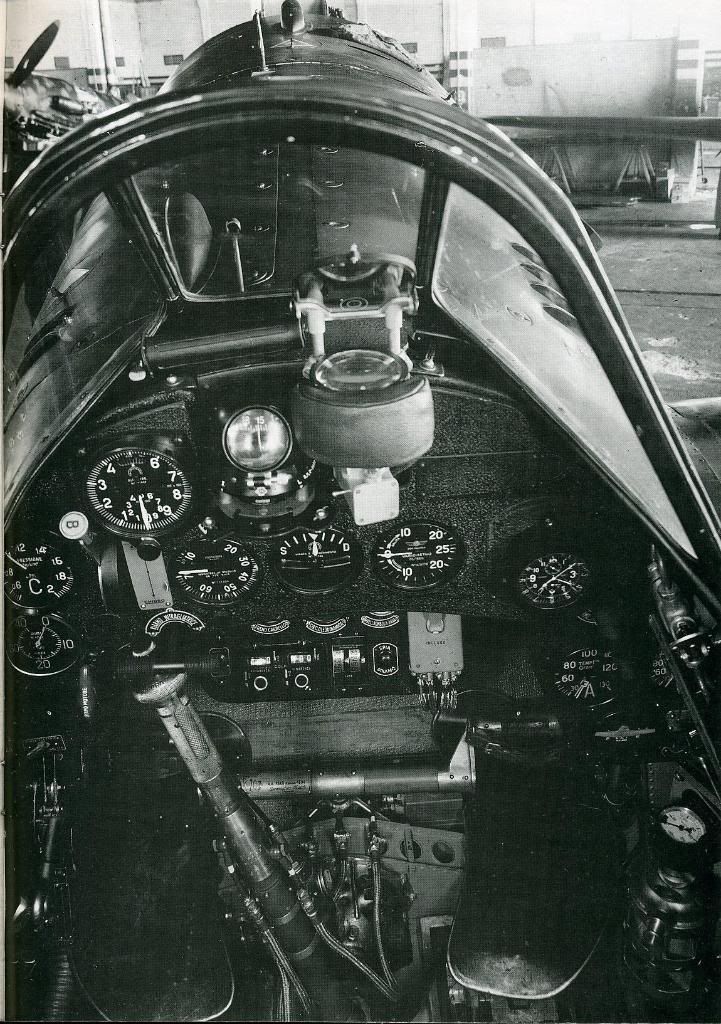
Note that operative devices often had a leather cushion to prevent shock during hard landings.
I hope these references are useful for your artworks.
Awaiting for your future masterpieces, we wish you a good work.
Ciao
Stefano
 [/url]