Over the years, the fuselage-side colors of the Messerschmitt Bf.109G have come-up enough times that I thought I would address the topic formally.
And the answer to this seemingly simple question is unfortunately not a short-one either.
However, before getting started, the thing to keep in mind when dealing with German WWII colors and camouflage is that the subject is in constant flux, as well as the vastness of the subject.
The confusion around this topic centers around
the camouflage colors observed on the sides of the Messerschmitt Bf.109G. Various authors, kit and decal manufactures indicate the colors to be
mottles consisting of 70/02, 70/02/75, 74/75/02 or even 70/02/74. Lets look at a couple of examples of these suggested colors.
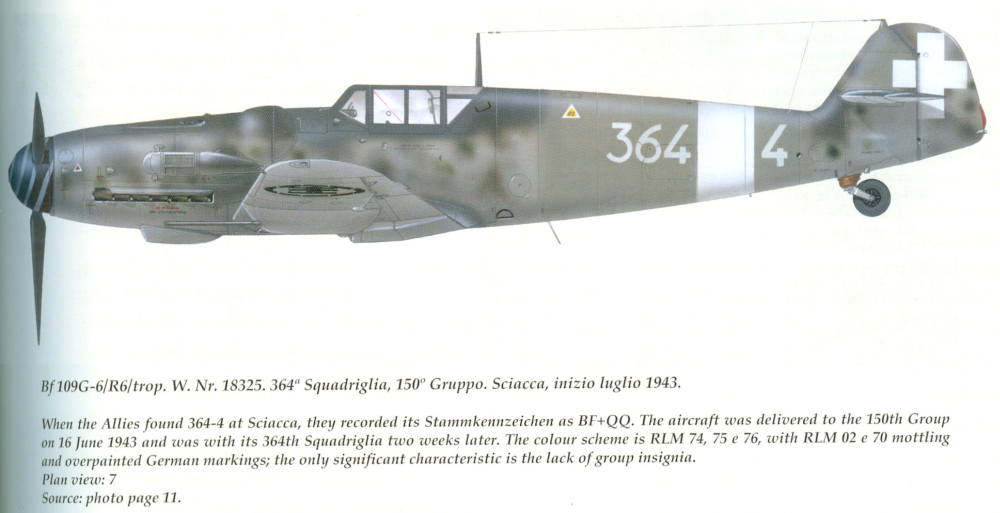
Mottles of 70/02 or 70/02/75 are quiet commonly referred to in references and an example is given below in Ali Straniere in Italia #1 Messerschmitt Bf.109 [1] (Profile 1),
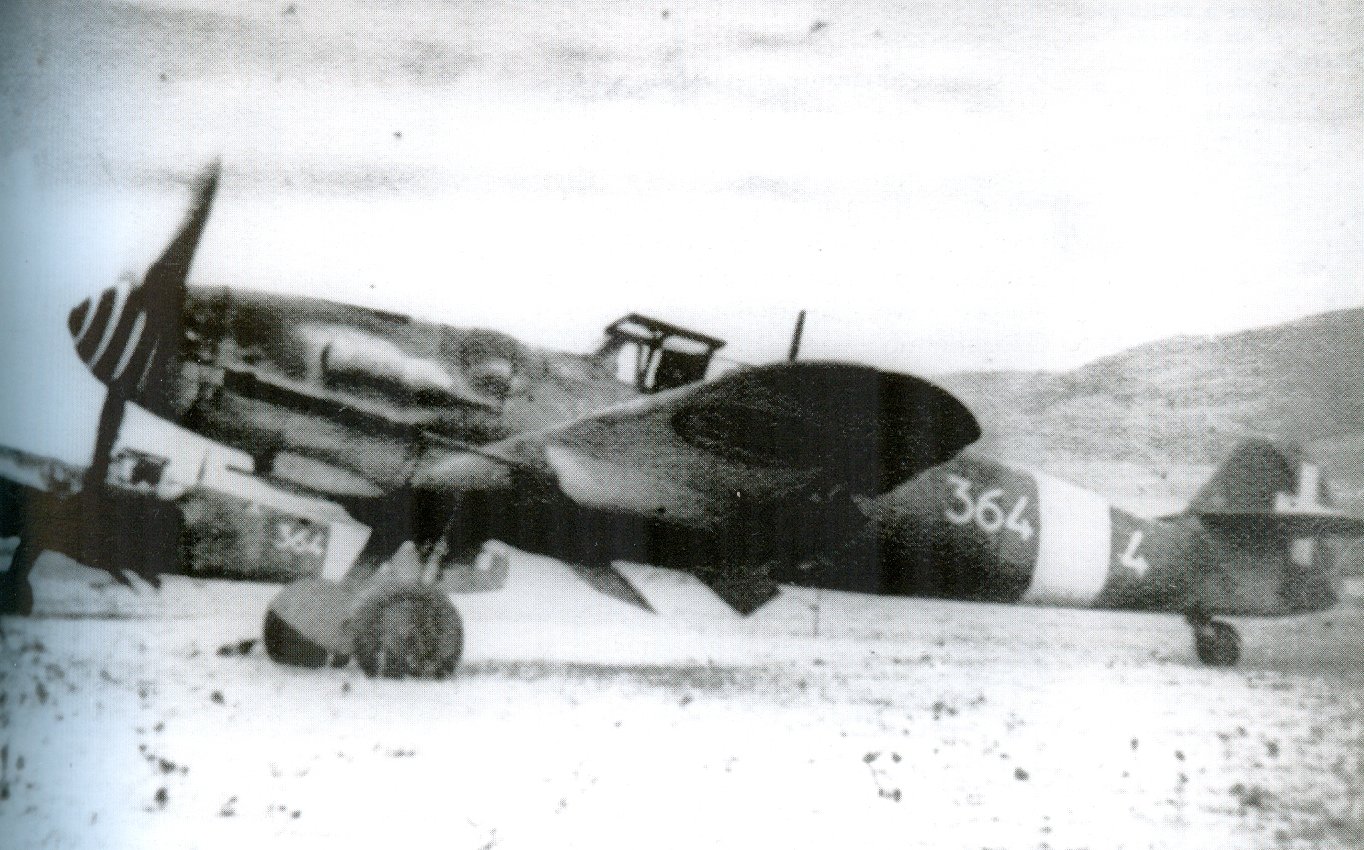
together with a corresponding photo (Img. 1). The profile shows a typical Erla-style camouflage scheme, however from Img. 1, a diagonal band over the cowling,
as well as darkened paint around the cockpit that extends forward of the 'buele' (gun bulges ahead of the winscreen) with no mottles aft of the diagonal band suggest the plane
was in fact a Mtt Reg built machine. However, more importantly a clue to its origins is given in the caption, W.Nr.18325, which indicates that this a/c belonged to block 18000-18899 [2]
manufactured by Messerschmitt AG Regensburg (Mtt Reg). Aft of the white band (as well as ahead and aft of the cockpit), German markings have been completely sprayed over, quiet
common to RA, and later to ANR machines. The caption reads "02 and 70 mottling".
|
|
Profile. 1 - Bf.109G-6/R6/trop 364-4, W.Nr.18325 with mottled sides in 02/70. [1]
|
|
|
|
Img. 1 - The photo corresponding to Profile 1 above, note the absence of mottles on the fuselage sides, and the typical
diagonal bands observed on Mtt Reg built machines, as well as the heavily painted-over rear fuselage, common to RA Bf.109s. [1]
|
|
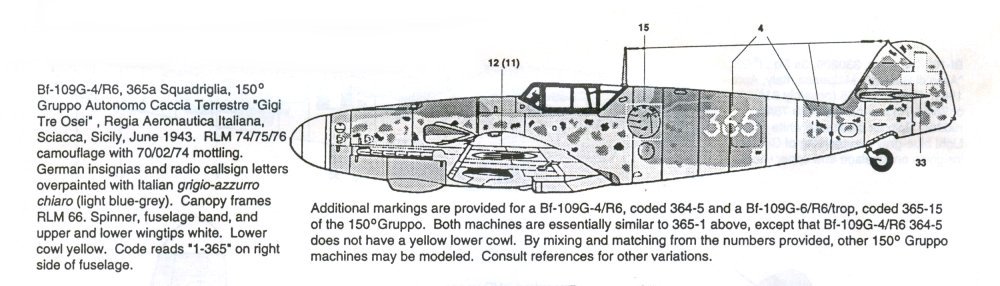
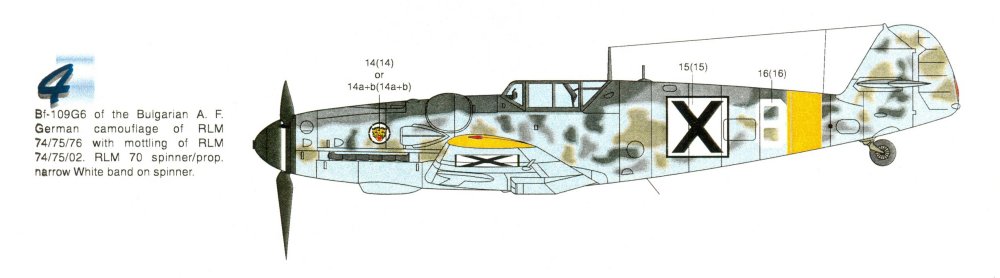
Here are two more examples from
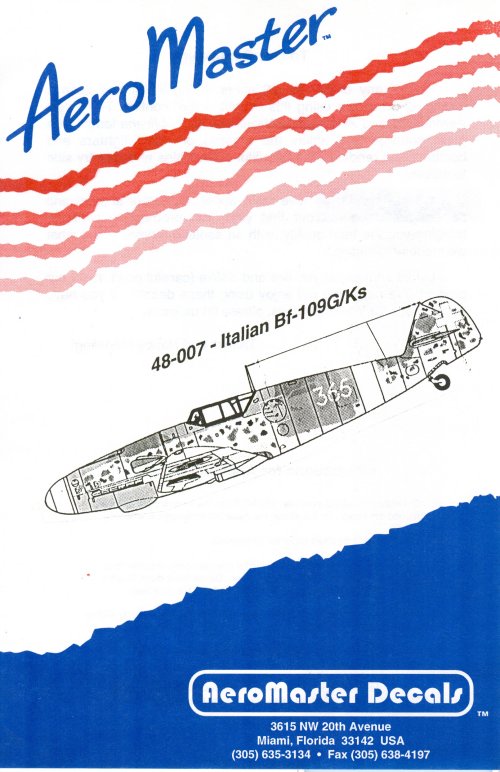
the mottles are stated to be 70/02/74 and
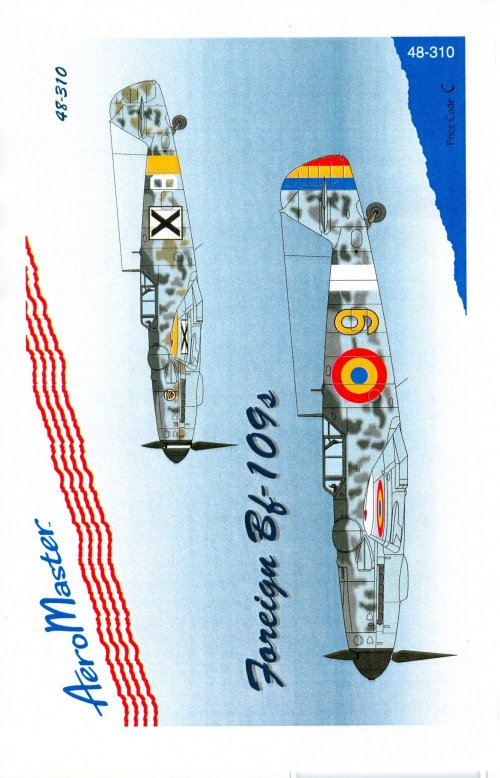
with mottles of 74/75/02.
|
|
Profile. 2 - Aeromaster Decals 48007 with fuselage sides stated as 70/02/74 mottles.
|
|
|
|
Profile. 3 - Aeromaster Decals 48310 with fuselage sides stated as 74/75/02 mottles.
|
|
The obvious question posed by modelers is, which color scheme is it? Lets take a closer look at these colors and narrow-down the topic a bit. But before we do, lets
start with a background to the topic on hand. The colors observed on the Messerschmitt can be broken down into four periods as follows:
The Pre-War Colors - The Greens:
Pre-war the Bf.109 was painted in either a uniform RLM 70/65 or a upper-surface splinter pattern RLM 70/71/65 that extended all the way down the fuselage-sides to the edge of the
lower surfaces. This was a defensive scheme adopted by the Luftwaffe at a time when the Germans were fearful of a surprise attack which could catch their aircraft on the ground;
all surfaces which could potentially be seen from the air were painted in either a black green (RLM 70) with lower surfaces light blue (RLM 65) (Img. 2), or a splinter-pattern
painted onto the top-wings and spine of the aircraft using a dark green (RLM 71)/black-green (RLM 70) with lower surfaces again in light blue 65. Ignoring the Bf.109C/D variants,
these colors applied mostly to early-built E-1 - E-3 variants.
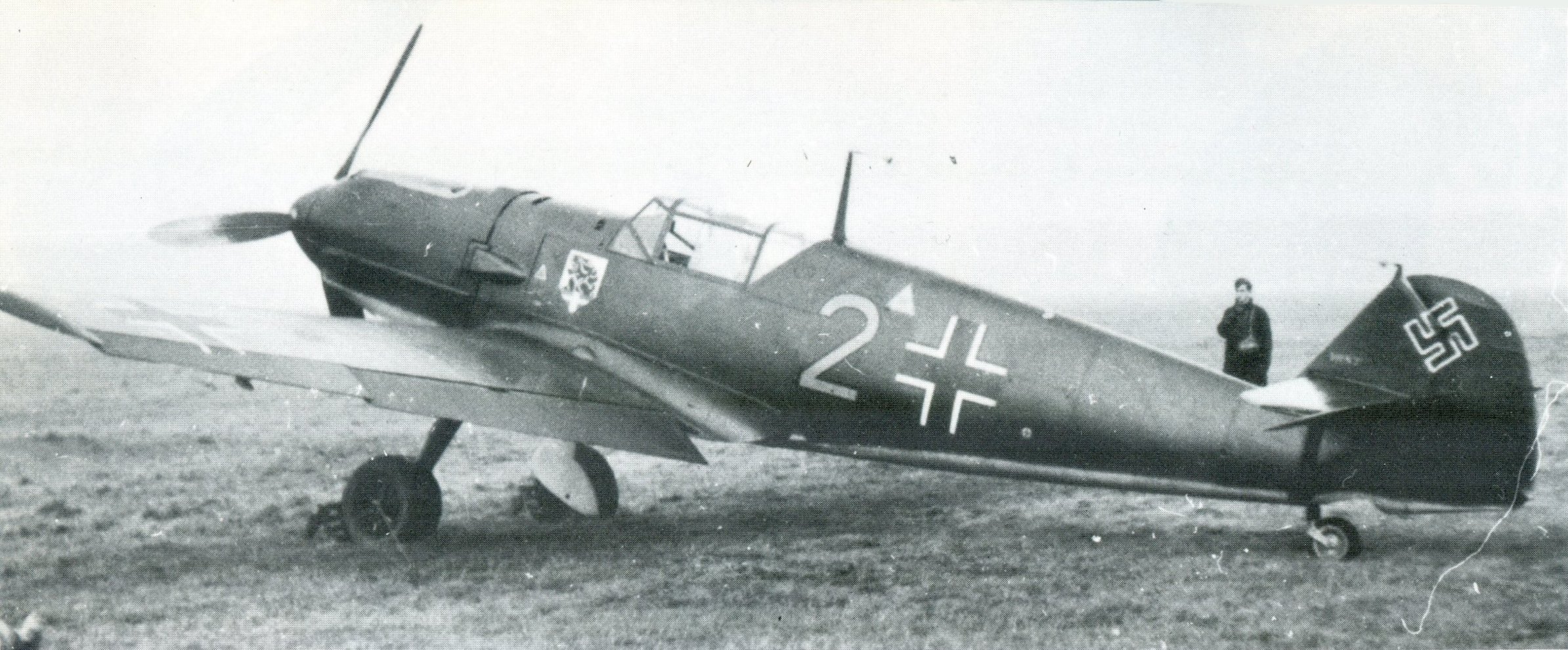
|
|
Img. 2 - Yellow 2, an E-1 of JG 21 (later JG 54) illustrates the standard color scheme of the Tag Jagd (Day Fighter) in 1939. Still
fearful of a surprise attack which could catch their aircraft on the ground, all surfaces which could be seen from the air were painted in Dark
Green (RLM 71)/Black Green (RLM 70) with Light Blue (RLM 65) undersurfaces.[3]
|
|
When the threat of Allied ground attacks receded, about the time of
the fuselage sides were painted differently with RLM 65 extending further-up toward the base of the cockpit, running along the entire length of the aircraft Img. 3.
Initially there were no mottles applied to the fuselage-sides but later field applications were observed (as per directive) as the threat of Allied aircraft on airfields
intensified again, camo was applied to the sides of aircraft in a soft-manner although many variations, as well as individualized camo-schemes existed, using the same colors
applied to the spine and top-surfaces. Fuselage-side camo was now here to stay and solid colors would even be extended to the fuselage-bottoms, as in the pre-war camo, in 1945.
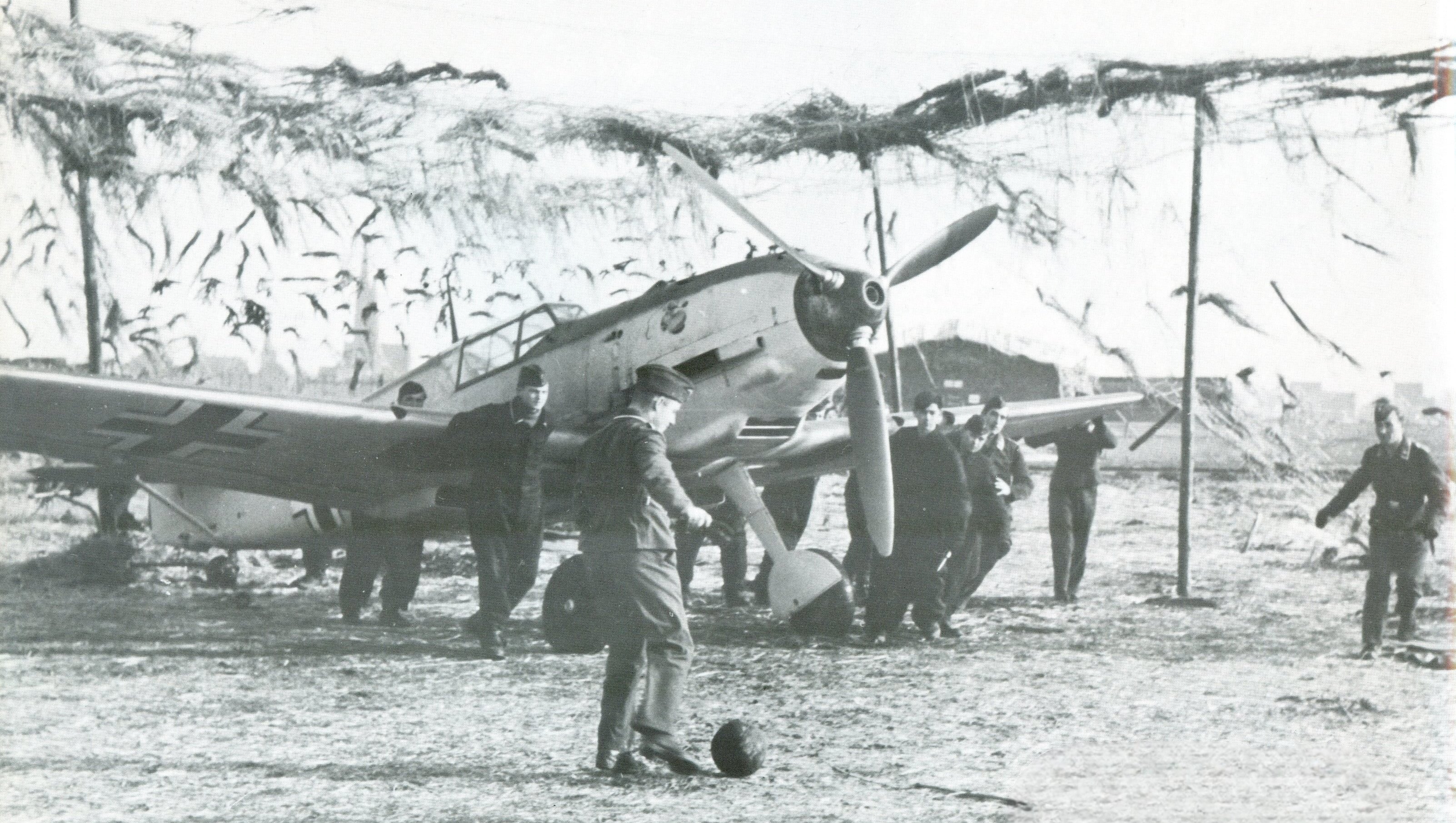
|
|
Img. 3 - An E-1 belonging to 1/JG 77, demonstrates the new lighter scheme which came into use late in-1939. No longer afraid
of being caught on the ground, and more concerned with being seen in the air Lt. Blue (RLM 65) was painted high-up the sides of Bf.109s.
The spinner and propeller blades are painted Black-Green (RLM 70). [3]
|
|
At this time a second color RLM 02 made its appearance on the upper-surfaces and spine of the Bf.109, replacing RLM 70, and was present with RLM 71 and RLM 65, RLM 65 continuing
to be used for lower surfaces. This new color was observed on, generally speaking, on late-E4-E7 variants. Planes destined for North Africa were painted 78/79 with field applied
spots of 80, in-line with Italian applied camo and a white theater band.
|
|
Img. 4 - This E-4 carries the 65/71/02 color scheme.[3]
|
|
The Grays:
Beginning with late-production E-7 and early F-variants the well-known grays 74/75/76 were introduced that would continue all through the G-series until mid-1944.
These paints were applied to the top surfaces and spine, as well as the fuselage-sides of the Bf.109 in various patterns depending where the aircraft was manufactured
and specifically in regard to the Bf.109G5/6, although such patterns were evident on earlier and later variants up to the G-10. Lets look at the three main factory patterns
evident on the Bf.109:
Messerschmitt Regensburg (Mtt Reg): aircraft can be recognized by the wavy, scalloped demarcation line along the spine which extends below the canopy, with
wide camouflage bands along the sides of the aircraft mottles 74, 75 (02?) (Img. 5).
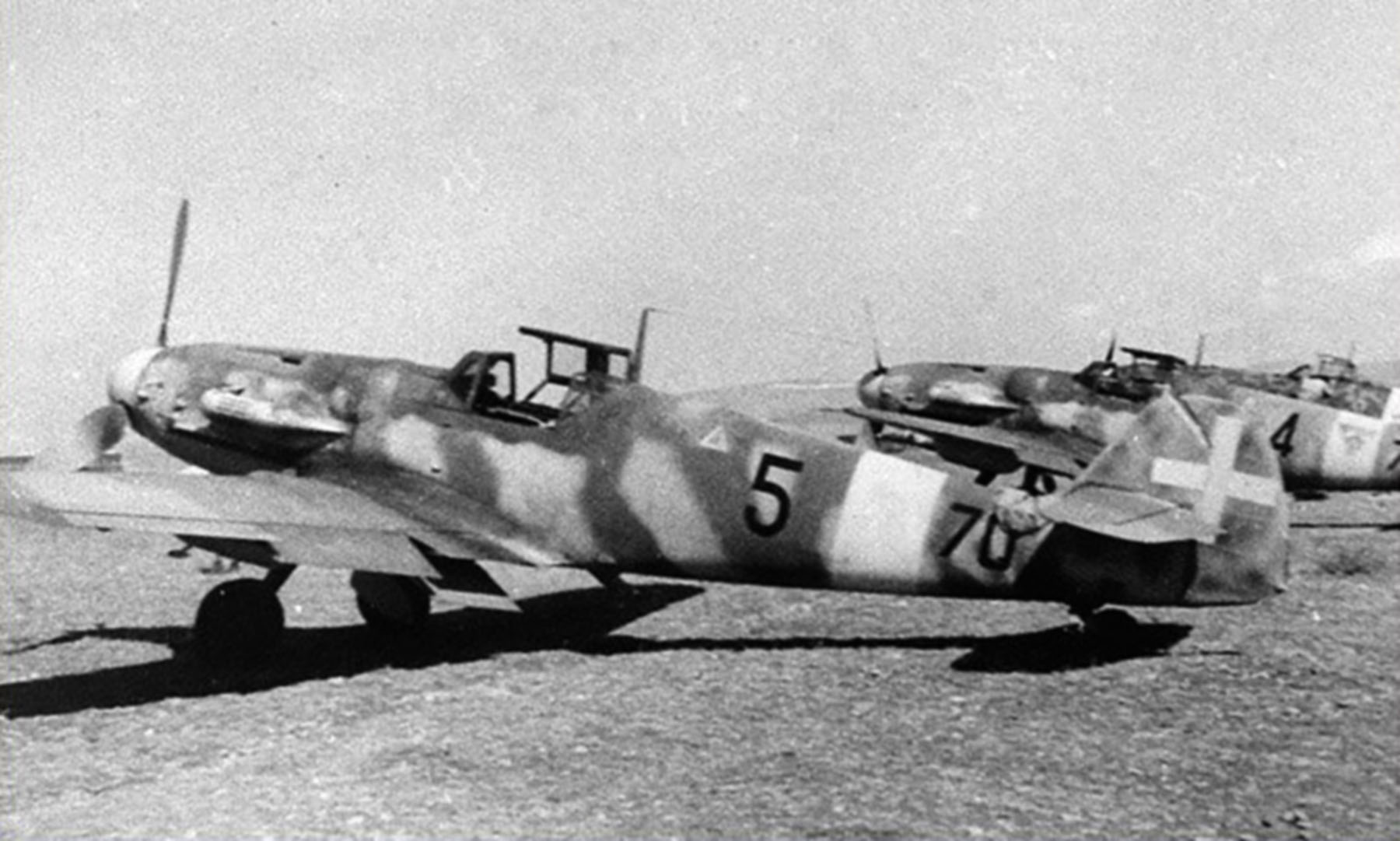
|
|
Img. 5 - A pair of 70a Sq. Mtt Reg Bf.109G-6/R6s. Note the color and density of the diagonal broad-bands
along the fuselage sides, almost certainly in 74/75, both the color and pattern of the bands are extended from the splinter pattern on the spine (e.g.,
on the nose the band is 75, around the cockpit the bands are 74). Note the presence of mottles on the fin and rudder only.[1]
|
|
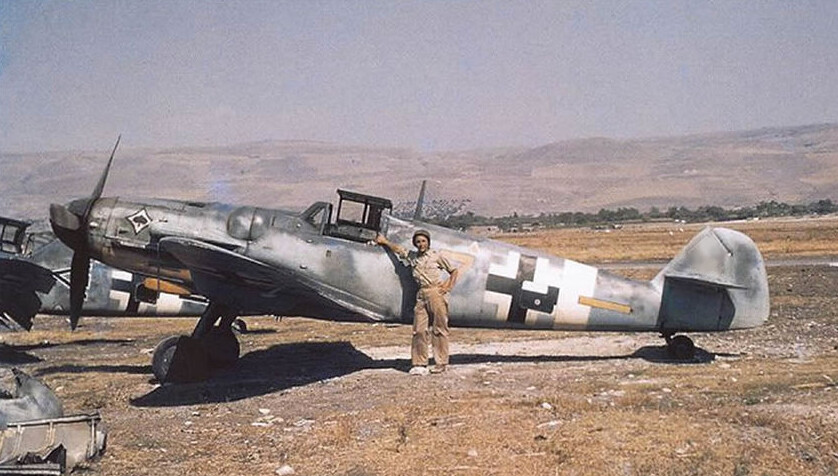
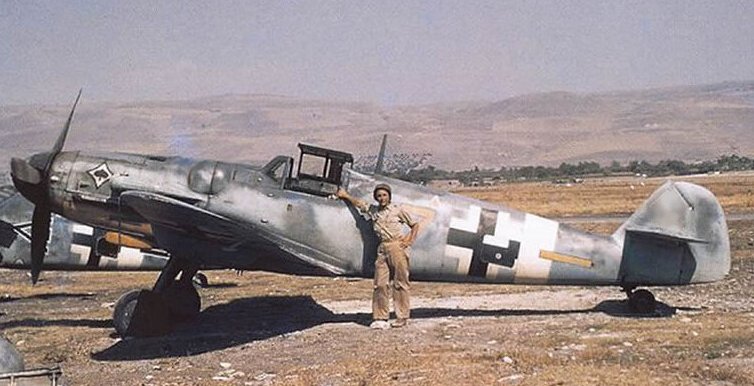
Img 5a is a color photo of a Mtt Reg built Bf.109G-6/R3. Note the spine and extended diagonal bands in 74/75, as well as the large diameter mottles on the fin and rudder.
The contrast of 74/75 on the spine and RLM 70 on the spinner and propeller blades is apparent, particularly around the nose of the plane and the spinner back-plate. The fuselage
sides around the Balkenkruez appear to have been overpainted, the plane likely having been transferred from another unit.
|
|
Img. 5a - A color photograph of a Mtt Reg Bf.109G-6/R3. The diagonal bands are not as dense as in Img 5 but are clearly evident. The grays 74/75 are apparent and
contrast clearly with the RLM 70 spinner and prop blades. Also note the absence of mottles around the diagonal fuselage bands and the overpainting of previous
unit markings around the Balkenkreuz as well as the large sized mottles on the fin and rudder.
|
|
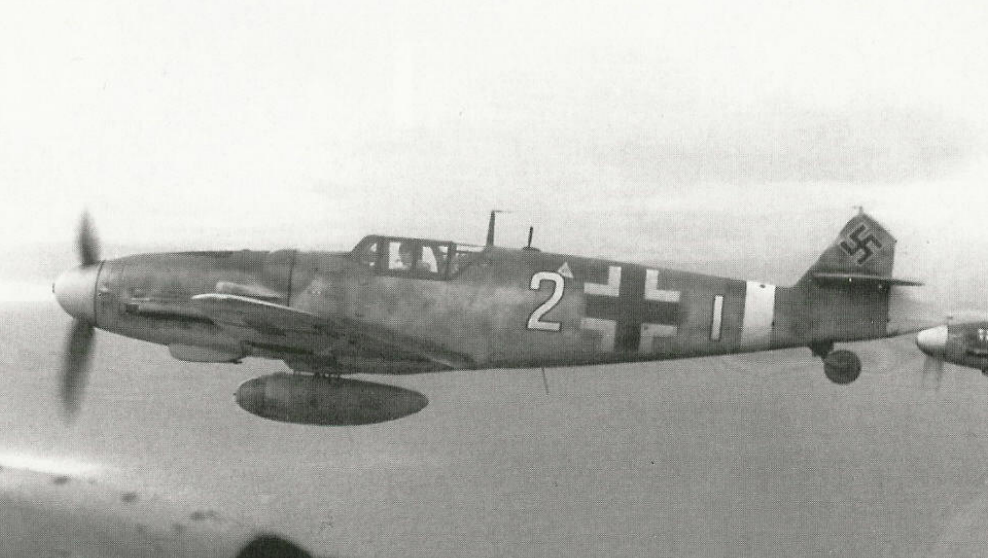
Wiener Neustädter Flugzeugwerke (WNF): aircraft were the closest to the official specifications. The demarcation line on the spine was relatively straight along
the whole fuselage with even, soft, mottles (or erratic lines) - the color of the mottles barely discernable. The dorsal camouflage pattern around the canopy was in 75,
unique only to WNF-built planes. The wing pattern was angular with both ailerons in 75 breaking the wing-pattern.
|
|
Img. 6 - a WNF-built late-Bf.109G-6/R3 with short radio mast, DF Loop and IFF whip antenna are apparent. Note the mottles are applied in a very soft manner,
the colors almost indiscernible and the straight demarcation line along the entire spine of the aircraft.
|
|
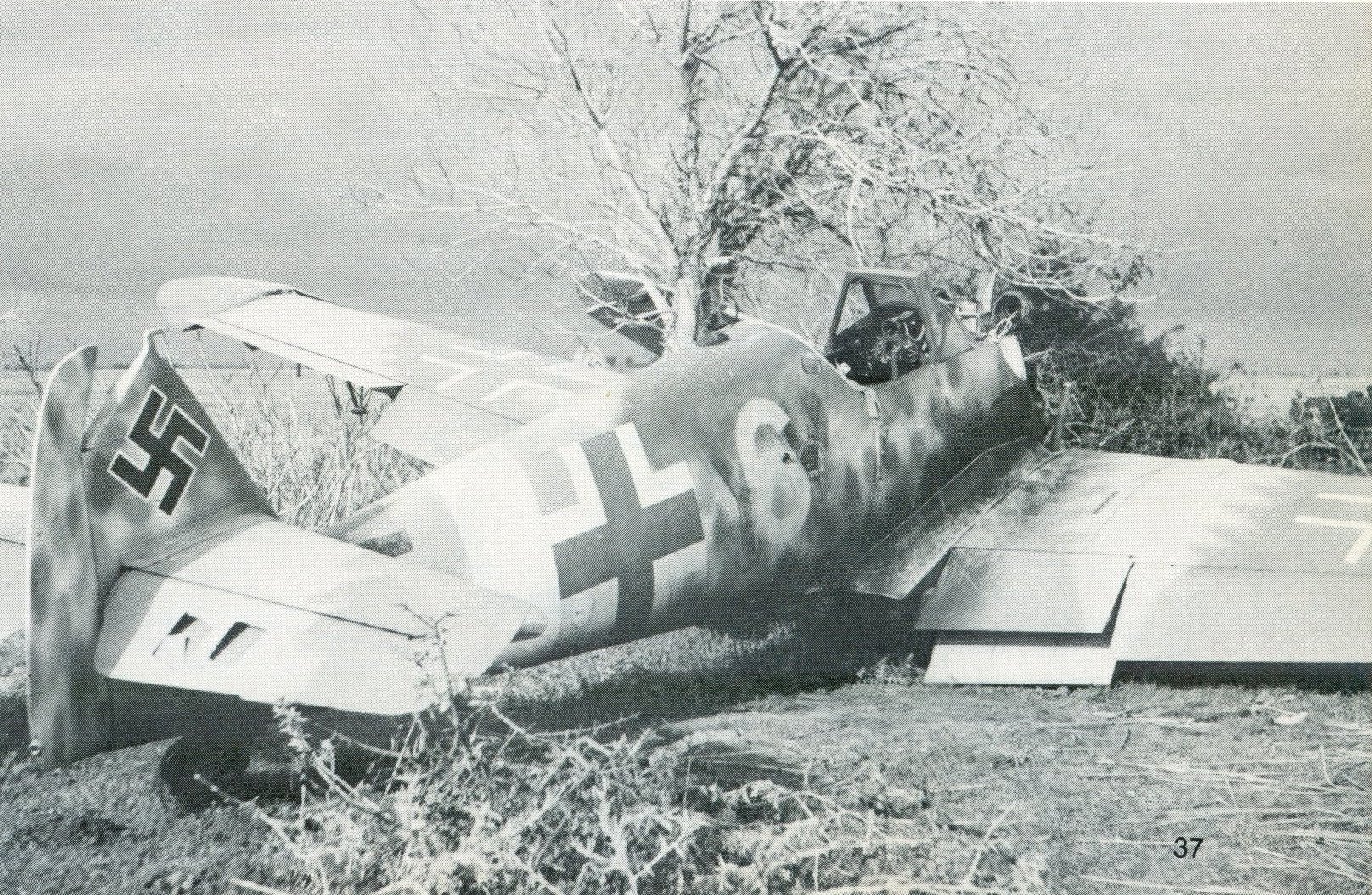
Erla Factory: aircraft were the most distinct in both markings and patterns. On these planes the canopy is in 74 but the plate in front of the windscreen is 75 leaving
a gap of 75 between the 74 on the windscreen and engine cowling. Also very distinct is the almost hard-edge, clearly visible spots or mottles. The wing-pattern
was saw-tooth-like with jagged edges Img. 7 [3]. When the topic of the fuselage-side mottles is discussed, we are referring to, almost always, to the side camo of Erla-built
Bf.109Gs.
|
|
Img. 7 - A Erla-built Bf.109G. Note the top wing-saw-tooth pattern and the clearly discernible, almost hard edge mottles along the length
of the aircraft. [3]
|
|
RLM Colors - Final Evolution:
On 1 July 1944 the RLM Technical Department GL/C-10 IV E issued an unnumbered Sammelmitteilung. This Sammelmitteilung included an instruction that on
aircraft using the colours 70 and 71, new colours 81 and 82 were being introduced to replace them. As neither 70 nor 71 were then being used on German fighters, except on spinners
and propeller blades, this initially had no effect on fighter camouflage, although Germany's rapidly deteriorating war situation eventually resulted in an unexpected development.
On 15 August 1944 Sammelmitteilung Nr.2 had been issued. This contained the sentence stating:[4]
[...] As a result of the new revision, the following colors will not be used in the future: 65, 70, 71 and 74. Color 70 however, is still prescribed for (metal) propellers.
An additional comment in Sammelmitteilung Nr.2 mentions for the first time, a further colour 83. The new RLM 83 which appeared on fighter aircraft together with RLM 75
from at least July 1944. The resulting 75/83 combination was probably intended to be used long term, but further simplification of paint stocks resulted in the combination
eventually being phased out in favour of 81 and 82. By November, camouflage drawings for fighters were showing the new colours 81 and 82, and in Messerschmitt
documents were identified with the written colour descriptions 81 Braunviolett and 82 Hellgrun. [4]
The Side-Fuselage Colors:
If the discussion of side-fuselage colors is focused primarily on Erla-built machines, then what were these colors? Lets look at a few more photos with a focus on
Erla-built machines.
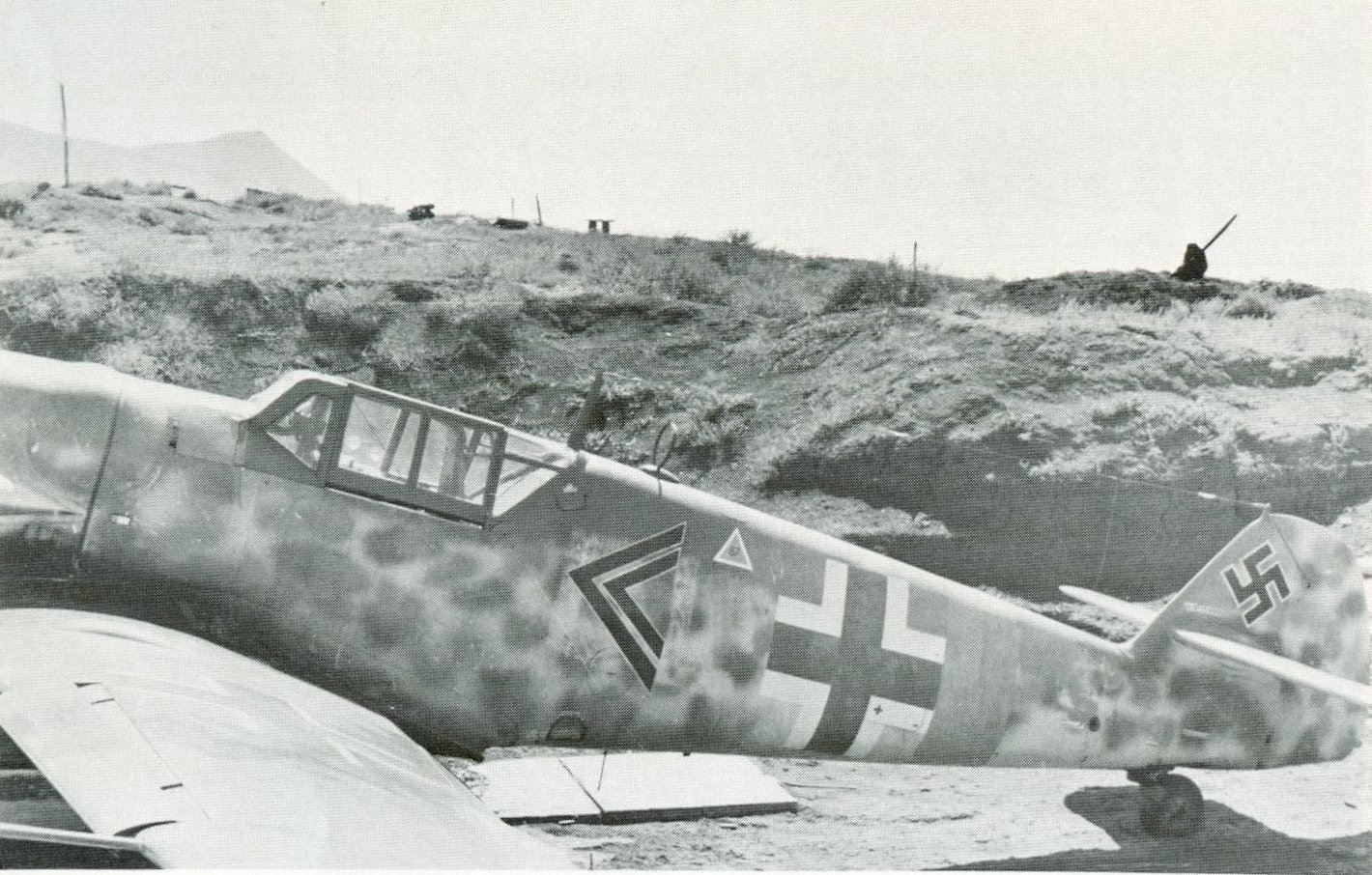
Erla built planes showed the most distinctive mottles, almost hard edged, in 74/75 with 02. This can be seen in Img. 8. In this B&W photo of
a Bf.109 belonging to the Gruppe commander, an Erla-built Bf.109G-5, note how the cockpit area is a dark gray (the cockpit canopy and just aft of the cockpit canopy)
and further forward it gets somewhat lighter as the top wings, appearing somewhat washed-out (due to lighting). The mottles on the fuselage sides and aft of the aircraft (rudder+ fin)
are the same shade as the spine around the cockpit.
|
|
Img. 8 - An Erla-built late-production Bf.109G-5. Note the spine 74/75 and mottles along the fuselage sides, fin and rudder. [3]
|
|
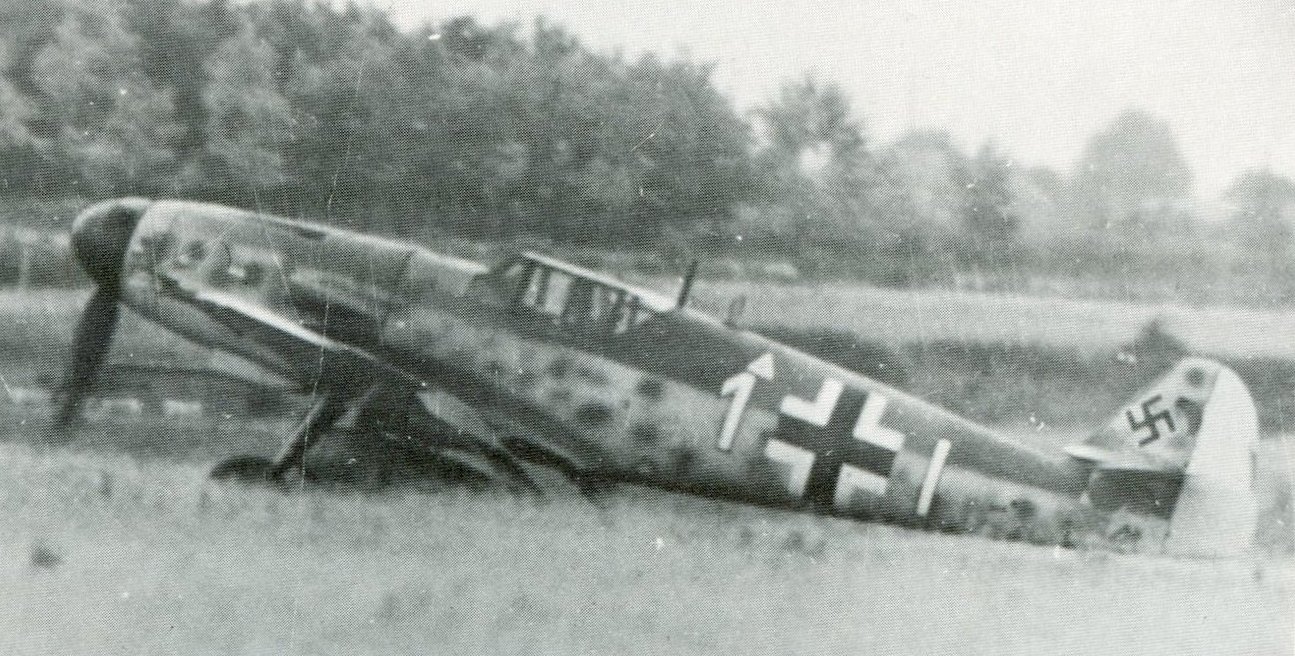
In Img. 9 the colors on the spine are 74/75 with typical Erla-style mottles applied to the fuselage sides. Again note the similarity of 74/75 on the spine of the aircraft
to the mottles on the fuselage-sides and also contrast the mottles to RLM 70 on the spinner and propeller blades.
|
|
Img. 9 - Another late-production Erla-built Bf.109G-5/R3. Again note the similarity of the spine and mottles along the fuselage sides, fin and rudder
and contrast this with RLM 70 spinner and propeller blades. [3]
|
|
In the color photo Img. 10, Black 7, note the exclusive use of 74/75 on the spine, top wings and fuselage sides.

|
|
Img. 10 - an early Bf.109G-6 finished in only 74/75 - there are no traces of RLM 02 on this plane.
|
|
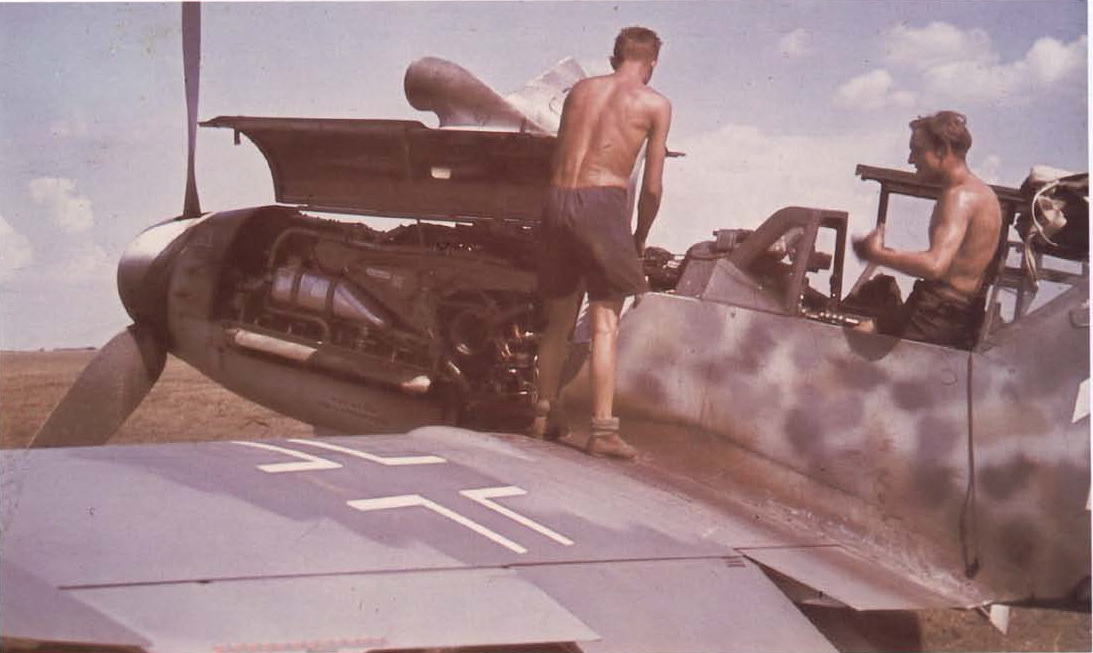
Img. 11 is a well-known photo, RLM 02 is clearly evident together with what appears to be dark gray
mottles on the fuselage sides; the color of the mottles similar to the cockpit canopy and windshield. It’s a photo that's somewhat confusing since the top-wing saw-tooth pattern
(typical of Erla built machines), that sits underneath the top-wing (white) Balkenkruez appears to be in 75 while the base color is closer to the base color of the fuselage sides.
The color of the supercharger intake is close to the canopy windshield and confirms 74. The color of the top wing band could be explained, perhaps because of lighting effects, or from
an overhaul but it’s unclear and, assuming also, this color photo (as well as the other color photos) is original and not colorized or touched-up. I believe this image
is where the confusion over the use of 70 on the fuselage-sides may have orginated, the mottles bearing a similar tone and density to the spinner and prop blades, but likely
because of lighting-effects as seen in other photos - in any case its an unusual photo.
|
|
Img. 11 - an Erla-built Bf.109G with 74/75/02 fuselage sides. Note the RLM 70 propeller blades and 1/3 white spinner and back plate in RLM 70.
Also note the confusing saw-tooth upper camouflage pattern in 75! Assuming this photo is an original color photo, the top wing colors are unusual.
|
|
Camouflage of the Bf.109G:
The following is based on original text published in ‘Messerschmitt Bf 109K Camouflage and Markings’ by T. Poruba [5] and
is also availble in D'Amico and Valentini, "Camouflage and Markings of the Aeronautica Nazionale Repubblicana 1943-1945" [4].
It provides the basic information about the colors and camouflage of the Bf 109G.
The standard camouflage of the Bf.109G was based upon an OS-liste of 1941. Unlike Heinkel or Dornier manuals which included camouflage schemes, the Bf.109 manual
only included a brief reference stating that the camouflage should conform with Oberflichenschutzliste 8 Os 109F a G, with regard to L.Dv. 521/1. This
was found in the G-1 manual of June 1943, as well as in the G-8 manual of October 1943, G-6/U4 manual of December 1943, G-14 of August 1944 and G-10 of January 1945.
Other documents referring to the camouflage of the Bf 109G are, as mentioned, the factory plans, referring to the
distribution of colour areas and national markings. 8-109G.a of 15th July 1941 is notable in that it determines the
distribution of colours, the areas to be covered and the colours to be used. The transition between the shades as
well as the line of demarcation on the leading edge were described. Another variant of the scheme contained the
location of national markings on all surfaces and some maintenance and equipment access signs. 8-109.590 S7 of
10th May 1943 (most likely updating the former) described the national markings on the wing, maintenance signs
and the location of transportation markings (Fliegwerkstoff-Kennzeichnung), their location and size being the
same as in 8-109G.a of 1941. Also notable is that on the basis of 8-109.590 S7 three Black circles of
100 mm diameter were painted on the top of the wing as late as in March 1945. Their function is not clear. By that
time they did not serve as the basis for constructing national symbols and transportation markings as these were
modified or abolished by further provisions as seen later.[4,5]
The numerical designations of the schemes suggest there were many more, but these have not been found.
Despite the standard camouflage pattern of Messerschmitt Bf.109Gs consisted of
Upper-surfaces in 74 and 75 with mottles of 74, 75 and 02 on the fuselage sides and 76 on the undersurfaces [4,5].
Transitions between colours were not sharp and the colours overlapped to a width of 100 mm. Lower surface 76
was carried around the leading edge in a wavy line (Zick-Zack Gbergeben) and merged into 74 and 75 to make the
aircraft hard to perceive against a light background in a front view.[4,5]
Top colours on the fuselage descended to the level of the lower edge of the canopy, below which there were
irregular mottles of 74, 75 and 02, these also appearing on the fin and rudder [4,5]. The spinner was dark green 70 with
a one-third white segment, in the centre of which was a propeller blade. Thus the camouflage of external surfaces
fully complied with L.Dv. 521/1 and very likely also with the OS-liste. RLM 02 was applied to the interior surfaces,
which probably also applied to undercarriage legs. Parts of the cockpit visible through the canopy were painted
in 66 Schwarzgrau.[4,5]
Conclusions:
The fuselage-sides of the Messerschmitt Bf.109 began being painted with mottles at about the time the RLM upper-surface colors were changed from the Greens 70/71
to the Grays 74/75 and were sprayed on as 74/75/02, as photos and existing documentation indicate. The camouflage patterns were different for planes that were
manufactured at different assembly facilities with mottles of 74/75 applied to the fuselage sides of Mtt Reg (in wide diagonal-bands) and WNF planes (soft mottles),
while planes manufactured at the Erla-factory were finished in 74/75/02 (distinctive almost hard-edge) mottles. Of course with any rule there are
exceptions and with more than 30,000+ Bf.109s manufactured, its impossible to rule-out field applied camo patterns, personalized planes, overhauls, repairs using parts from
other planes, unit transfers etc. However these basic-rules for 74/75, in general, applied also to the later colors such as the mid-late 1944 colors 75/83/76, with mottles
of 75/83 on the fuselage sides of late production G-6/G-14, and applied similarly to the late-war colors 81/82, as seen on the G-14/AS.
As to the color schemes that suggest the use of RLM 70 on the fuselage-sides of Bf.109s, as shown above, the photos and the documentation don't support it.
RLM 70 was applied to spinners and propeller blades, both these parts were subcontracted. But also, just as a practical consideration, it seems strange that there was an urgent need
to get these planes to units, that the aircraft-manufacturers would feel the need re-load spray guns to apply some mottles of 70 on the fuselage sides, a color that was no longer
in use on assembly lines by 1943 it should be pointed-out, when they could have simply applied these mottles at the same time when spraying the upper-surfaces of the aircraft (spine
and wings) using 74, similar in contrast to 70, saving both time and money, not to mention, what significant advantage the use of 70 over 74 may had over concealing a plane on the
ground, from the air, is not clear.
|