|
Development of an Air Force
|
The development of the Regia Aeronautica can be broken down into seven phases [3], beginning with the army’s pre-1914 experiments with aircraft
during peacetime maneuvers and the Italo-Turkish war. During World War I, the army and navy built up large air forces, and Italy’s aviation industry
grew from 6 to over 100 firms, as government spending on aviation increased from 17 to 600 million lire annually. Between 1919 and 1922 Italy
demobilized, and the air force was reduced from 70 to 35 squadrons as the budget shrank to 90 million annually. The Fascist regime expanded the
budget to 500 million and reorganized the Regia Aeronautica as an autonomous arm in 1923, and by 1926 the new Regia Aeronautica had a front-line
strength second only to that of the French air force. Over the next seven years, Italo Balbo increased the prestige and the budget of the air force
through a policy of ‘‘crociere’’ (cruises) and ‘‘primati”’ (records), although it was argued, that this isolated the air force from the army and navy.
In 1933 Mussolini took control of the Air Ministry, but until 1939 Giuseppe Valle, Undersecretary and Chief of Staff of the Regia Aeronautica, actually
ran the ministry. Under Valle, the Air Ministry’s budget increased at a rate faster than that of the other forces, rising from 810 million in 1934-1935
to 4,296 million in 1938-1939; and under Valle’s successor, Francesco Pricolo, the budget doubled, giving the air force a larger share of the budget than
the navy. But this rapid increase largely reflected Italy’s involvement in Ethiopia and Spain in 1935-1939. Moreover, that the budget barely increased
from 1939-1940 to 1942-1943 indicated both “how hard-pressed Italy was financially”. [3]
For 20 of the 30 years prior to 1939 the Italian Air Force was involved in some sort of conflict. It was employed in various types of warfare from
colonial to civil to European and it was deployed in force. During the Italo-Turkish war of 1911-1912 the Italians used practically their whole force
(small as it was) against the Turks in Libya. Between 1915 and 1918 the Italian air force grew from about 6 to around 70 squadrons, and during the
decisive battle of Vittorio Veneto in October 1918 the Italians (during World War I, the Corpo Aeronautico Militare was part of the Regio Esercito
(Royal Army), operated a mix of French fighters and locally built bombers, notably the large Caproni aircraft. The Regia Marina (Royal Navy) had its
own air arm operating locally built flying boats) employed over 600 aircraft daily. By the end of the war the Italians had trained 5,100 pilots,
produced 12,000 machines and fielded over 1,500 front-line aircraft. [3]
In Libya, where the Regia Aeronautica was used against Senussi rebels in the 1920s, the Italians deployed 60 aircraft in 7 squadrons. And in Ethiopia,
the Italians built over 80 airfields and increased their force to 350 aircraft in 1935-1936. During the Spanish Civil War, the Italians sent 6,000 air
force personnel and 730 aircraft to fight the Republic and its allies France, Britain, the USA and the USSR, and by late 1939 they had claimed over
900 victories. But they had also lost 175 dead and 226 aircraft, with the remainder ceded to Franco’s government. Thus by 1939, the Regia Aeronautica
had used up around 1,500 aircraft in Ethiopia and Spain, out of a production of about 7,000 and some consider this sort of wear and tear to have been
an obstacle to Italy’s efforts to rearm for World War II.[3]
But if constant use inhibited Italy’s efforts to modernize its front-line aircraft, it should have given the Italian air force experience and forced it
to develop an empirical air doctrine. As early as 1911-1912, Italian pilots had pioneered most of the roles in which aircraft would be employed over
the next two decades: daytime bombing; night flights and nighttime bombing, tactical, strategic, and photographic reconnaissance and low-level attack.
During World War I they further developed these roles, and by 1917 had used combined forces of bombers, reconnaissance aircraft and fighters in mass
tactical actions against enemy positions; and the concentration of their bombers and fighters in ‘‘massed” attacks. During the 1920s, the Italians used
aircraft for infantry liaison, transport and supply in Libya, as well as for low-level attack, surveillance patrols and reconnaissance duty. In Ethiopia
the Air Force served as a tactical air component while in Spain the Italians implemented the “Guerra di rapido corso”[10], conceptually similar to
Blitzkrieg but with better balanced mechanized units in armor, infantry and artillery than their German counterparts and certainly better developed
than British armored units, with an air component providing mobile artillery as Mecozzi advocated. [3,10]
However, the Regia Aeronautica had not depended solely on trial and error to train its personnel and forge a doctrine. It also established its own
Accademia Aeronautica, which counted over 300 students by the late 1930s, thus ensuring a core of academically trained officer-pilots, who were
supplemented by reserve pilots trained by the Aero Club d'Italia, which was also under the Air Ministry. In 1935 the air force established a staff
college (the Scuola di Guerra Aerea), and in 1939 an airborne school (the Sculoa Paracadutisti). In addition, the Regia Aeronautica published its own
journal and established several experimental and special advanced training centers, such as the general research facility at Guidonia, the Scuola di
Alta Velocita at Desenzano del Gardo, and the Scuola di Navaigazione Aerea d’Alto Mare at Orbetello.
Although the army, navy and air force could have increased cooperation, some joint maneuvers were carried out, including one in 1939 in which the
Regia Aeronautica used 400 aircraft in conjunction with the navy, and development of the first purpose-built military transport S.82 that was
undertaken by the Italian army and air force in the same period. The air force should therefore have been able to integrate its practical
experience with theory, especially since the Fascist regime did not censor discussions pertaining to the employment of air power.
Disputes between proponents of interservice cooperation such as Mecozzi and advocates of a completely autonomous air force such as Douhet persisted,
and the Regia Aeronautica vacillated between the two positions. Balbo seems to have purposely skirted the theoretical debate and instead concentrated
on increasing the prestige of the air force by his mass ‘‘cruises’’ (‘‘crocieri’’) over the Mediterranean and Atlantic. Valle also avoided the pitfalls
of theory by encouraging aerobatics and record attempts (the ‘‘primati’’ of the late 1930s) and attempting to increase exports of aviation products by
disciplining industry through a consortium in 1937 and increasing the desirability of Italian products through the pursuit of records and by the display
of aerobatic prowess. Both men thus followed apolitical programs that avoided doctrinal disputes while increasing the prestige of both the Regia
Aeronautica and the regime with which it was so closely identified in the public mind.[3]
However such policies did not necessarily damage the development of combat potential of the Regia Aeronautica. The ‘‘crocieri’ pioneered long-distance
mass flights, and the aircraft used became vehicles for research and development of everything from radio equipment and altimeters to propellers and
engines. Moreover, despite generating perhaps some friction between the ‘‘atlantici’’ and the land-based pilots, the ‘‘crocieri’’ seem to have kept
both the prestige and the morale of the Aeronautica at a high level in peacetime, something most armed forces would consider desirable. The pursuit
of records and participation in competitions such as the Schneider Cup races also gave the Italians experience in high-speed and high-altitude flying,
and thus indirectly encouraged industry to develop increasingly better aircraft and engines. Thus in 1934 an Italian racer, the Macchi MC.72 sped to
709.207 km/h (440.681 mph), a new world record that still stands today, and in 1938 another climbed to 17,093 meters, performances that were
comparable to the best aircraft of World War II. Moreover, the cost was relatively cheap at about 8 million lire for Balbo’s 1933 trans-Atlantic flight,
out of that year’s budget of 770 million. The ‘‘crocieri’’ and ‘‘primati’ should therefore have complemented and supplemented the practical experience
gained in Libya, Spain and Ethiopia, especially given the growth of Italian commercial aviation, which seemed to augur well for the robustness of the
Italian aviation industry.[3]
In 1939 Italy’s airlines logged 62.3 million passenger miles annually, only about 9 million behind Germany, and 6 million ahead of Britain. Italian
industry supplied 128 of the 129 aircraft in Italy’s commercial fleet, which put it third to Germany’s 220 and Britain’s 155. Moreover, Italy
supplied aircraft to the Czech and Belgian airlines — a tribute to the qualities of Italian commercial aircraft. Since aircraft such as the S.81
and S.79 doubled as military machines, the robustness of the commercial airlines should have indicated a healthy military force as well. [3]
The Regia Aeronautica’s seemingly “bad showing” between 1940 and 1943 thus seems if not inexplicable, certainly inexcusable, particularly given its
brilliant performance during World War I and the amount of attention paid it by the regime and the public during the 1930s - and it is tempting to
blame either the Fascist regime or the Stato Maggiore Generale (SMG, or General Staff), or both, for the supposed “rapid destruction” of the air
force after 1940. If the regime exploited the air force, this was no different than the Soviets who show cased their own aerial acheivements and
if the regime is to blame then how is this different than US exploits in speed and distance records and trans-Atlantic crossings (Charles Lindbergh)
and circumnavigation of the globe (Amelia Earhart) and records like it? Chasing records in speed, range, payload and altitude furthered the
development of aircraft design, not hindered it. However there were important differences between the conflicts of 1915-1918 and 1940-1943. In
reality, World Wars I and II were not comparable. In the former Italy had easy access to raw materials and semi-finished goods, as well as to
finished aircraft, thanks to its alliance with France, Britain and the United States and it faced a relatively weak enemy, Austria. Thus if Italy’s
production of 12,000 aircraft did not match Germany’s output of 43,000, it was more than double the 5,400 produced by the Dual Monarchy of
Austria-Hungary. But during World War II, Italy competed for resources with its German ally and managed to produce only about 10,000 aircraft,
a paltry number compared to British production of 85,078 and an American one of 156,974 between 1940 and 1943. With relatively little help from its
ally, the Italians bore the brunt of the Anglo-American war effort from 1940 to 1943 which included no less than 9 Allied countries (e.g., Britian,
Canada, Australia, New Zealand, South Africa, India, Free French, Poland and Greek forces – the Netherlands and Belgium -) to start and would grow to
more than 20 by 1943, and Italy fought not on one major and one minor front as in World War I, but on two major fronts (North Africa and Russia)
and several minor ones (the English Channel, the Balkans, and East Africa). Italy therefore was never able to concentrate its air forces to the extent
it had in 1915-1918. It is thus misleading to assume that success in the first war should have guaranteed success in the second and that success in
Ethiopia and Spain against relatively weak enemies would have been valuable only had Italy restructured its military and naval commands and settled
on an overall doctrine in which the air force would have been rationally integrated. But even had Italy’s command structure been integrated and its
doctrine flawless, the problems posed by a lack of raw materials in particular, and to a lesser extent, a fragmented industrial base, and a dearth
of skilled workers and technicians would have remained to make correcting deficiencies difficult. That this was so is clear if one examines one of
the most often cited problems that plagued the Regia Aeronautica: the policy of “prototypes,” i.e., of testing and putting into line too many different
types of machines rather than standardizing around one or two types.[3]
The inability to standardize aircraft types “supposedly” sprang from a lack of doctrine and in turn made it difficult to replace obsolete models. Yet
a proliferation of prototypes and production models in both aircraft and engines was common to most of the major powers, and France had as many and as
severe problems formulating doctrine and deciding on standard types. Even the U.S. and Britain tended to have difficulties in this area with the
difference that the geographical positions and industrial bases of Britain and the U.S. allowed them to catch up, while the exposed positions of Italy
and France precluded any rapid rectification. Nonetheless Italy still remained focused and had in production only three main types in service at any
one time, for example with the Series 5 aircraft, three models from several porotypes was selected and put into production. If the Italians had focused
on a single model, Italy could have been left vulnerable if that type failed operationally, not to mention possibly shutting down aircraft design at
some of the aircraft firms. In fact, as shown in 1939, that although the C.200 was generally considered the best of the R-Program fighters, the plane
had initial teething difficulties that precluded its use over the English Channel leaving only the G.50 and the CR.42 to carry on the fight. Having
three competitive models in production was not excessive, especially since the types available were similar in capability and the number of types
never reached the same number of prototypes that were constructed in Germany or the United States (e.g., F4F, P.40, P.38, P.47, P51, F4U, F6F etc).
Not to mention parts were commonly sourced. Prototype construction never amounted to much more than a tiny fraction of the budget while only a handful
of aircraft were ever produced anyway, while new designs always encouraged innovation while rewarding effective design teams with contracts. Allowing
as many different prototypes into the main fighter competitions did not and could not hinder aircraft production, it only bettered the outcome from
increased competition, and the planes that emerged from these fighter competitions were superb: Re.2000, Re.2001, C.200, C.202, C.205V, C.205N, G.55
and the Reggiane Re.2005.
But let's say the Italians had standardized around a single prototype the C.200, how many more planes could Italian industry have produced if Fiat
and Reggiane joined-in producing this plane? 186 Reggiane Re.2000’s were manufactured while Fiat manufactured 784 G.50. Add this total to 1,151 C.200
for a total of 2,121, and allowing for some 20% efficiency due to standardization, perhaps 2,500 C.200; compare this total to 4,200 Hurricane I
(14,483 all variants) and a similar number of Spitfire Mk I and II. The Italian aviation industry at the start of WWII was large however it was
constrained by its ability to procure raw materials, as well as limited government financing, as will be shown later. If the Regia Aeronautica could
have placed large orders for the Macchi fighter, say 20,000 like the Spitfire it would have but industry was simply unable to fill an order like this.
Compared to the number of aircraft industry could deliver, the “problem” of prototypes, at best it seems, was a limiting factor.
But even admitting that the production of a plethora of prototypes and production models (there were only three) was not the optimum use of industry
in wartime, in peacetime it evidently did what was in part intended — it kept Italian aviation firms working. Moreover, it is not true that Italian
types were inferior to foreign types, in fact it could be argued the opposite especially in regard to the Re.2000, Re.2001, Re.2005, C.200, C.202,
C.205V and G.55. If Britain’s Spitfire was excellent, its Defiant was a total failure, and if not a match for the Spitfire, Italy’s Re.2000 and C.200
(the C.202 was better than the Spitfire V [19]) were comparable in speed and armament to the early-Bf.109E, France’s Morane Saulnier 406, Britain’s
Hurricane I, and the U.S. Brewster Buffalo — and superior to the Soviet Polikarpov I-16/10, a 1937 model still in line in 1941. One wonders if Britain
would have fared so well had development been stopped and ‘‘standardized’’ on the Hurricane or Defiant, or the Battle, a bomber that compared poorly
to Italian bombers, which in terms of speed and bomb load occupied a position in the middle rank during the 1939-1942 period. If compared to French
fighters of the 1920s and 1930s, Italian fighters are comparable until the appearance of the Dewoitine 520, which is considered superior primarily
because it mounted a 20mm cannon. The real problem in fact seems not to have been so much one of quality as one of quantity: while the best Italian
types were produced in driblets, the British produced 20,000 Spitfires — double the Italian production of all types between 1940 and 1943. One wonders
what the outcome of the Mediterranean war would have been if Mussolini had available 20,000 C.202/205V.
It was not the proliferation of models (there just weren’t that many) as much as the ability to develop certain types of aircraft or equipment that
hurt Italy such as a lack of aircraft carriers and carrier borne aircraft. Interservice rivalry and planning largely accounted for this, but so
apparently did geo-military considerations, given that the French, German, and Soviet navies also did not develop powerful air arms a weapon
characteristic only of the ocean-borne navies of Britain, Japan and the US. Nor was the lack of interservice cooperation unique to Italy, given
for example, Air Marshal Goring’s strained relations with Admiral Raeder. And few observers in any country correctly interpreted the lessons of Ethiopia,
Spain and Manchuria. [3]
However the Italians could not afford mistakes, and many writers have noted that the failure to develop a powerful liquid-cooled in-line engine to
replace the aerodynamically clumsy aircooled radials in effect compounded the policy of prototypes and led to the production of underpowered and
therefore underarmed and underarmored aircraft. But the real problem with engine development seems to have been that the Italians failed to develop
the radials that they were already producing. Radials proved excellent power plants on non-Italian aircraft (e.g., F4F, F6F, F4U Corsair, FW.109,
Lavochkin La-5, Mitsubishi A6M etc), and Italian engines, even if produced on license, should have been amenable to further development, as they
would, developing powerplants such as the Piaggio P.XII R.C.35 generating 1500hp by 1942 - comparable to Allied powerplants of the time.
Even as they existed in 1939, Italian radials were reliable given that they had to pass a thousand-hour test before being accepted by the air force
and they were not inferior to French engines, as indicated by the similarity in performance of the Gnome et Rhone powered Bloch 152 and the Piaggio
P.XI powered Re.2000, and in any case radial powered fighters such as the Re.2000 and MC.200 were as quick or only slightly less faster than the
Hurricane I but could out-climb, dive faster and were more maneuverable than the Hurricane I. The "real" problem then it seems is that the Italians
weren't producing enough of what they had since Italian engineers showed they could still produce competitive types.
Whether the failure to place 15 or 20mm cannon on fighters was crucial is debatable. The Italian 12.7mm gun was reliable, and whether it conceded that
much firepower to the Browning 0.303 or the French 7.7mm is not at all clear. Indeed, to argue that a larger caliber gun (the 20mm Oerlikon) was needed
to replace the 12.7mm and simultaneously argue that the four to eight 0.303 calibre guns on many American and British aircraft were superior to the two
Italian guns is contradictory [19]. The slowness to develop radar and mount radios on fighter aircraft prior to 1939 was a concern, but not inexplicable
if the Italians believed that they had until 1942 to prepare for war especially since radio sets had been tested by 1939 and radar was being developed
in 1939-1940. Nor was the lack of a bomb heavier than 500 kg (1,250 Ibs) necessarily critical, since even a 500 kg bomb could do considerable damage to
a ship if delivered by a dive-bomber, as the Italians showed when they acquired the Ju.87 [14]. It was thus the lack of an aircraft to deliver their bombs
that hurt the Italians, but the failure to develop a dive-bomber was as much a technical-industrial one as one of command or of doctrine and the
availability of a foreign type negated the immediate need to develop this type and in any event the dive bomber as a type would be short lived. The
reliance on foreign models and licenses was a long-standing ‘‘Italian’’ not a ‘‘Fascist’’ problem that the Fascist regime attempted to rectify.
On the other hand, the wastage of some 1,500 aircraft or 20 percent of total production or more importantly as will be shown the effect on finances
from 1935 to 1939 in Ethiopia and Spain was certainly a byproduct of Mussolini’s foreign policy. It was not so much the number of aircraft left behind
or used in Spain that really mattered as much as Italy failed to secure payment or compensation for essentially winning Franco’s war for him – Italy
covered the entire cost of the Italian contribution in the Spanish Civil War and also paid and armed much of its air force and army. Italy had to
export aircraft to obtain the hard currency needed to obtain the raw materials to produce the Regia Aeronautica’s machines. In fact, the scarcity of
hard currency and raw materials, compounded by a devaluing currency from sanctions (albeit limited) placed on the country prior to WWII as well as
interventions to rebalance a structural deficit [20], and the need to keep the aviation industry
working at capacity not only delayed the introduction of newer models, but also created delays and bottlenecks in the production of current models,
making it difficult to work more than one shift per 24-hour period [3]. And differing priorities for the three bodies (army, navy and air force) involved
in ordering aircraft further complicated orders and consignments of raw materials, as well as advances and disbursements of funds and the awarding of
contracts. While Gabaereo (the Air Ministry Cabinet) pursued political goals, Coastaereo (overseeing production) based its decisions on technical
considerations, and Stataereo (the general staff) ordered its priorities according to military criteria. Moreover, construction of new plants in the
chemical, mechanical, and metal industries was slow, with only about half the projected expansion occurring between 1933 and 1941. [3]
Typical it would seem of the problems in rearming was the attempt to find a new fighter in 1938-1939, the so-called R-Program. The air force had
originally announced a competition for 1938, then delayed it a year to allow more firms to submit prototypes, and only in July 1939 did the air force
test eight prototypes at Guidonia. Five of the prototypes were immediately rejected however the other three were all similar in performance. Although
the Re.2000 was probably the best (the competition committee believed it was the C.200) and bettered the Bf.109 in mock combat, only 12 models were
ordered (due to fuel tank arrangements – the RA was willing to lose a plane but not a pilot due to explosion and this would in fact be the case in
the P-47 that had a similar fuel cell arrangement), while 200 CR.42s which the examiners labeled a ‘‘transitionary” type were added, along with
182 MC.200s, and the G.50 was also ordered that has led the Italian historian Lucio Ceva and other like him to see ‘‘a crisis of rejection’’ of the
newer types in favor of the older biplanes by the pilots and examiners of the Regia Aeronautica. And in part it was. But Valle was mostly concerned
with getting some newer types into line as quickly as possible, even ‘‘transitionary’’ ones like the CR.42. Since Fiat was already producing 50-60
CR.42s monthly, and since Reggiane would need six months to set up a production line and would need time to train workers to produce the new model,
whose wing attachment was unfamiliar, it was deemed more prudent to have two Fiats in the hand rather than a Reggiane on the assembly floor. The MC.200
was ready for production, and thus had an edge over the Re.2000. In effect, the lack of trained technicians, skilled workers and the financial and
material resources necessary to retool rapidly for radically new models delayed production of the best fighters in the 1939 competition.[3]
That the Italians were not in a position to compete with the US and the British Commonwealth (Britain, Canada, Australia, New Zealand, India, South
Africa) in 1940 was due in part to a number of problems with their roots in World War I and the 1920s. But shortcomings of doctrine, of technique,
and of industry were not unique to Italy, and even the Germans had problems with the Ju.87, Ju.88, Bf.109 and Bf.110. The British, Americans, French,
and Russians also had their failures, but with the exception of France they all had better access to raw materials and larger industrial and
demographic bases than Italy. Nonetheless, the MC.200, Re.2000 and G.50 all proved capable of further development although they were quiet capable
especially the C.200 which was comparable to early Spitfires I and II and better than the Hurricane I in all but straight-line speed and even at that
it was only fractionally slower and did not bleed speed in turns like the lumbering Hurricane, and if produced in quantity would have no doubt tilted
the Mediterranean air war. Even the S.79 and Z.1007bis proved adaptable enough to find regular employment and the S.79II/III would end the war as the
best land-based torpedo bomber of WWII – its only shortcoming being it was not produced in sufficient numbers.
If Sadkovich concludes that doctrine and theory were not primary reasons for defeat, and that bottlenecks in production and skilled labor could only
have affected production marginally, and that blame to the SGM or the ruling regime had only a limited effect, if any, on industry as a whole,
then what could have resulted in such low production levels of aircraft (as well all other armaments such as ships, tanks, guns, radar, radio equipment,
engines etc), including advanced aircraft and equipment that was immediately available on the drawing boards? What prevented the Italian state from
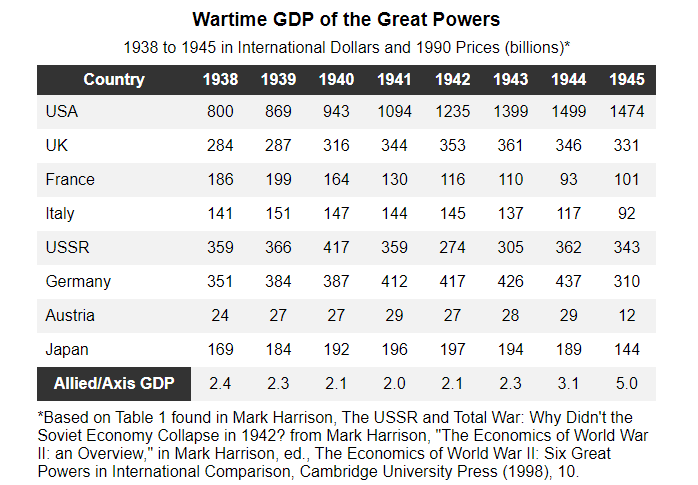
achieving the production levels of armaments it could have and should have produced to carry out an effective war? The answer can be found in the
financial condition of Italy going into WWII, what Sadkovich alluded to earlier: “how hard pressed Itay was financially” and the competition for raw
materials.

|
|
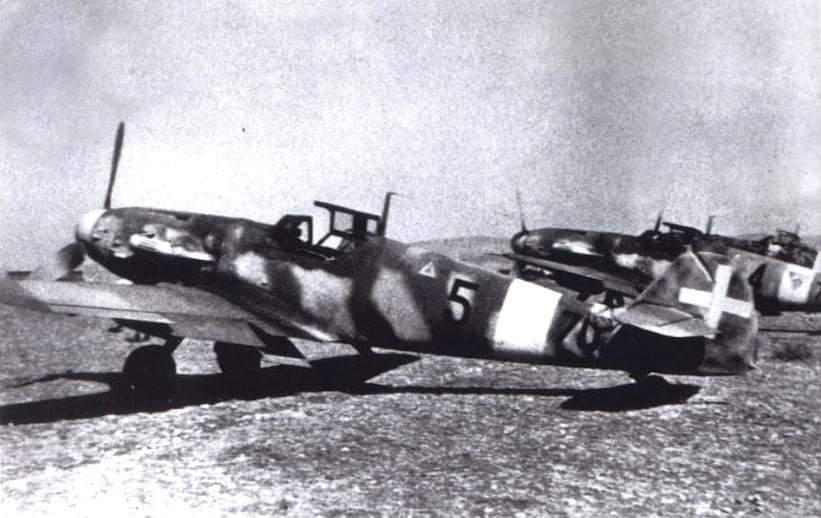
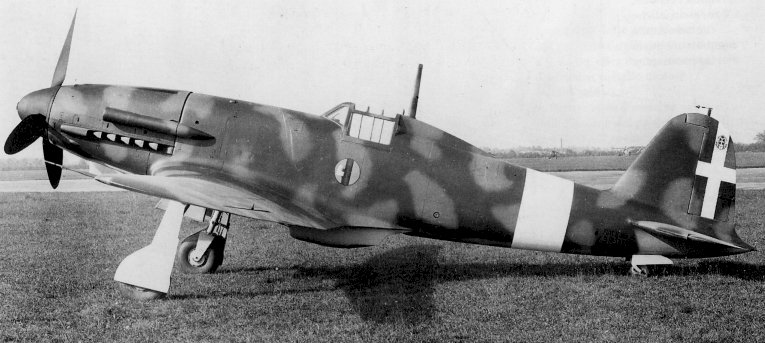
A Macchi built C.202 MM.7762. This plane is generally considered one of the best fighters of WWII
and was a match for the Spitfire V [19].
|
|
|