|
Old Wings Models 1/72 CANT Z.1015 Prototype Bomber by Harvey Low |

 |

Click the STORMO! Eagle to return to the Gallery |
|
A modification of the CANT Z.1007 incorporating three 1500 hp Piaggio P.XII R.C.35 radial engines, the CANT Z.1015 made its appearance in 1939 as a long-distance
mail plane, although definitely intended as an improved bomber prototype. The civil version set a record of 347.97 mph at an altitude of 14,760 ft,
but the military development saw no operational use during the war. Details were as for the CANT Z.1007bis except for the length of 59 ft 6 in, the loaded
weight of 29,988 lb and the maximum range of 1864 miles. The positioning of the pilot and co-pilot were side-by-side unlike the tandem arrangement of
the CANT Z.1007bis. There is no record of the armament fitted.
The CANT Z.1015 was designed by Fillipo Zappata. In 1938 at the behest of the Regia Aeronautica, a long-range mail carrier design was begun
capable of being converted to a medium-sized bomber, the goal being to create an aircraft that could be manufactured comparatively easily
while meeting or exceeding the speed and operational range of current designs. Zappata used the CANT Z.1007bis as a starting basis, which was
structurally modified only slightly. The length was shortened and the wings were altered to accept a new engine. An Alfa-Romeo 135
RC.32 (Tornado) 18-cylinder radial engine with power output of 1,550 horsepower was planned. The prototype was completed on December 22, 1938 and
first flown on January 20 at Monfalcone by test pilot Mario Stoppani. During test flights the aircraft showed good performance with a speed of
500 km/h (311 mph) and a load of 2,000 kg (4,409 lbs) of bombs to a distance of 2,000 km (1,243 miles). In the same year, the aircraft was accepted
by the Regia Aeronautica and designated as CANT Z.1015B (Bellico/Military), the serial number of the prototype was MM.394. At the end of 1939 however,
development was paused. After a short break, development was resumed and by the end of 1940 the plane was now equipped with the Piaggio P.XII RC.35,
power output of 1,350 horsepower (1,500 hp at take-off), as well as a new three-bladed adjustable propeller Piaggio-D'Ascanio. Between June 23 and
July 3, 1942 the Z.1015 with these new engines reached a speed of 563 km/h (350 mph) and flew to a distance of 2,930 km (1,820 miles). During 1942,
the aircraft was flown on a few test flights and was then transferred to the Nucleo Addestramento Aerosiluranti (a torpedo-bomber training unit)
located at Gorizia under the command of Ten.Col. Carlo Unia former commander of the XVIII Gruppo, 10o Stormo. There the aircraft received a new serial
number MM.512 and was tested as a torpedo bomber. During test flights the aircraft demonstrated good flight characteristics and the performance of
the aircraft exceeded the performance of well-known torpedo carriers such as the Savoia-Marchetti SM.79. Production was eventually abandoned due to
the complexity of the design. |


|


|

|
|
|
Background:
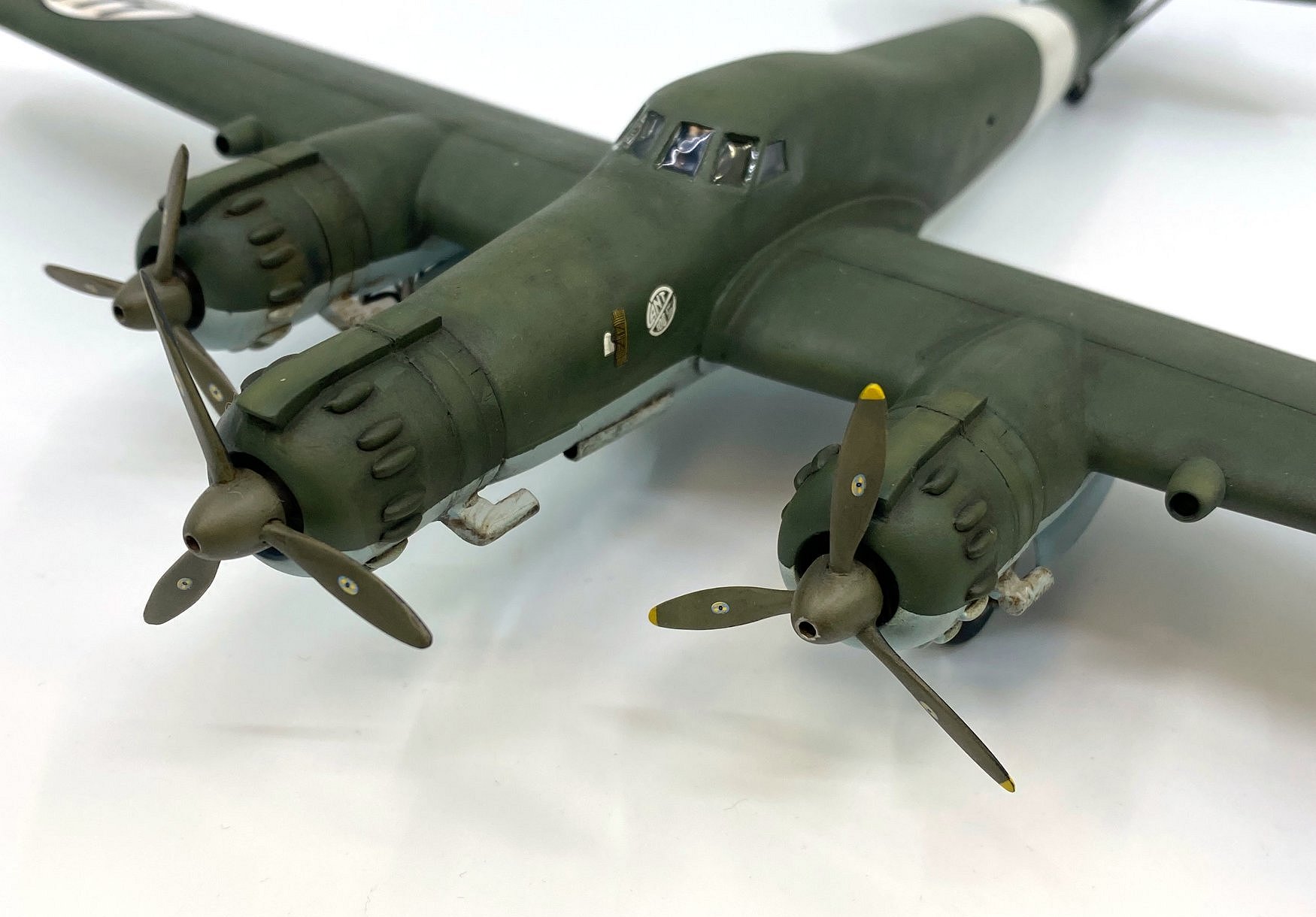
The Model: This model is of the older resin typical of the 90’s. Poor surface texture along with many surface imperfections. Large gates meant removal by both hand saws and a mini hobby table saw (done outside to avoid the dangerous resin dust). There is only one reference on this rare bird: Aerofan Number 2, 1986 by Giancarlo Garello. My thanks to Stefano Lazzaro for his assistance in this reference and his knowledge! No interior or close-up detailed photos exist of this aircraft. The website Secret Projects (www.secretprojects.co.uk), was helpful on some background information. I would like to thank Vince Tassone as well for his help too! The kit uniquely provided a solid resin cast fuselage hollowed-out for an "interior" to be covered by an upper fuselage spine (note the openings cut-out for the windows). This was advantageous in that there was no need to fill any top-fuselage seam given it is difficult to see much, I did not spend much time detailing the cockpit. The interior includes seats and other cockpit details from spare boxes, along with a new raised floor and rear cockpit wall, given the existing kit floor was too low. The cockpit was painted Tamiya Sky Grey (XF-19). I replaced the landing gear from a spare Italeri SM.79, along with new exhausts from evergreen tubing. Photos of the aircraft show it with and without a torpedo. Since the underside torpedo mount was very crude, I sanded it off and did not install a torpedo. The rear tail wheel-well was non-existent and had to be cut out, with a new one from the spares box. The propellers were very delicate requiring lots of flash removal, and filler. I brushed over each blade with super glue and sanded smooth to help fill pin-holes. IMPORANT: It should be noted that the right propeller was counter-rotating!


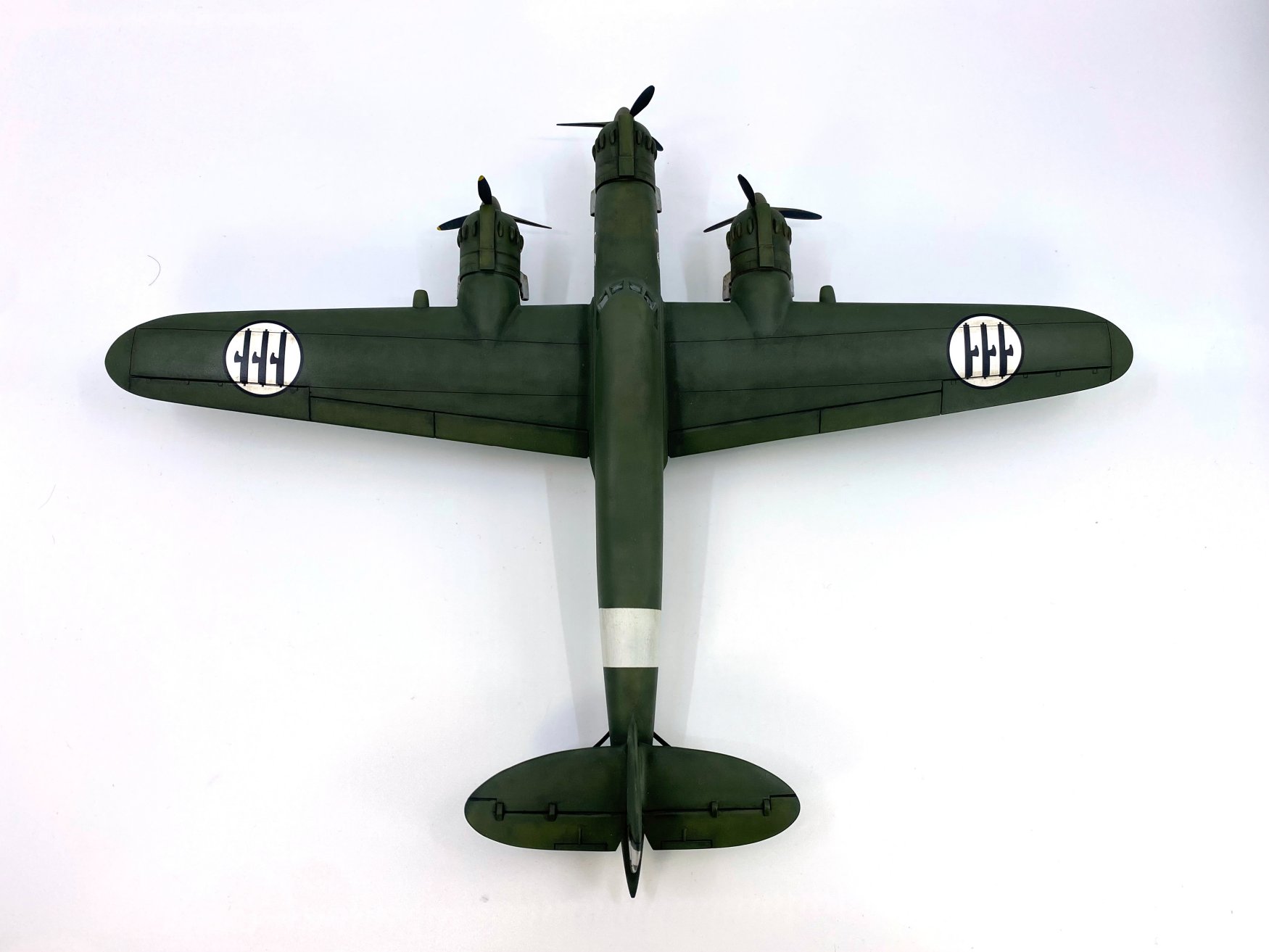
Painting: This aircraft in 1939 had an unknown livery. Possibly it was painted aluminum with some blue or red arrow, or flash given its original civilian purpose. Or possibly even red, the International racing color assigned to Italy since the plane was originally projected as a racer. There are photos of the Z.1015 in Verde Olive Scuro (an olive grey-green FS.34052) with lower surfaces in light blueish-grey (close to FS.36307). The insignia shows clear background lower wing fasces and a white fuselage band and cross of Savoy on the rudder. I found that Tamiya Field Grey (XF-65) as a good match to lighter Verde Olive Scurro. The undersides were painted Tamiya Royal Light Grey (XF-80) with a touch of Light Blue (XF-23) added. The props were painted using AK RC307 Nakajima Interior green (any will do for colour interest variation). Vallejo Black-Grey (70.862) for backside of the prop blades. Prop tips were Tamiya Yellow (XF-3) but only on port propeller as photos show)! All decals were from the spares box including Italeri, Sky Models, and Tauro. 



The final step was the cockpit windows. These were initially masked-off, until all painting was complete when the openings were filled with Micro Kristal Klear window forming material.
And the final result after some finishing touches with a small piece of sponge and white paint: 

For complete details of this model, please refer to Guideline Publications, Scale Aircraft Modelling February 2023 issue: Guideline Publications | Buy SAM: Vol 44-12 online at UK shop
|
Aircraft: CANT Z.1015 Manufacturer: Cantieri Riuniti dell'Adriatico Type: Bomber Year: 1942 Engine: Three Piaggio P.XII R.C.35, 18-cylinder radial, air-cooled, 1,500 hp each (take-off) Wingspan: 81 ft 4 in (24.80 m) Length: 59 ft 6 in (18.14 m) Height: 18 ft 4 3/32 in (5.59 m) Weight: 29,988 lb (13,602 kg) (Loaded) Maximum Speed: 347.97 mph (560 km/h) at 16,404 ft (5,000 m) Ceiling: 26,500 ft (8,100 m) Range: 1,864 miles (3,000 km) Crew: 2-4 |


|
|
|
|
|
|

|
|
|


|


|
|
|
|
April, 2023 STORMO! © 2023 |