|
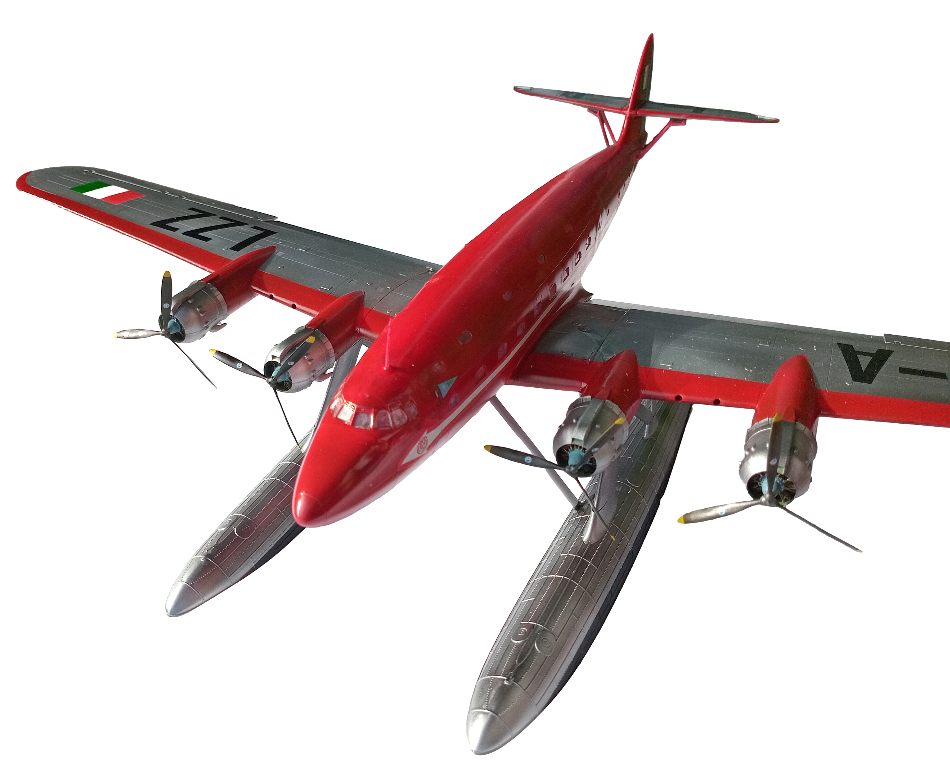
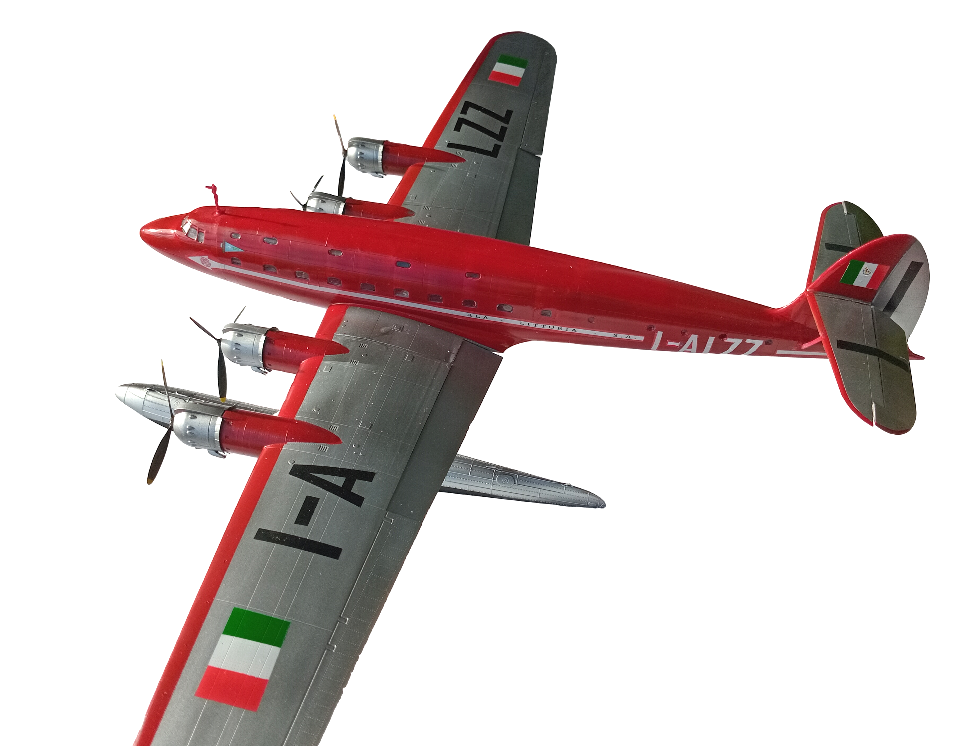
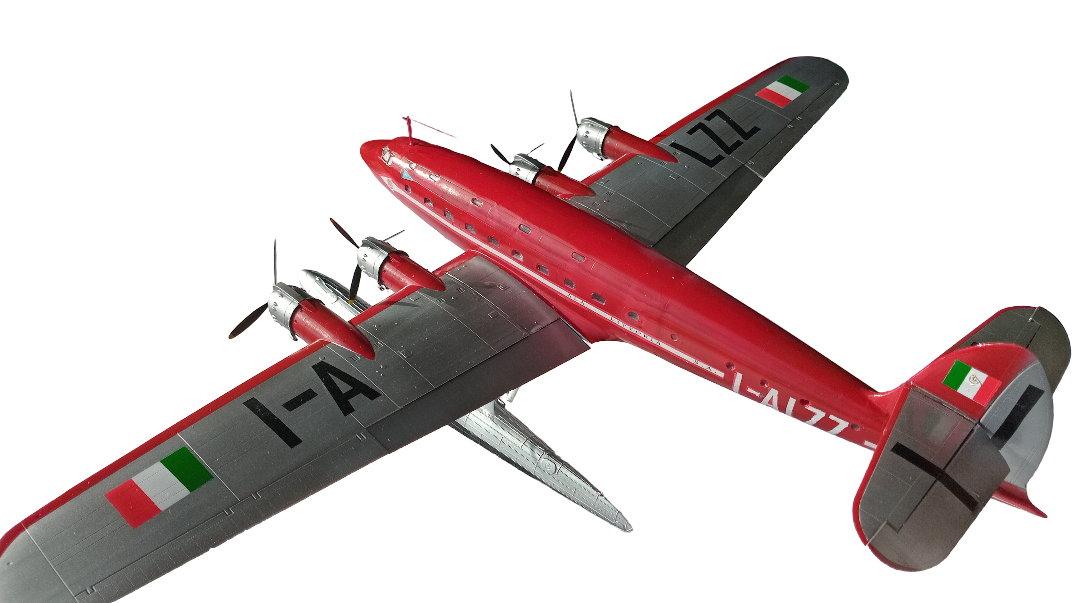
Rare Bird Models 1/72 CANT Z.511 I-ALZZ Commercial Airliner by Vince Fiore |
|
|
|

Click the STORMO! Eagle to return to the Gallery |
|
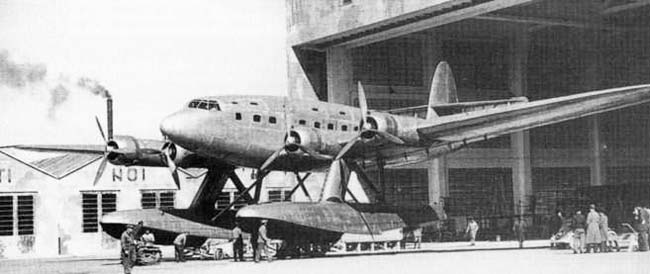
The CANT Z.511 was the largest seaplane on floats ever built. In 1939 Ing. Filippo Zappata designed the four-engine Z.511 transatlantic passenger airliner. Originally intended
for Alitalia's South Atlantic route, the Z.511 featured a two-level fuselage with crew and passenger compartments above, and mail and freight holds below. Sleeping accommodations for
sixteen persons were to be provided. However, the prototype was not completed until after the outbreak of the war, flying for the first time in October, 1940. Another example was built
concurrently. An excellent and rugged design the Z.511 could moor on waves nearly seven feet high with little adverse effect and had a maximum range of 2796 miles. An ambitious plan for raiding New York harbor was under study in 1943 by the Regia Marina using S.L.C. Maiale or Siluro a Lenta Corsa, manned-guided torpedoes, already successfully employed against the British, sinking the battleships Valiant and Queen Elizabeth at Alexandria. The two Z.511 seaplanes were to fly the Atlantic taxying in under radar screen to a point from which the manned torpedoes could be launched. No provisions were made for retrieving the naval personnel after their attack. The military Z.511A was powered by four 1500 hp Piaggio P.XII RC.35 radial engines giving a maximum speed of 264 mph, a cruising speed of 205 mph and an alighting speed of 84 mph. It could climb to 13,120 ft in 16 minutes. Reference: [1] Thompson W. Jonathan, "Italian Civil and Military Aircraft 1930-1945", Aero Publishers Inc., Los Angeles, California, 1963
Italian Civil and Military Aircraft 1930-1945

|
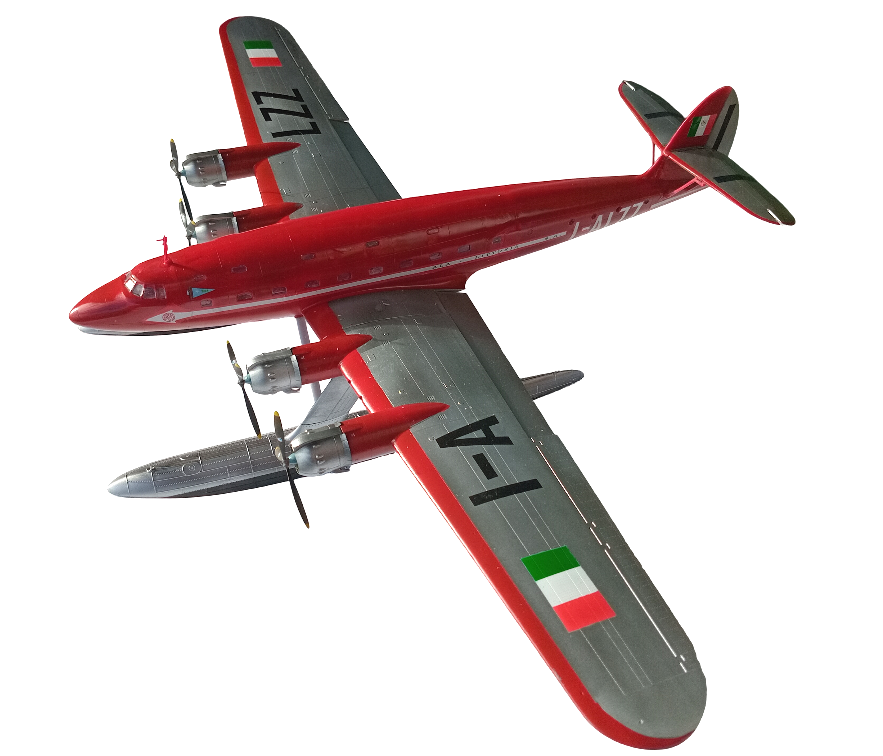
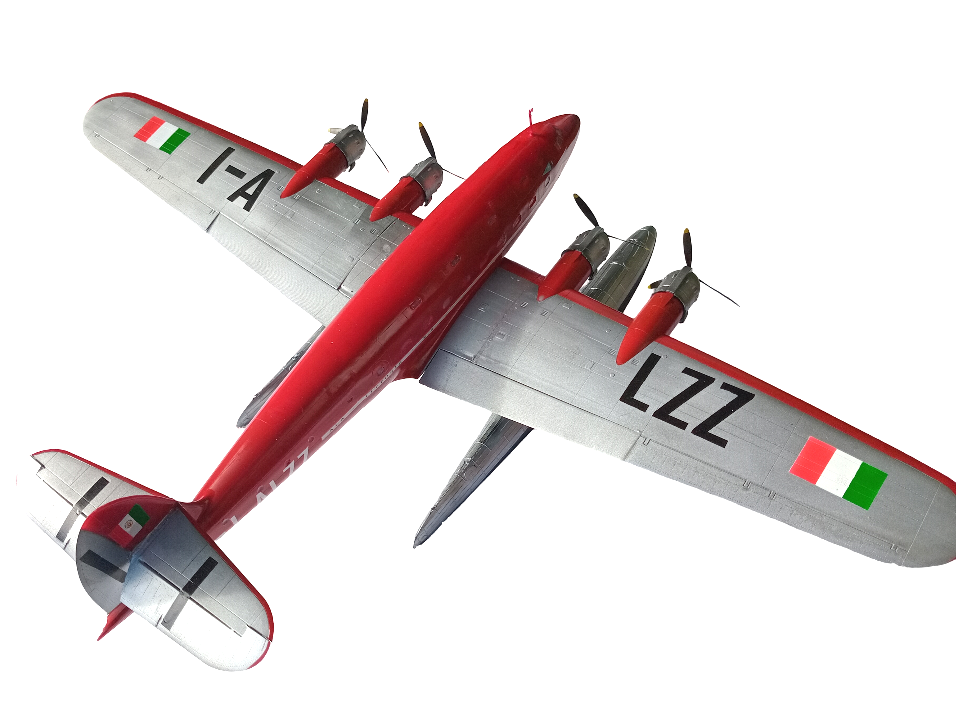
First, let me begin by saying these fantastic kits. The fit of the parts is fantastic, as is the level of detail. This is my second attempt at building this subject. Because the first build went so well, I proceeded onto the second without the caution I should have and ran into a couple of problems, entirely my fault. However, they were easily overcome. One problem is the decals if you choose the red motif. The white part of the decals is printed on a red background. This would have been fantastic if we are formed as to what red should be used. I use MRP Rosso Corsa 188. Therefore, when the decals were applied, the red of the decal was too light. My solution was to wait a halfhour after application, apply the setting solution, and with a new blade cut the red of the decal away. A very delicate process. On the first model, I found it was very difficult to set the windows flush. On this model, I left them off and used Deluxe Glue n Glaze . The tri-color flags were painted on, because I discovered the white is not opaque. I was very pleased with the result. The tiny flags and the prop decals were from the spare box. A great kit, highly recommended. SPOILER: THE NEXT KIT FRON RARE BIRD MODELS IS ALSO AN ITALIAN SUBJECT ...
|
Aircraft: CANT Z.511 Manufacturer: Cantieri Riuniti dell’Adriatico Type: Civil transport Year: 1940 Engine: Four Piaggio P.XIl RC 35, radial with 18 cylinders, air-cooled, 1,350 hp each Wingspan: 131 ft 3 in (40.00 m) Length: 98 ft 1 in (29.90 m) Height: 35 ft 4 in (10.77 m) Weight: 75,400 lb (34,200 kg) (Loaded) Maximum Speed: 263 mph (424 km/h) Ceiling: 25,000 ft (7,550 m) Range: 3,170 miles (5,100 km) Crew: 6 Passengers: 16 (48) |
|
|
|

|
|
|
|
|
|


|
|

|
|

|


|


|


|
|
|
|
January 2026 STORMO! © 2026 |