|
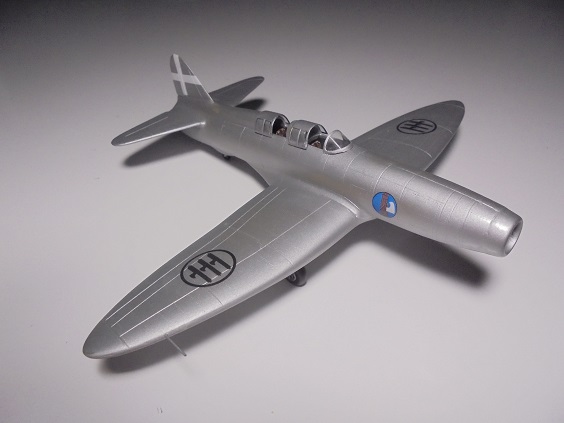
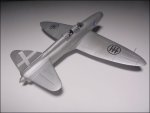
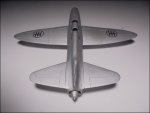
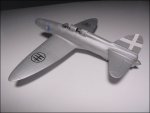
Valom 1/72 Caproni Campini N.1 Second Jet Powered Aircraft by Richard Mendes |
|

Click the STORMO! Eagle to return to the Gallery |
|
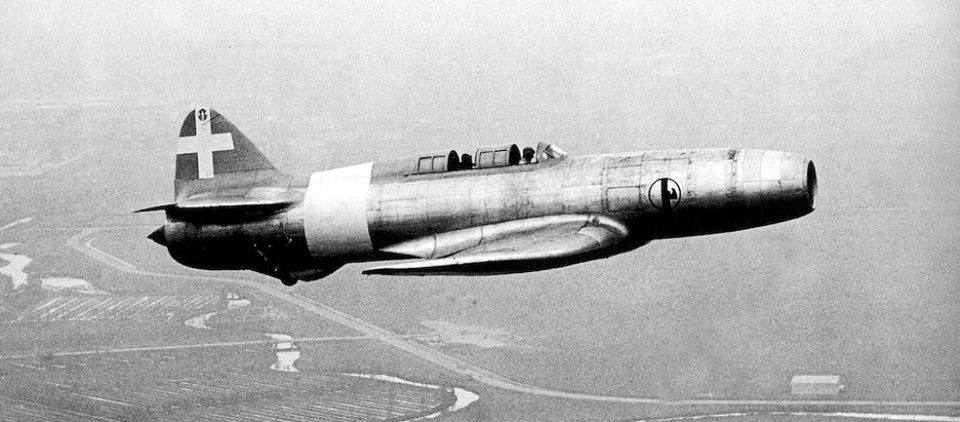
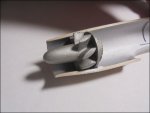
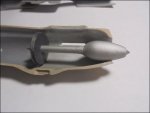
The first Italian jet aircraft made its maiden flight on May 28, 1940 and for a while this was considered to be an historic date for the whole of aviation. In fact on that day it seemed that the Camprini Caproni CC.2 (also known as the Caproni Campini N.1), which took off from the Taliedo airfield without difficulty at the hands of Mario de Bernardi, had managed to outdo the intense efforts of the German and British industries which had been working for years on engines and aircraft of this type. However, this was not the historic event it was first thought to be. This was because the first flight by a jet aircraft had already taken place in great secrecy, in Germany a year earlier: on August 27, 1939 with the first major trial of the Heinkel He 178. And secondly because the design potential of the CC.2 jet-engine, namely using a piston engine to drive the compressor, limited power. There was, of course, still the satisfaction of having outmatched Great Britain (the first flight by an experimental Gloster E.28/29 jet aircraft took place there as late as May 15, 1941). Nevertheless, the CC.2 demonstrated the feasibility of jet propulsion and it should be added that the Italian approach was the same as the one being pursued in the US at this time. The engineer Secondo Campini had started the preliminary plans for his revolutionary aeroplane in the latter half of the 1930s. Rather than designing an aeroplane, it was more a question of producing a turbine engine capable of providing the necessary thrust for making the aircraft airborne, and Campini opted for a compromise solution: in his engine, the function normally carried out by the turbine in a turbo-jet was carried out by a normal piston engine. In effect the system of propulsion consisted of three parts: the forward-mounted, three-stage compressor capable of 18,000 rpm; the piston engine, in this case a V -12 Isotta-Fraschini producing 900 hp, which worked the compressor; and the dynamic duct with the ring-burner and outlet nozzle, in which the air-flow from the compressor was accelerated before passing through combustion chambers where it was further expanded.
The 'motoreallore' (moto-jet), which was the term used to define the engine developed by Campini, was mounted in a specially designed monoplane-type body with a low wing and retractable undercarriage, built entirely of metal; the wing was distinctively elliptical in shape, and the aeroplane could seat two people. After its maiden flight the Campini Caproni CC.2 prototype went through an initial series of trials, in the course of which the entire range of the aircraft's features and the engine's characteristics was explored. The major limitations, which soon became evident, were the low speed and the low altitude it could reach. This was because of the relatively poor performance of the Isotta-Fraschini engine installed. On November 30, 1941, at the end of the trials, Mario De Bernardi flew the second Campini Caproni prototype on its first long-distance flight, which was also the first of its kind in the world. This flight was from Milan to Rome, landing at Guidonia airport, where the aeroplane was to be handed over for the official trials at the experimental centre of the Regia Aeronautica. The flight took place without a hitch and the aircraft also carried a bag of mail on that occasion. However, the series of tests at Guidonia marked the beginning of the end of the Campini Caproni. The combination of scepticism and the delays caused by a series of minor technical setbacks and minor accidents, caused the tests to drag on up to September 1943. Innovations: The Caproni Campini N.1 introduced two new innovations to jet engine design, the afterburner and the shaped exhaust/aerospike nozzle needed for higher mach nunmbers that when mated to a Junkers Jumo 004 (which lacked both features) would have resulted in a modern day jet engine. |
|
|
|
|
|
|
|
|
|
|
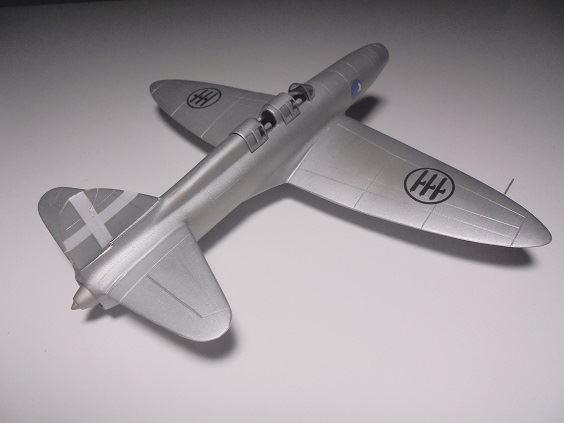
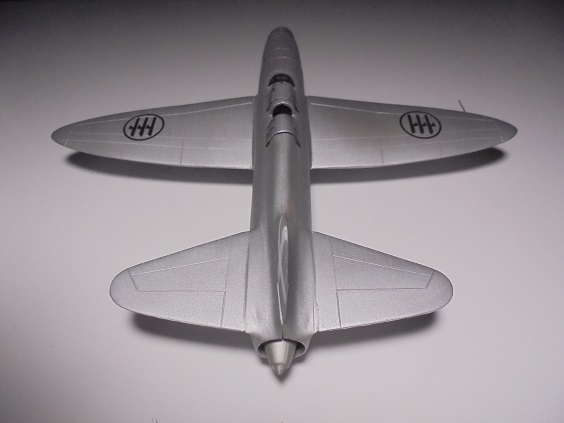
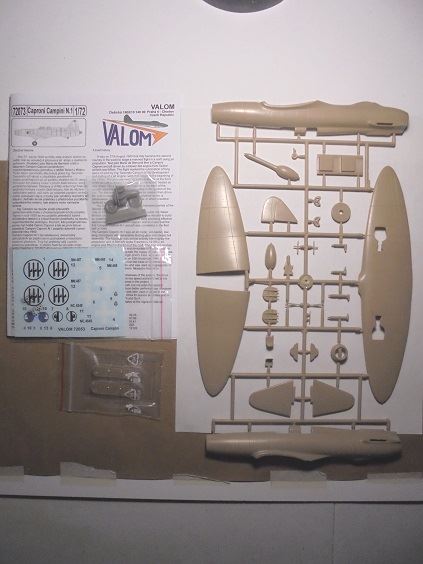
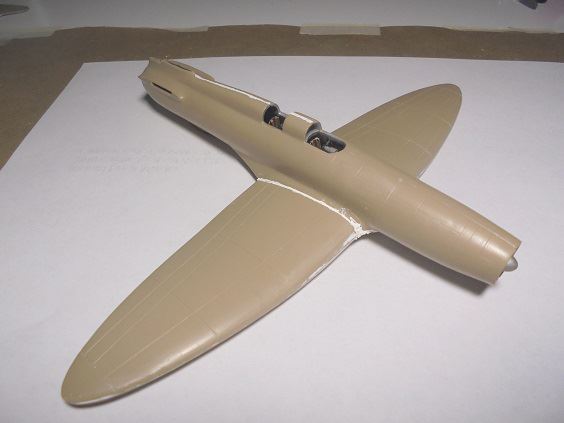
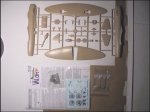
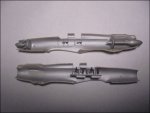
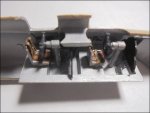
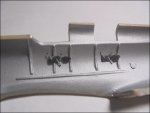
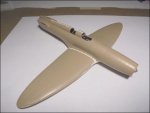
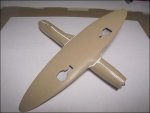
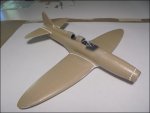
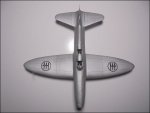
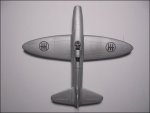
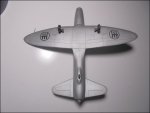
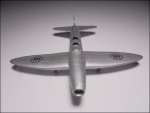
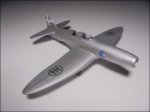
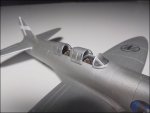
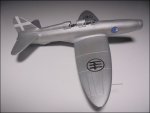
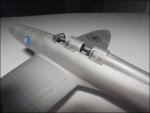
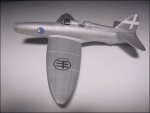
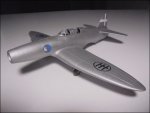
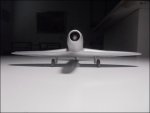
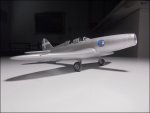
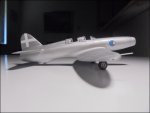
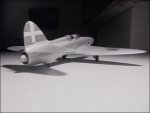
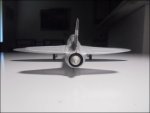
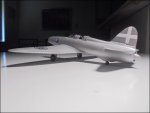
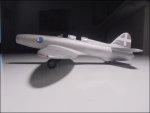
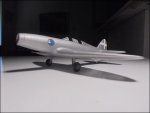
The 2013-vintage Valom 72073/72086 with styrene plastic-injected and clear vacuform, etched brass, resin and photo film instrument panel parts, 1974/80s-vintage Delta/Delta2 3/1003 with all styrene plastic-injected parts are the only 1/72nd scale model kits of the Caproni Campini N.1 two-seat CC.2 (no kits to date of the single-seat CC.1) the tad better tooled Delta/Delta2 kits featuring now outdated raised rivet and panel scribing detail compared to Valom’s recessed. None are accurate renderings of the CC.2 Valom to their credit providing etched brass and photo film instrument panel cockpit parts latter not aligning at all with corresponding brass instrument panel covers discarding them in favor of contour cutting clear styrene plastic sheets glued behind the brass covers overpainting the former with dark grey paint.
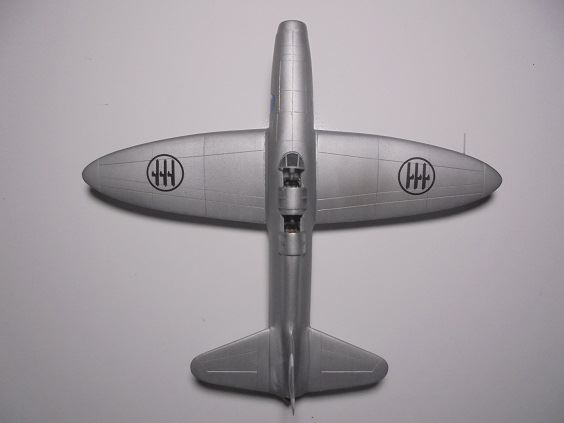
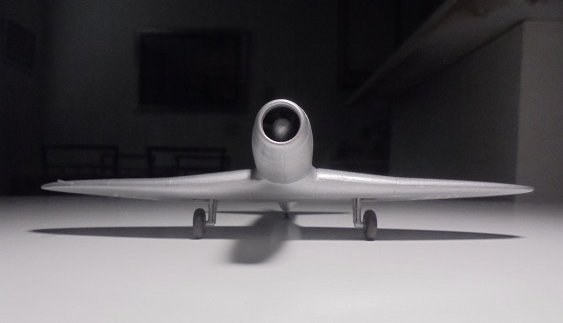
Painting the Valom kit was disarmingly simple; exteriors and interiors Testors Flat Aluminum and Steel enamels per period and museum photos of the Caproni N.1 CC.2, Humbrol 29 Matt Dark Earth enamel torso and seat belts, Testors Flat Rust, Flat Black and White “special mix”, Black, White, Flat Rubber “special mix” latter for tires well as other spot mixes for detailing, Testors Flat Green and Model Master Insignia Red for mainwing navigation lights. Kit mainwing and fuselage water decals were employed, portside top and underneath mainwing tri-fasci reversed for blades to face outwards due to incorrect silk screening holding them in place with White Glue, full-color fuselage fasci affixed forward of pilot’s canopy, full-sized white Distintivo di Guerra crosses without House of Savoy crests masked-off and spray painted on rudder sail per how the CC.2 appeared on its August 27, 1940 maiden flight, no clear lacquer seal sprayed on as not for the model to appear toy like.
|
Aircraft: Campini Caproni CC.2/N.1 Manufacturer: Societa Italiana Caproni Type: Experimental Year: 1940 Engine: One Campini motor-jet, 1,650 lb (750 kg) thrust, worked by an Isotta- Fraschini L.121 MC40 Asso, V-12, water-cooled, 900 hp Wingspan: 48 ft 0 in (14.63 m) Length: 39 ft 8 in (12.10 m) Height: 15 ft 5 in (4.70 m) Weight: 9,300 lb (4,217 kg) (Loaded) Maximum Speed: 223.4 mph at 10,000 ft (359.5 km/h at 3,000 m) Ceiling: 13,120 ft (4,000 m) Range: - Crew: 2 |
|
|
|
|
|
|
|
|
|


|


|
|
|
|
August, 2021 STORMO! © 2021 |