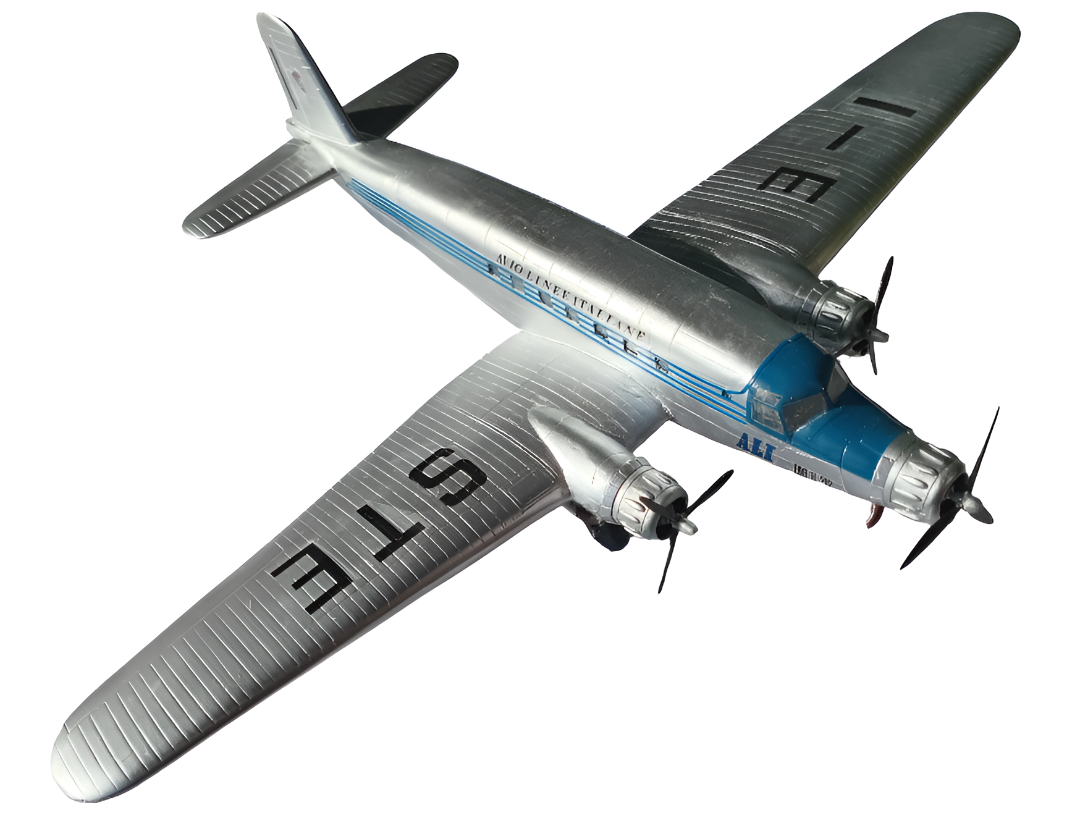
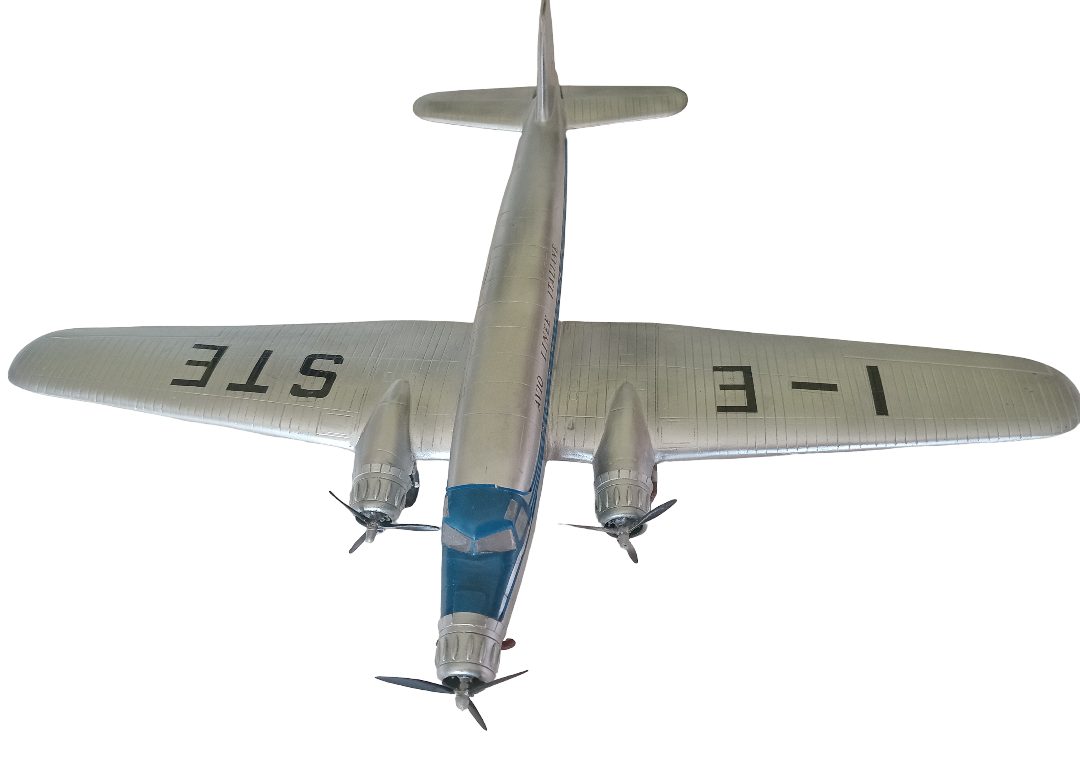
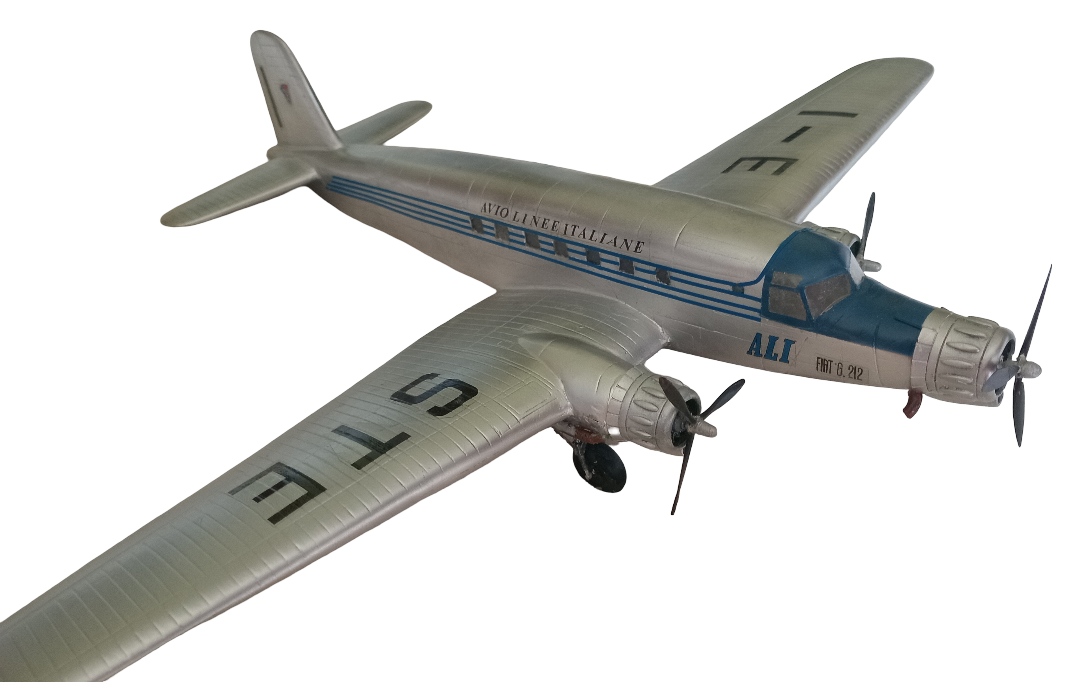
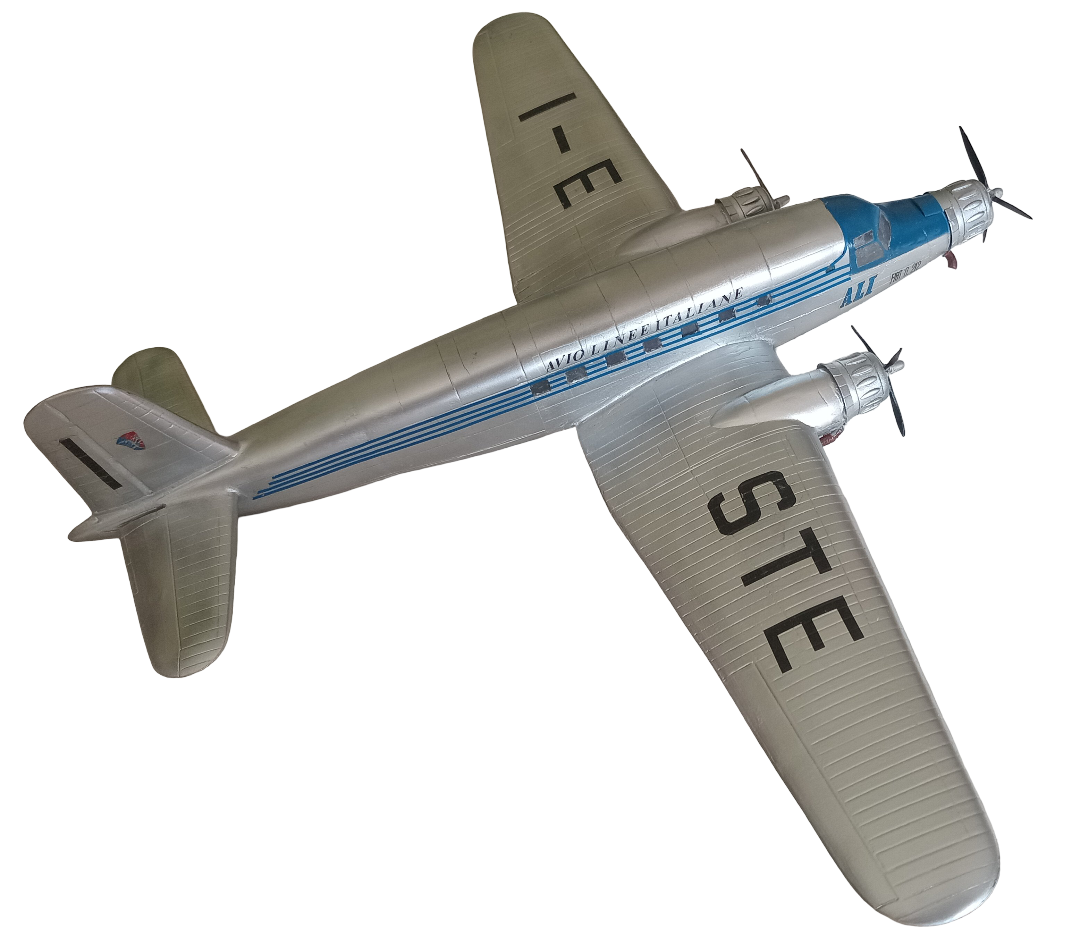
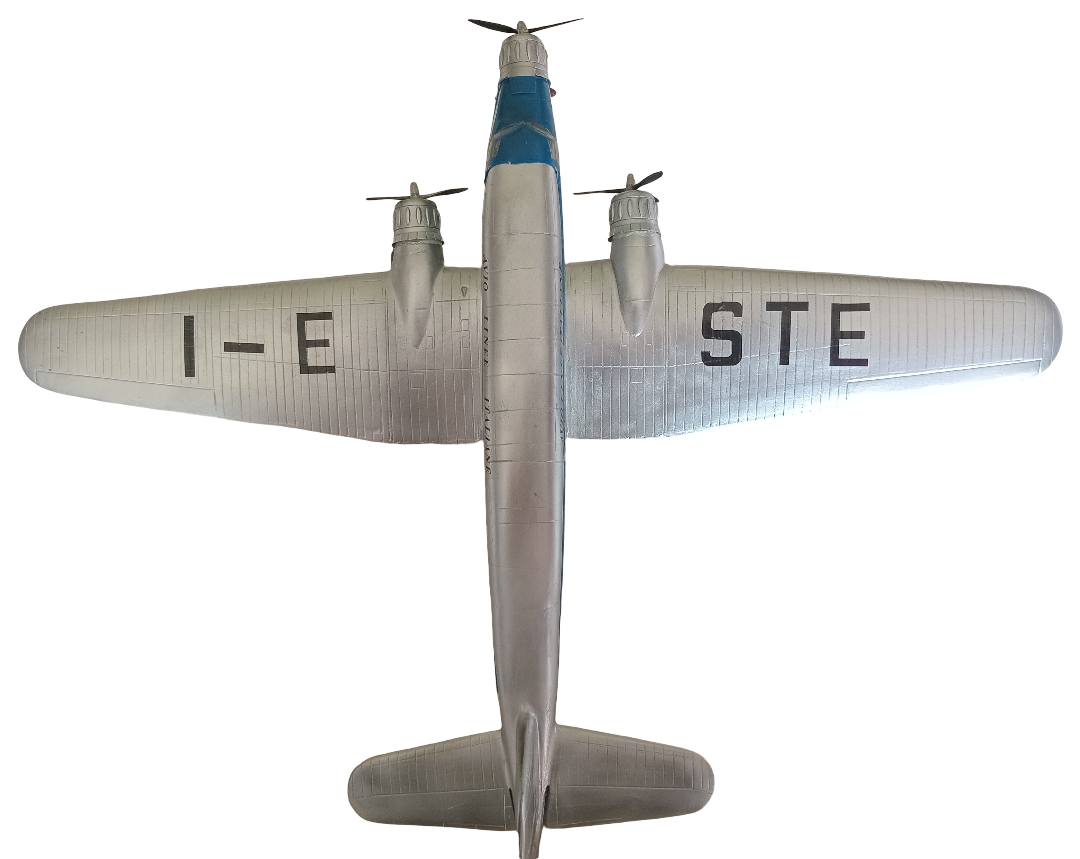
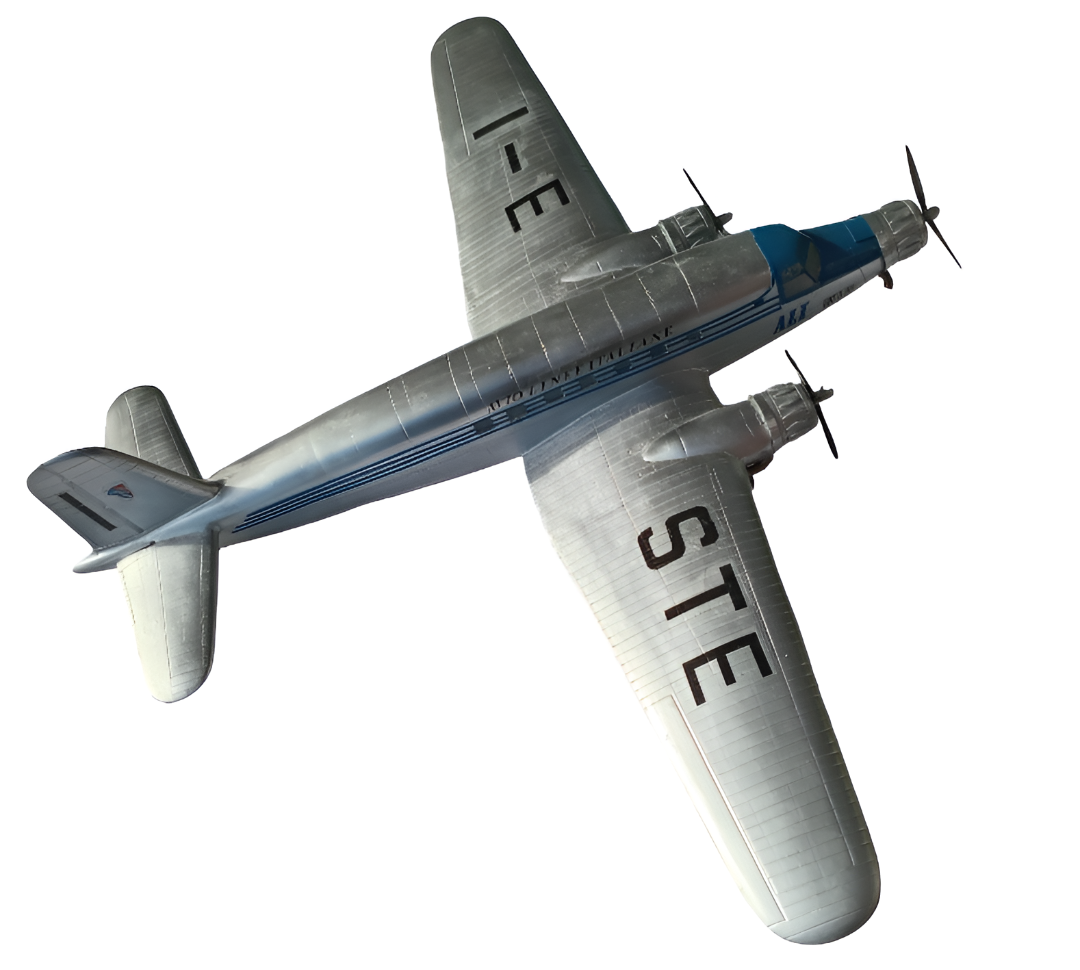
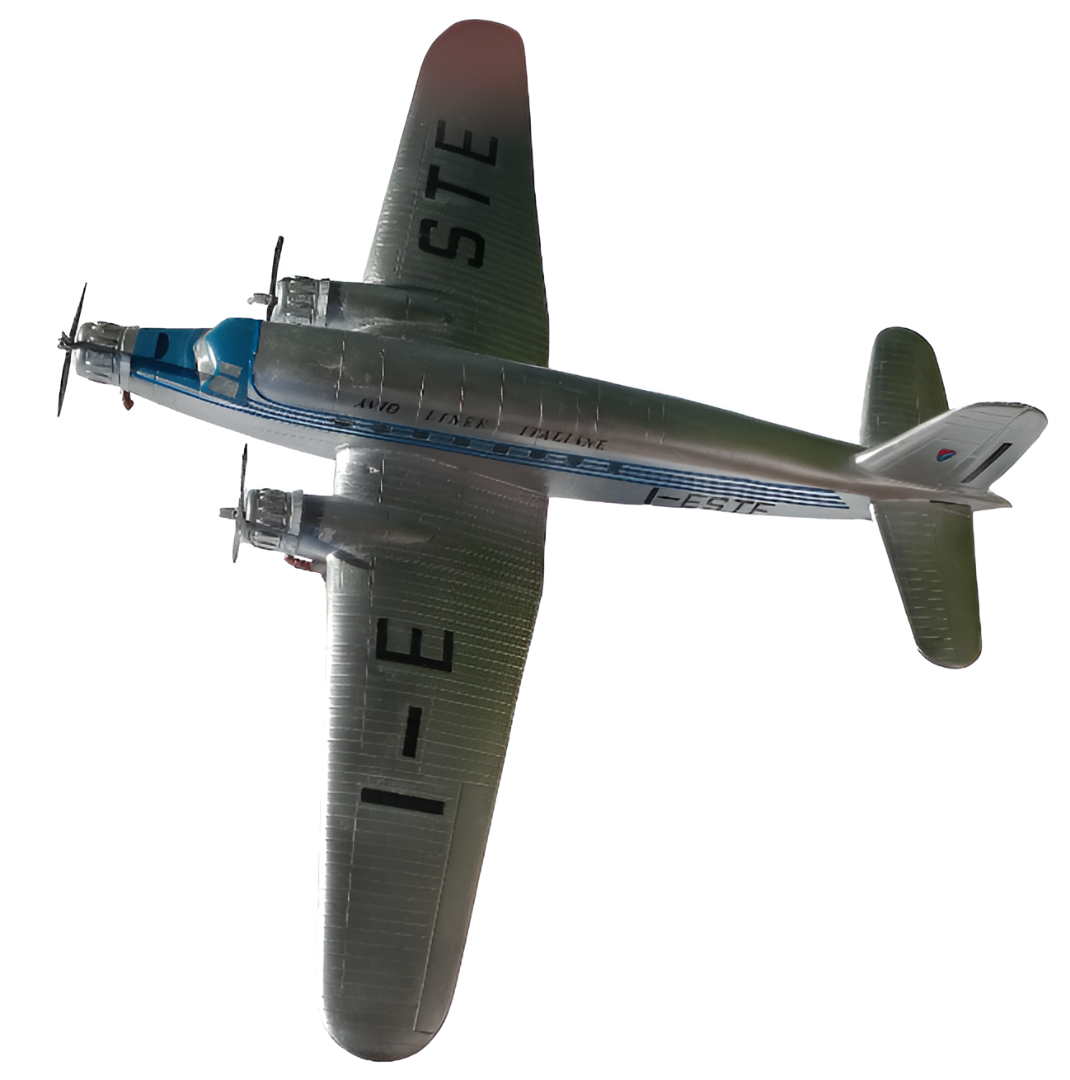
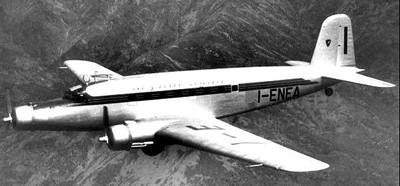
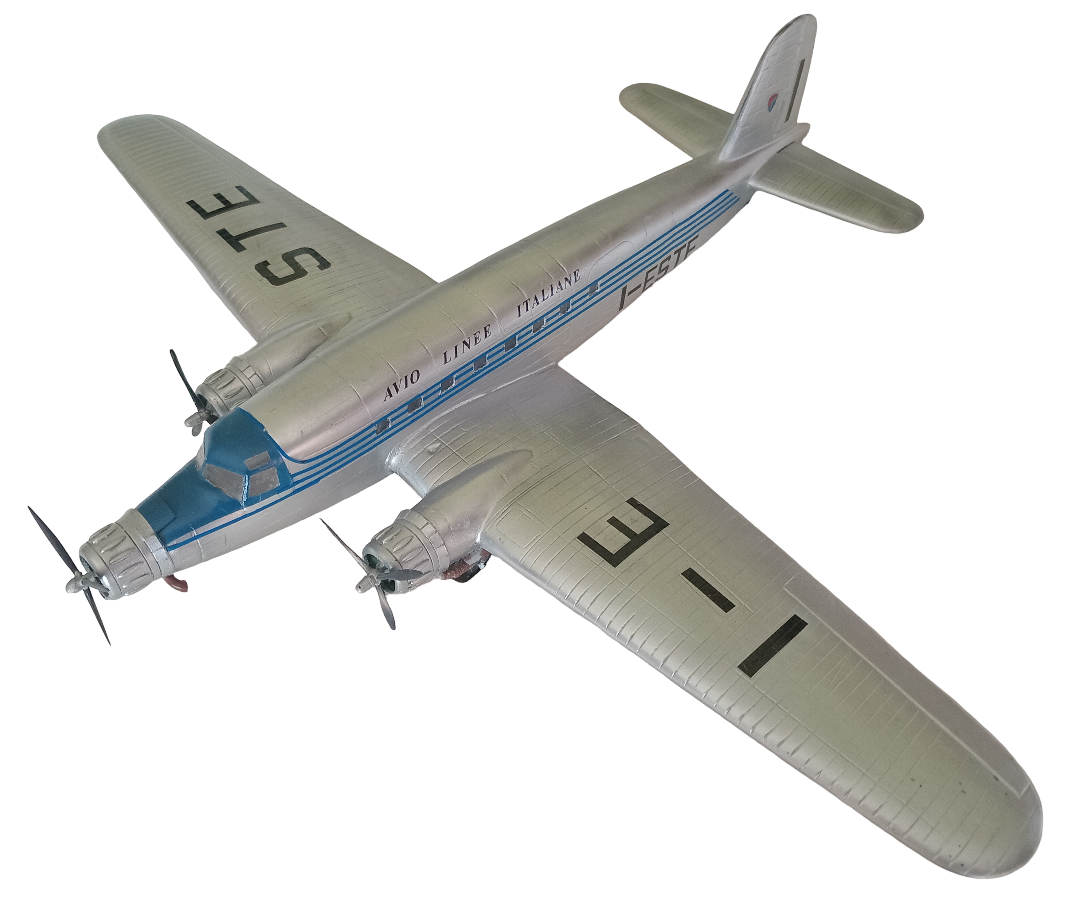
The last example of the three-engined formula, which was typical of Italian aeronautical engineering from the 1930s onwards, was the Fiat G.212.
Although not meant as a rival to contemporary or modern American aircraft when it appeared, this airplane gave useful commercial service between 1948 and the
early 1950s, together with its direct forerunner, the G.12, which had been built after the war in the larger capacity L version. Nine models of the civil
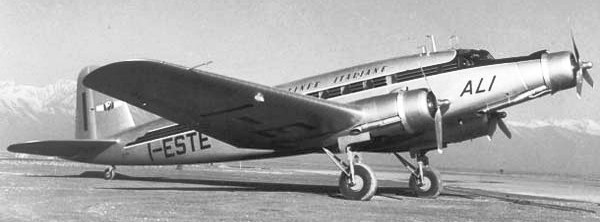
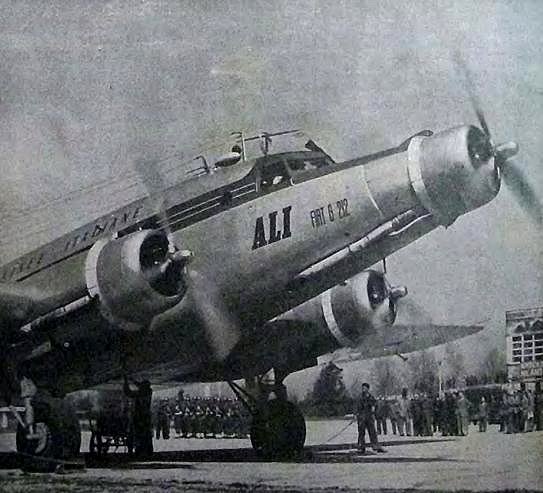
version of the G.212 (the CP) went into service: six with ALI (Avio Linee Italiane, an historic Italian carrier (1926-1952) owned by Fiat),
three with the Egyptian company SAIDE, which also used the four-engined SIAl Marchetti SM.95C. The Egyptian aircraft had possibly the most dramatic career.
Appropriated by the Air Force they were used in 1957, at the time of the Arab-Israeli war for the exchange of prisoners. However a military version of the
G.212 was also built, and these were used by the Italian Air Force (AMI) from 1948 onwards.
The G.212 project was launched by Giuseppe Gabrielli towards the end of 1943, with the aim of producing a larger and more powerful successor to
the three-engined G.12, which had made its maiden flight in the civil version in the autumn of 1940, and had been followed a year later by the
military version. However, the design and development stage was considerably delayed both by the way the war was going, and by a ban imposed
by the German military authorities. It was not until January 20, 1947 that the new three-engined model, called the G.212 CA, managed to make its
maiden flight. In its general design the aircraft echoed that of its direct predecessor, even though it had been considerably replanned, especially with
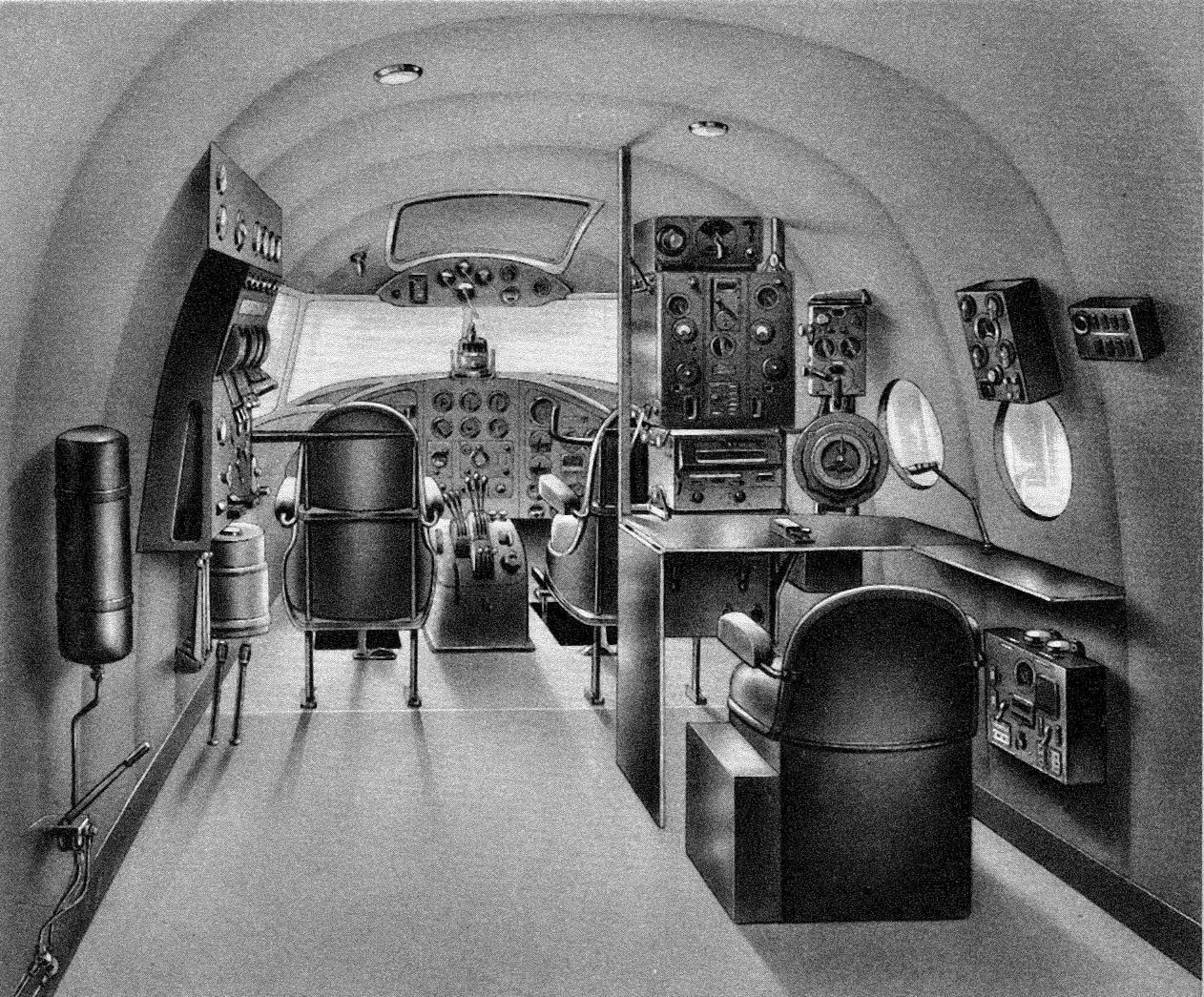
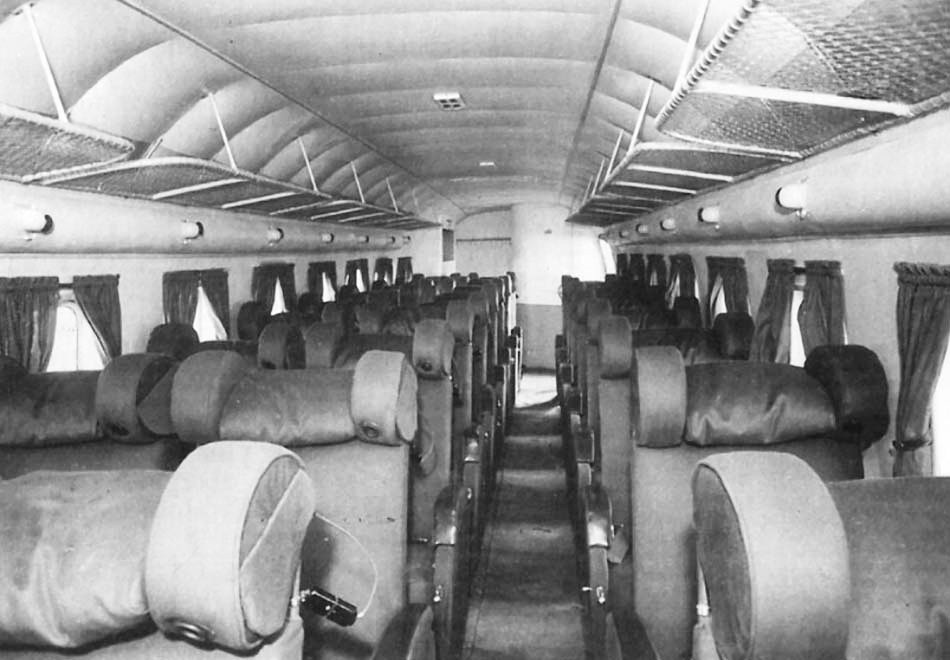
regard to the fuselage which could now accommodate 30 passengers. After the initial trials, which revealed no defects, the prototype was delivered to
the Air Force which in turn concluded its own tests. In the meantime, Fiat, which had envisaged an initial production series of 25 aircraft, found itself
obliged to reduce this estimate in view of the meagre demand for the type on the civil market. The version destined for commercial use, called the G.212 CP
Monterosa, differed from the prototype principally in terms of the engines; instead of the Alfa Romeo A.R. 128 they had three Pratt & Whitney R-1830-S1C3-G Twin Wasp engines,
producing a constant 1,065 hp and 1,215 hp at take-off and in emergency conditions. The normal capacity was 26 passengers; baggage could be stored
in the lower part of the fuselage and in special compartments beneath the leading edge of the wing, outside the engine nacelles.
The Fiat G.212 CP went into service with ALI in 1948, operating mainly on international flights, starting from Milan. The aircraft did not have a particularly lengthy career with this
company. The following year ALI took over various minor companies and formed with these the group called ALI-Flotte Riunite. However, this group failed to match up to the two
major airlines and did not survive beyond March 1952 when it was taken over by LAI. At least four G.212s were used by ALI-Flotte Riunite in this period. At the same time the three-
engined Fiat went into service with the Egyptian company SAIDE, which used it until 1950 on the Cairo-Benghazi-Tripoli-Tunis route.
It is interesting to note that, with the production of the G.212, Fiat interrupted its activities in the field of air transport for many years. These activities were not resumed until the
early 1960s, in the form of the preliminary studies which were to lead to the project for the twin-engined turbine-driven Fiat G.222.
Reference:
[1] Angelucci E. and P. Matricardi, "World Aircraft, Commercial Aircraft 1935-1960", Sampson Low Guides, 1979
|
|
Fiat G.212 Passenger cabin.
|
|
|
|
Fiat G.212 with ALI, note the vast dorsal antenna array.
|
|
|