|
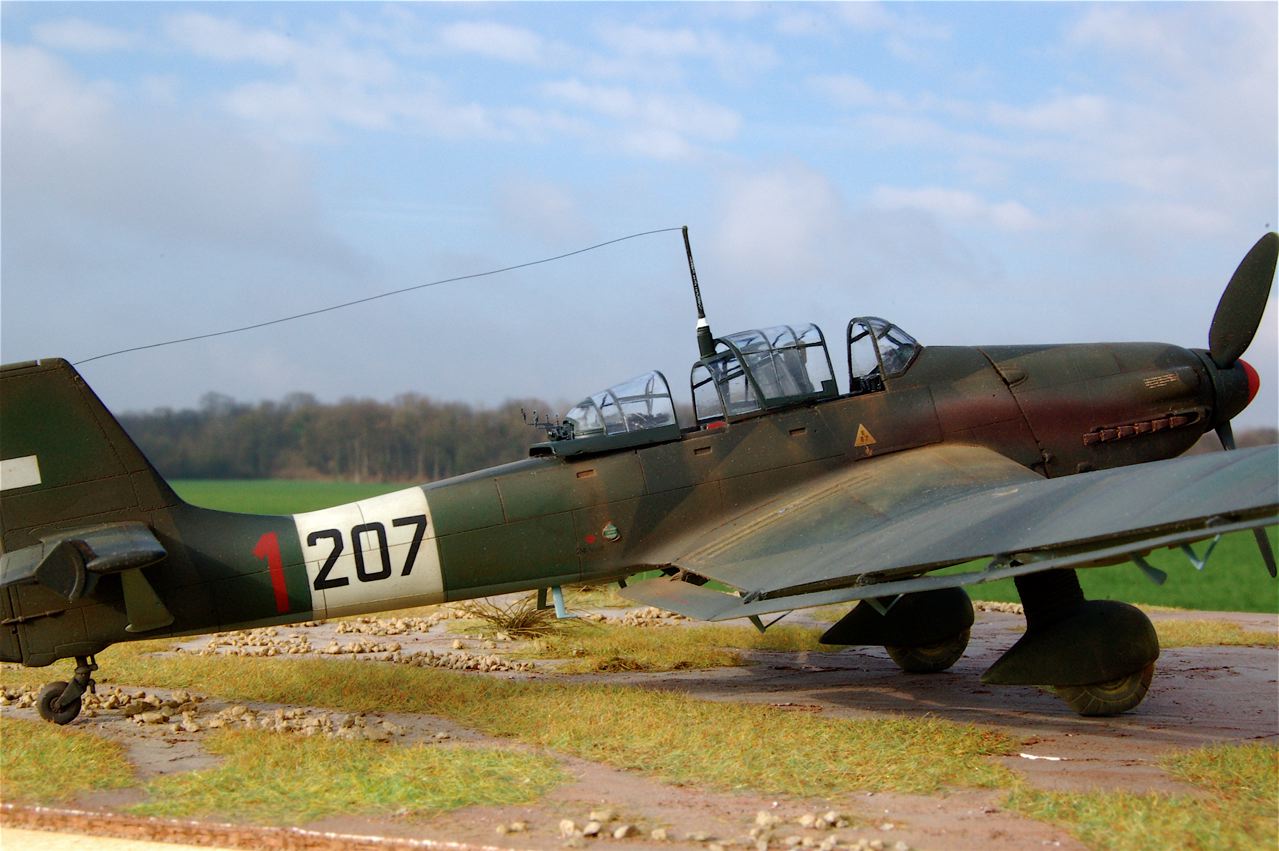
Hasegawa 1/48 Junkers Ju 87 D3 Picchiatello (Stuka) by Jean Barby 
|
|
|
|

Click the STORMO! Eagle to return to the Gallery |
|
In its brief but spectacular career the dive bomber earned itself a unique place in the pages of aeronautical history. No other aircraft typified the terror wrought by these aircraft as did the Ju 87 Stuka. Perhaps understanding early the limitations of the dive bomber, the Regia Aeronautica (RA) never fully committed itself to the development of the dive bomber, choosing instead to devote its resources to the development of conventional ground attack aircraft and strategic bombers such as the Piaggio P.108, CANT Z.1007 and CANT Z.1018. However, with the rapid German successes in France and Poland and seeing a need for the pinpoint accuracy of the dive bomber in place of level bombing (in support of its navy), the Regia Aeronautica turned to the Ju 87. It is interesting to note that neither Britain, France or Russia developed a successful dive bomber while the US, Japan and Germany each featured one. However the Ju 87 stands alone as the only successful land based dive bomber. No other country outside of Germany had gained as much notoriety in the use of this aircraft as did the Italians. Seeing that the number of Ju 87s avaiable could not reach the prescribed numbers needed to put into effect the tactics of the Luftwaffe, the Italians developed the skip bombing technique well before its use in the Pacific war. Italian dive bomber groups were called Bombardamento di Picchiata (Dive Bomber Group) and hence Picchatello (Dive Bomber).
103o Gruppo; 207a and 237a Squadriglie This unit was formed on 1 February 1943 to use the new version of the German Ju 87. In Mid-April twelve Ju 87D-3s arrived from Graz, Austria, followed by six more on the 21st. The latter were flown by Italians to Bari-Palese for inspection by the Air Ministry on the 20th, then to Siena the next day. With German technical help the unit began intensive training. In May the unit moved to Sardinia for anti-shipping and night raiding missions. The night it arrived at Decimomannu it was bombed and reduced to six operational aircraft. It shortly moved base to escape further bombing. On 10 July four Ju 87Ds of 207 Sq flew to Decimomannu joining seven escorting fighters from 51o Stormo, and set off to tackle the invasion fleet at Licata Bay. They met fifty enemy fighters, but some ships were hit and all four bombers managed to land at Chinisia. The following day 237 Sq transferred from Gioia del Colle to Crotone with five aircraft to take on shipping off the Calabria area. The unit then passed its remaining nine aircraft to the newly formed 121 Gruppo. The next month the unit retired to the north to test the Breda 88M, a rebuilt version of the earlier ground-attack aircraft of 1940. It had two of these serviceable on 7 September.[2] References [1] Di Terlizzi M., "Junkers Ju.87 Picchiatello", Aviolibri Special 02, IBN Editore, Roma, 2000
Aviolibri Special 02 - Junkers Ju.87 Picchiatello
 [2] Dunning C., "Courage Alone: The Italian Airforce 1940-1943", Hikoki Publuications, Manchester, United Kingdom, 2009
Courage Alone: The Italian Airforce 1940-1943

|
"Tuffatori"! This Italian word rings like bells to my ears. It has the same effect as "pasta alla arrabiata" but not for the same reason. If it is a well known fact that the RA has to do with the Ju87B due to the failure of the S85 as a dive bomber, it is a lesser known fact that the same RA used a couple of the D serie Stukas. So today I invite you to build a Junker Ju.87 D3 with the usual step by step pics as a guide in case of height anxiety. The kit is, of course, the very good Hasegawa one. The plus is the Aires cockpit, king of the gems in its own style. 

Most of you know that RLM 66 dark grey was the rule with the Luftwaffe interiors in those days. I drybrushed the whole thing with a mixture of black and white oil paints, and suddenly the "pit" is brought to life. You may note the realism of the instrument panels as well.


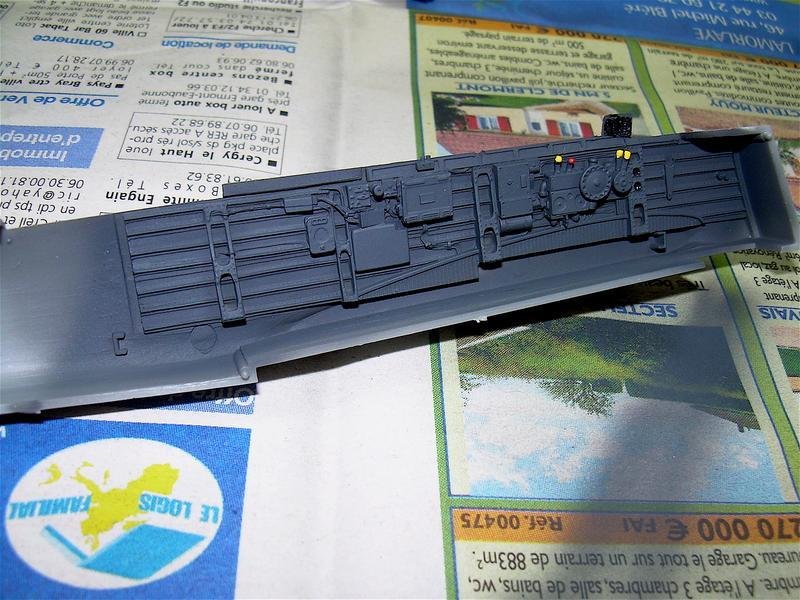


Now you must turn your attention to the wing tips. Hasegawa provides a D5 wing while the D3's one is close to the B variant. At the same time some panels have to go, don't cry, that's life. 


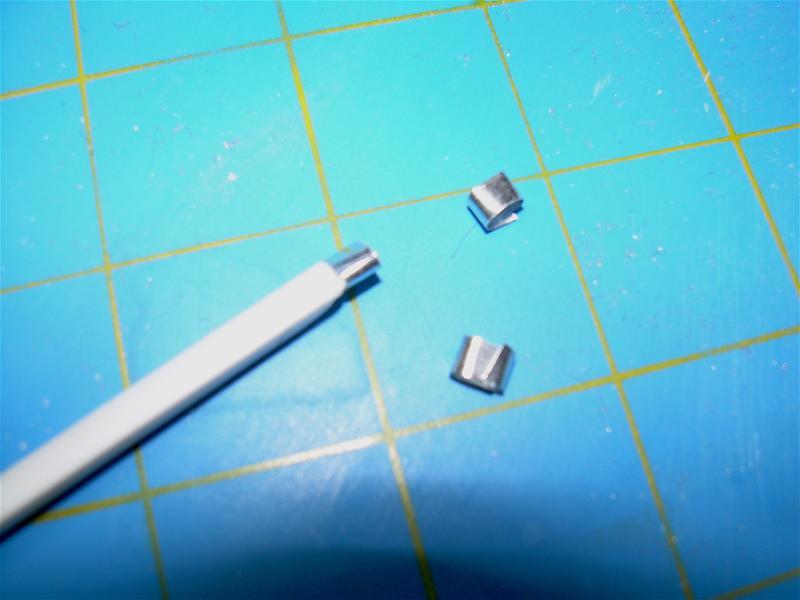
Now we come to the tricky part. For obvious production reasons, Hasegawa molded all the flap/aileron hinges as solid parts which is definetly not the case on the real aircraft. First you must drill the oval shape holes where the actuator will pass. I made a tool from plastic strut to make the aluminium strips to cope with the new shape of thes openings. Then using plasticard, I rebuilt the whole system, and It is not as difficult as I had once guessed. Now it looks like the real thing! 
Wings are fixed and the zone where putty is used is masked with tape to avoid unwelcome scratches when sanding time will come. You have to add the anti skid stripes on the wings(plasticard) and the steel plates along the front edges of the pilot fuselage sides (plasticard again). A photo etched grill is used to close the opening of the chin radiator, and some work is also required for both underwing radiators which are undersized. Aluminium foil was used to build the movable parts of the radiators. Now we are ready to paint the beast! 


So here we go RLM 65 for the underside, then highlight of some panels with RLM76, upper side is RLM70/71 What else! White band around the fuselage ... 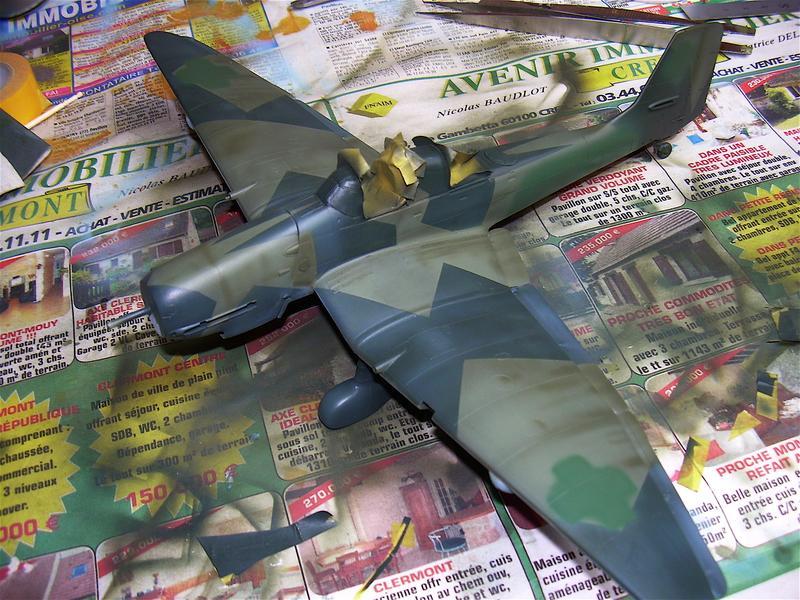
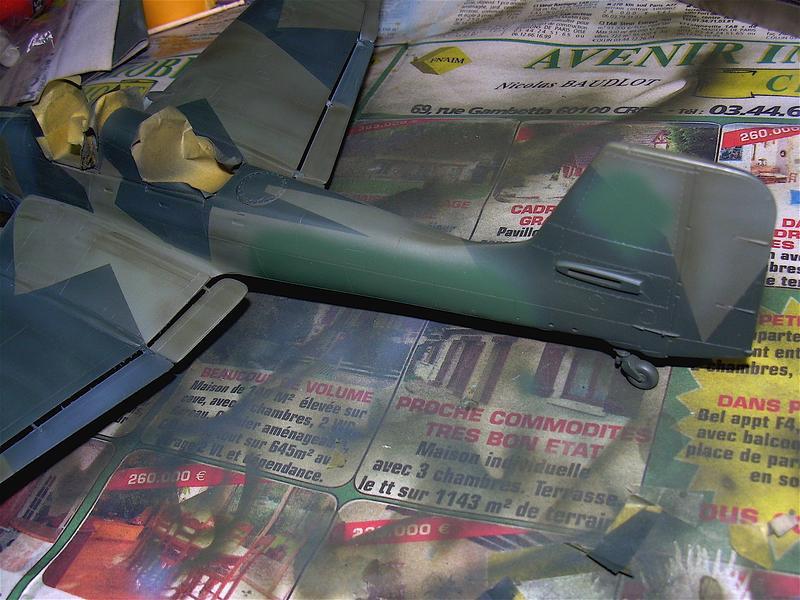
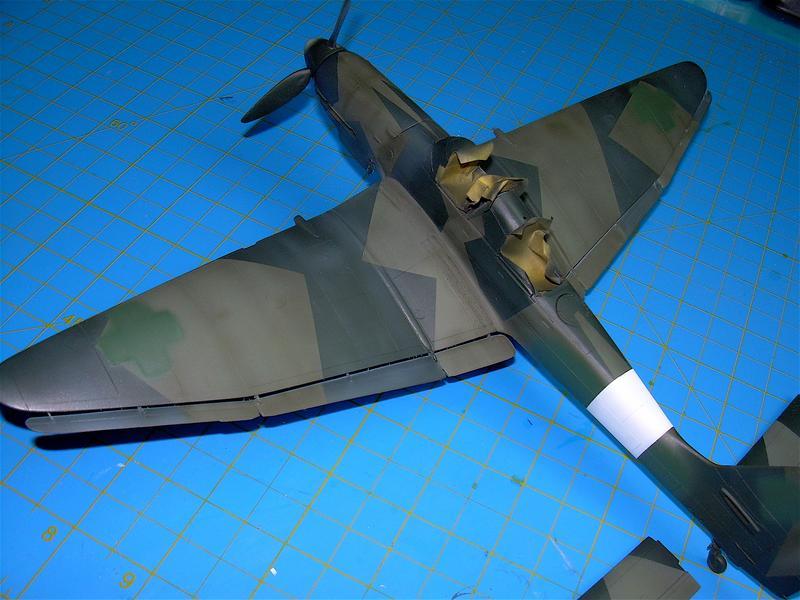


For the weathering effects I used the technics of the filters used by our friends from the AFV, using drops of oil colors spreaded with a large brush to give chromatic effects on your paint. This technic is very effective and I use it very often by now. 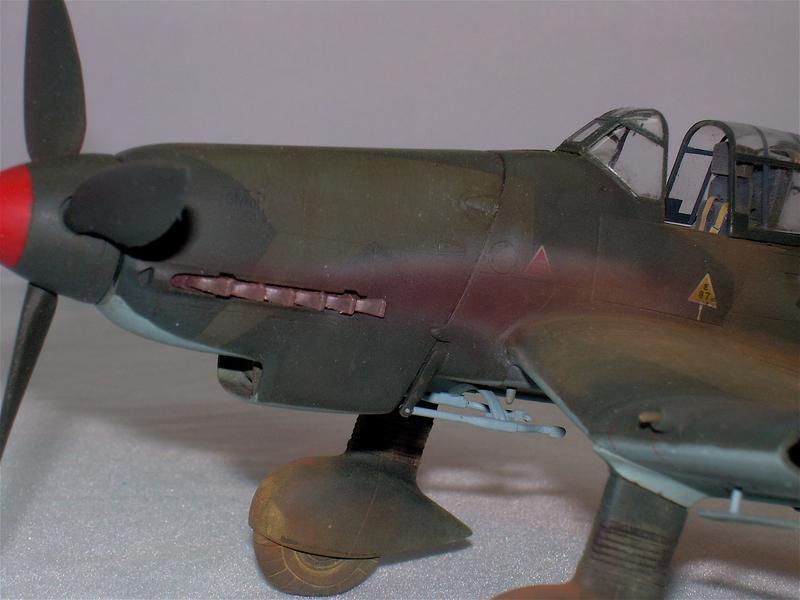

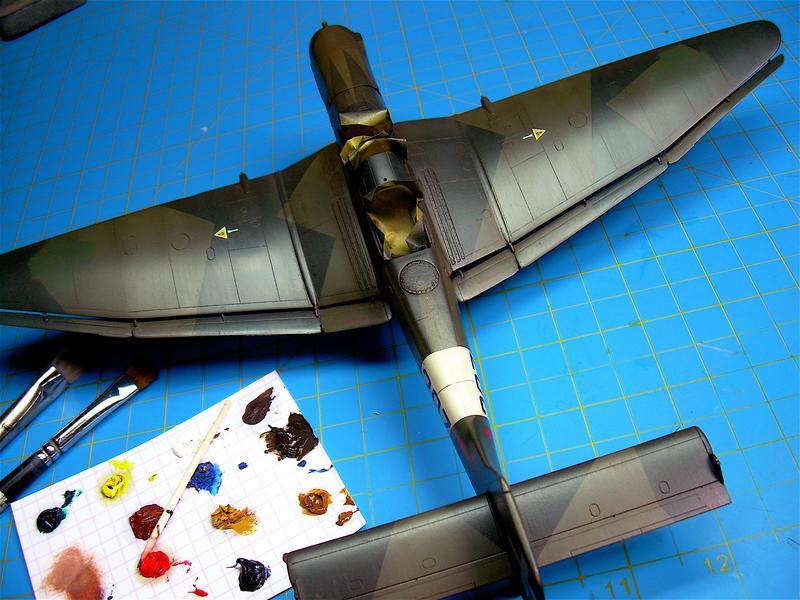

The decals are from Tally-ho but the number is a bit oversized, and then you have a "Tuffatori" from the 207 sqadriglia during the hot fight of mid 1943! Ciao tutti!


|
Aircraft: Junkers Ju87D-3 Manufacturer: Junkers Flugzeug und Motorenwerke A. G. Type: Dive Bomber Year: 1941 Engine: Junkers Jumo 211J-1, 12-cylinder V, liquid-cooled, 1,400hp Wingspan: 45 ft 3 in (13.79m) Length: 37ft 9in (11.48m) Height: 12ft 9 in (3.88m) Weight: 12,880lb (5,835 kg) (Loaded) Maximum Speed: 255mph (410km/h) at 13,500ft (4,115m) Ceiling: 23,905ft (7,300m) Range: 954miles (1,535km) Armament: 4 machine guns; 3,968lb (1,800kg) bomb Crew: 2 |
|
|
|
|
|

|
|
|

|


|
|
|
|
February, 2009 STORMO! © 2009 |



