|
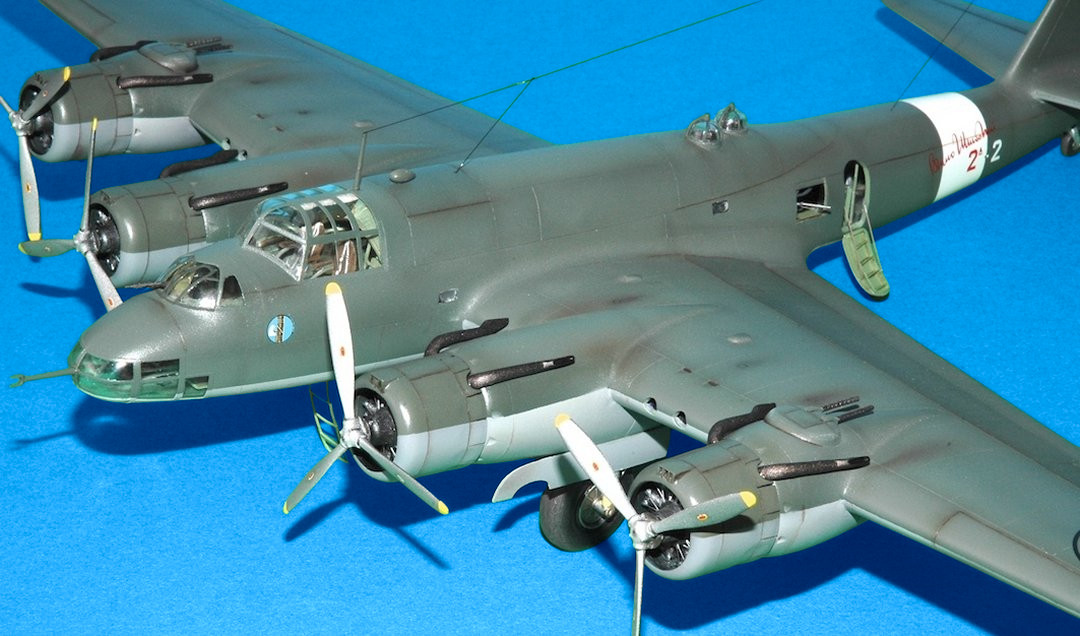
Special Hobby 1/72 Piaggio P.108B Serie I Strategic Bomber by Philippe Martin |

|
|
|

Click the STORMO! Eagle to return to the Gallery |
|
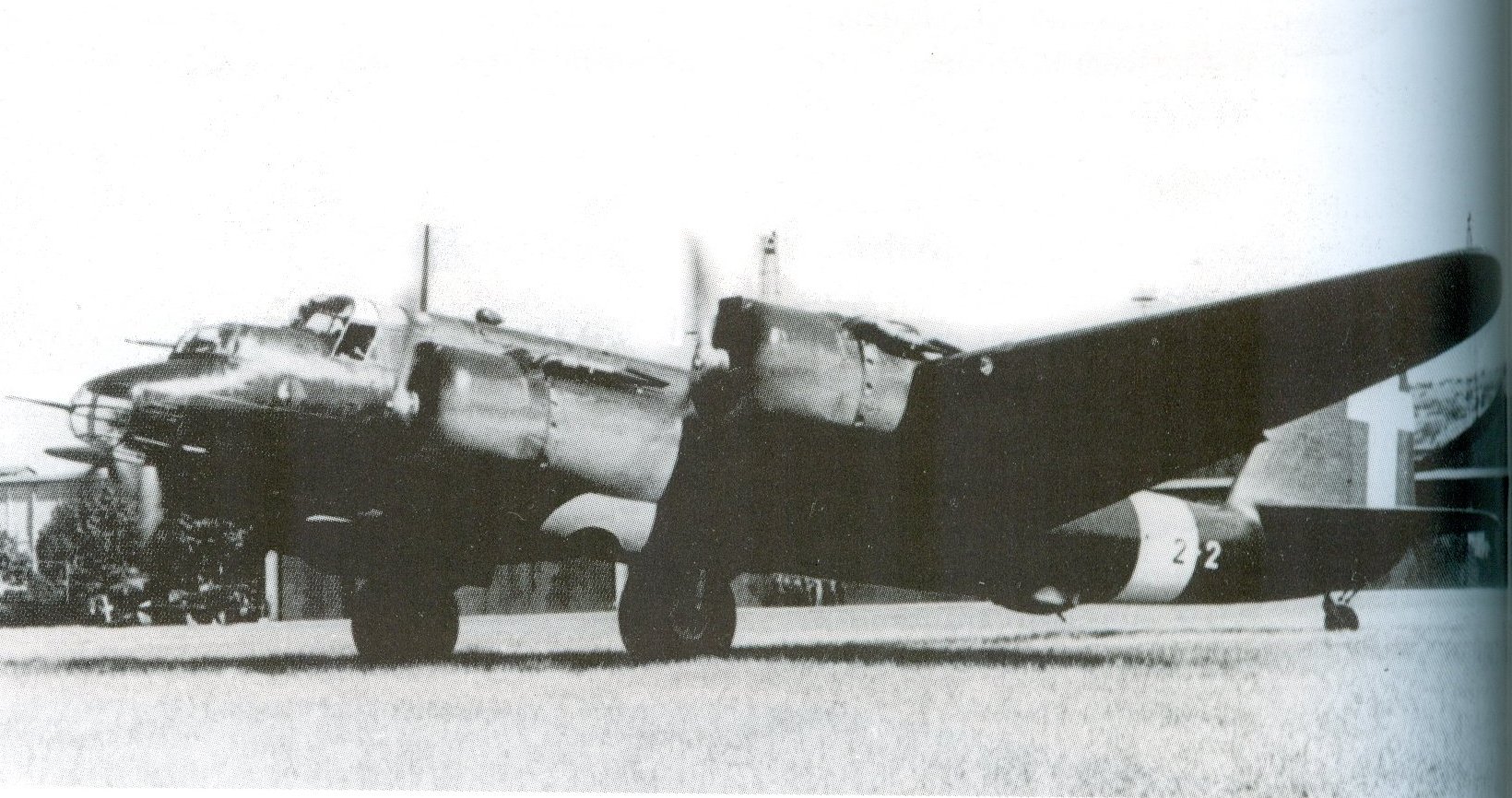
This was the Italian "Flying Fortress". The airplane was built in late 1939, but it did not complete its first
mission until June 9, 1942, and the few aircraft built had little occasion to show their outstanding qualities.
The P.108 was unique in the history of Italian aviation as it was the only four-engine strategic bomber, and
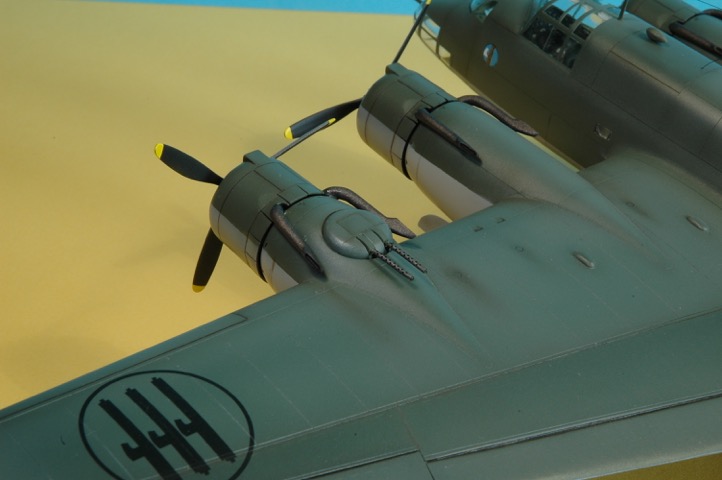
was one of the best bomber designs of WWII. The designer of the airplane was Giovanni Casiraghi who worked in the United States from 1927 to 1936. On the basis of this experience he designed a radically new airplane. The P.108 was an all-metal low-wing bomber with a retractable under-carriage. Power was provided by four 1,350 hp Piaggio P.XII radial engines. Defensive armament consisted of four 12.7 mm machine guns installed in pairs in two remote-controlled turrets in the engine nacelles, two 7.7 mm guns on the sides (later replaced with two 12.5 mm guns), and a 12.7 mm machine gun in a retractable ventral turret. The airplane could carry a maximum of 7,700 pounds (3,492 kg) of bombs inside the fuselage. The Italian Air Force had nothing else like it and the airplane aroused the interest of the authorities as soon as it appeared. During the ministerial competition of 1939 it won out over another interesting design, the four-engine CANT Z.1014. The prototype first took to the air on November 24, 1939. It performed extremely well in a series of tests and required refining in only a few small details, but it took some time for pilots and crew to get used to the new aircraft. The airplane was delivered to a single unit, the 274a Squadriglia BT long-range bomber squadron and the airplane became operational on June 9, 1942, when it went out on a maritime search-and-bomb mission in the area of the Balearic Islands. During the last year of Italy's participation in the war, the P.108 was used only occasionally. Among the targets of the 274a Squadriglia BT were Gibraltar and Algeria. The Algerian raid took place during the Allied invasion of North Africa. After September 1943 most of the airplanes fell into German hands, but they did not use the airplane in combat. A total of 24 aircraft were built between November 1939 and August 1943. Several variant models were developed, these included the P.108A which carried a 102 mm cannon; the P.108C, a civilian version to be used on South American flights; and the P.108T, a military transport that could take-off with an all-up weight of 32 tons (32.51 tonnes). Nine examples of this transport model were built. German transport units used this variant until the end of the war. "Those privileged to fly the P.108 remember it with affection, despite its large size, the bomber was easy on the controls in all flight conditions. On operations, the crew appreciated the payload and good overall characteristics."[2] 274a Squadriglia BT (BGR - Bombardiere Grande Raggio) This was the only strategic bomber unit in the Regia Aeronautica, formed for long-range shipping and land target attacks. Another unit 275a Sq, was created in 1942 but disbanded after a short while because of a lack of future aircraft supplies. The bomber was very expensive to produce from Italy’s limited resources and ability to finance such large scale projects after two major wars. Thus only one unit existed, which kept up a balance of loss and supply until the Armistice. The crews trained in the anti-shipping role, although the aircraft were rarely used in this way. The trainee crews were sent to Guidonia for training, Littoria for instrument flying, Furbara for bombing lessons and Gorizia for torpedo drops. On 7 August 1941 Bruno Mussolini, son of Benito Mussolini died when his aircraft crashed during a landing approach. He was CO of the unit and a popular commander. The unit never had more than eight aircraft, averaging four serviceable at any one time. Operations began on 9 June 1942 with attacks on the Royal Navy in the western Mediterranean. On 26 June the unit moved to Sardinia, carrying out its first night raid on Gibraltar three days later. Three of five participants landed in Spain low on fuel - one aircraft was promplty refueeld and allowed to continue. Two were damaged and interned. From July to September the unit continued training receiving Serie II planes with a modified nose and additional fuel tanks. Operations resumed from 24 September with raids being made on Gibraltar until November. Bad weather and low numbers limited success. On 28 October one aircraft force-landed in Algiers due to bad weather. The unit turned its attention to the invasion ports of North Africa, however results were limited due to so few aircraft employed in such missions. Augmenting this force with other bomber types was not viable because of the extreme range of these missions, prevented the use of any medium bomber from the Regia Aeronautica's arsenal. Early in December all bombers were sent to the Piaggio works for new engines. On 6 January 1943 operations were resumed against the same ports. Seven days later two bombers were shot down over Algiers by Beaufighters of 153 Squadron RAF. Victory claims by the RAF for 22 January, 1 March and 23 March are something of a mystery and remain unsubstantiated, as the Piaggios were not operating on those nights. From February to July the unit continued training, with attacks on invasion shipping off Sicily commencing on 11 July. lt retired further north at the end of July and still had five aircraft on the day of the Armistice.[3] References [1] Angelucci E. and P. Matricardi, "World Aircraft, World War II – Part I", Sampson Low Guides, 1978 [2] Garello, G., "Piaggio P.108", No.15, La Bancarella Aeronautica, Torino, 2000
Piaggio P.108
 [3] Dunning C., "Courage Alone: The Italian Airforce 1940-1943", Hikoki Publuications, Manchester, United Kingdom, 2009
Courage Alone: The Italian Airforce 1940-1943

|
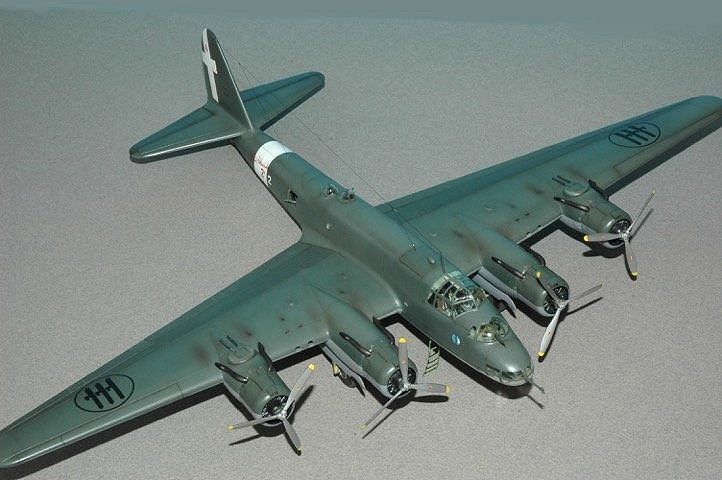
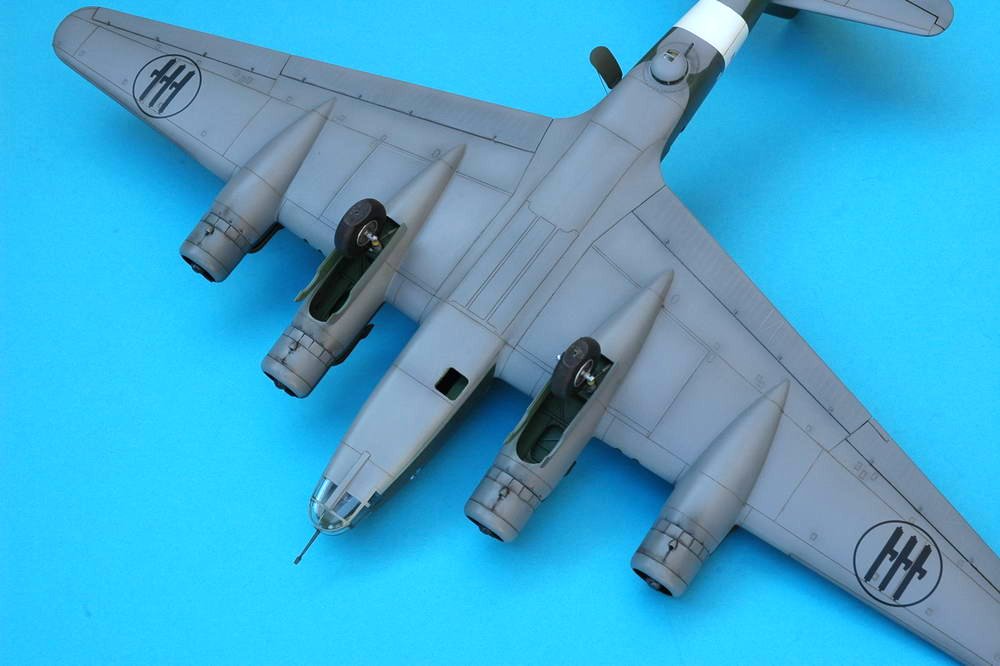
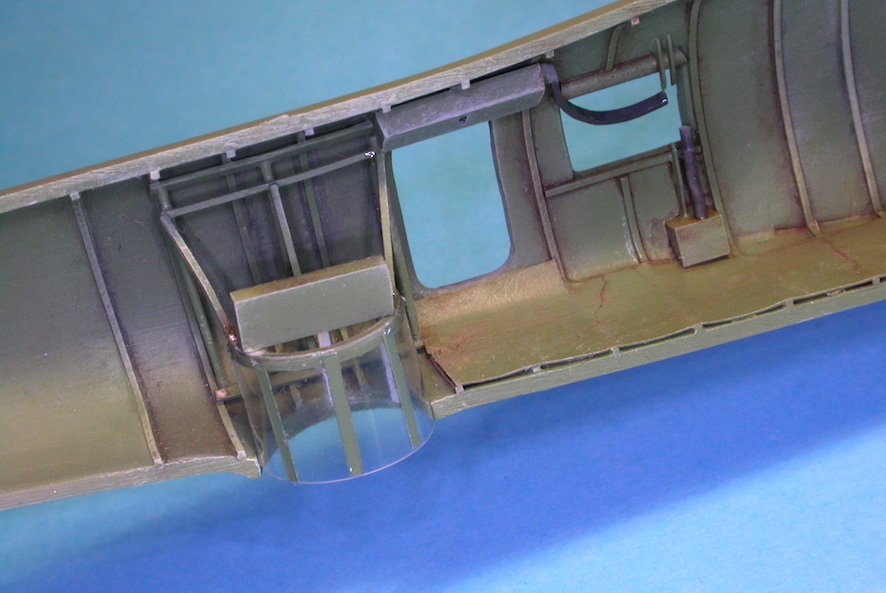
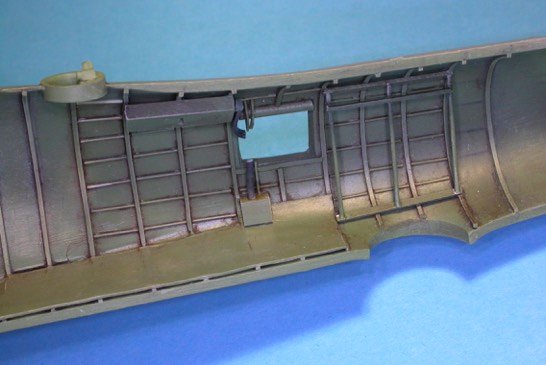
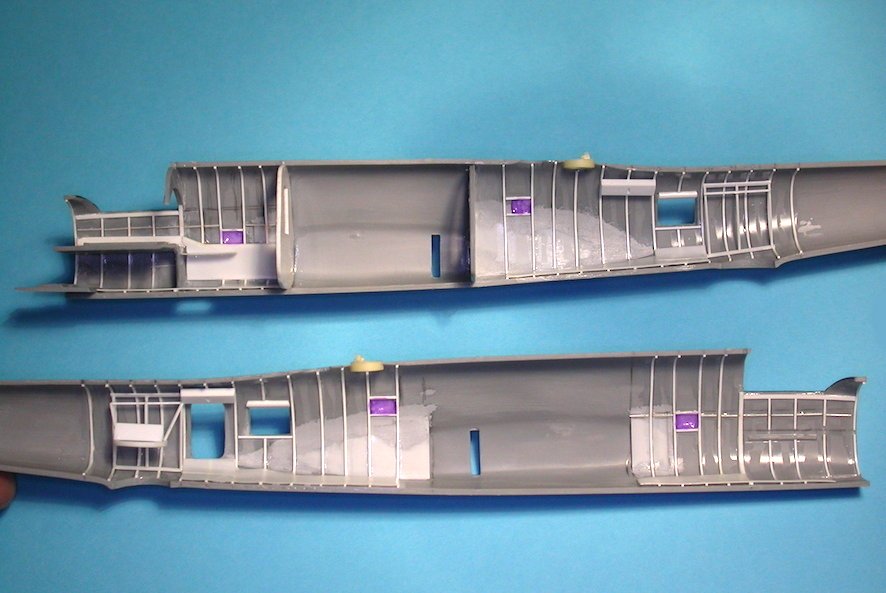
The Model This is the Special Hobby Piaggio P.108B Serie II, 1/72 - SO72035.
Special Hobby Piaggio P.108B Serie II, 1/72 - SO72035
With its four engines and its flowing, elegant lines (apart from the nose), the Piaggio P-108 stands out among the often angular bombers of WWII. Until now, we only had the Airmodel vacuum kit
to build a replica. Thanks to the very beneficial and prolific partnership between the Czech Special Hobby and the Milanese Flying Machines, we can now build a model accessible to all in both
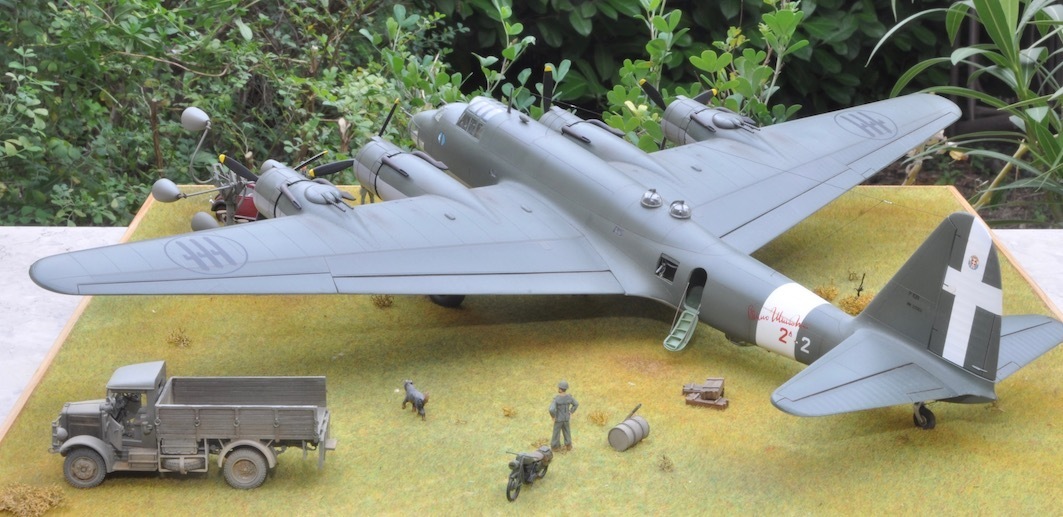
its daytime and nighttime bombing versions. I created this assembly for Replic Magazine in 2005; it appeared in issue 172 in December. To date, it remains my only foray into the world of dioramas, aside
from a small, basic staging of a Mauler from the same period. The kit with the extras plus shipping and money conversion plus PayPal cost me about one hundred eighty USD dollars. I am thinking
about getting another kit because I have another striking paint job I would like to have.


The Diorama


|
Aircraft: Piaggio P.108B Manufacturer: S.A. Piaggio & Co. Type: Bomber Year: 1942 Engine: Four Piaggio P.XII RC 35, 18-cylinder radial, air-cooled, 1,350 hp each Wingspan: 105 ft (32 m) Length: 75 ft 2in (22.92 m) Height: 17 ft (5.18 m) Weight: 65,970 lb (29,855 kg) (Loaded) Maximum Speed: 261 mph (420 km/h) at 12.800 ft (3,900 m) Ceiling: 26,400 ft (8,050 m) Range: 2,190 miles (3,520 km) Armament: 8 x 12.7mm BREDA SAFAT machine guns; 7,700 lb (3,500 kg) of bombs Crew: 6 |

|
|
|
|
|
|
|
|
|


|
|

|
|

|


|


|
|
|
|
October 2025 STORMO! © 2025 |