|
Balaton Modell 1/72 SIAI-Marchetti S.75 GA/RT Grande Autonoma/Rome-Tokyo Flight by Harvey Low |

|
|
|

Click the STORMO! Eagle to return to the Gallery |
|
The SM.75 is well known among Italian WW2 Aviation Enthusiasts. It first flew in November 1937 and had held many speed
and endurance records as early as 1939. It was powered by three 559kW (750 hp) Alfa Romeo 126 RC.34 radial engines which made it
suitable for extreme long range flights. Its military version evolved into the SM.82. With such performance features, a SM.75 was tasked
with a secret flight from Rome to Tokyo to deliver new diplomatic codebooks to its Axis partner (it was suspected that the Allies had broken
their international radio codes in January 1942), and as radio was the most vital means to communicate with their Axis partner of the Pacific,
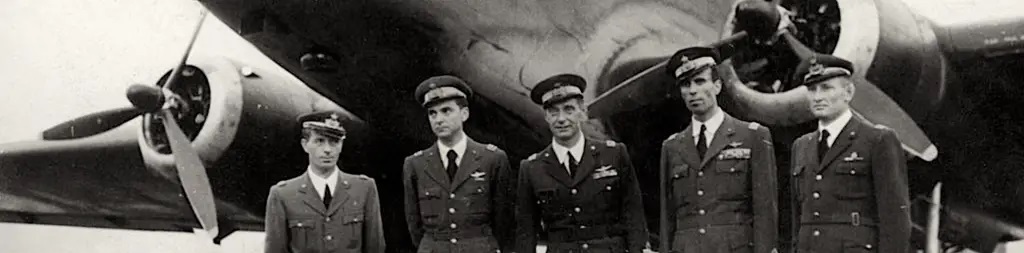
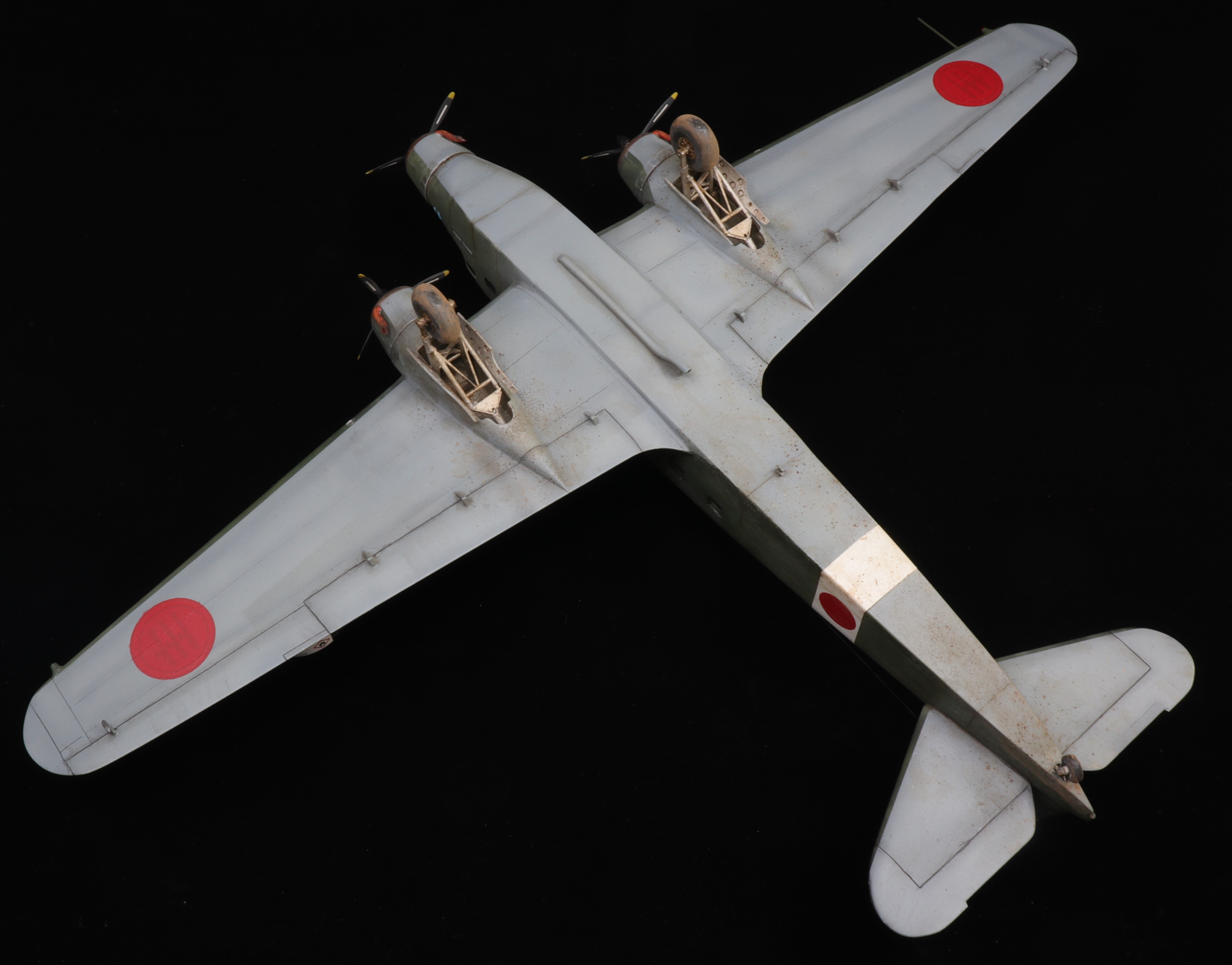
the Italians needed to deliver new codebooks to Japan. So a SM.75 GA (for Grande Autonomia, meaning "Long Range") Matricola Miltare number MM60539, was specially modified for this single plane flight from Rome-to-Tokyo and back. In June 1942, this aircraft (an earlier variant GA), was designated the SM.75 RT (for "Rome-Tokyo"). Starting from Rome on 29 June 1942, this SM.75 flew to German-occupied Ukraine, to be refuelled by Italian ground crew, then over the vast Soviet airspace to Japanese-occupied Mongolia for refuelling. The aircraft was then repainted with Japanese roundels as a precaution in Japanese airspace. With a Japanese Interpreter now aboard, she flew the remaining distance to Tokyo, landing on July 3, 1942. References [1] Rosselli, R. "In the Summer of 1942, a Savoia-Marchetti Cargo Plane Made a Secret Flight to Japan", Aviation History, January 2004.
|
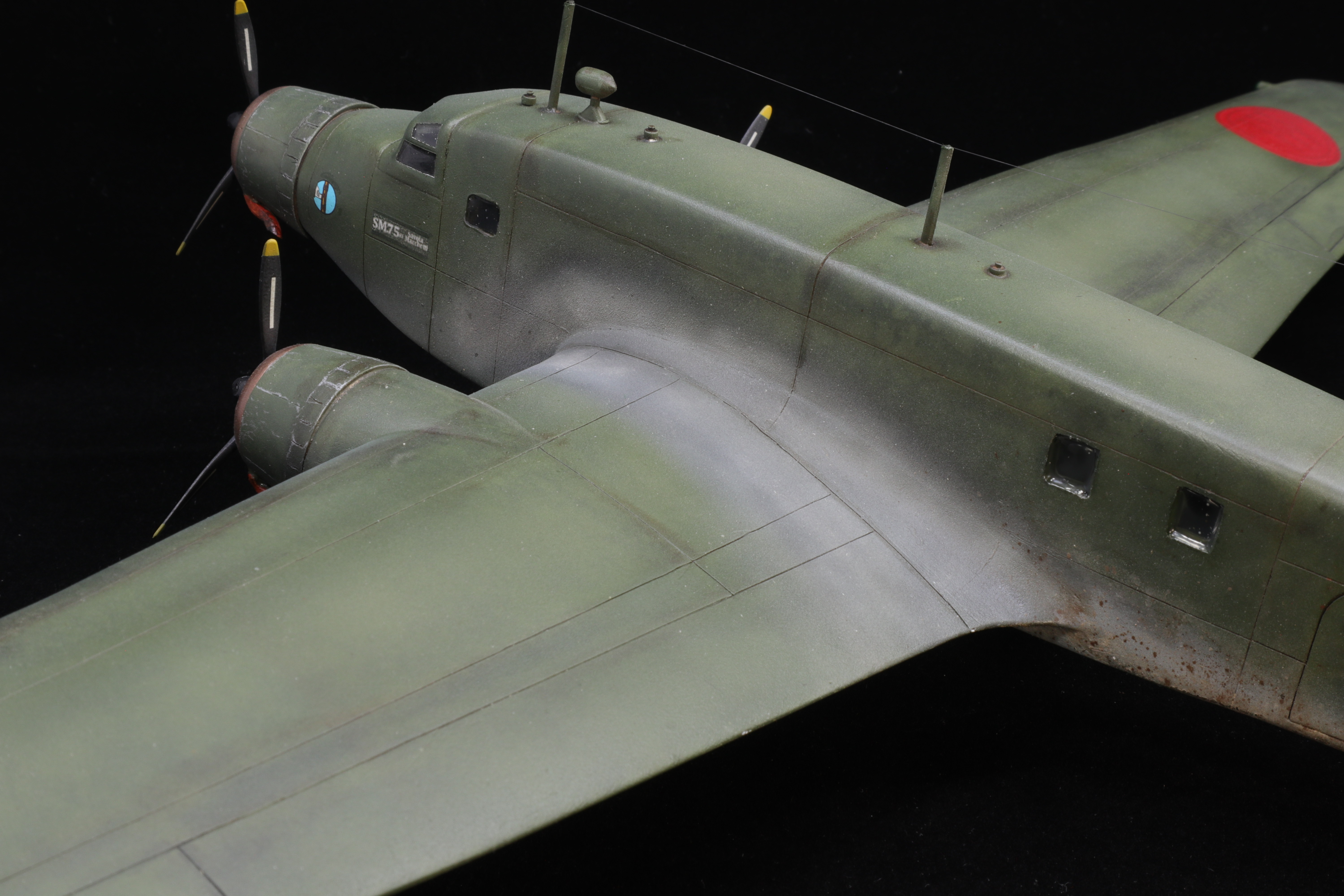
This is the 1/72 resin model modified from Balaton. While the Broplan kit provides a correct “GA RT” version, I modified the newer Balaton kit instead, since I found resin somewhat easier to work with than vacuform, and more precise. Visually the “RT” variant when compared to the production “GA” version, had fewer cabin windows, different exhausts and landing lights, and had an alternate DF and aerial mast configuration. Through close scrutiny of photos and the propaganda video, I noticed that this aircraft did not have the two rear underwing stabilizer supports that some GA aircraft had. The aircraft also had two noticeable landing lights (one in each wing) that that I simply made by drilling-out holes in the resin wing and later adding the lenses. Due to the long flight, it had more sophisticated radio equipment installed reflected by the two radio masts and “football” directional finder (scratch-built).


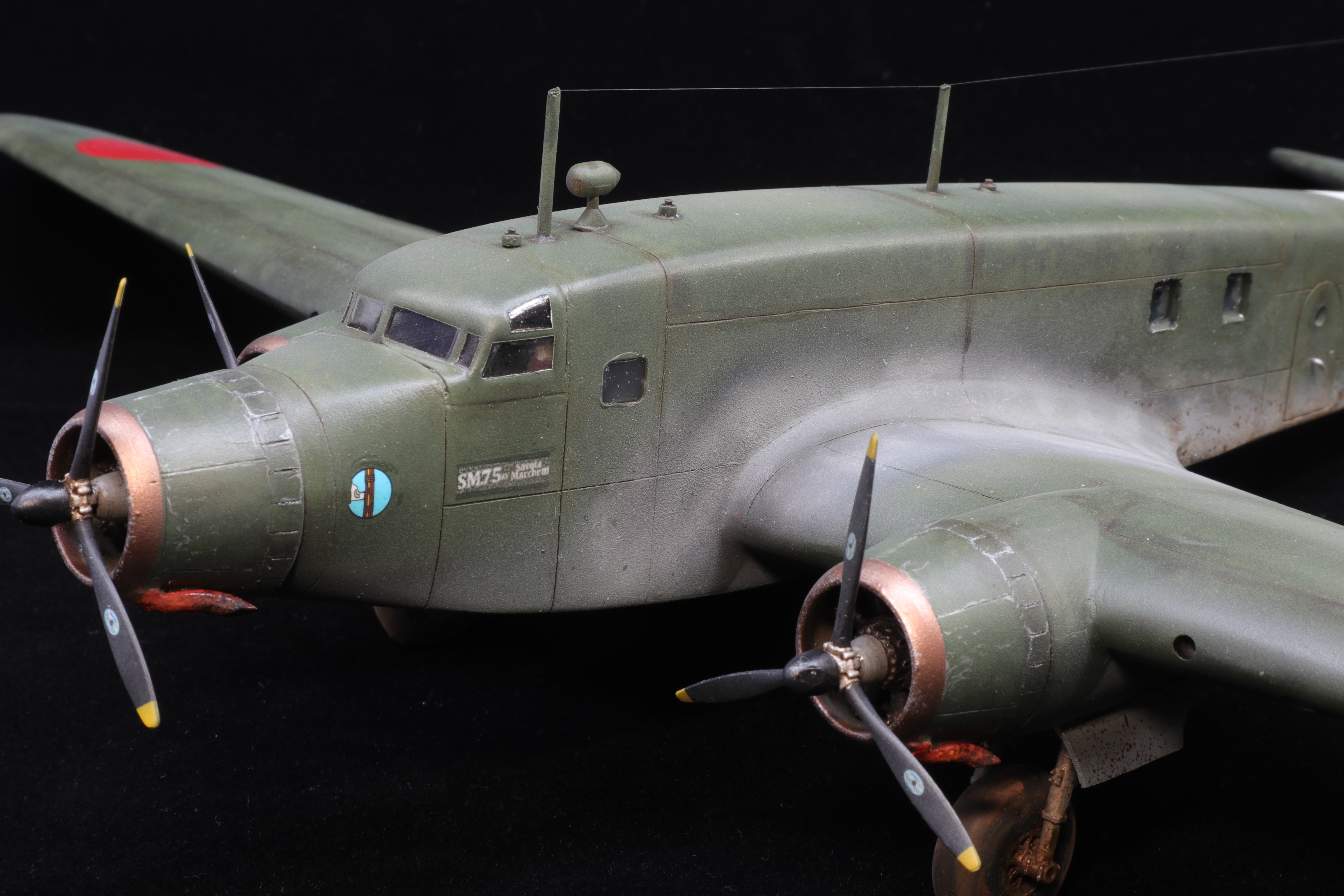
The Balaton kit has all the cabin windows ala the passenger version, which some had to be filled-in by using a .020 and .030 styrene strips placed on the inside to allow a foundation for copious amounts of putty to be subsequently sanded smooth on the outer surface. The RT aircraft clearly shows only two windows on each side forward of the rear entry door, and a single smaller window on each side just behind the cockpit. This aircraft also had installed what appeared to be a long “pipe” of some sort mounted underneath the fuselage coming from the radio compartment area, the purpose of which I have yet not confirmed.


Finally, the SM.75 had two types of vertical tail stabilizers - a longer more aerodynamic shape, and a taller sharper tipped one. The plane used on the Rome-Tokyo flight was built at the Vergiate factory, and thus had the later taller sharper tipped vertical stabilzer. This new tail had to be scratch-built as the Balaton kit represents the more aerodynamic stabilizer. The shape was copied off a 1/72 SM.82 profile, as it was pretty much the same shape albeit slightly narrower. The rudder shape was simply defined using a panel scriber. The top colour was Tamiya Olive Green (XF-58) which I find closely matches Verde Oliva Scuro 2 (Regia Aeronautica Dark Olive Green). Some yellow and white were added for lighter tones to represent fading. It is interesting to note that some researchers believe that this aircraft was black or black-green in colour! I chose the olive-green as this is what is shown in period propaganda posters. These were misted on to allow the modulation to show through. The undersides were painted Tamiya Light Grey (XF-66) close to Grigio Azzurro Chiaro. Photos show that this aircraft was “fairly” clean. This staining was caused by the forward engine exhaust pipe that was located on the left underside of the centre cowling. The lean mixture of fuel shows darker edging on the outer stain with much lighter staining towards the centre. This exhaust effect, due to the shaped-effect of the airfoil, was created matching the pattern of exhaust in the photos and video. I first sprayed on light coats of Tamiya Smoke (Enamel X-19) thinned heavily with Tamiya Lacquer thinner, to sketch-out the pattern edges. Next thin layers of darker NATO Black (XF-69) were layered on towards the centre of the stain. Next a very thin white/buff colour (mixed with Tamiya White and Buff XF-57) was gently misted in the centre areas in a spotted random fashion. Finally, MIG dry powder Concrete (P026) was hand applied onto centre areas for refinement. Less exhaust staining was done on the undersides, as I could not see significant exhaust stains in those areas. This model also represents a little-known but significant part of aviation history, and a testament to the engineers, flight crew, and maintenance crew, that made this flight happen. The Rome-Tokyo flight was arguably one of the Regia Aeronautica's finest hours. A diorama is now in order showing Japanese airfield crew and trucks servicing an Italian aircraft!
|
Aircraft: SIAI Marchetti S.M. 75 Manufacturer: SIAI Marchetti Type: Civil Transport Year: 1937 Engine: Three Alfa Romeo A.R.126 RC 34, radial with 9 cylinders, 750 hp each Wingspan: 97 ft 5 in (29.68 m) Length: 70 ft 10 in (21.60 m) Height: 16 ft 9 in (5.1 0 m) Weight: 31,967 lb (14,500 kg) (Loaded) Cruising Speed: 202 mph (325 km/h) Ceiling: 23,000 ft (7,000 m) Range: 1,420 miles (2,280 km) Crew: 4 Passengers: 18-24 |




|
|
|
|
|
|
|
|
|
|


|
|

|
|

|
|
|


|


|
|
|
|
February, 2025 STORMO! © 2025 |