×
Ciano's Diary : 1937-1943
by Galeazzo Ciano

Reviewed by Vince Tassone


Authors: Galeazzo Ciano (Author)
Publisher:‎ Phoenix Press (January 1, 2002)
Publishing Format: Paperback
Publication Year: 2002
ISBN-10: 1842124765
ISBN-13: 978-1842124765
Description: 625 pages
Language: English
Price: CDN $19.99 (STORMO! Amazon)

Recommendation: Recommended

This book is an unbridged translation of Count Galeazzo Ciano's Diary from 1937-1943.

Galeazzo Ciano was an exceedingly intelligent Foreign Minister of Italy from 1936 to the beginning of 1943, and Benito Mussolini's son-in-law. He was an Italian patriot. His diary, in its entirety, chronicles the daily exchanges with foreign ambassadors, leaders and dignitaries and at times predicts future events with incredible accuracy. The diary has been the basis of historical studies and documentaries and should be considered essential reading for students of WWII, and was also used as the basis for the case against Joachim von Ribbentrop at Nuremberg. Indeed the Germans made strenuous efforts to seize the Count's documents. Thanks to his wife, the diaries, and supporting documents, were smuggled to Switzerland where they were microfilmed and sent to the United States.

The Ciano Diary is essential reading to understand the full extent of Italian diplomacy and Italy's preparedness prior and during WWII. When studying the Italian participation in WWII, this is the place to get started. This book outlines in detail the treachery and deceit of the Nazis, on all levels, regarding the Italians and Germany’s other allies up until 1943. The diary shows Ciano’s and the Italian leadership's accuracy in predicting events later on, showing how well informed these groups were - Italian Intelligence (SIM) and general reporting were quiet good. In general Italian leadership, particularly amongst the Military, was strongly opposed to Italy’s entry into WWII in 1940, elucidating to Mussolini the lack of modern equipment, indeed the Pact of Steel was predicated on at least 3 yrs of peace (up to 1943) since Italy had been at war since 1936 in 2 major wars. Italy’s financial condition at the end of these wars left it vulnerable with no funds for new equipment or large-scale expansion while Britain was rearming from 1935. When war did come the Italian military hoped for a short war since essential metals and stocks only allowed for a 3 month conflict. Indeed the Italian Navy (as well as the Army and Air Force) were limited in the number of sorties throughout the war due to fuel shortages. Although the Italians had gained experience in warfare prior to WWII it was not enough to offset the enormous advantage of the Allies in men and equipment particularly in tanks, anti-tank guns, anti-aircraft guns, planes etc. Ribbentrop provided assurances that Germany would not go to war in 3 yrs (prior 1943). Sensing that Italy and the Allies were not prepared to wage war in 1939, Germany attacked Poland. The Germans were also prepared to betray its allies once the war had been won and to expand its borders into Italy and occupy its allies Romania and Hungary (in a series of speeches and statements made by Nazis) with eyes on a corridor to warm water at Trieste (Mediterranean) and the Po valley. Despite some hesitancy, nonetheless the Germans succeeded into talking Mussolini into WWII after its initial successes in Poland, Norway, Denmark, Holland, Belgium and France. Seeing its territorial claims slipping away Mussolini acted.

In an interesting statement from Mussolini to Ciano later on in the war he said that Germany (and the Axis) had a better chance of winning WWII if Germany had waited until 1943 when Italy would have been ready, which had been agreed upon by the two Axis partners in the Pact of Steel, Mussolini believing that time was on the Axis’ side since the democracies were not united and could be handled in the future. However Germany viewed Italy as a rival and also sensing weakness in France, Great Britain and the Soviet Union began its attacks. Ciano remained anti-German throughout WWII and at times seems to cheer-on Axis set-backs (perhaps as a way of vindicating his initial position against Italy’s involvement in WWII) and even blames the lack of effort on the Italians themselves although he himself, as well as the entire Italian Military establishment predicted such early outcomes because of a serious lack of modern equipment particularly tanks and anti-tank guns and aircraft. The root of Italy’s weakness lay in its financial situation:

June 2, 1939 “Guarneri unburdened himself of some very pessimistic talk on the exchange situation. Our reserves are now reduced to 3,200,000,000. Five hundred thousand will be necessary to carry through to the end of the year. Guarneri openly speaks of bankruptcy and says that it can be avoided only by bringing imperialistic policies to an end.”

Despite all this Ciano still seems genuinely surprised by the early setbacks of the Italian armed forces.

In discussions with the King of Italy, Ciano indicates the King’s open hostility to the Germans warning Mussolini not to trust the Germans since they don’t keep their word like the British or Americans (1938).

The Catholic Church was anti-Axis and also against the anti-racial laws implemented by the Fascist regime at the end of 1938 focusing particularly on the Jews.

March 30, 1939 – “The tension between Germany and Poland, which had become so alarming during the last few days, seems now to be lessening. I (Ciano) am glad of it because a German move would have disastrous repercussions here. Poland enjoys a good deal of favor, and besides the Germans must not overdo things. It is now difficult to find anyone who has faith in their word. They would be completely discredited should they fail to carry out their pact of collaboration with Poland which they have reaffirmed over and over again.”

There is a period missing in Ciano’s diaries from Jan 27 1941 to the end of April 23 1941 when he re-joined his (military) unit in Greece. This is a pity since it misses the Italian breakthrough in Greece during this time as well as the Invasion of Yugoslavia.

One other aspect of this Diary to note is how provocative the French were, especially in their Press, insisting on war, not just with Italy (an intelligence report surfaced in 1939 stating that France would attack Italy in June 1939) but with Germany as well, while the British were more prudent and tried every way to avoid war. There are many other points throughout the Diary that contradict what is often written in the histories of this period, for example, on August 11, 1940 the Germans requested Italian air assistance in the Battle of Britain (see the corresponding date entry in 1940 below).

An enthralling read, a difficult book to put down, Malcom Muggeridge considers this diary “the most interesting” that emerged from WWII “ … and will probably prove in the end to be the most useful to historians.”

Notes and Highlights:
In this review I provided my own notes, I started with enumerated lists in 1937 and 1938 and then filled out highlights as they were recorded on a daily basis. I hope to return at some later date to fill-in 1937-1938 with the same type of notes I made for 1940-1943, for completness.

Here are a brief collection of notes and highlights ordered chronologically, by date and entry:

1937
1) British militarizing from 1937 onward (even as early as 1935), this is often omitted in the histories, given how much larger the British economy was, it was an enormous advantage since the Italians were embroiled in Spain which was a drain on the Italian economy forcing the Minster of Currency and Exchange to declare Italy bankrupt on the eve of war of WWII.

2) Italy and England would inevitably clash

3) Italians did not want war with the US but felt England could be defeated and this assessment was correct with German assistance since the Italians had wrestled control of the central Mediterranean and the war had returned in favor of the Axis by 1942. If the US (and the USSR) had not been attacked, the UK and its many allies would have eventually been defeated.

4) Italian finances were an issue as early as 1937

5) Ciano disliked Balbo, although he agreed with Balbo that the Axis alliance was not beneficial to Italy

1938
1) Uncertainty about the Spanish civil war. Questions about the Spanish lack of central command and efficiency weighted on the CTV. SCW weighted heavily on Italian finances/economy. This is often omitted in histories but was a real concern for Mussolini's government.

2) Reasons for invading Greece become clear as the Greek government visited Rome feigning an accord while visiting London shortly thereafter and imploring the British to attack Italy. This is often omitted in the histories i.e., Mussolini emulating the exploits of the Germans was in fact driven by Greek provocations.

Mussolini anti-clerical; Mussolini harbored Socialist tendencies, indeed outside the USSR, Italy had the most centralized economy in the world.

Balbo believed German aviation industry was more advanced than their own in 1938.

Racial laws adopted at the end of 1938

Church was anti-axis and opposed racial laws (anti-racial)

King is anti-German


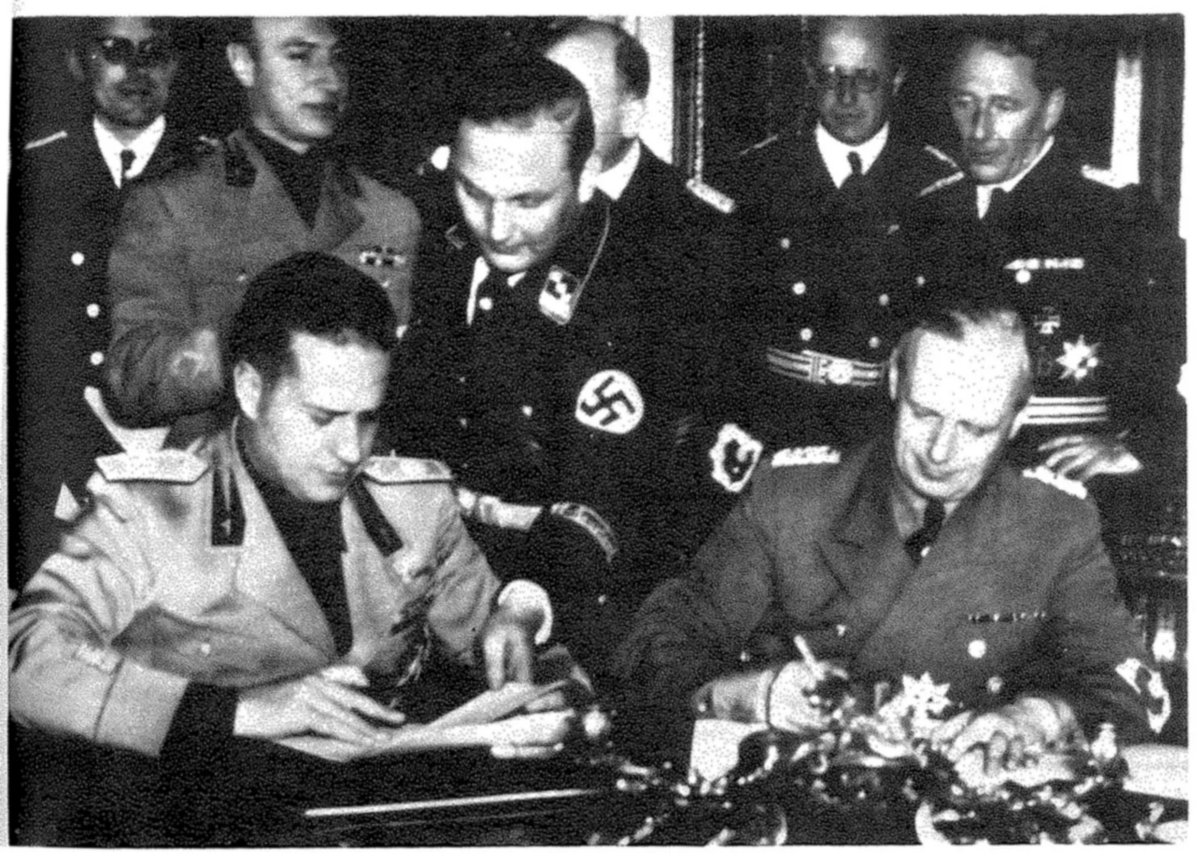
Ciano and Ribbentrop at Schloss Belvedere, Vienna, November 2, 1938. (National Archives Collection of Foreign Records Seized).

1939
Chamberlain visits Rome in January - Fascists are not anti-British and even sign a treaty with the British at the end of 1938

French Press anti-Fascist and provocative

Chamberlain discussed Jewish question in UK

Report that indicates France would attack Italy in June 1939

Mussolini opposed to the Tripartite pact since he feared it might draw the US into a fight. Preferred German and Italian pact only, but not Japan.

Ciano discovers that Italy is being played by the Germans - Ribbentrop leaking info March - advises Duce

March 18 - "is it worthwhile being loyal with such people" referring to the Nazis including Hitler

March 19 - communication opened with France and Britain and Mussolini considers not signing the Tripartite Pact

March 30 - "difficult to find anyone in Italy that believe the word of the Germans" (King in 1938 said that it was not a good idea to form an alliance with Germany because they "don't keep their world like the English or Americans")

The French press quiet provocative.

April 29 - Ciano provides a frank assessment of the preparedness of the Italian Armed forces prior to WWII and indicates that the armed forces have misled Mussolini as to their state. If Mussolini is to be treated as a bluffer in retrospect (English histories), then it was because he believed the information that was fed to him.

May 2 - General Carboni with more information about the weaknesses of the Italian Armed Forces

May 15 - incredible accuracy about the fate of Poland by Ciano

June 2 - discussions of bankruptcy - low reserves – Felice Guarneri (Minister of Currency and Exchange) demands that all imperial activity come to a halt and 3 yrs of peace are needed

British Foreign Minister complains about anti-British sentiment in the Italian press

Guarneri again sounds the alarm about Italian finances July

July - Ribbentrop again lies to Ciano about the desire for peace in the next 3 yrs while Attolico (Italian ambassador to Germany) sounds the alarm to the contrary. Italians lied to repeatedly about German desires for peace while mobilizing to attack Poland - also in breach of the Pact of Steel since the Germans were required to notify the Italians of any war plans and they clearly had not. Ciano considers Ribbentrop crazy and a warmonger.

August 4 – Attolico is very concerned about possible war – sounds the alarm

August 6 - Ciano now believes war is possible and does everything to avoid it citing military preparedness after 2 wars, low metal stocks and gold reserves - cannot wage war despite assurances from Germans there would be no war (only 3 weeks later WWII would begin).

Aug 9 – Mussolini asks Ciano to explain to Ribbentrop when in Germany that the probability of winning a large war at this time is not high but if they wait for another 3 yrs the probability of winning would be close to 80%.

Aug 10 - Mussolini drafts a memorandum for Salzburg (Ciano + Ribbentrop) that urges peace because a war with Poland would not be local and would be disastrous for Germany and especially Italy

Aug 13 - after meeting with Ribbentrop - lied to Italy - Italy does not want a general war, fearing Germany would drag Italy into a war it does not want and is not ready to fight - disgusted with Germany


1940
Mussolini acknowledges only 10 divisions ready. Badoglio confirms the military unpreparedness of the Italian armed forces and would take up to 1942 before any intervention could take place.

January 18 - Percy Loraine explains to Ciano that Britain is no longer the Britain of 1 yr ago and is fully prepared to fight. Indeed the British were preparing for a general conflict since 1935/37, their armored forces were prepared even earlier while the Italians were embroiled in two major conflicts during this time.

Jan 23 - Riccardi indicated that there’s enough material only to arm 10 divisions - Mussolini talks of 70 divisions

Jan - Germans pushing Mussolini to join the war, Himmler, Goring, Ribbentrop

Jan 28 - Mussolini lashes out at Hitler for hastening the war which would have been won in three 3 yrs because the Democracies lack unity

March 5 - American Consul in Naples uses “beggars” as a source of information to gauge attitude of Italians to the fascist regime

March 11 - von Ribbentrop visits Rome trying to get Mussolini to intervene/enter (in WWII) sooner!

March 18 - Duce and Hitler meet - Hitler pushes Duce to enter war, Mussolini now commits but at a time of his choosing

April 06 - Duke of Aosta - French and British equipped and ready to fight - this is often omitted in the general histories.

May 18 - "he (Sir Percy Loraine) gives me (Ciano) the usual information on military situation, which the English continue to present in incredibly rosy colors" - The English situation could not be true since the English (and French) were losing badly to the Germans at this point in the Battle of France.

May 31 - Hitler and von Mackensen receive a letter from the Duce that Italy will enter the war June 5 – Hitler and von Mackensen elated and enthusiastic.

June 2 - Hitler communicates to Duce to enter the war earlier than the planned June 11 entry - wants Italy in the war as quickly as possible

August 10 - Greeks provoking Italy along the Albania border

August 11 - formal request from the Luftwaffe for air assistance in the attack on Britain - this is often omitted in history books

"The German air force has asked that our planes be sent to join in the action against Great Britain. When we offered them a month ago they were promptly refused. Now Germany asks for them. Why? I am not very-favorable to this for technical and also for political reasons."

September 27 - Germans oppose Spanish intervention - not worth the cost of having them. Indeed the Italians won the Spanish Civil War for Franco, however at great cost to Italian finances.

Nov 11 - the Germans are spreading anti-Italian propaganda in Greece.

1941
May 30 - Duce angry that the empire is lost and blames the Germans for having begun the war too early and talking him into war

Jul 16 - Duce concerned about war in Russia will not end by winter - concerned that attacking Russia was too big a task

1942
Greece starving – Germans charging Greeks extremely high rates - taxes

1943
Worked in Ministry of Foreign Affairs up to Feb and then dismissed.


 Conclusions

Count Galezzo Ciano was Italy's Minister of Foreign Affairs from 1936-1943, he was also the son-in-law of Mussolini and had a front row seat to the important events that lead up to World War II. This diary is an important document of wartime history and is pre-requite reading for anyone seriously interested in understanding the decisions and polices that were made and adopted at this time, both in Italy and abroad and gives insights into the skullduggery of the Nazi regime. This book will interest, and is of interest to students, scholars not just in matters that affected Italy but all the major powers of the time. It is a must read before seriously studying the topic of WWII. In regard to Italy, it is impossible to understand Italy's involvement and the policy decisions it undertook in WWII without reading this book first. Unfortunately for consumers of history, many historians have either not read or ignore this document, or are even unaware of it.


 Products


August, 2023
STORMO! © 2023