|
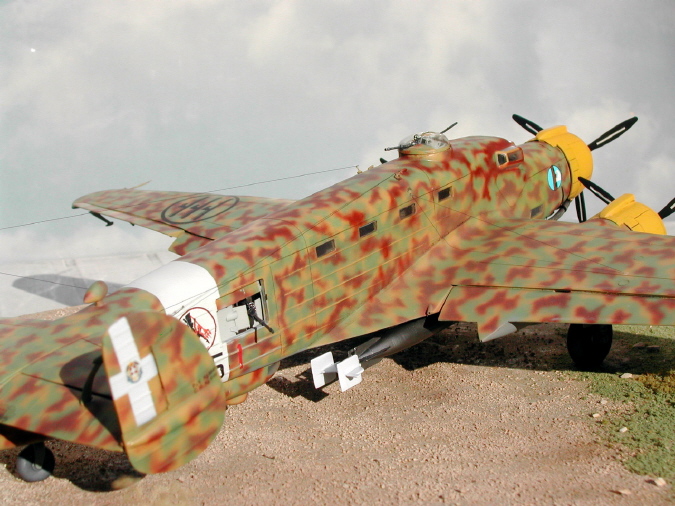
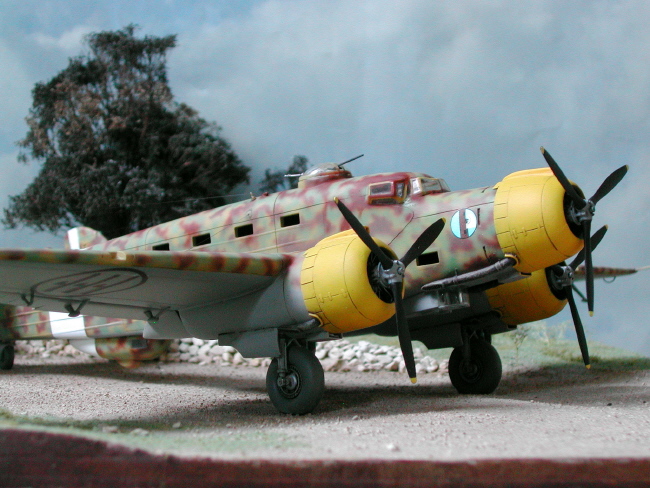
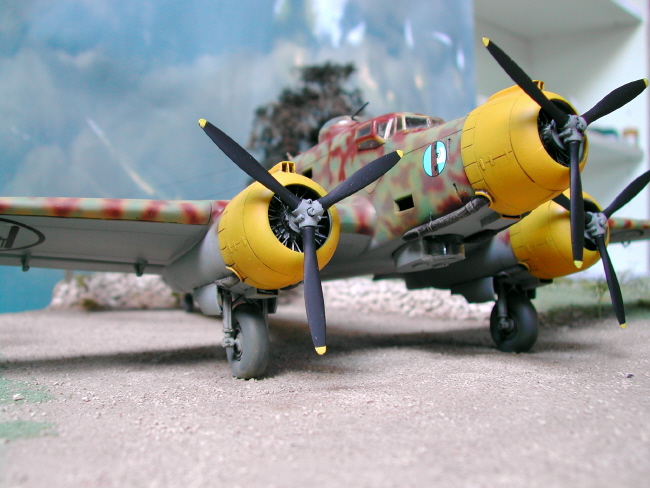
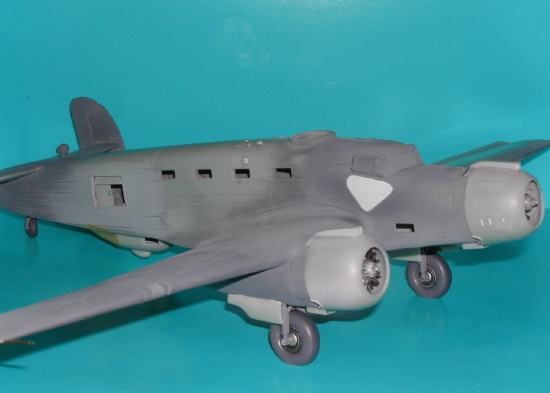
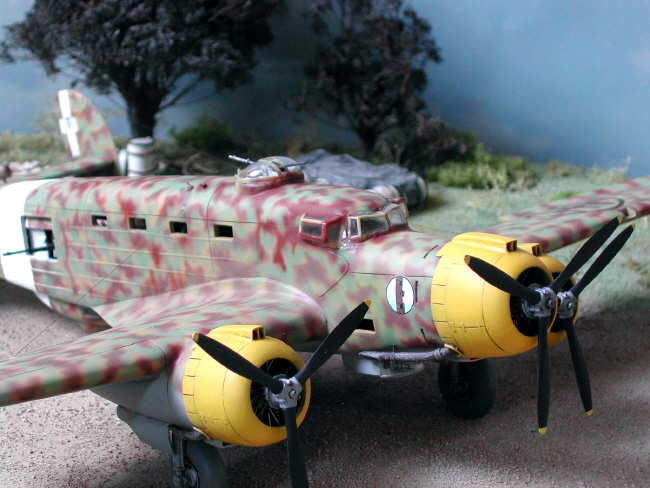
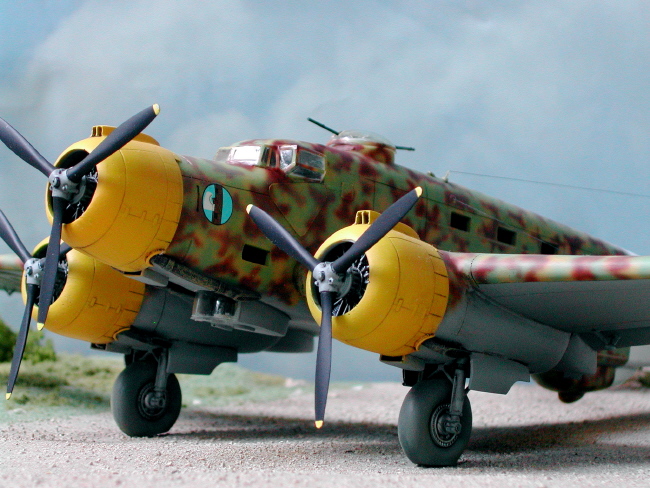
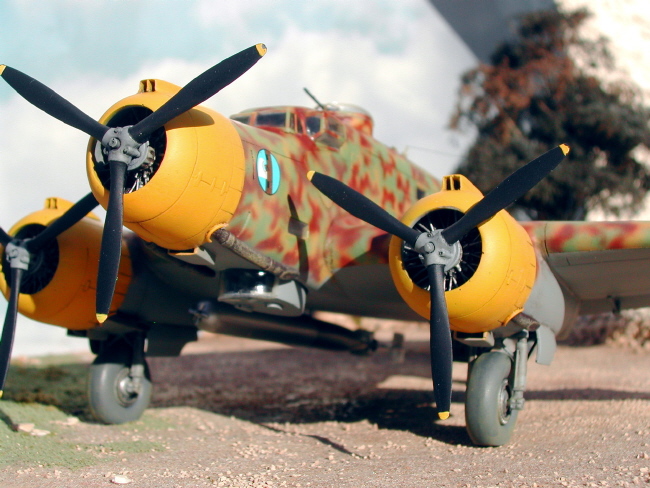
Alitaliane 1/48 Savoia Marchetti SM.84 Silurante (Torpedo Bomber) by Jean Barby 
|
|
|
|

Click the STORMO! Eagle to return to the Gallery |
|
This airplane was designed to replace the SM.79, but it was not quite able to match the earlier aircraft. Although the SM.84 was modern and generally a better airplane it was not an ideal combat aircraft like its predecessor. Its chief weakness was that it was not highly maneuverable. This became evident when it was used as a torpedo bomber. Nevertheless the 309 aircraft manufactured put in a good showing in the Mediterranean until the 1943 armistice. Some SM.84s were used in transport units after the war and remained in service until 1948. The SM.84 was designed by Alessandro Marchetti who had designed SIAI’s earlier tri-motor aircraft. The new plane kept the main plane of the SM.79 however the fuselage was more modern, the tailpane had twin-rudders for improved directional stability and a wider scope of fire for the rear gunner and engines that were more powerful. The SM.84 was a low wing monoplane with a frame of wood and steel tubing and skin of fabric, plywood and aluminum. The undercarriage was retractable and partially enclosed in the engine nacelles. Power was provided by three 1,000 hp Piaggio P.XI radial engines which drove three blade metal propellers with variable pitch. Defensive armament consisted of 4 x 12.7 mm MGs. Bombs could be carried inside the fuselage or under the wings. A maximum of 1 ton of bombs could be carried internally. Outside, the airplane could carry four rockets, various accommodations of bombs up to a maximum of 3,500 pounds or two torpedoes.[1]
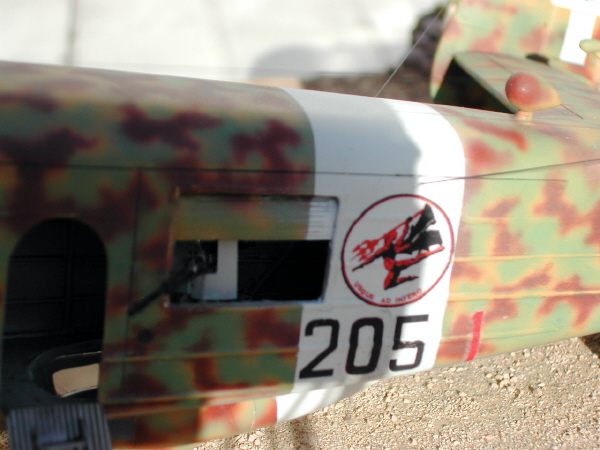
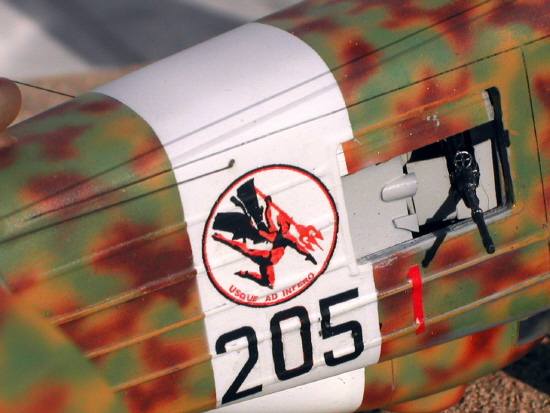
41o Gruppo, 204a, 205a Squadriglie: [2] The crews from this unit had flown the SM 79 n Spain and had then used the aircraft as a high-speed transport during the invasion of Albania in 1939. Briefly operating against France, with an attack on Ghisonaccia on 19 June 1940, the unit then moved to the Aegean theatre. Attacks were carried out on convoys and land targets in the eastern Mediterranean. In June an SM 83, the transport version of the SM 79, was used for reconnaissance duties over Gibraltar, using the Spanish base of Cartegena. It was intended that the SM 79s should use that base for bombing the Royal Navy around Gibraltar, but Spain would not allow this. The SM 83 eventually rejoined the unit at Gadurra. The unit continued operations, now equipped with the Z1007bis, against Haifa, Palestine and Tel Aviv. For longer-range operations it received six SM 82s. Three of these arrived at Ciampino on 11 August. They moved to Gadurra on 2 September where they were damaged by enemy bombing two days later. On 13 October five SM 82s joined the Gruppo, and on the 18th operated against the Bahrain oil refineries, flying on to Zula in East Africa. The two remaining SM 82s were passed to 92 Gruppo on 5 November. A lack of strategic bombers meant a transfer to the Greek front. With a greater need for tactical support, however, the unit were returned to Italy with no aircraft left on strength. On 31 October the SM 83 moved to Brindisi to support the Greek campaign, moving to Littoria via Ciampino on 8 January 1941. In February the Gruppo was the first to receive the new SM 84. By May the crews partially trained in torpedo-bombing and were hastened back to the Aegean with twelve SM 84s. On the way they stopped at Capua to pick up torpedoes and at Lecce for additional crews. The SM 83 rejoined the unit at Gadurra in May but was shot down by a Beaufighter near Amorgos on 3 July. The Gruppo CO was lost in this aircraft. From 20 to 28 May the SM 84s carried out operations on and around Crete, bombing, torpedoing and reconnoitring. On the 27st three aircraft attacked ships south of Caso Canal, in conjunction with bombers from 30 Gruppo, resulting in the sinking of the destroyer HMS Juno. On the 23rd two crews became lost on returning from Alexandria and made emergency landings on the Turkish coast. They were interned, with one crew returning to Italy a year later. 282 Sq was attached for the month of July. During the year the SM 84 was found to be inadequate for the anti-shipping role. On 19 anuary 1942 the unit re-equipped with the SM 79, receiving aircraft and crews from the now disbanded 281 Sq. The SM 84 was no longer used after 1 February. Since May 1941 the unit had had an average of seven SM 84s on strength, with only three operational. With the additional experienced crews the level of competence rose sharply. On 15 February three aircraft of 205 Sq attacked a ‘Jervis’ class destroyer, claiming a defending Beaufighter, which damaged all three bombers. Two more SM 79s arrived and one was shot down by P-40s. The crew was later rescued by German U-boat (U-311). In March the unit operated over the bay of Sollum. On June it sank the neutral Swedish ship Stureborg in error. Between 13 and 15 June it struck heavily against shipping from Alexandria to Malta. The Gruppo had by now left 12 Stormo, possibly from January. It was certainly Autonomo in June 1942. Withdrawing to Pisa in August, it received new SM 79s, made by Reggiane, in November. 205 Sq went to Decimomannu in April 1943, and 204 Sq left for Siena on 25 May to join Raggruppamento Aerosilurante when that unit formed on 1 June. By 5 April 205 Sq had only two serviceable aircraft. 205 Sq joined 204 Sq at Siena on 2 July, retaining an emergency section at Milis on a ten-day relay. On 25 June two aircraft of 204 Sq used Gerbini for a night operation over Capo Bon, returning to Siena the next day. On 9 July 205 Sq had four serviceable aircraft at Milis. References [1] Angelucci E. and P. Matricardi, "World Aircraft, World War II – Part I", Sampson Low Guides, 1978 [2] Dunning Chris, "Courage Alone: The Italian Airforce 1940-1943", Hikoki Publuications, Manchester, United Kingdom, 2009
Courage Alone: The Italian Airforce 1940-1943
 [3] Gori Cesare, "Ali D'Italia #21 SIAI SM.84", La Bancarella Aeronautica, Torino, 2006
Ali D'Italia #21 SIAI SM.84

|
Alitaliane is a great "home cottage industry" manufacturer of resin kits and the "Italian", like Alphaflight are doing justice to their aviation history which is something we should
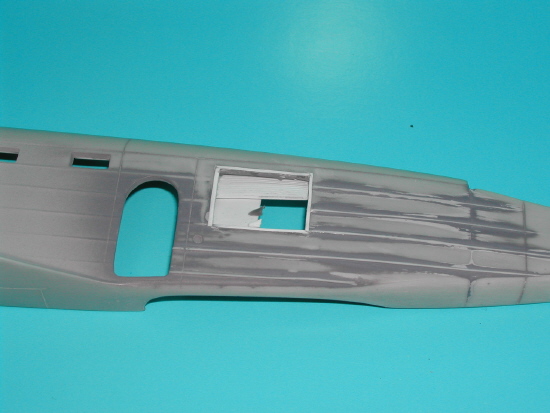
all applaude. I've read allot about the twisted rear fuselage of this kit, however I must say that mine was correct. The resin is very good quality with "bubbles" kept to a minimum.
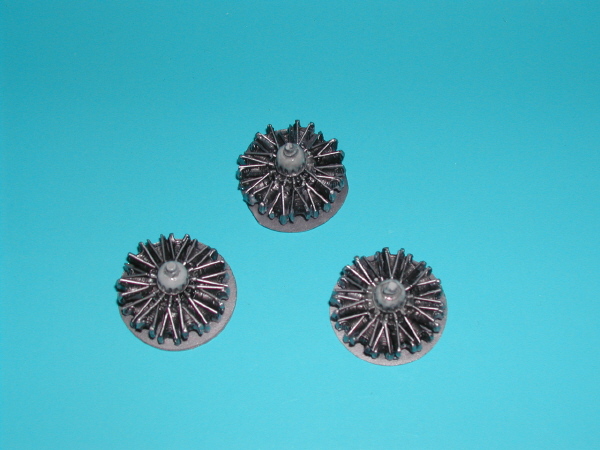
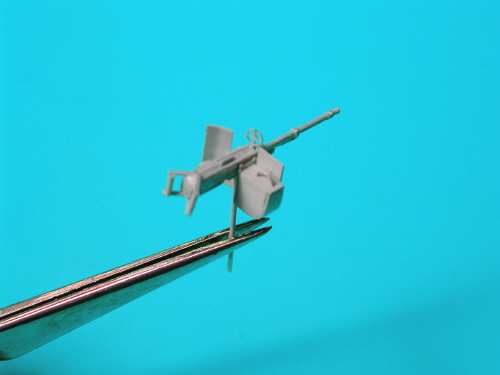
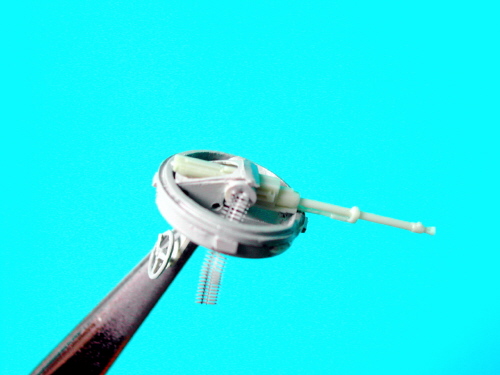
The main white metal parts are OK but if you want a more appropriate representation of some of the parts, you will have to scratch-build them yourself - I'll describe this in a little
more detail later. The BREDA 7.7mm machine gun and the rear retraction arms of the undercarriage are the main troubles with this kit. Before starting, I'd like to thank Dan
Salomone who sent me some very useful documentation on this particular bird. Now on with the job!
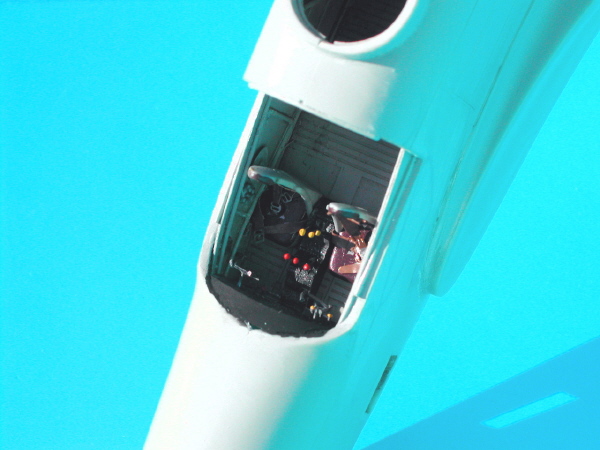
The front gondola of the SM.84 was removable during flight for some obvious reasons, but was in the down position for torpedoing or bombing. The docs show you what it looks like and the kit part got it all wrong. Look at the pics and put your little fingers to work. New transparencies were made from clear plasticard and the targeting equipment is scratchbuilt. Future is used to glue those in place.
 |
Aircraft: SIAI-Marchetti SM.84 Manufacturer: SIAI-Marchetti Type: Bomber Year: 1941 Engine: Three Piaggio P.XI RC 40, 14 cylinder radial, air-cooled, 1,000 hp each Wingspan: 69 ft 7 in (21.20 m) Length: 58 ft 10 in (17.93 m) Height: 15 ft 1 in (4.59 m) Weight: 29,330 lb (13,288 kg) (Loaded) Maximum Speed: 268 mph (432 km/h) at 15,000 ft (4,600 m) Ceiling: 25,900 ft (7,900 m) Range: 1,137 miles (1,830 km) Armament: 4 machine guns; 4,400 lb (2,000 kg) of bombs Crew: 5 |
|


|



|

|



|
|
|
|
|
|

|
|
|


|


|
|
|
|
January, 2006 STORMO! © 2006 |