|
Camouflage and Insignia of the FIAT CR 32 Balearic Islands 1936 to 1939 - Part I by Stefano Lazzaro |
|
|
|
|
Although the Fiat CR.32s in the Balearic Islands would see less action and claim fewer kills than their respective mainland counterparts,
the FIAT CR 32s of the Balearic Islands are fascinating for the all-metal finishes and band camouflage. Until recently few details were
known about the livery of these aircraft; only a few examples in aluminium were represented and no more than three were known to have
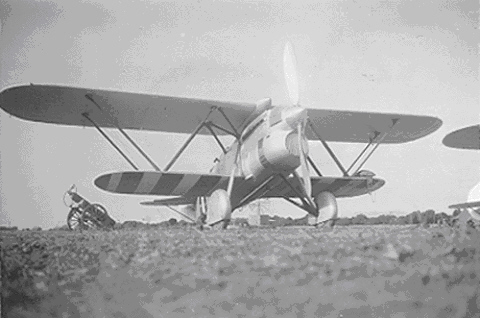
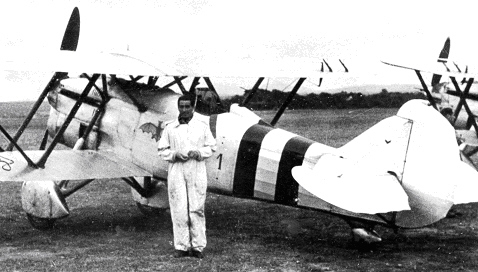
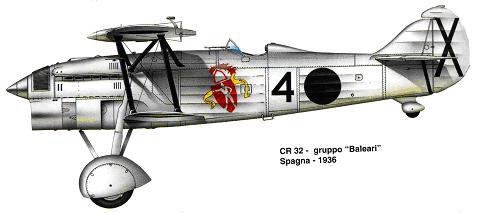
been portrayed in the popular band camouflage finish. In particular black “4” (Img 1) is often pictured since the plane carried a
colorful shield painted on the fuselage, however this famous profile lacked supporting images and proved later to be incorrect.
|
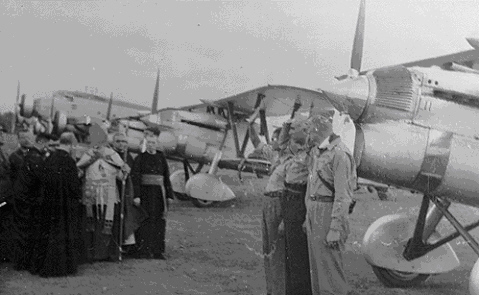
When the first three CR 32s of the Squadriglia Mussolini arrived in Majorca, in August 1936, the aircraft were in the standard
(of the time) Regia Aeronautica fighter finish: natural metal with fabric areas painted in silver dope. The rear sides of the propeller
blades were finished in an anti-glare matt black, while the wing and undercarriage struts were painted in a gloss dark colour, that
in early photos seems to be black or very dark grey and in later photos, matt medium grey (possibly worn or repainted areas). The only
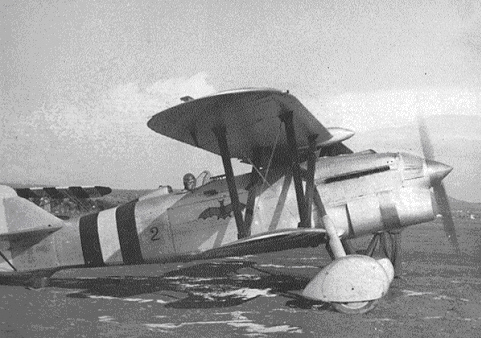
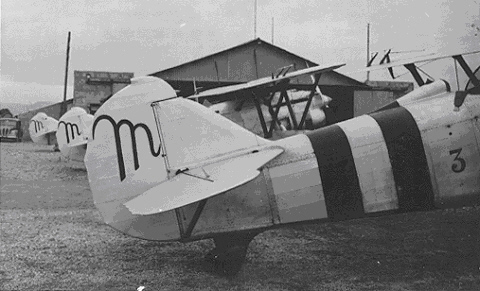
insignia borne by FIATs were black-white-black 30 cm-wide bands on the fuselage and black/white bands on the lower wing under surfaces.
Under wing black bands covered the metal wing root, and 2nd to 4th wing rib, 6th to 8th, 10th to 12th and 13th wing rib to tip.
These aircraft soon received individual black numbers, about 25 cm high (Cap. Giuseppe D'Agostinis commander of the unit, chose no. 4
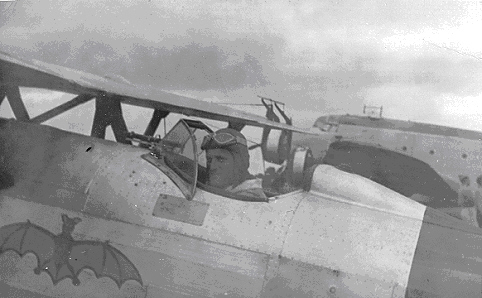
probably because he came from 4° Stormo), followed by the first unit insignia, a blue bat (the symbol of Majorca) on both sides of
the fuselage.
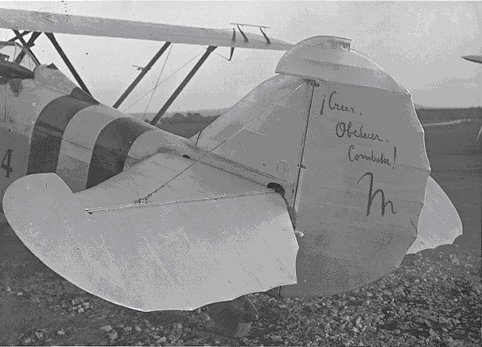
Perhaps during this period, at least on the port side of the rudder of no. 4 there appeared a dark red caption
"¡Creer, Obedecer, Combatir!” signed with the monogram of Mussolini, which was the Spanish translation of the famous
fascist motto "Credere, Obbedire, Combattere!" (Trust, Obey, and Fight!).
Also, aircraft no. 1 had a small red chevron, which was later deleted, at least on the port side of the tail fin, likely to represent
the pilot’s rank.
In late December, a fourth CR 32 joined the existing Fiats, followed by two more in January 1937. Since the bat's blue distemper
paint did not adhere well to the aluminium pigment (just like today in our hobby!), it was easily "washed out" by air streams during
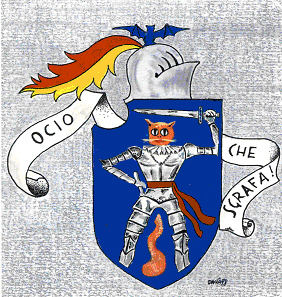
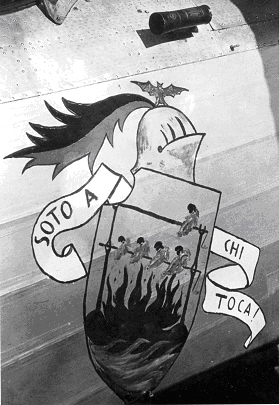
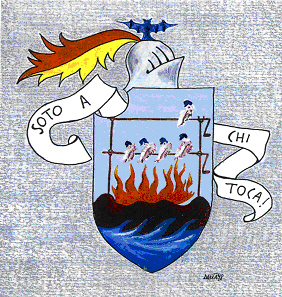
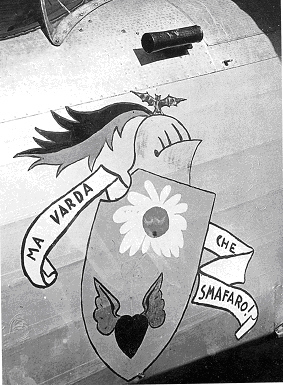
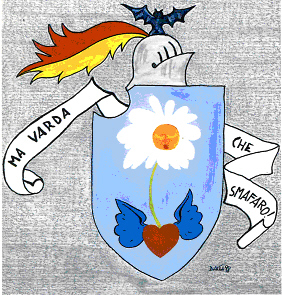
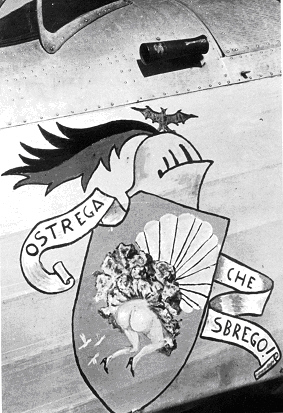
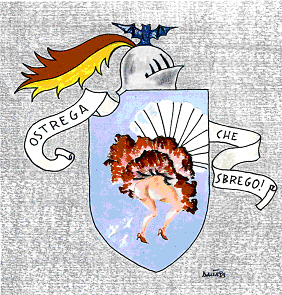
flight. So, in the early weeks of 1937, the pilots decided to erase the bats and paint their own personal shields. Each shield was
decorated with a red/yellow-plumed knight helmet with the usual blue bat placed upon it and with a white cartouche containing a motto
in Venetian dialect (the reason behind this is because most pilots came from the North-East of Italy).
No. 1 was the personal aircraft of Serg. Guido Carestiato “Efisio Ciarotti”. This was the first aircraft reassembled – in just a
single night - after it arrived in Son San Juan on 27 August 1936. The following morning, Carestiato strafed four Republican SIAI S.62s
and a few minutes later, D’Agostinis claimed a fifth. Hence, the picture of five chickens on a spit. The motto reads: “(COME ON,) WHO’S
TURN IS IT”.
It seems that this aircraft was also baptized “CU FU?” (‘Who was it?’ or ‘What happens?’ in Sicilian dialect, often used as an interjection) in honour of the Sicilian mechanic of the Squadriglia, however no photographic evidence exists.
The origin of the fourth shield, painted on no. 3, is rather interesting. A pilot, perhaps S.Ten. Ippolito Lalatta “Valisneri” who was
often pictured beside this aircraft and who had a love affair with a buxom Spanish beauty and was very jealous of her! So, one day he was
ordered to test another aircraft and once he took off, his comrades hurriedly painted on his shield a parachuting girl … seen below!
The motto is of course untranslatable and ambiguous, however the meaning is clear: “OH, MY! WHAT A ****!”.
An anecdote: that same afternoon the Squadriglia Mussolini received a sudden visit from the Catholic Archbishop of Majorca! Luckily
for them, the venerable prelate did not notice their latest artwork ...
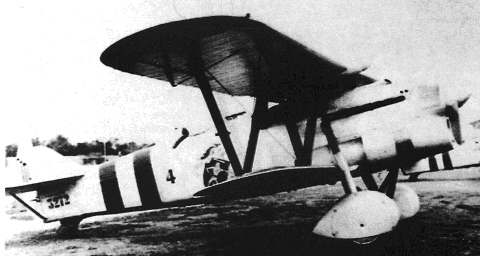
At a certain moment, a mysterious MM (Matricola Militare – the military serial number) was applied in stencil style under the tail
of "black 4", probably on both sides; it was strange in that "3272" is not included in the list of CR 32's MMs. Soon after, a dark red "M"
was painted on at least the starboard rudder of each aircraft. The locals believed it was in honour of Majorca, but actually,
as we’ve seen, it stood for "Mussolini".
The MM on “black 4” was short lived and was deleted after the aircraft received Mussolini’s monogram.
CONTINUED IN PART II - December 2005
Bibliography: Alessandro Santarelli (ed.), I caccia delle Baleari, in: Aerofan no. 70, Jul-Sep 1999, Giorgio Apostolo Editore, Milan Andrea Degl’Innocenti & Umberto Postiglioni, Colori e Schemi Mimetici della Regia Aeronautica 1935-1943, 1st edition, CMPR, Ravenna, 1977 Andrea Degl’Innocenti & Umberto Postiglioni, Colori e Schemi Mimetici della Regia Aeronautica 1935-1943, 2nd edition, CMPR-GAVS-GMT, Trento, 1994 Ferdinando Pedriali, Guerra di Spagna e Aviazione Italiana, 2nd edition, USSMA, Rome, 1992 Photo Credits: Giorgio Apostolo, Ali d’Italia no. 4 - FIAT CR 32, La Bancarella Aeronautica, Turin, 1996: Img 1 CD-ROM FIAT CR.32 https://www.italianwings.it, also published by Ufficio Storico Stato Maggiore Aeronautica Militare: Img 2 to 5, 11, 12 Angelo Emiliani & Emilio Ghergo, Ali in Spagna (also published in English as: Wings over Spain), Giorgio Apostolo Editore, Milan, 1997: Img 6 Aerofan no. 70, Jul-Sep 1999, Giorgio Apostolo Editore, Milan: Img 7 to 10 Tuttomodellismo no. 50, Feb 1998, Hobby & Work Italiana Editrice, Bresso (Milan): Img 13
|
|
|
|
|
|

|


|
|
|


|


|


|
|
|
|
© Stefano Lazzaro, 2005 STORMO! © 2005 8 (2005) 1-2 |