|
Camouflage and Insignia of the FIAT CR 32 Balearic Islands 1936 to 1939 - Part II by Stefano Lazzaro |
|
|
|
|
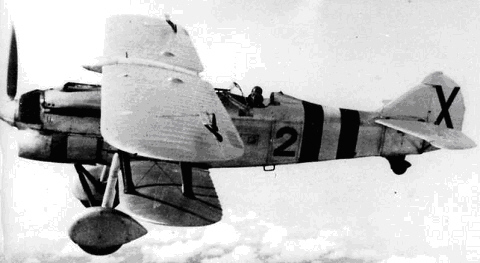
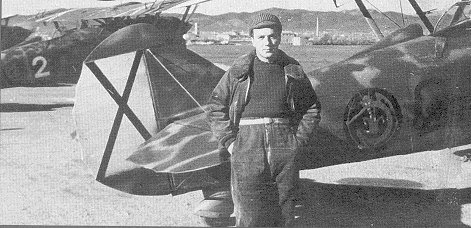
In the spring of 1937, the well known black St. Andrew's cross appeared on the rudder of 101ª Squadriglia planes. It was reduced in size
compared to other units operating CR 32s. The cross was painted directly on aluminium fabric (silver dope) and lacking the white background.
Other insignia remained unchanged. In the same period, individual numbers doubled in size to 50 cm as well as a slight change in style that
occured.
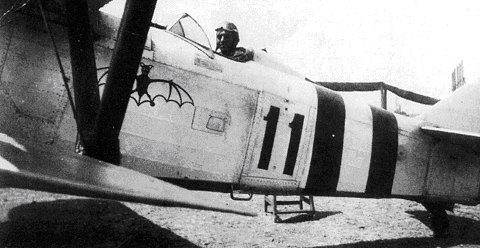
Five more FIATs arrived during this time resulting in a total of eleven CR 32s. The blue bat was painted again on some aircraft,
for instance nos. 9 and 11. But this time, apparently, the bat’s wing membrane was left unpainted, instead of being medium blue
previously.
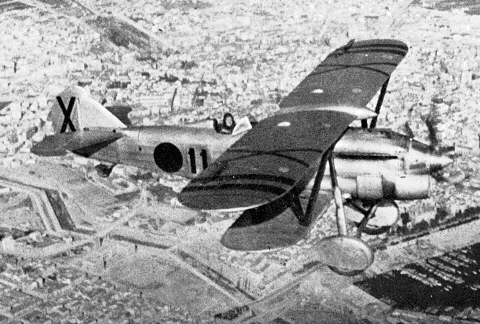
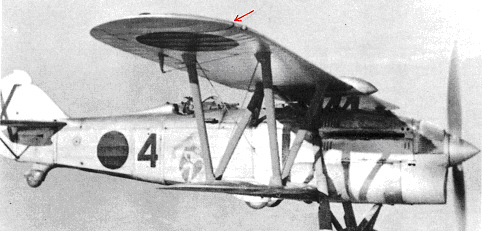
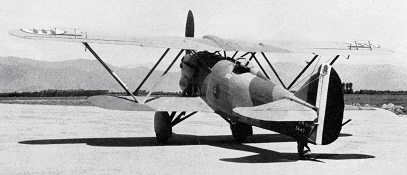
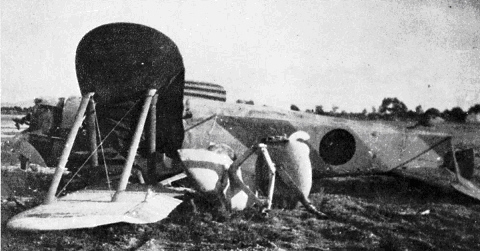
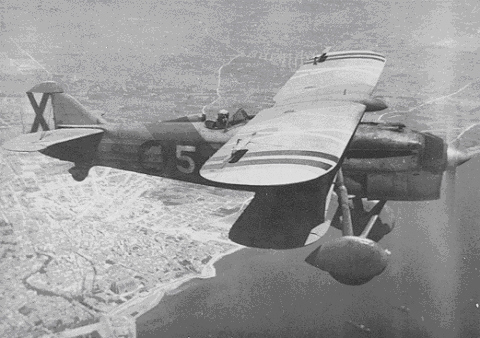
In May, the Squadriglia Mussolini became the 101ª Squadriglia. Likely during this period, Nationalist insignia changed to their
definitive form. A black 60 cm disk replaced the fuselage bands. Beneath the top wing appeared another 100 cm black disk, and
above the top wing a black St. Andrew cross was painted whose extremities reached the 11th-12th and the 15th-16th wing ribs; two
black bands were in 18th-19th and 20th-21st wing rib space; the area between the 22nd rib and the wing-tip was painted white on some
aircraft (for instance nos. 2 and 5) and aluminium on others (for instance nos. 4 and 11), but outlined by a fine (thin) black line just
over the 22nd rib (see img 16 & 17).
Under wing black and white bands were deleted and three smaller (thinner) black bands, about 15 cm-wide, 8th to 9th, 10th to 11th and 12th to 13th wing ribs were painted on an aluminium background.
This situation remained unchanged at least until July when the 101ª Squadriglia joined the newly arrived 102ª Squadriglia to form the X Gruppo Caccia “Baleari”.
|
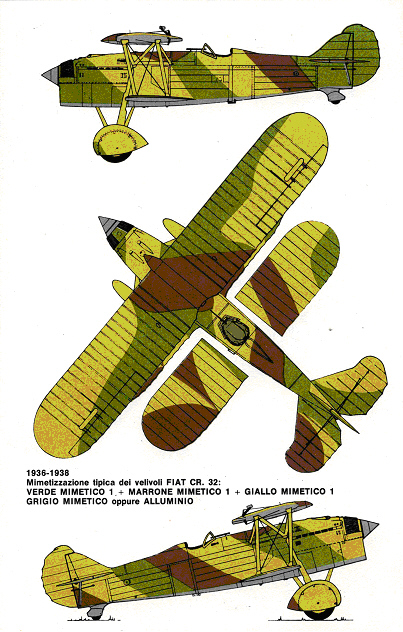
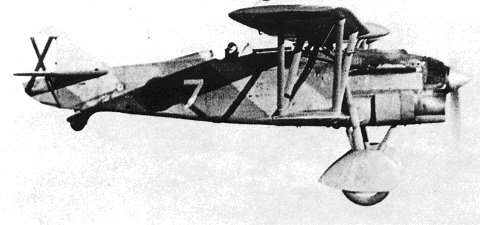
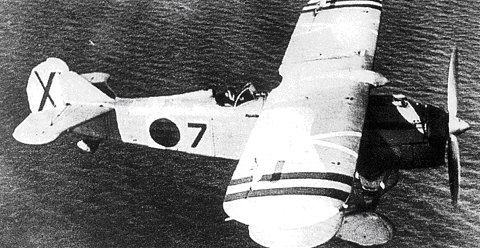
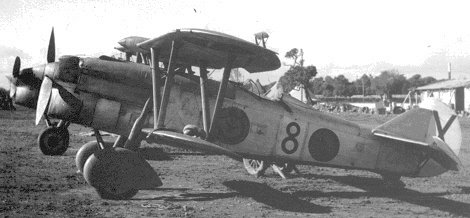
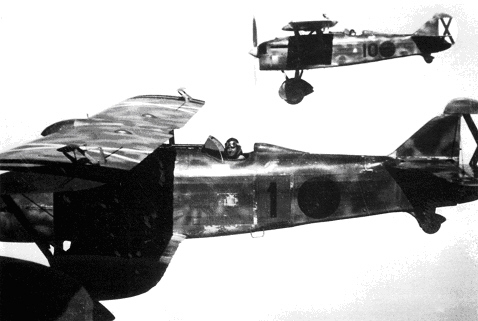
The CR 32ters of the 102ª Squadriglia were painted with the new three colour band camouflage which was the new finish for RA
fighters from the summer of 1937. Below (img 19) is the typical pattern as drawn in “Colori e Schemi Mimetici della Regia Aeronautica
1935-1945”, first (and out of print) edition of 1977. This pattern was applied with some variations. The spinner and the front side of
the propeller blades were left in a natural metal.
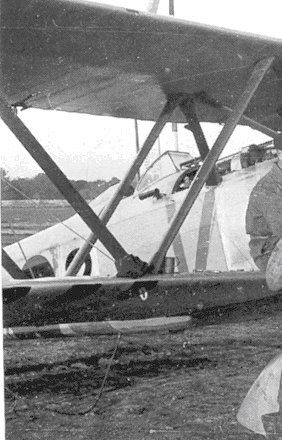
The under surfaces and wing struts were most probably painted in Grigio Mimetico, as suggested by the non-reflective underside
finish of this somerset FIAT.
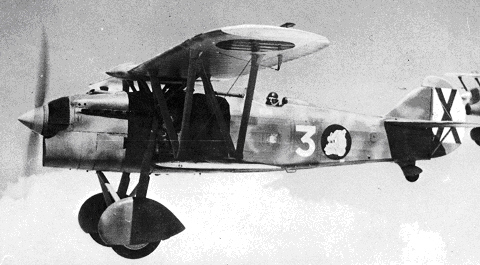
Nationalist insignia remained the same as 101ª’s, only the upper side top wing St. Andrew cross was white, and the cross on the rudder
had a white background. The individual numbers were white.
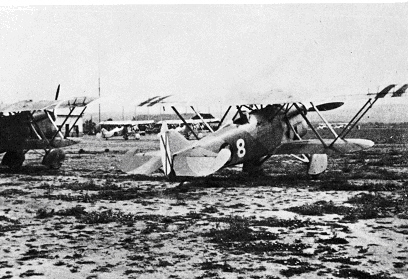
A band camouflaged aircraft (“black 7”) was also assigned to 101ª Squadriglia, likely a replacement plane.
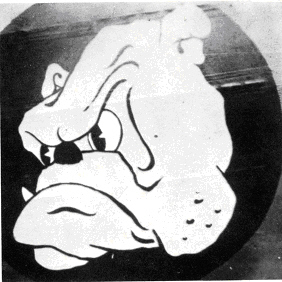
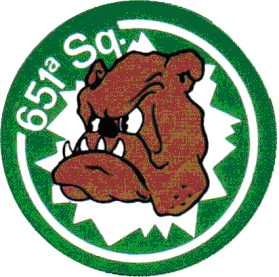
Shortly after their arrival, the aircraft of 102ª Squadriglia received their own unit insignia, a bulldog painted on the fuselage
black disk. The bulldog was applied on both sides, facing forward on the port side, and rear on the starboard side. Although often
depicted in pink (skin tone) in several artists’ profiles, its more logical colours were grey or, more likely, light tan, as depicted
in the badge of the current 651ª Squadriglia Collegamenti of the Aeronautica Militare (AMI).
This bulldog was present at least in band-camouflaged nos. 3, 5, 8 and 9 but this does not imply that it wasn’t applied to other aircraft.
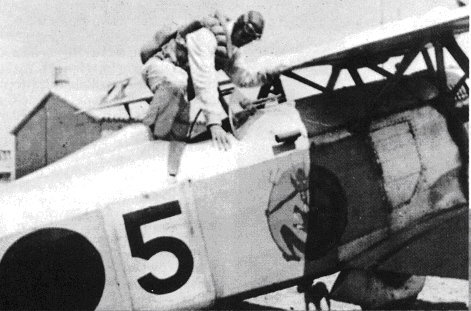
In 1938, the 101ª Squadriglia changed its unit insignia, a red snatching devil with pitchfork, inscribed in a yellow disk, on both sides. Sadly, no detailed images of this badge are known.
During 1938 and 1939 several aircraft were replaced, due to loss in accidents. The new aircraft came either from other units
or from Italy and had a mottled camouflage. In fact, in operational use, the band camo had been proved to be ineffective and was
replaced by the mottle scheme, first to units in continental Spain (VI, XVI, XXIII Gruppi and Squadriglia Mitragliamento “Frecce”),
and then directly at the FIAT factory. The band scheme survived only in the Balearic Islands because of the low threat of enemy attacks.
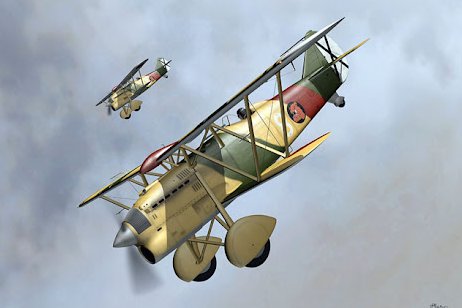
It seems that the patterns that were field-applied in Spain mainly consisted of only two colours (probably green over yellow, whose
actual hues/shades are still controversial), and that the aircraft coming from the factory had either a three-tone or a two-tone
(green over yellow) scheme, depending on the period. The colours used by FIAT were: Giallo Mimetico 1, Verde Mimetico 1 and Marrone
Mimetico 1 with undersides in Alluminio or Grigio Mimetico until 1938 and the same colours (except Alluminio) plus Giallo Mimetico 3,
Marrone Mimetico 2, Verde Mimetico 3 and Verde Mimetico 53192 in 1939. Noteworthy, aircraft painted in Spain had often the camouflage
extended also to wing struts, spinner and even the front face of the propeller blades.
In 1939, the 101ª’s devil was moved to the black disk.
The construction numbers, usually applied on the tail fin of other unit CR 32s were never applied to the Balearic fighters.
Bibliography: Alessandro Santarelli (ed.), I caccia delle Baleari, in: Aerofan no. 70, Jul-Sep 1999, Giorgio Apostolo Editore, Milan Andrea Degl’Innocenti & Umberto Postiglioni, Colori e Schemi Mimetici della Regia Aeronautica 1935-1943, 1st edition, CMPR, Ravenna, 1977 Andrea Degl’Innocenti & Umberto Postiglioni, Colori e Schemi Mimetici della Regia Aeronautica 1935-1943, 2nd edition, CMPR-GAVS-GMT, Trento, 1994 Ferdinando Pedriali, Guerra di Spagna e Aviazione Italiana, 2nd edition, USSMA, Rome, 1992 Photo Credits: Giorgio Apostolo, Ali d’Italia no. 4 - FIAT CR 32, La Bancarella Aeronautica, Turin, 1996: Img 14, 20, 29 CD-ROM FIAT CR.32 https://www.italianwings.it, also published by Ufficio Storico Stato Maggiore Aeronautica Militare: Img 17 Angelo Emiliani & Emilio Ghergo, Ali in Spagna (also published in English as: Wings over Spain), Giorgio Apostolo Editore, Milan, 1997: Img 18, 22, 31 Tuttomodellismo no. 50, Feb 1998, Hobby & Work Italiana Editrice, Bresso (Milan): Img 23, 28 Antonio Duma, Quelli del Cavallino Rampante, Edizioni dell’Ateneo, Rome, 1981: Img 15 Replic no. 84, Aug 1998, Editions DTU, Clichy: Img 16, 24 Andrea Degl’Innocenti & Umberto Postiglioni, Colori e Schemi Mimetici della Regia Aeronautica 1935-1943, 1st edition, CMPR, Ravenna, 1977: Img 19 Angelo Emiliani, Giuseppe F. Ghergo & Achille Vigna, Spagna 1936-39 – L’Aviazione Legionaria, 2nd edition, Intergest, Milan, 1976: 21, 25, 27, 30 https://www.aeronautica.difesa.it/CSA/CBR/51Stormo/651.asp : Img 26 Andrea Degl’Innocenti & Umberto Postiglioni, Colori e Schemi Mimetici della Regia Aeronautica 1935-1943, 2nd edition, CMPR-GAVS-GMT, Trento, 1994: Img 32
|
|
|
|
|
|

|


|
|
|


|


|


|
|
|
|
© Stefano Lazzaro, 2005 STORMO! © 2005 9 (2005) 1-2 |