|
Classic Airframes 1/48 FIAT CR.32 Freccia (Arrow) - Final Assembly - Part III by Davide Splendore 
|
|
|
|

Click the STORMO! Eagle to return to the Gallery |
 |
|
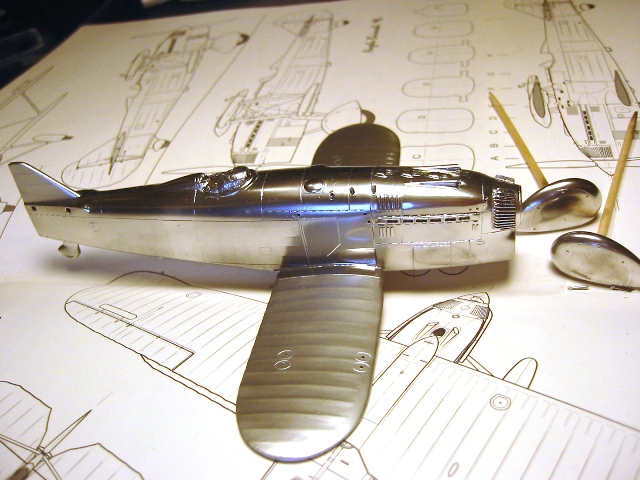
Painting The next phase involved the painting of the fuselage prior to assembling the top wings. The livery this subject is totally natural aluminium except those areas covered in cloth which nontheless received an alluminum colored finish. I chose to use Alcad Metalizers
Alcad Metalizers
and to prepare the suface I applied a black primer polish using Testors paints. 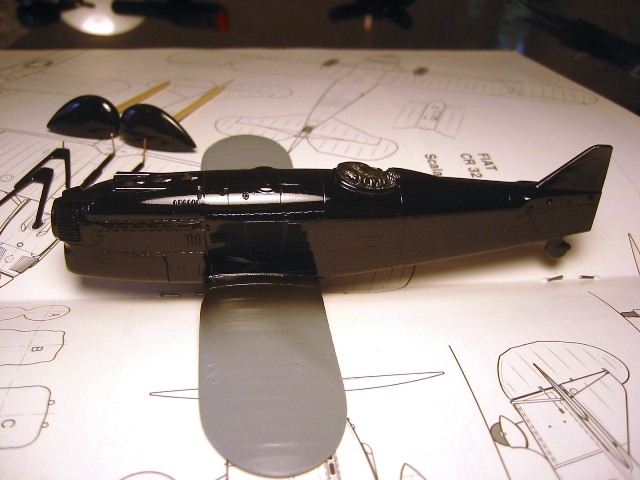
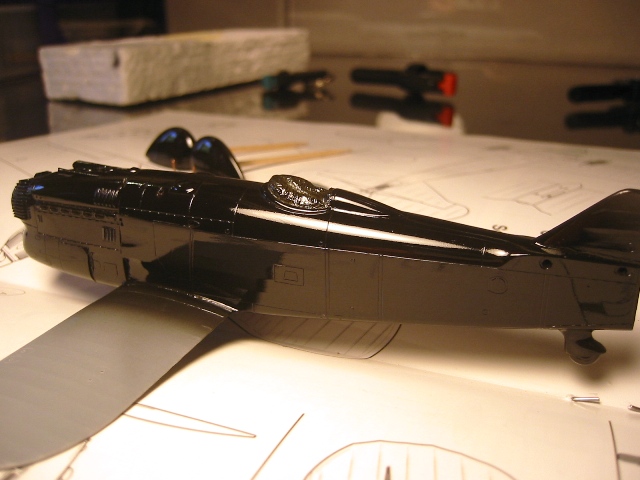
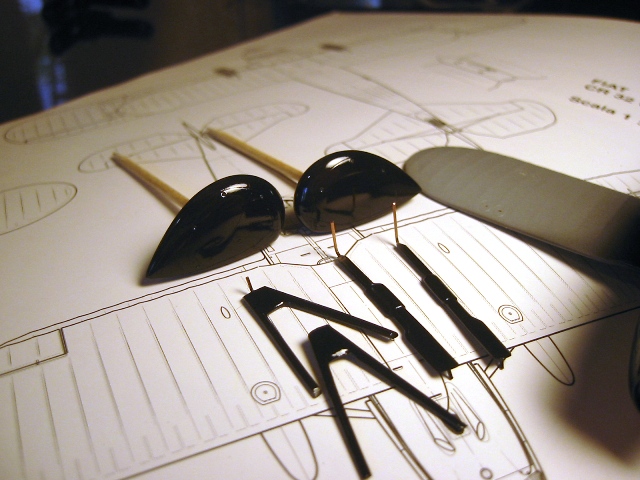
The first application of Aluminum consisted of Alcad "Polished Aluminum"
Polished Aluminum 1 Fl. Oz. - ALC105
applied to the fuselage followed by Alcad
 "White Aluminum"
White Aluminum 1 Fl. Oz. - ALC106
sprayed on the lower wings to reproduce the off-shade effects created by the cloth farbric covered wings.
Different types of Alclad "White Aluminum",
White Aluminum 1 Fl. Oz. - ALC106
"Duralluminium",
Duraluminium Finish 1 Fl. Oz. - ALC102
 "Stainless Steel"
Stainless Steel 1 Fl. Oz. - ALC115
were applied to various areas of the fuselage to give an effect of the difference between
the sheet panels that constituted the fuselage. 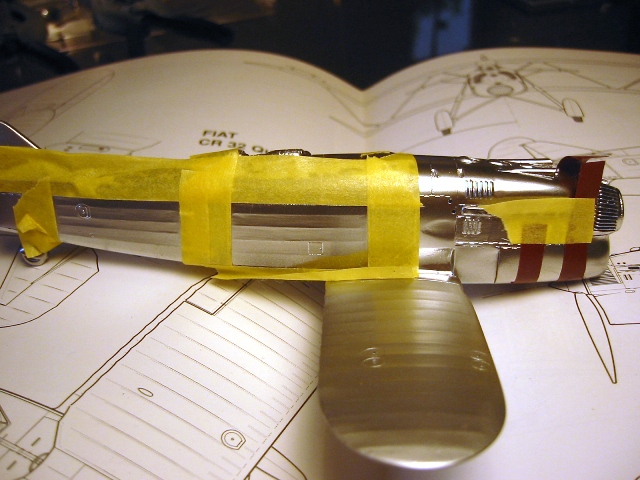
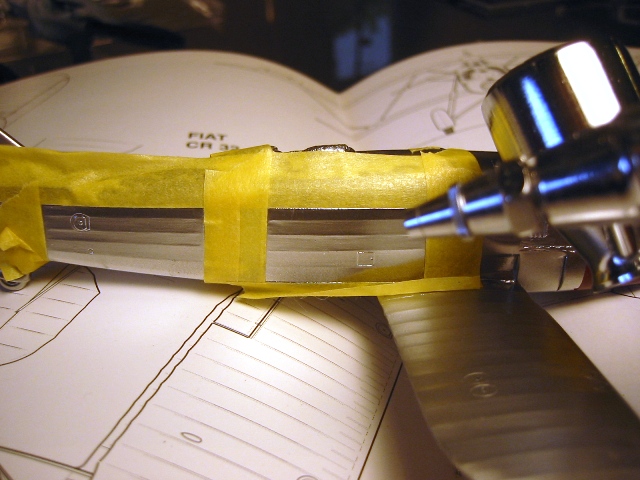
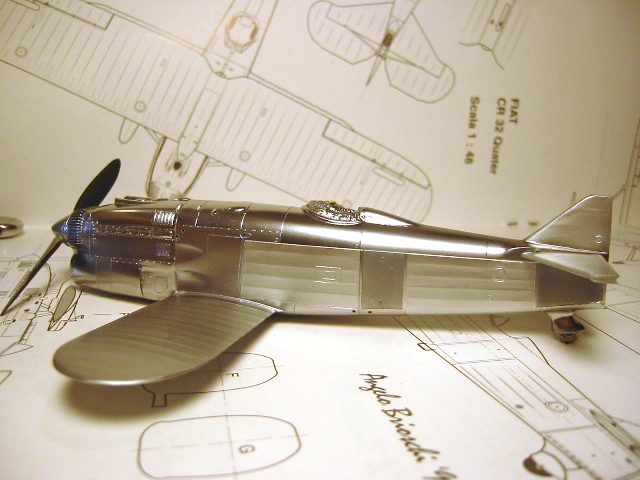
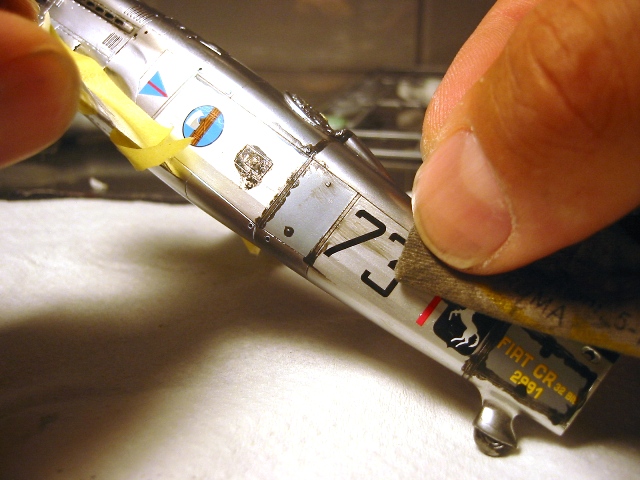
The model appears a little too "polished", however after the traditional washing the model takes on a more realsitic tone. Its was now time to apply the decals and I used the beautiful sheet printed by Cartograph and designed by Chris Busbridge. The decals lack complete instructions, however as the decals sheet indicates, the decals were designed to compliment the kit supplied decals. The quality of the decals are excellent, after all the decals are printed by Cartograph. It wasn't necessary to apply a transparent varnish on the Alclad colors since the decals finish smoothly. 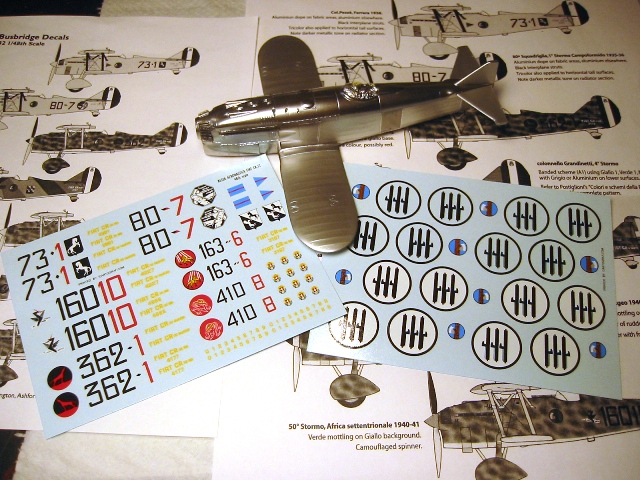
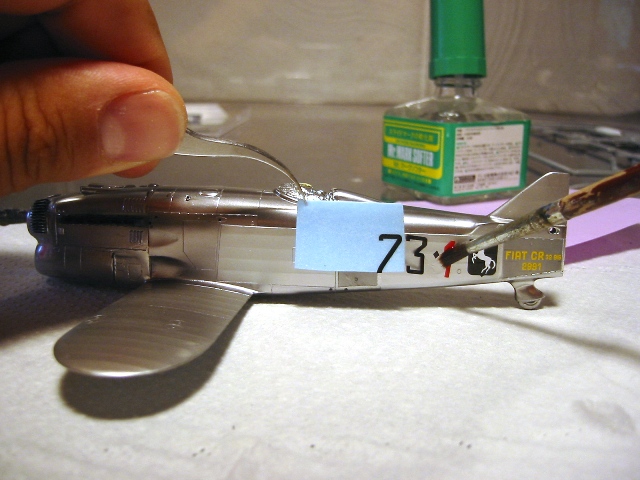
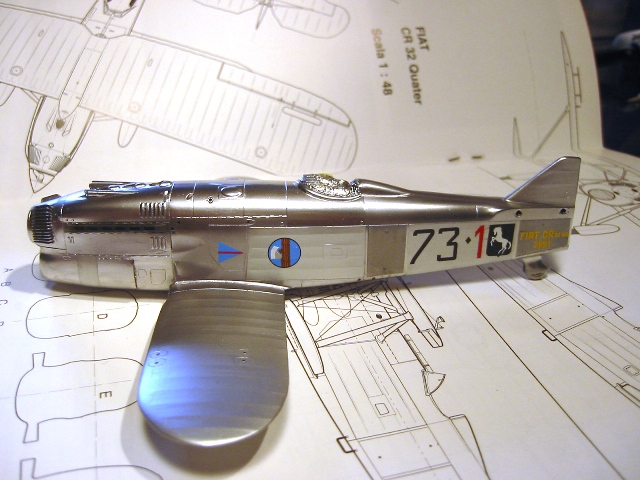
Now it was possible to carry out a wash in order highlight the panel lines, using artist chalks, powdered and mixed with water to avoid the risk of ruining the Alclad finish. 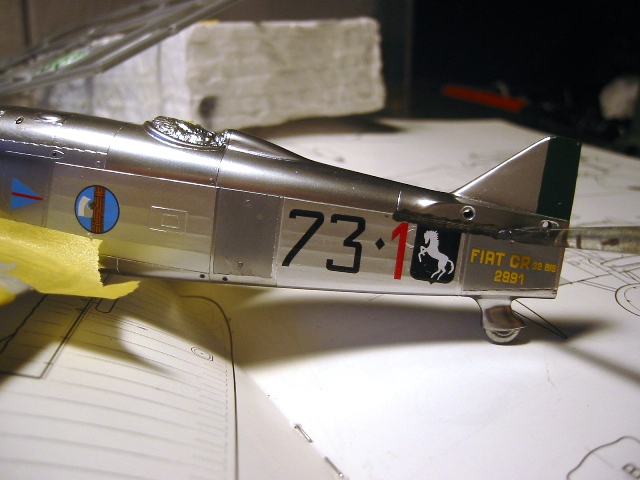
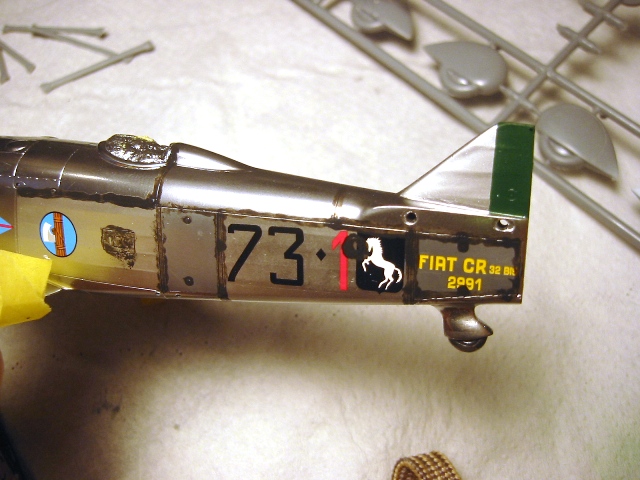
Almost immediately after applying the wash the excess wash was removed with a dampened cloth.
While the fuselage dried, it was time to focus on some particulars, separately painting the tailplanes: 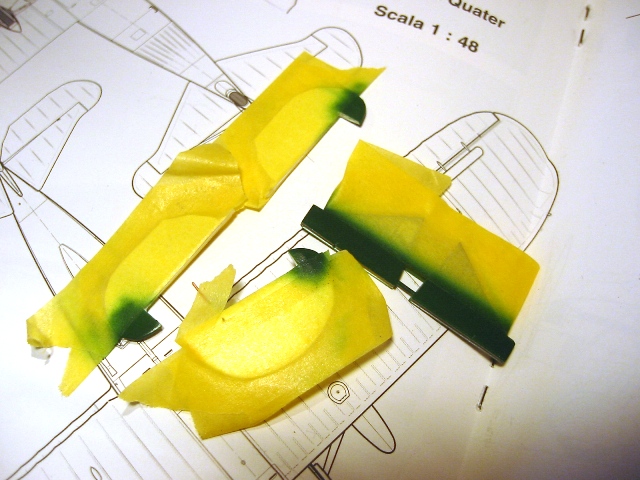
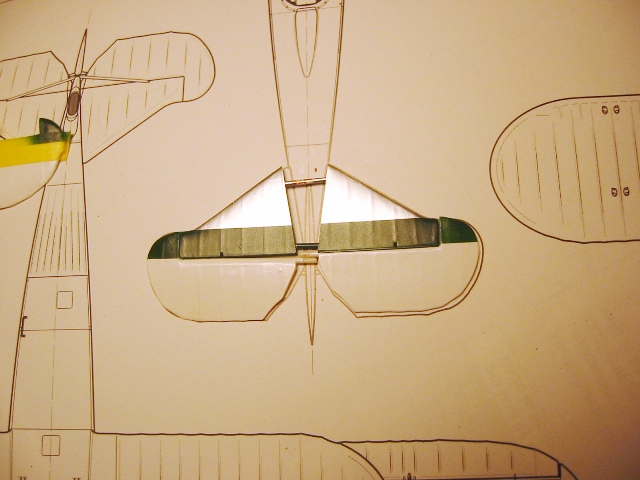
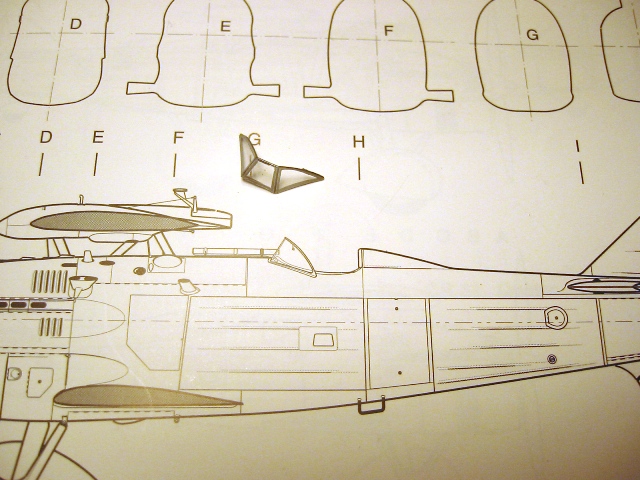
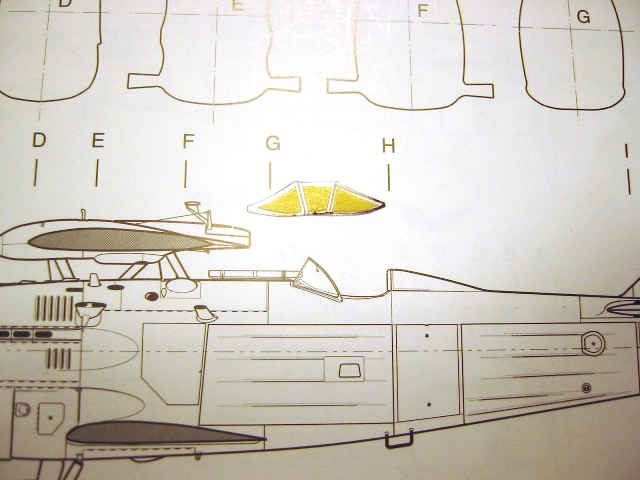
The cockpit canopy was reproduced from a sheet of clear acetate reproducing the exact profile using Ali D'Italia #4 , obtaining, in my opinion a thinner, sharper canopy than the one supplied with the kit. 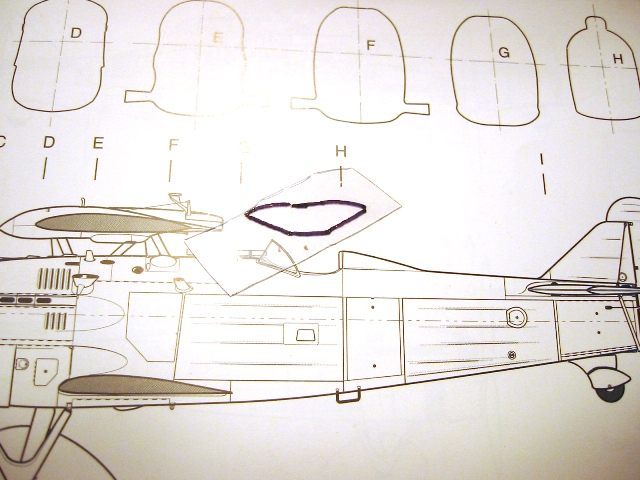
The lower machine-gun barrels were made from syringes painted in "gun metal" and dry brushed with silver. The wing struts are somewhat "problematic" since the mounting points are not accurate, however with a little patience and the aid of wire and new points this could be done accurately. Mounting the wing struts was done one at a time, while maintaining the correct inclination. 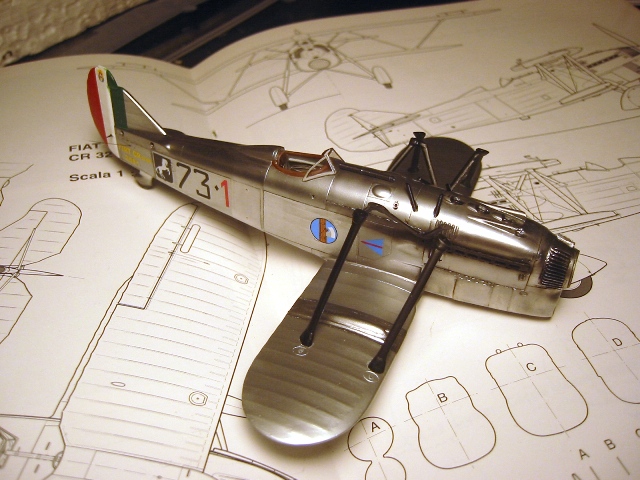
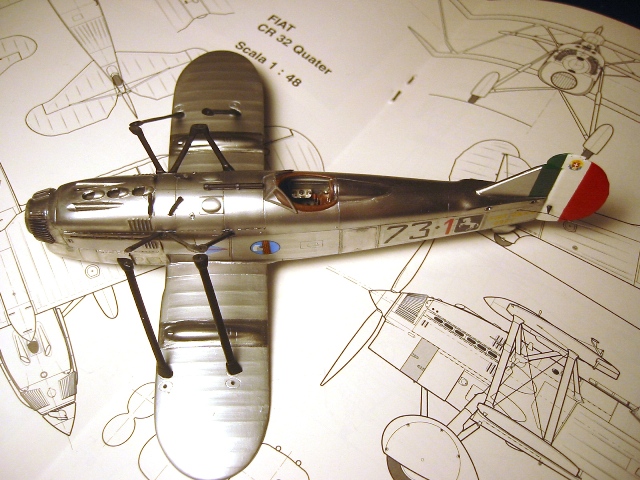
The wing strut aligment with the top wing was off somewhat and gaps were filled with Kristal Cleer which can be painted using a brush and subsequently smoothed down with water. Obviously the part dealt with Kristal Cleer was retouched with black semiopaque. The top wing assembly required a little patience. For the undercarriage, the situation is more complex, and it was necessary to devise an approach to glue the parts using tape to keep the parts properly aligned with respect to drawings. 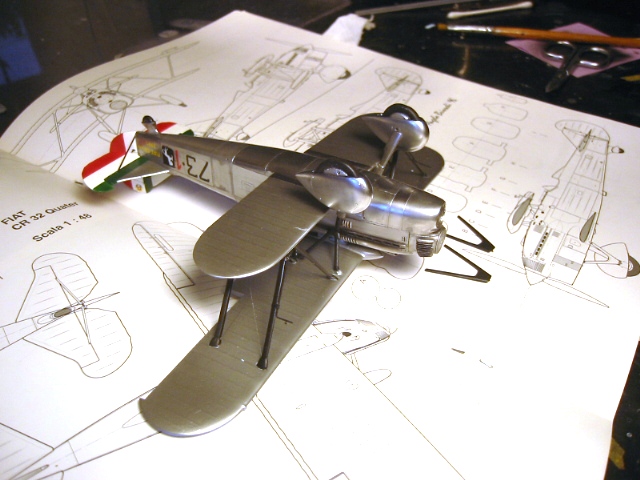
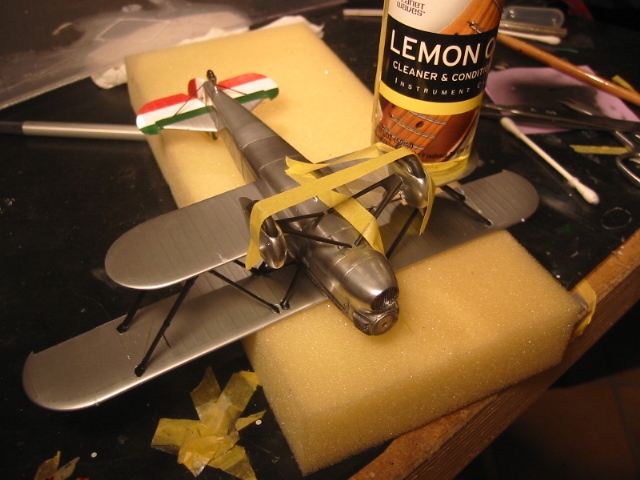
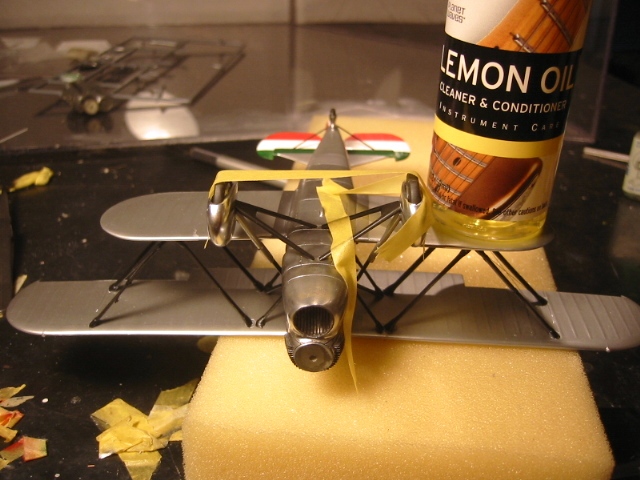
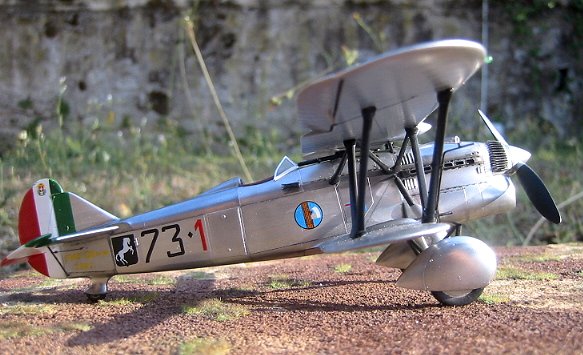
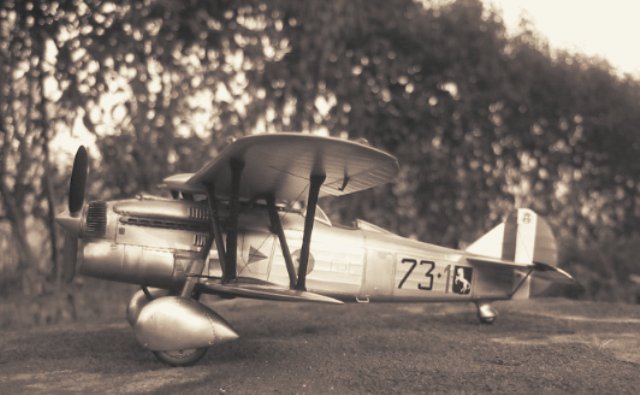
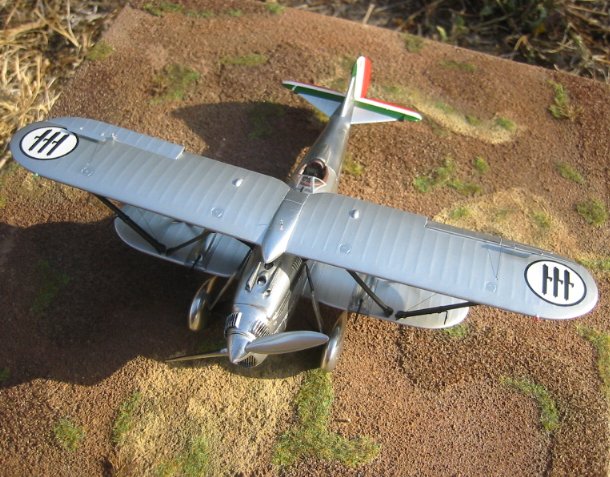
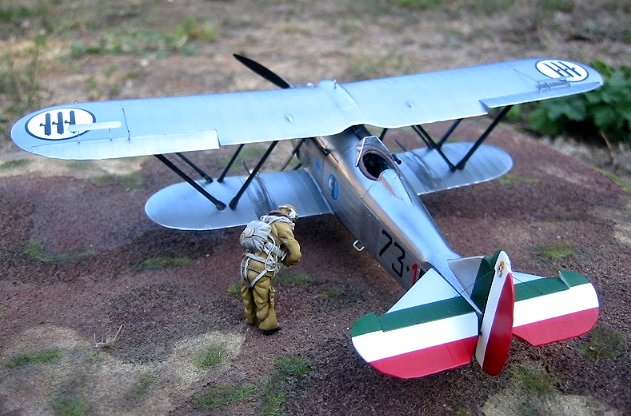
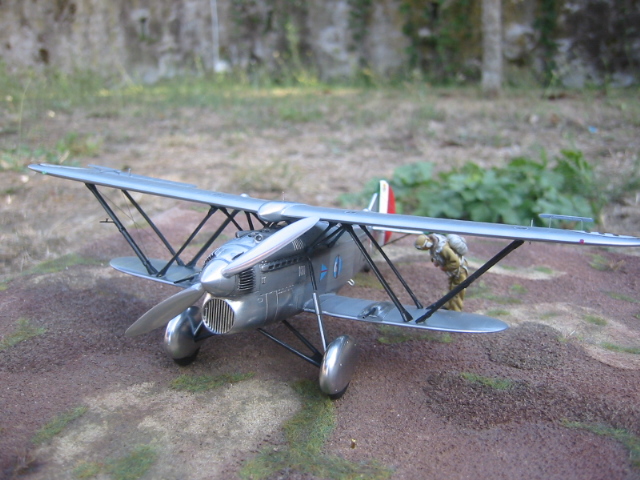
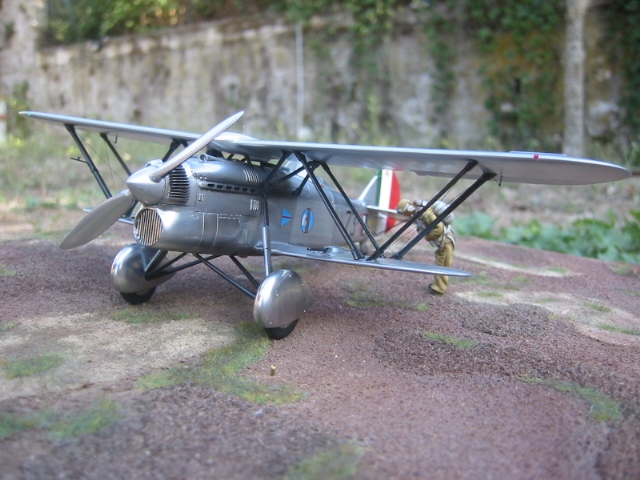
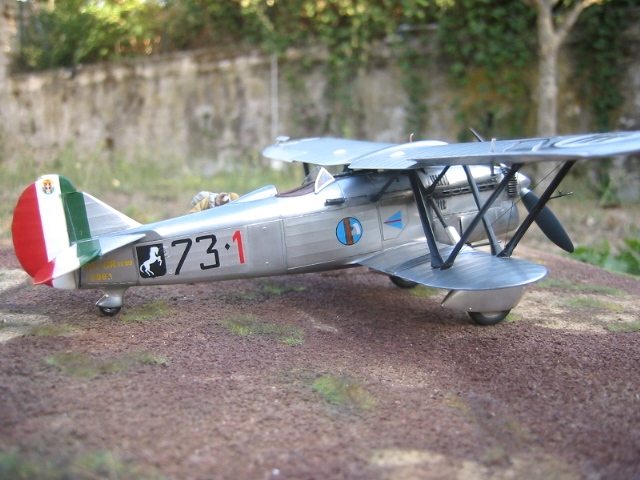
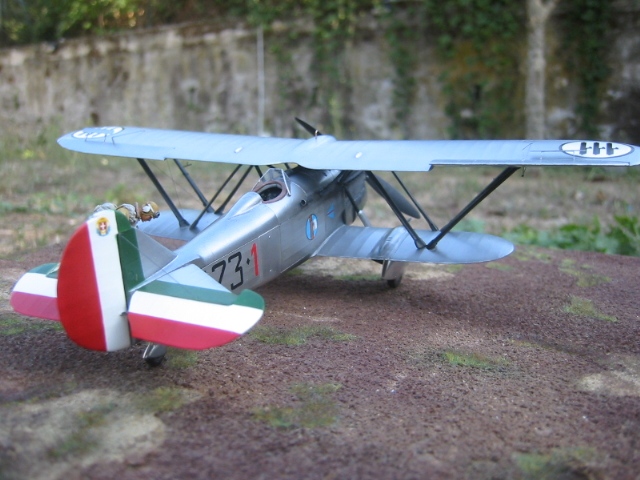
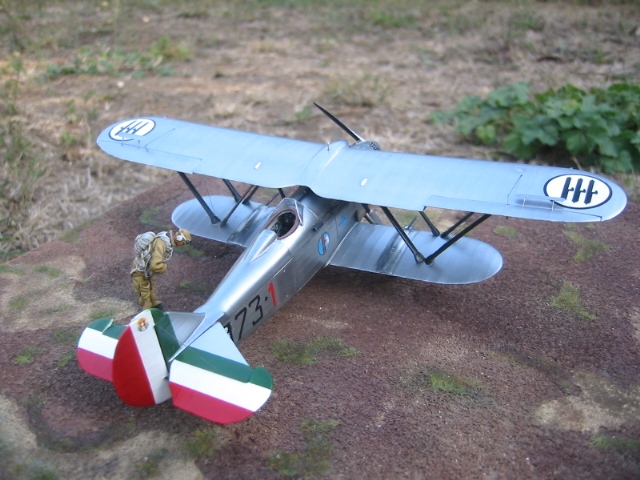
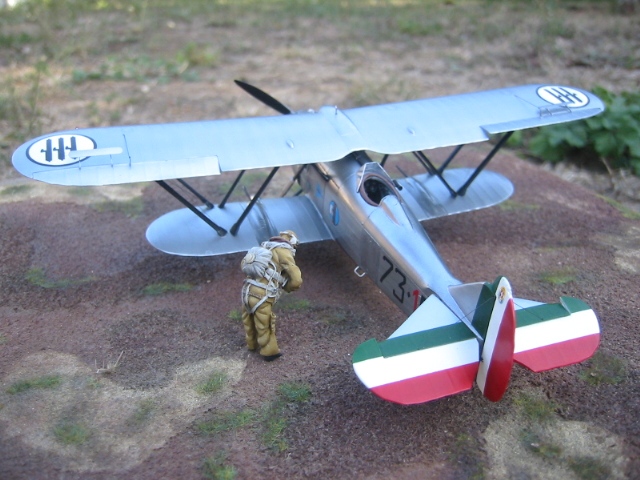
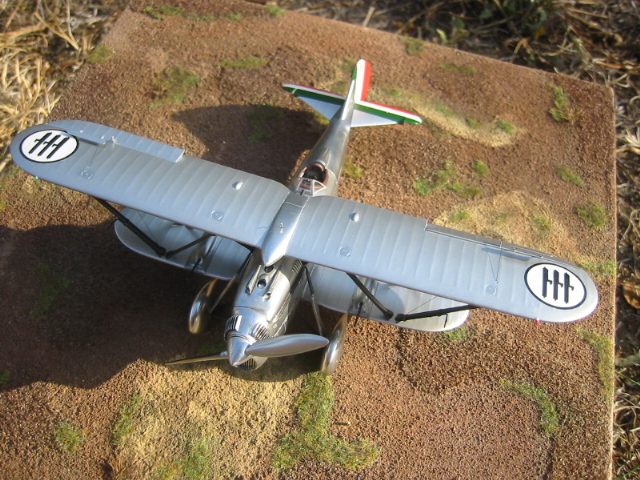
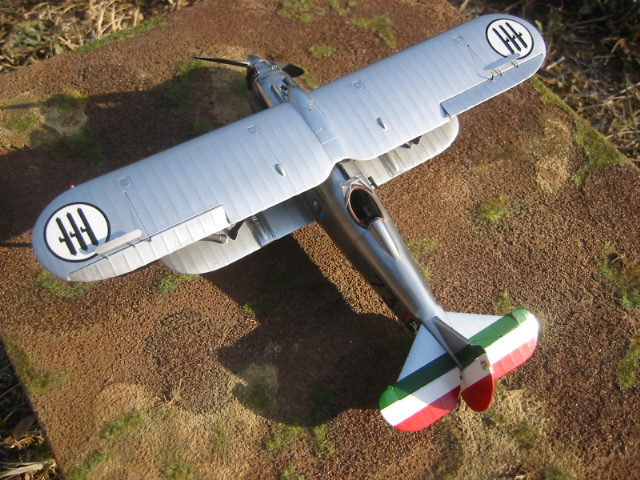
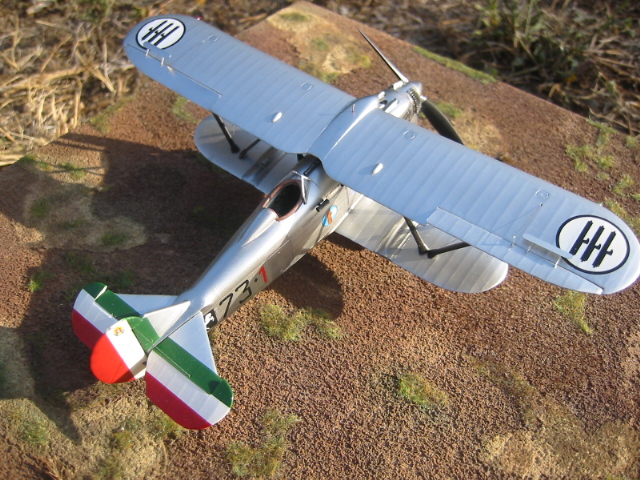
After assembling the undercarriage, the decals were applied to the top wing and the ailerons placed into position with the appropriate photo etch booster tabs, indispensable for giving a faithful reproduction of the particular aerodynamic counterbalances of the CR 32. Finally the model was completed and the result is a winner, a simple figure adds a touch of realism to this rewarding project.
Conclusions For how much it concerns the assembly, the kit it is not on the level of the more well known kit manufacturers, however the surface detail, with the addition of the resin parts and particularly the resin nose and photoetch parts transform this kit without doubt into a highly detailed subject, that comes together rather quickly and demands only a few modifications. The shapes and the dimensions are accurate, except for the short undercarriage legs and cockpit canopy which is far too thick. The only note worth considering is the photoetch dashboard that is absolutely over sized. The decals are a high point which cover Italian subjects of the 1940s. The end model is beautifully rendered, the shapes and the general aspect, if constructed with some passion results in a terrific replica of this most famous Italian machine. Buon modellismo.
|
Aircraft: Fiat CR.32 Manufacturer: Fiat S.A. Type: Fighter Year: 1935 Engine: Fiat A.30 RA, 12-cylinder V, liquid-cooled, 600 hp Wingspan: 31 ft 2 in (9.50 m) Length: 24 ft 5 in (7.45 m) Height: 8 ft 8 in (2.63 m) Weight: 4,080 lb (1,850 kg) Maximum Speed: 233 mph at 9,800 ft (375 km/h at 3,000 m) Ceiling: 28,900 ft (8,800 m) Range: 460 miles (760 km) Armament: 2 machine guns Crew: 1 |
|
|
|
|
|
|

|
|
|


|


|
|
|
|
March, 2008 STORMO! © 2008 |