|
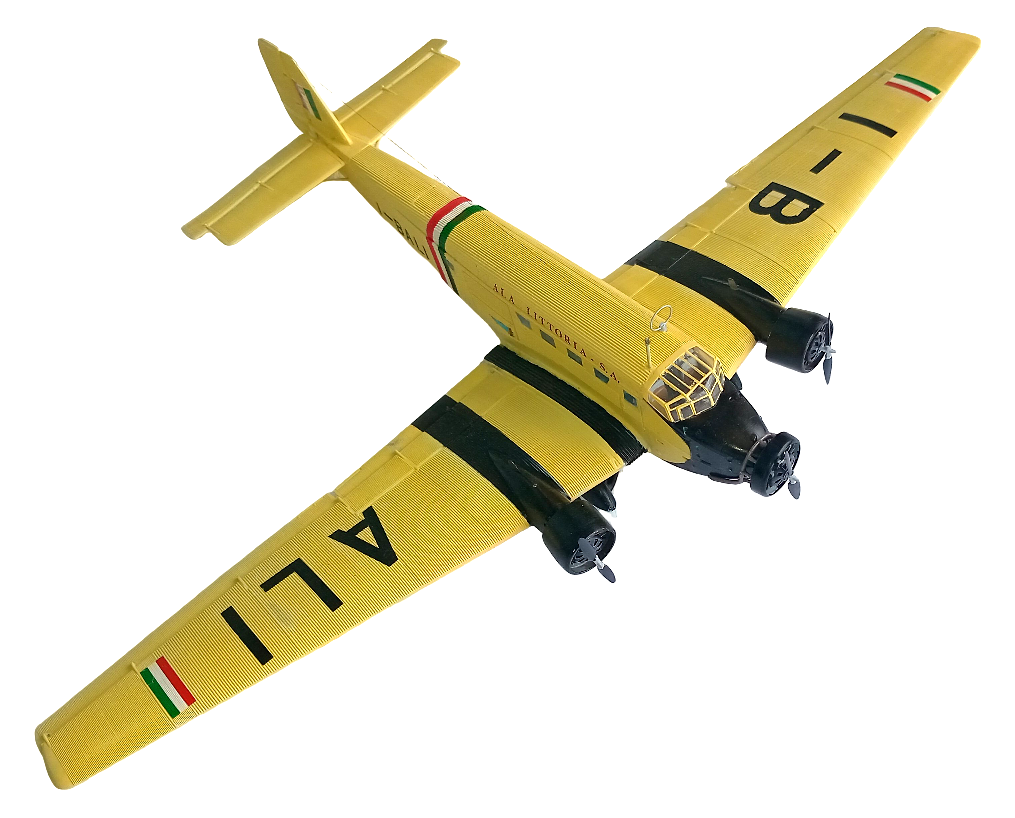
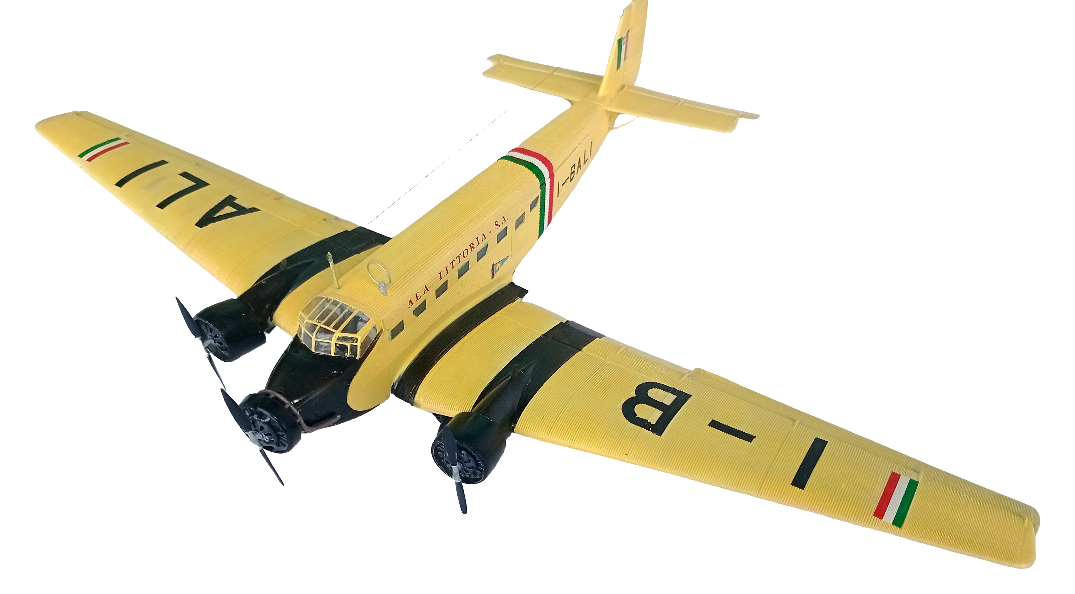
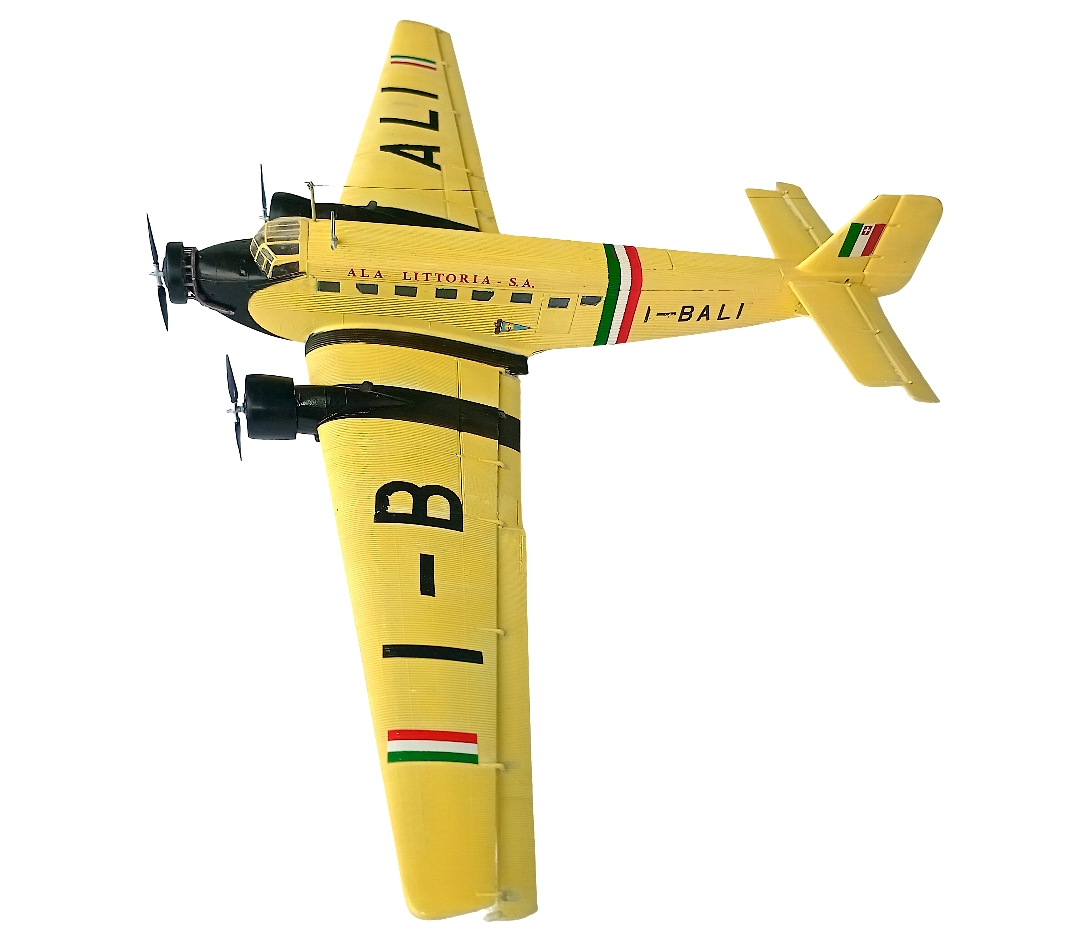
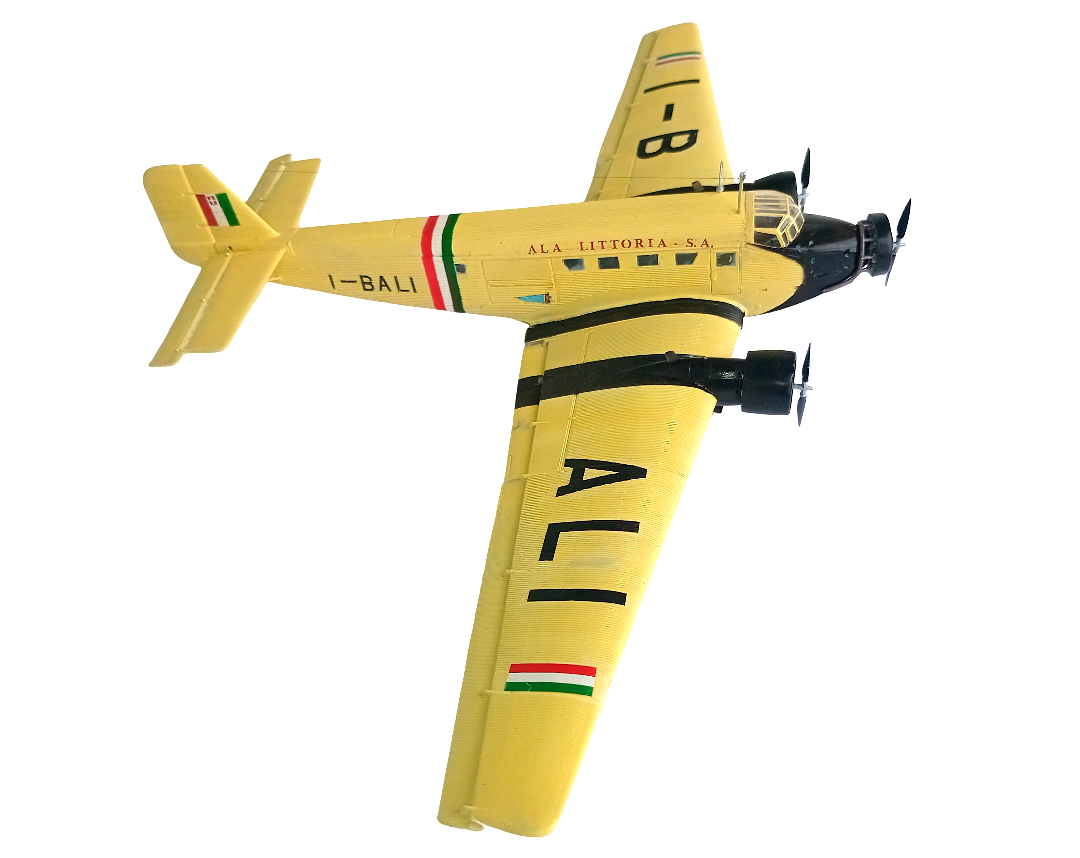
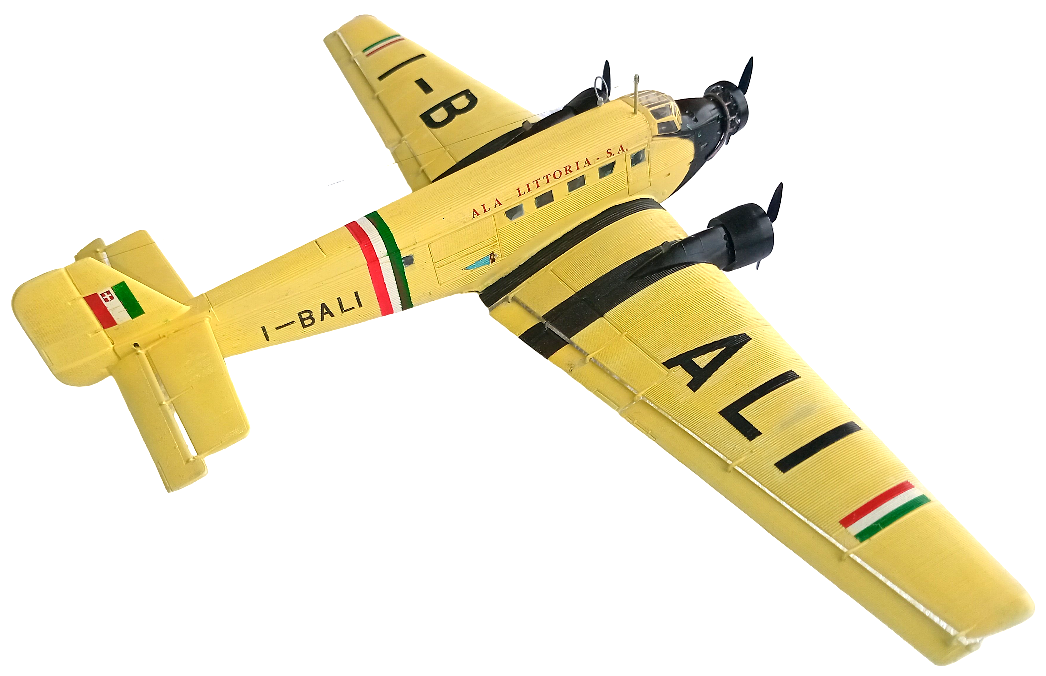
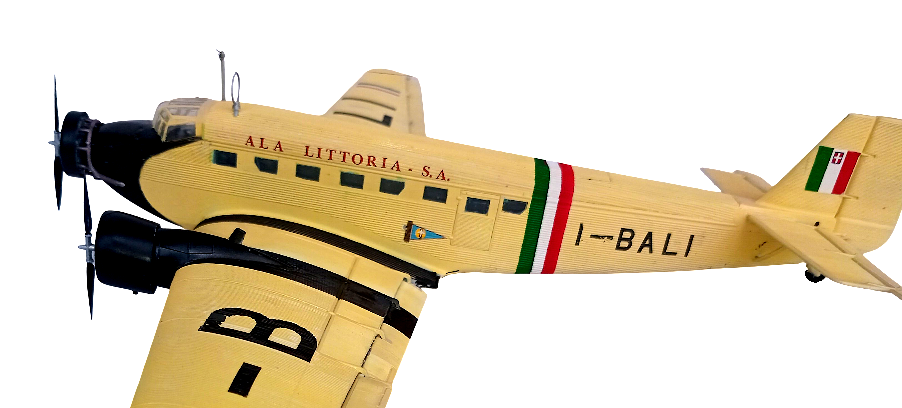
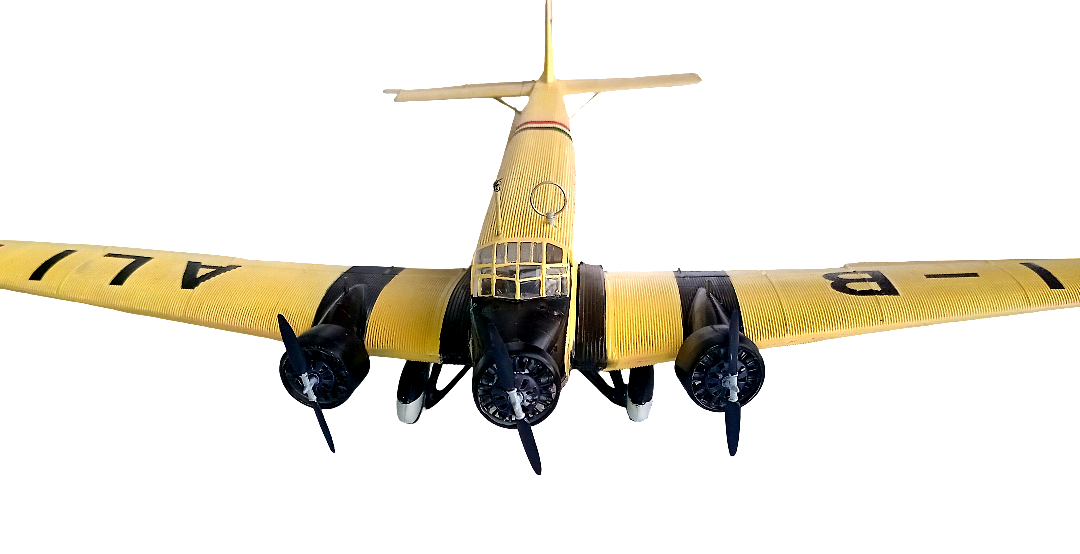
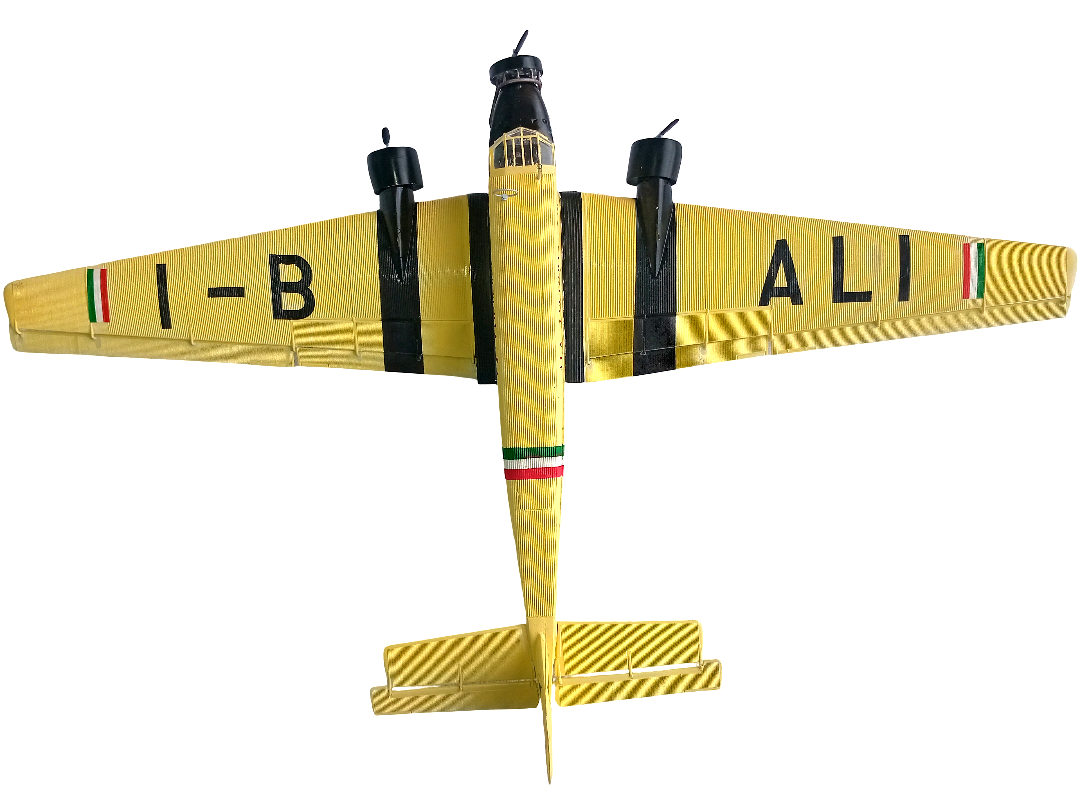
Heller 1/72 Junkers Ju.52/3m Civil Transport I-BALI by Vincent Fiore |
|
|
|

Click the STORMO! Eagle to return to the Gallery |
|
The Junkers Ju 52/3m passed automatically from civil to military service. This angular three-engine airplane with its corrugated metal skin was a symbol of
German aviation for 15 years. It began its career as a prestigious civil transport airplane and later became a multi-role military aircraft. It served on
all the fronts and in every possible function, including material and troop transport, ambulance service, paratroop transport, glider-towing,
mine-sweeping and bombing. In every one of these roles 'Tante Ju', as she was called, showed itself to be a very safe, sturdy and rugged (tough)
airplane. A total of 4,835 aircraft were built including the civil models built before the war. There were a host of models, which differed chiefly in
engines but the Ju 52/3m remained basically unchanged throughout its life. The original design was developed in 1930. It was an all-metal low-wing monoplane with a single engine. The prototype, however, was a three-engine airplane, which first took to the air in April 1932. It was powered by three 525 hp Pratt & Whitney Hornet engines built under licence by BMW. The first military version appeared late in 1934 and was known as the Ju 52/3m g3e. This airplane was adapted for bombing, and it could carry 1 1/2 tons (1.52 tonnes) of bombs. Its defensive armament consisted of two 7.9 mm MG machine guns. One was installed on the back of the airplane and the other was housed in a retractable nacelle under the belly. When the existence of the Luftwaffe was revealed in March 1935 production models of the Ju 52/3m g3e were already being built. By the end of 1935 they equipped two-thirds of the Luftwaffe's bomber units. The Ju 52 had a limited operational career as a bomber, however, because specially built bombers soon began to appear such as the Dornier Do 17 and the Heinkel He 111. Twenty Ju 52s were sent to Spain when hostilities began there but these tri-motor airplanes were used almost exclusively for transport purposes. Meanwhile new variant models of the Ju 52/3m were prepared. The first to use more powerful engines was the g5e which had 830 hp BMW 132T-2 radials. This aircraft appeared in 1938. This model greatly increased the aircraft's versatility. The airplane was designed to accommodate wheels, skis, or floats so that it could also be used as a seaplane. Another important production model was the 1941 g7e which had an automatic-pilot, larger doors, and heavier defensive armament. This aircraft could carry 18 fully-equipped soldiers or 12 stretchers. The 1942 g9e model had 850 hp BMW engines and a reinforced under-carriage that made it possible to increase the airplane's weight by 1 ton. This model also carried a glider towing-hook as standard equipment. The last model to be produced in large quantity was the gl4e which began coming off the assembly lines in the autumn and winter of 1943. Production continued until the middle of 1944. This model carried armour protection for the pilot and had more powerful engines. Its defensive armament was increased to three 7.9 mm guns and one 13 mm gun, the latter carried on the airplane's back. The Junkers Ju 52 took part in all the combat operations of the war, from the invasion of Holland, Belgium, and France to the German attacks on Greece and Yugoslavia, the Russian campaign, African operations and the last desperate battles of 1944 and 1945. 'Tante Ju' survived the war and subsequently the Ju 52/3m was built under licence in France and Spain. The French version was built by the Ateliers Aéronautiques de Colombes. Known as the AAC.l Toucan, it was used by the Aéronavale, the Armée de l'Air, and by Air France. In 1949-50 a number of airplanes based in Indochina took part in operations against the Viet Minh. A total of 170 aircraft were built in Spain by the C.A.S.A. and were used for several years as transport aircraft by the Spanish Air Force. Some of these airplanes were later sold to the Swiss Air Force.[1] Source: [1] Angelucci E. and P. Matricardi, "World Aircraft - World War II - Part I", Sampson Low, Bershire House, UK, 1978
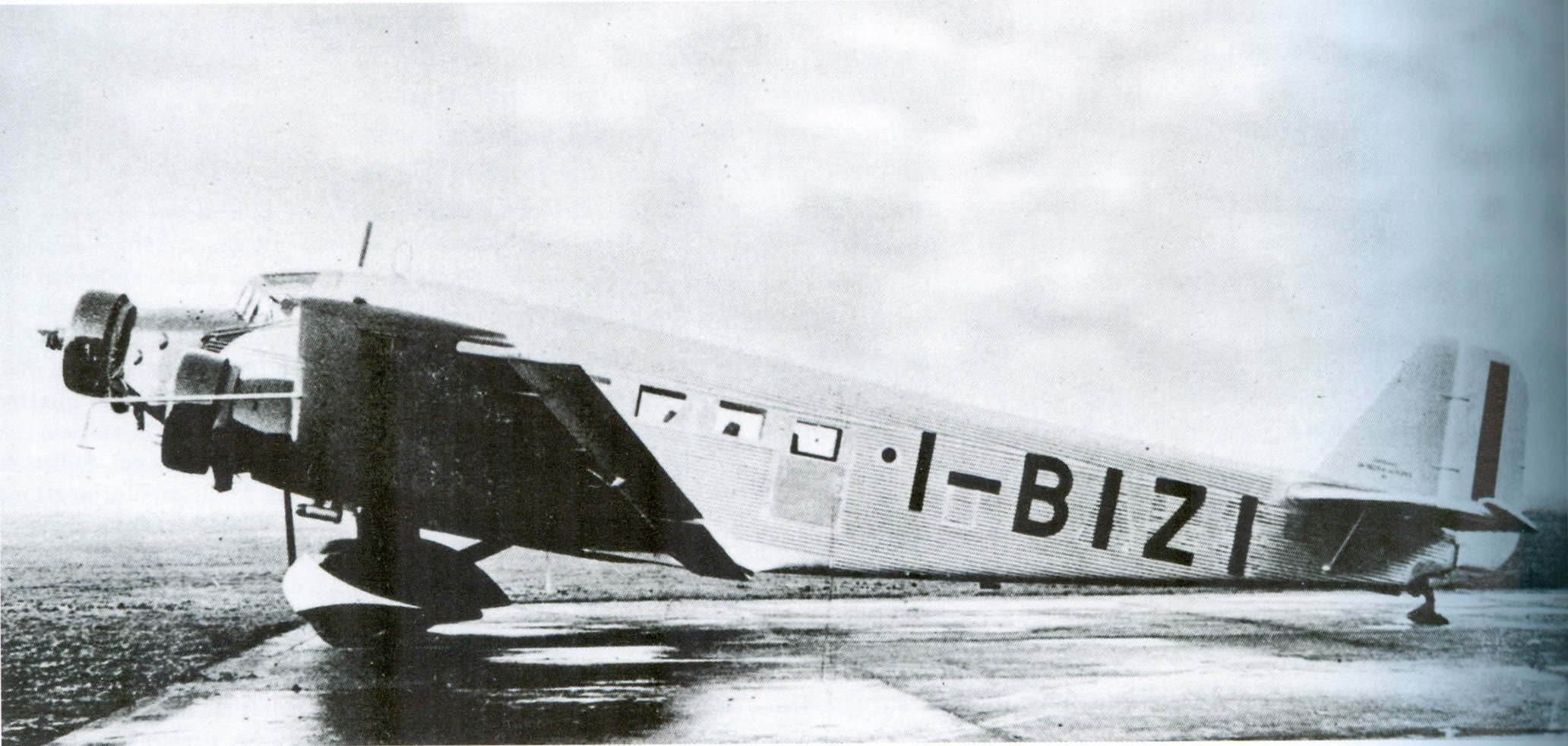
At the end of 1934 the Ala Littoria was employing two Junkers G 24s and one SM 71 on the routes Vienna-Budapest and Munich-Berlin. When a fire destroyed the maintenance workshop at Venice Lido, the Junkers G 24s, escaped the flames, were replaced with three Junkers Ju 52s. The first three aircraft were delivered to Ala Littoria from January 1935. These planes had the W.Nrs., 4063-4062-4064 and they assumed the Italian civil registrations I-BAUS, I-BEZI and I-BIZI. The aircraft represented a notable advance, both in terms of performances and general equipment. The original BMW 660 hp engines were replaced with the more powerful Italian (770 hp) Piaggio P.X R. On March 1938 the I-BEZI, during a training flight at Venice Lido, was seriously damaged and therefore in November it was replaced with another Ju 52 (D-AUJG Hans Wende W.Nr. 5942) borrowed from the Lufthansa and was registered I-ABJZ and maintained the original BMW engines. On 4 December 1938, while headed for Munich, I-BAUS was involved in a serious flight accident a result of ice formation on the wing-surfaces. The crew made a forced landing near Eisenstein with the consequent total loss of the aircraft. Some passengers were injured and four did not survive. Again Lufthansa lent an aircraft (D-ARCK Van Vloten W.Nr.6779) to replace I-ABJZ and was subsequently registered as I-BALI and was employed in Italy from 30 January 1940 to 25 May 1940. From June 1940 three more Ju 52s were delivered, the civil registrations were: I-BIOS (W.Nr.6710), I-BERO (W.Nr.6803) and I-BOAN (W.Nr.6765). The three new machines were equipped with Alfa Romeo 126 R.C.34 engines, while the survivor I-BIZI maintained the Piaggio P.X R engines. In summer 1940, the four machines were militarized and taken in charge by the Nucleo Comunicazioni Ala Littoria, belonging to the S.A.S. (Servizi Aerei Speciali). They assumed the following military serials:
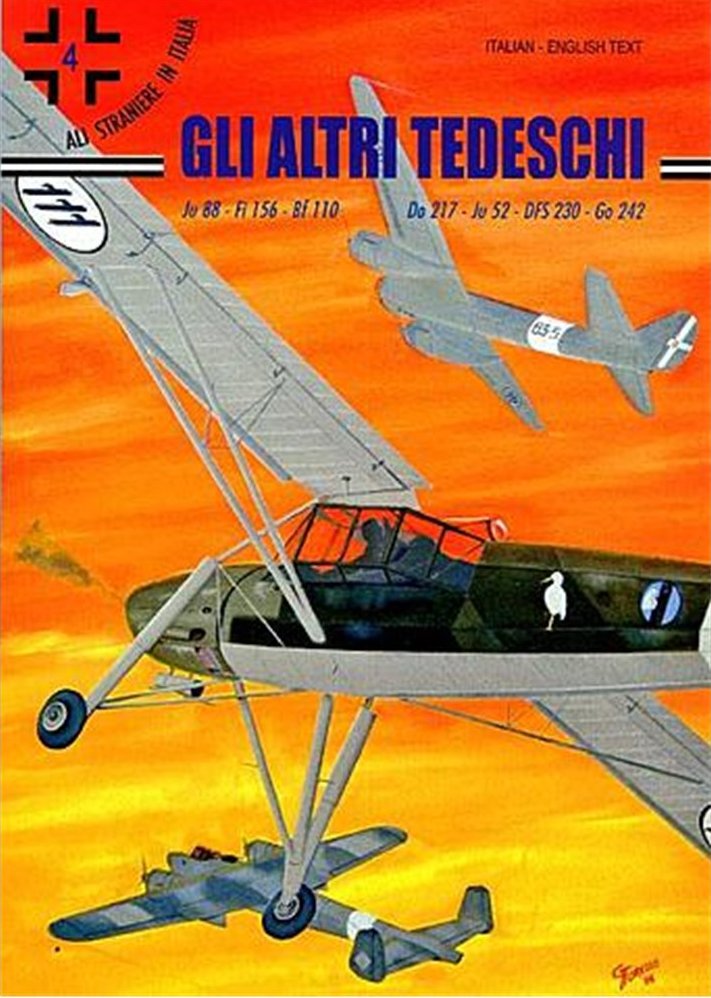
Source: [2] Becchetti F. and M. Gueli, "Ali Straniere in Italia, Gli Altri Tedeschi 04", La Bancarella Aeronautica, Torino 2005
Ali Straniere 04, Gli Altri Tedeschi
|
Firstly, don't believe modelers that say Italeri and Heller kits are the same - they are not. I bought the Heller kit because it was less expensive. I then purchased the masks produced by Edward for the Italeri, thinking they would fit the Heller kit. They do not match. This kit goes together very well however. The only thing you will need is a set of wheel covers, as the kit is a German aircraft, not the one used used by Ala Littoria. Thankfully, I had a set in my spare stash. The first thing I did was to remove some material from the windows, from the inside. This is so that when the clear parts were installed, they would protrude a little. Allowing them to dry for a day, I saned them flush with the fuselage. When satisfied, I polished them to a smooth, clear finish. The rest of the build proceeded as required. A coat of 1500 white Mr. Hobby was applied. Two coats of Mister Paint were applied. So far, so good. The decals were applied. However, as I tried to get everything perfect, I inadvertently touched some of the not fully set and dried decals. Disaster struck. One thing led to another, and disaster struck again. I decided to let the decals dry for a day and would try to remove them with tape the next day. This did not work out as I could not remove the decal that had settled and dried in the corragation. Next step is to apply another two coats of paint. As I did not have another fuswlage tri-color band, this had to be painted on. I did have some spare decals for the rest of the things I needed. Decals from Tauro# 72/529. These decals were bought from Super Hobby in Poland. I also used this decal sheet in my conversion build S.73 I-BALI Civil Transport:
Italeri (Conversion) 1/72 SIAI-Marchetti S.73
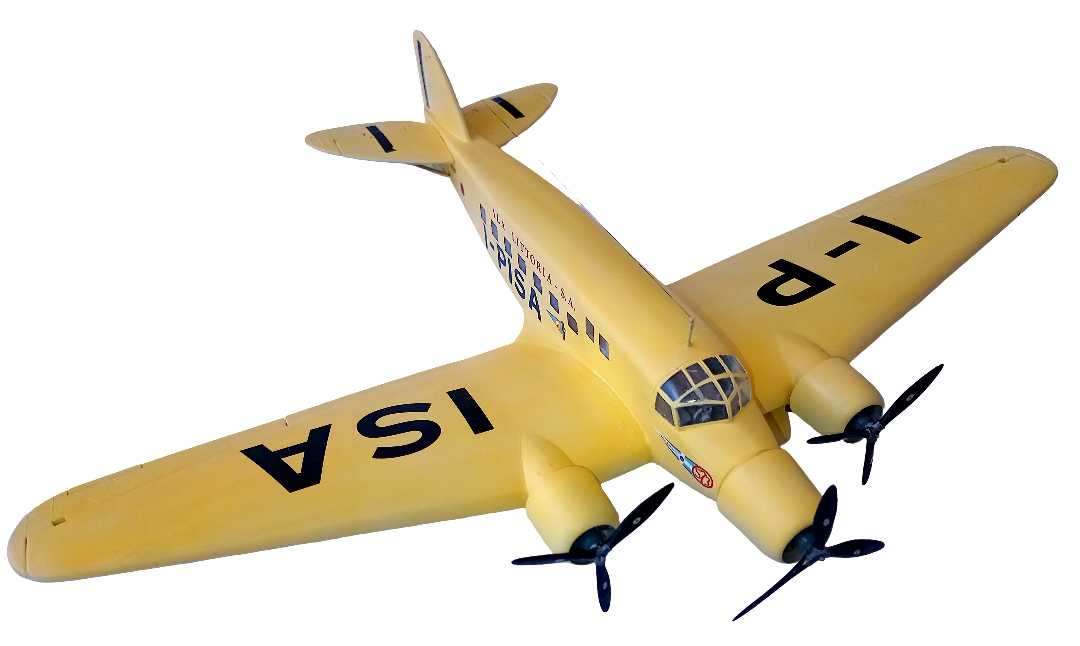 The radio loop and antenna were now installed. I am happy with the results.
|
Aircraft: Junkers Ju 52/3m g3e Manufacturer: Junkers Flugzeug und Motorenwerke A. G. Type: Bomber Year: 1934 Engine: Three B.M.W. 132A-3. 9-cylinder radial, air-cooled, 725 hp each Wingspan: 95 ft 11 11/2 in (29.25 m) Length: 62 ft (18.90 m) Height: 18 ft 2 1/2 in (5.53 m) Weight: 23,146 lb (10,498 kg) (Loaded) Cruising Speed: 172 mph (277 km/h) Ceiling: 19,360 ft (5,900 m) Range: 620 miles (1,000 km) Armament: 2 machine guns: 1,100 lb (498 kg) of bombs Crew: 4 |
|
|
|
|
|
|
|
|
|
|


|
|

|
|

|
|
|


|


|
|
|
|
May, 2025 STORMO! © 2025 |