|
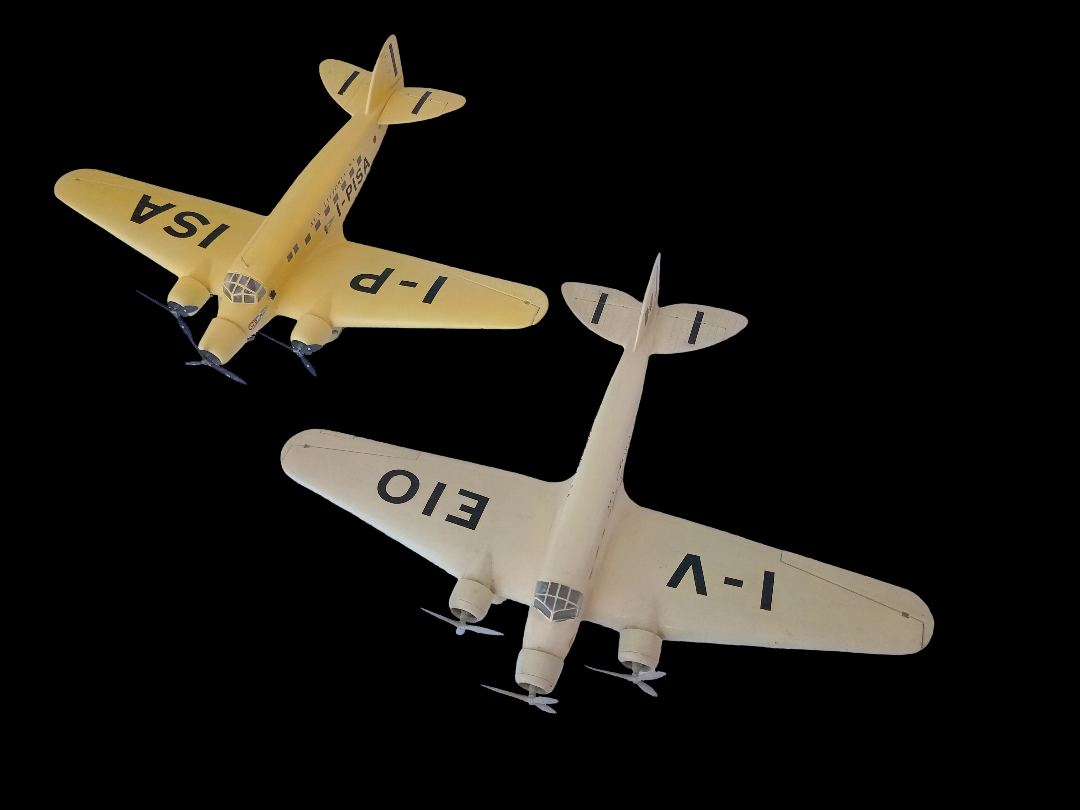
Italeri (Conversion) 1/72 SIAI-Marchetti S.73 Civil Airliner by Vince Fiore |
|
|
|

Click the STORMO! Eagle to return to the Gallery |
|
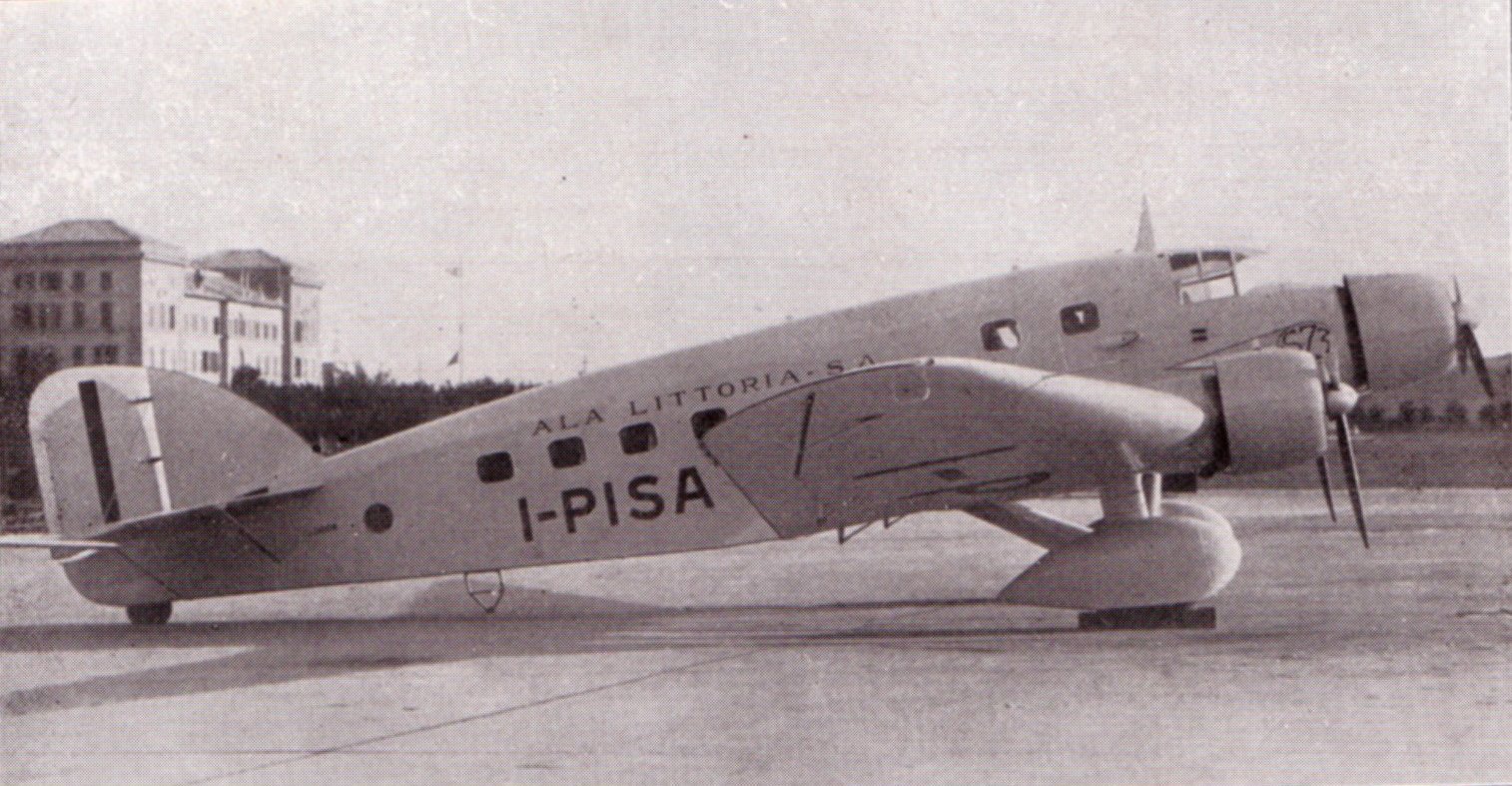
The SIAI-Marchetti company was famous, especially during World War II, for a series of engine
aircraft they started building in the 1930s. The first of these planes to make its appearance was a
civil transport plane, the 73, which made its debut in 1934. This aircraft laid the foundation of a
construction formula that proved sound for many years and resulted in some exceptionally fine planes.
Some of the 73s were requisitioned by the Italian air force and served all through the war as troop
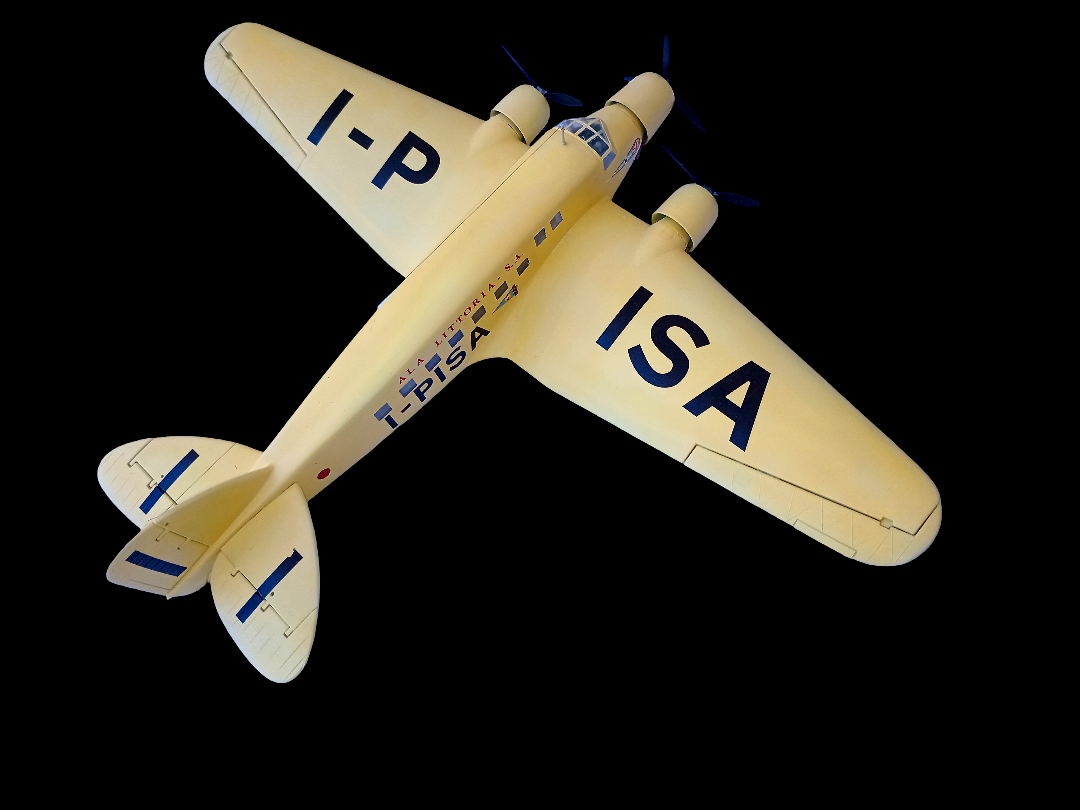
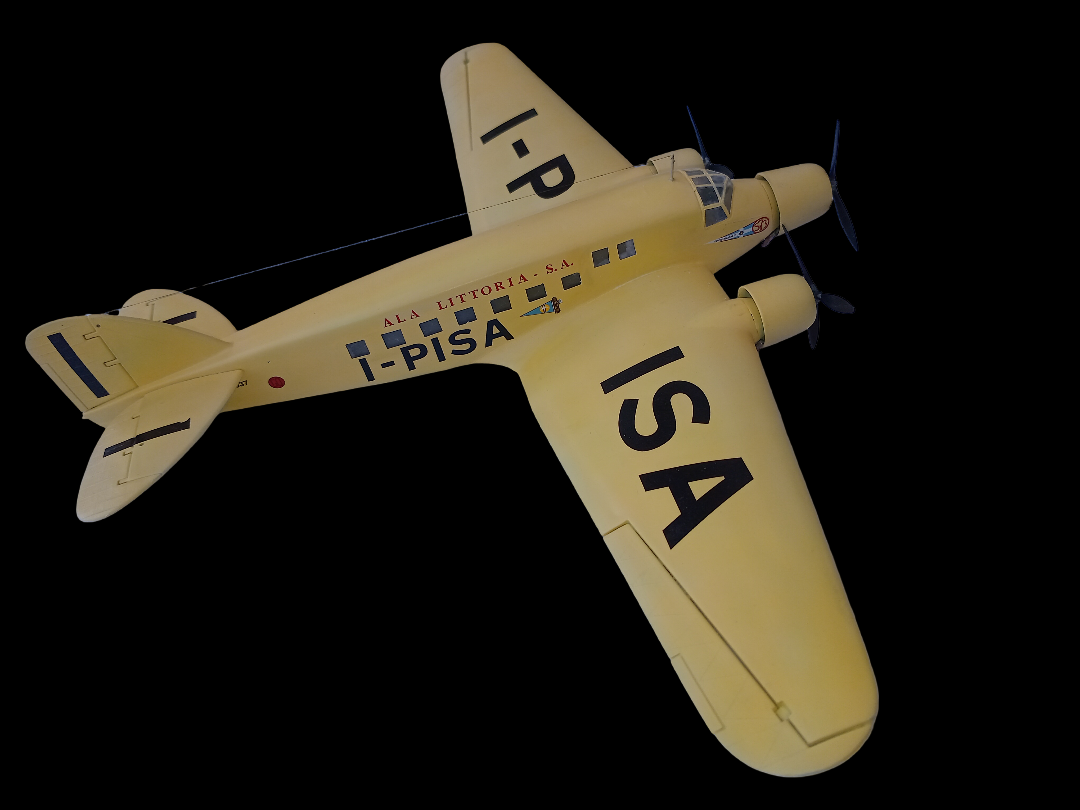
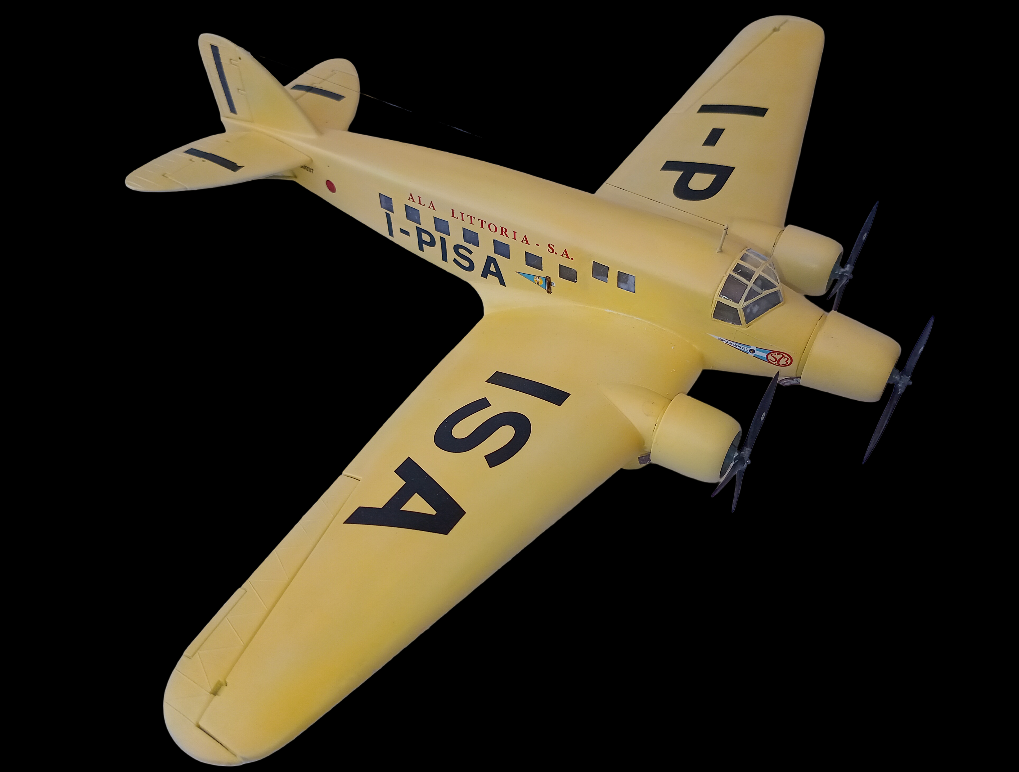
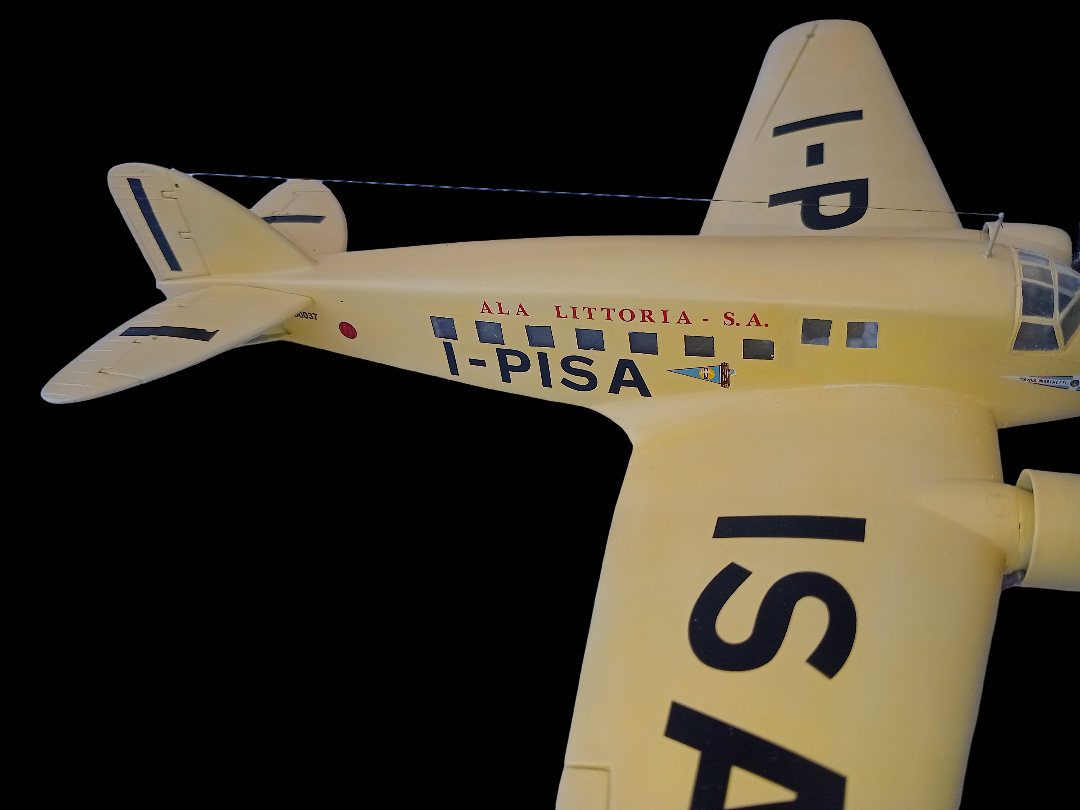
transports. They were remarkably long-lived and tough aircraft. The prototype took to the air for the first time on June 4, 1934. A triple-engine low-wing monoplane, this aircraft had a wood-and-metal skeleton and fabric-and-plywood skin. This first plane had a row of windows down both sides of the fuselage. The propellers were wood, four-blade for the central engine and two-blade for the side engines. The production model had a different arrangement of windows, and all the engines had three-blade metal propellers. The tail and rudder were also modified. The first engines were 600 hp Gnome Rhone Mistral 9K radials, and they were also installed in the first five production models, whose delivery to Sabena, the Belgian airline, began in 1935. Later a variety of engines were installed in the SM.73, including the 700hp Piaggio Stella X.RC, the 770 hp Wright Cyclone GR-1820, the 750 hp Alfa Romeo 126 RC, and the 615hp Waiter Pegasus II M2. All the variant models were outstanding in performance and cargo capacity. Some planes carried up to eighteen passengers and a five-man crew. The SM.73 was a great commercial success. The first five planes, consigned to Sabena, flew the London-Paris-Brussels-Hamburg-Copenhagen-Malmo route, the line that connected Brussels with Lille and Ostend, and the London-Ostend run. The Italian Ala Littoria company bough about twenty SM.73s in various models, equipped withPiaggio, AIfa, Romeo, and Wright Cyclone engines. Ala Littoria flew the planes along the main routes of Europe, North Africa, and East Africa. The Avio Linee Italiane took six SM.73s. Three aircraft were sold to CSA, the Czechoslovakian airline, in 1937, and two more soon afterward. These were the only planes equipped with Waiter Pegasus II M2 engines. In 1937 seven SM.73s were built under licence in Belgium for Sabena, which used these aircraft on its toughest runs, on the route from Brussels to Elisabethville in what was then the Belgian Congo. These were modified SM. 73s that carried only eight passengers instead of the standard eighteen. This flight took almost two days: 44 hours flying time. Source: [1] Angelucci E. and P. Matricardi, "World Aircraft - World War II - Part I", Sampson Low, Bershire House, UK, 1978
|
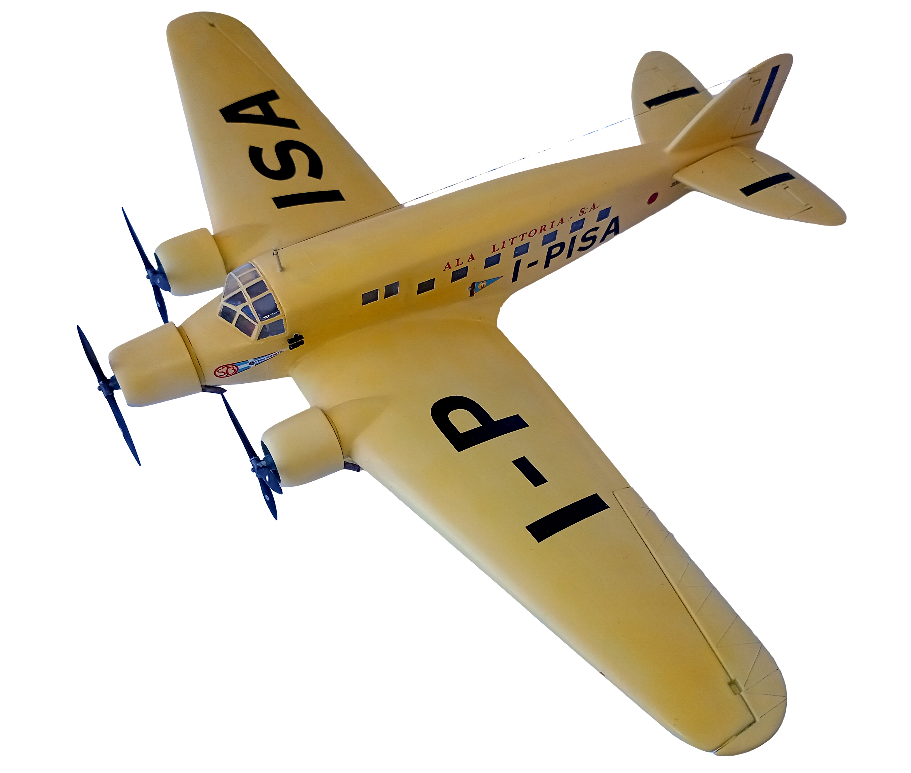
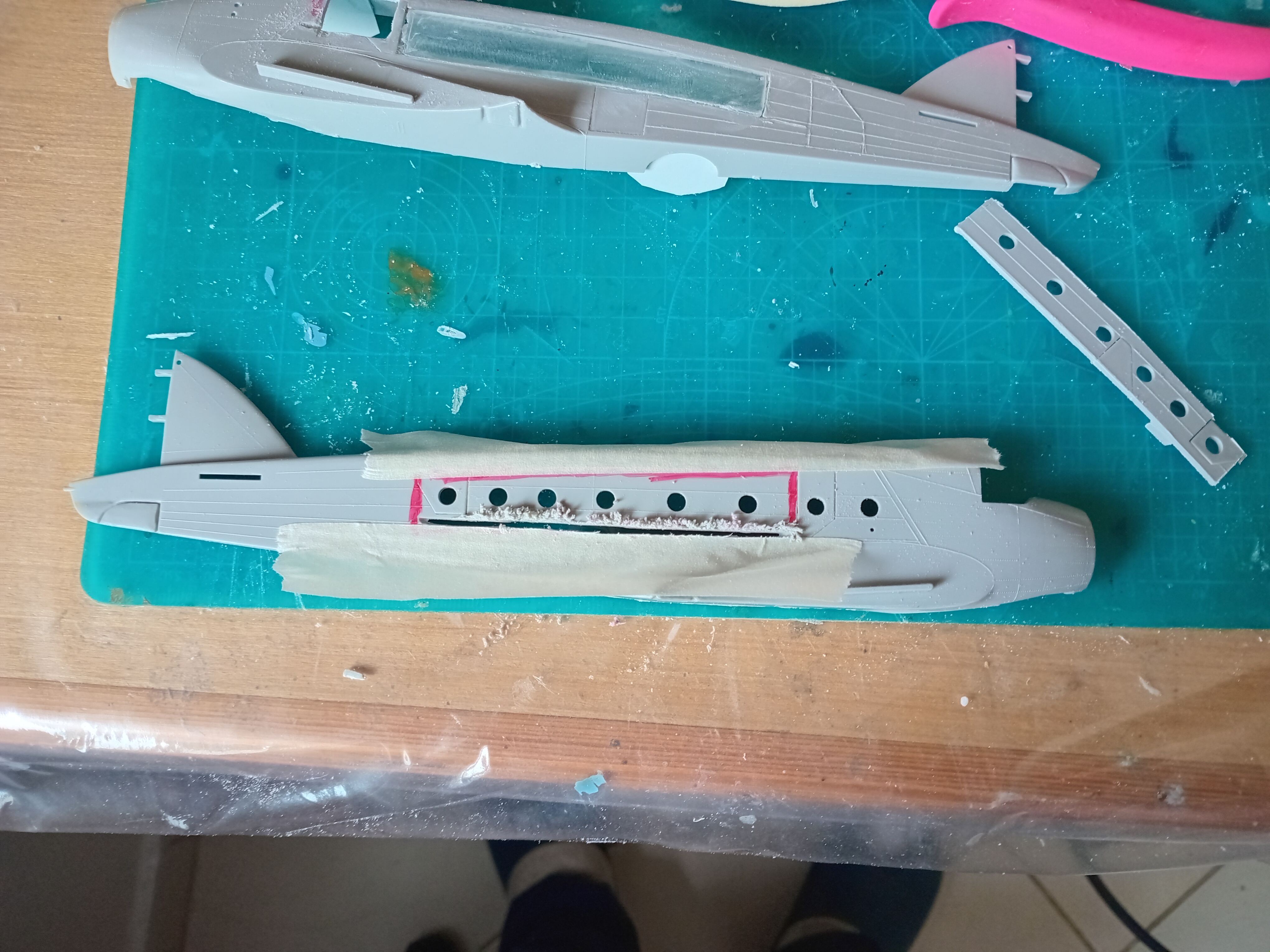
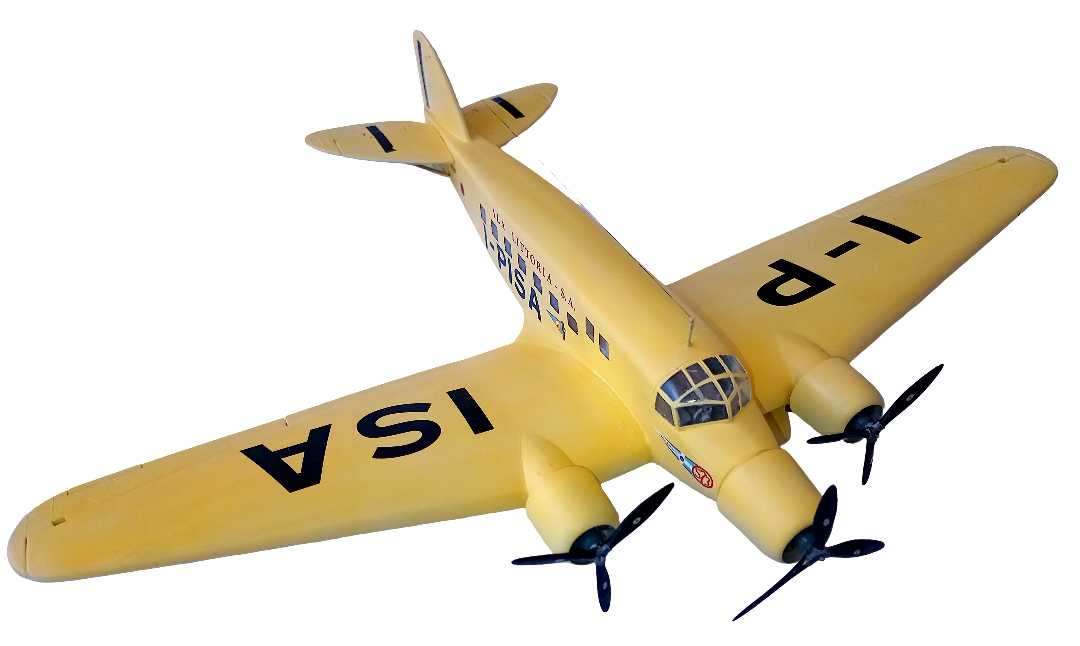
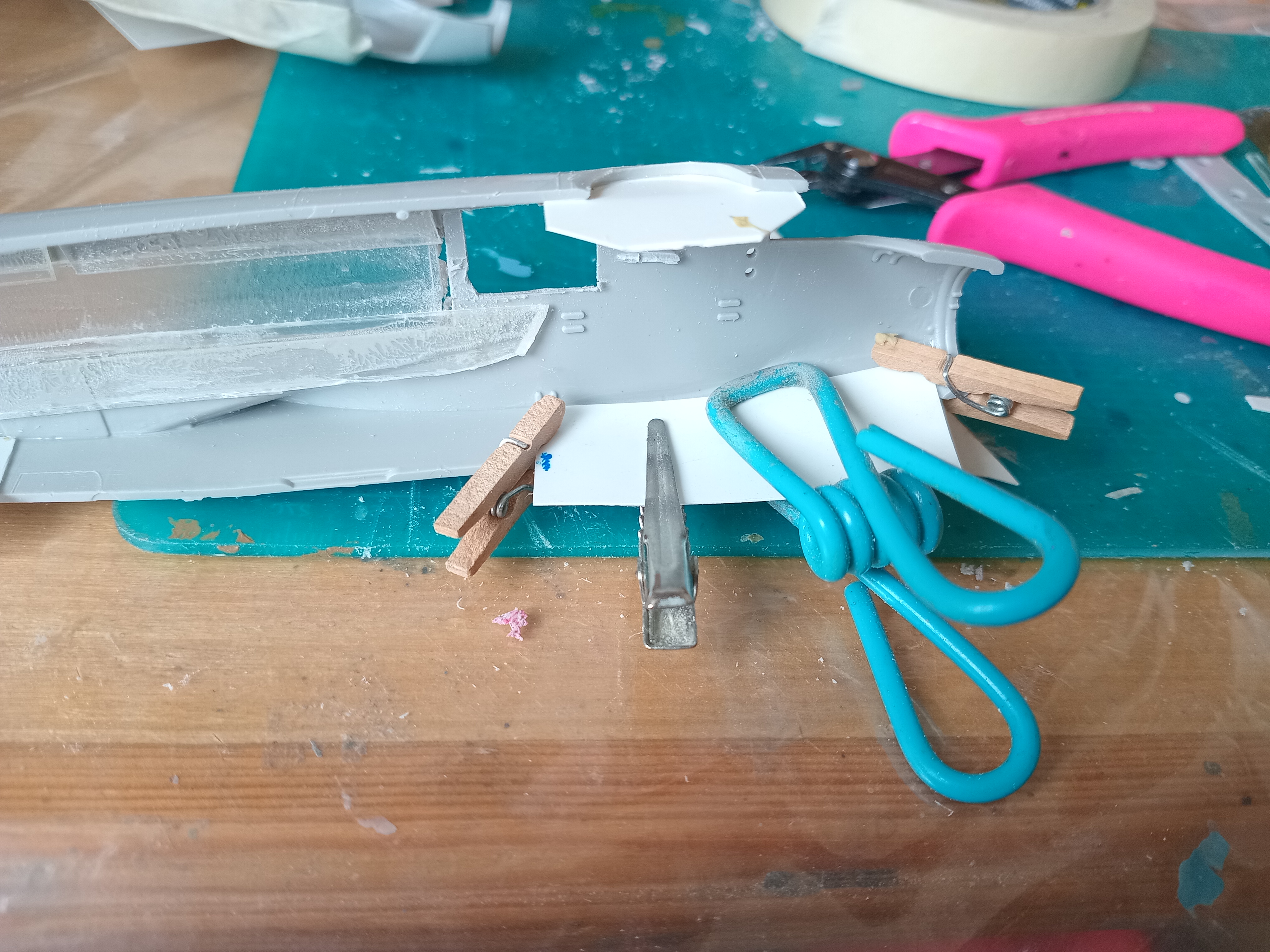
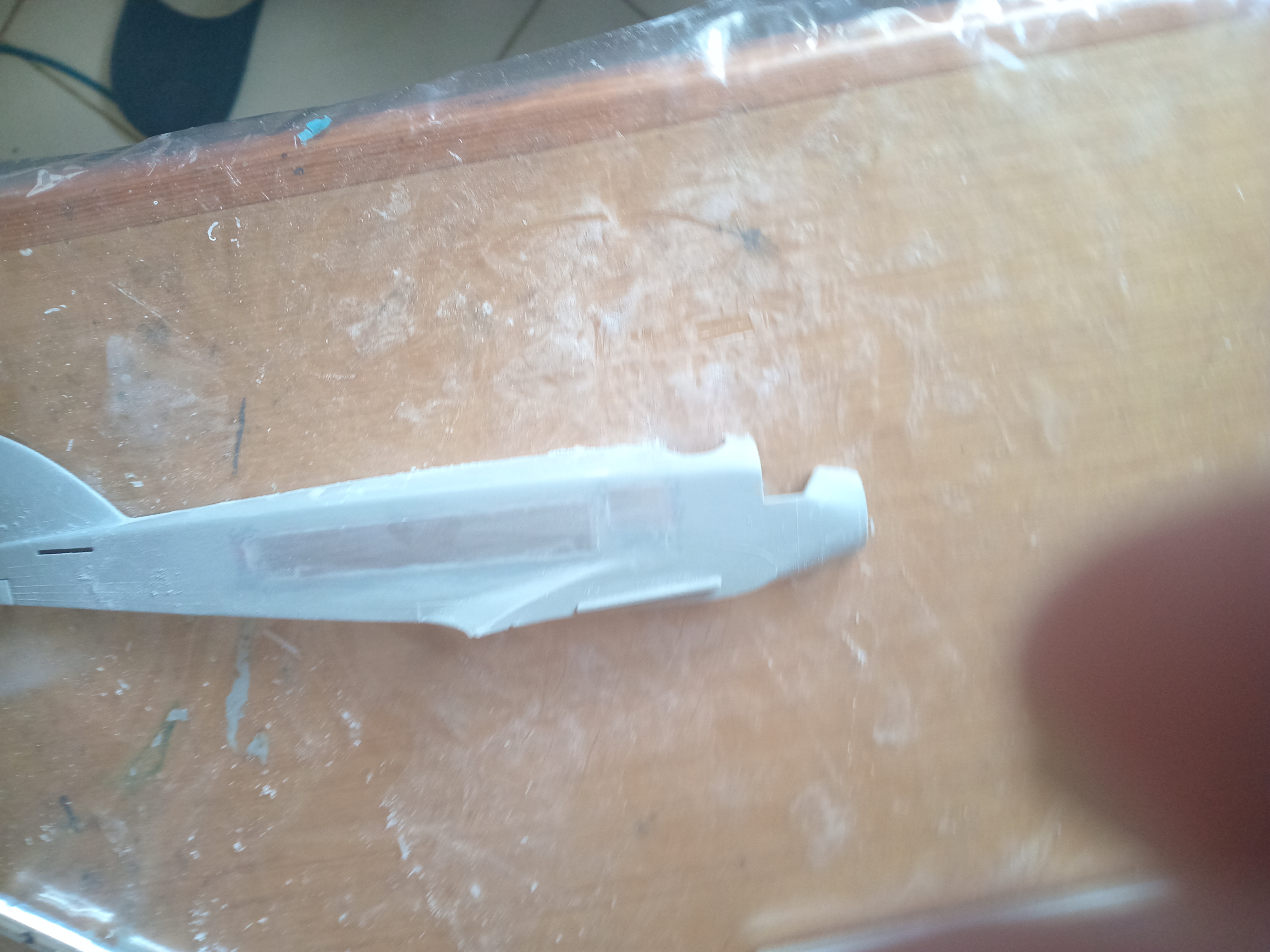
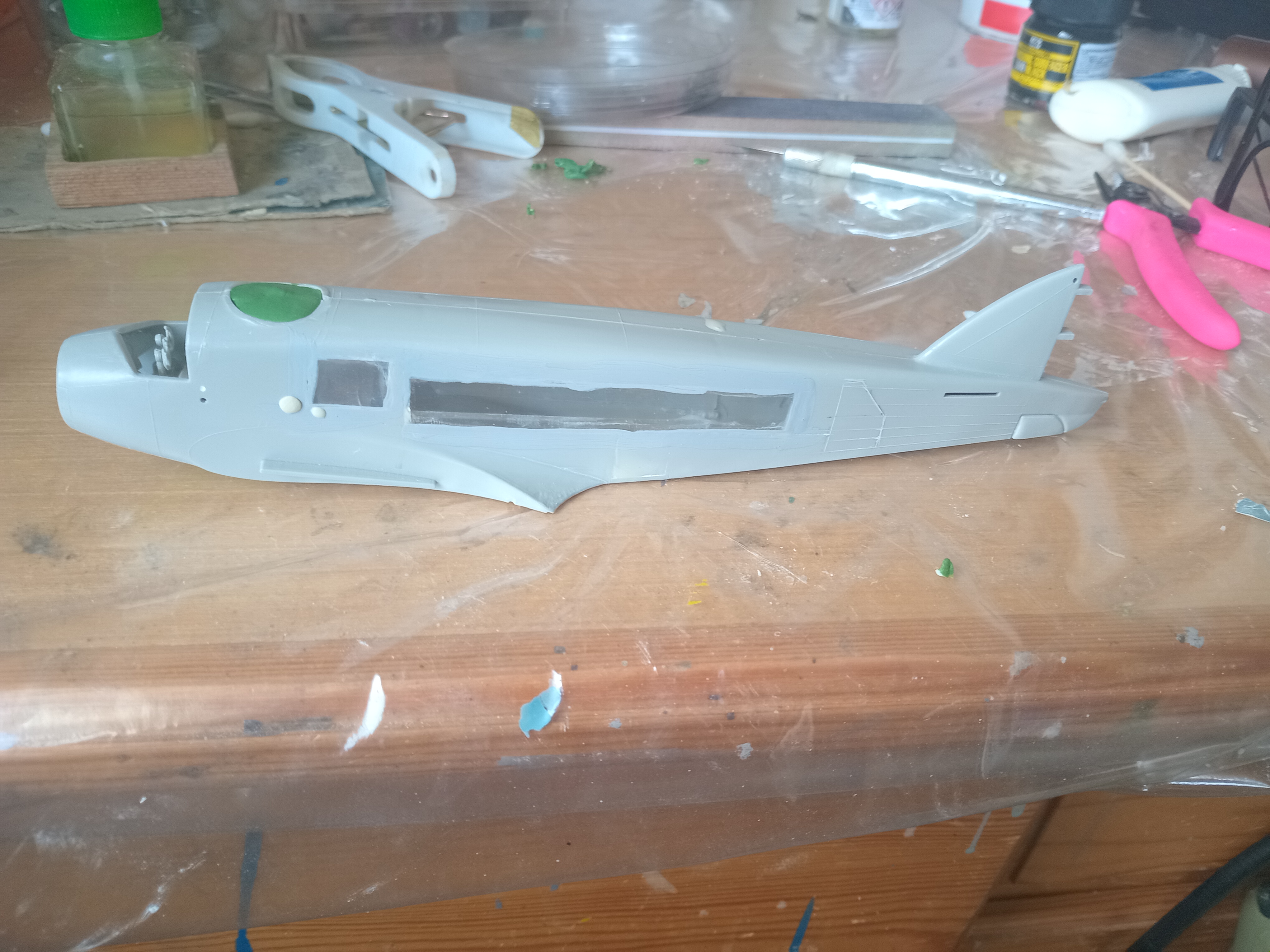
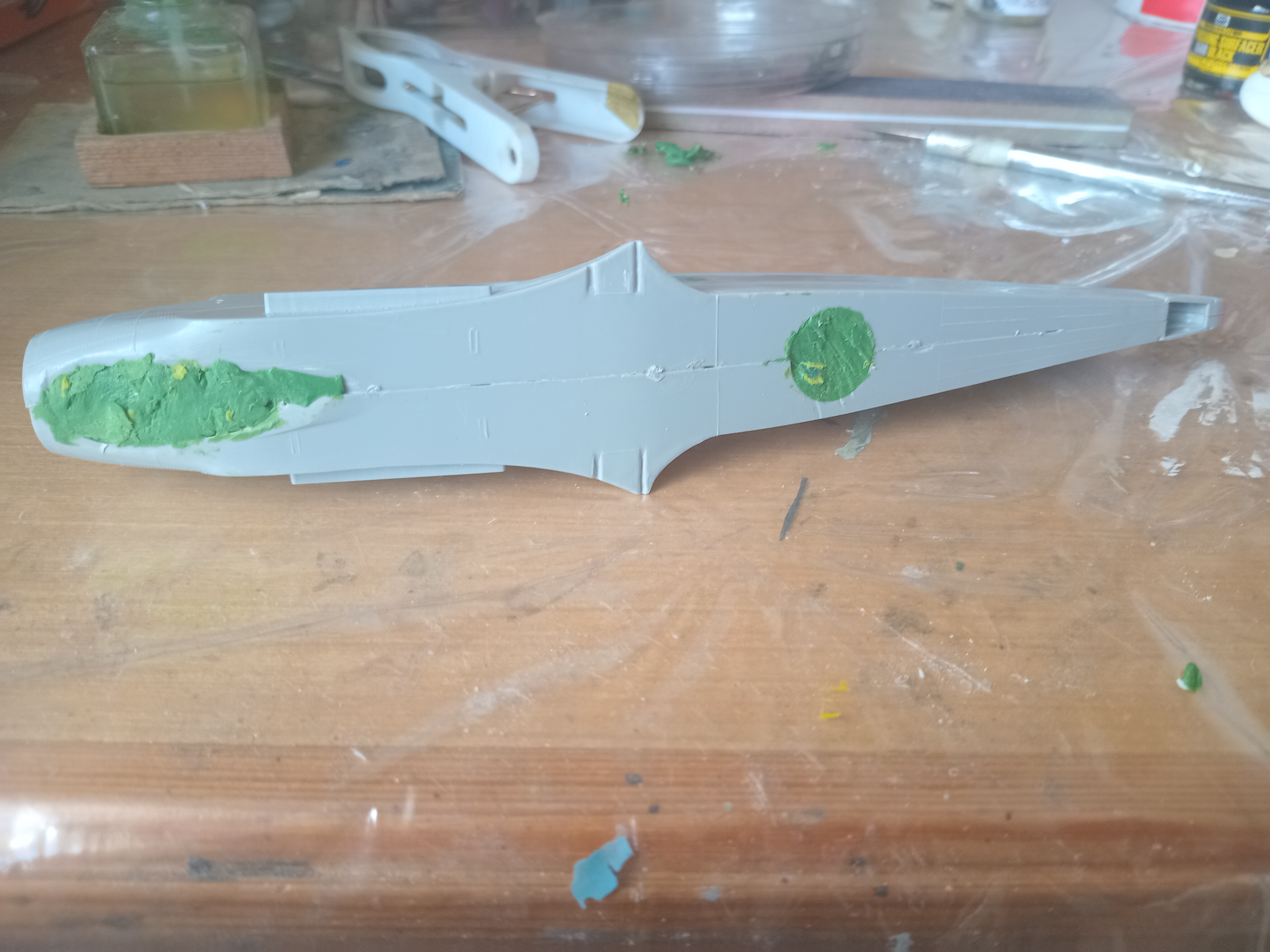
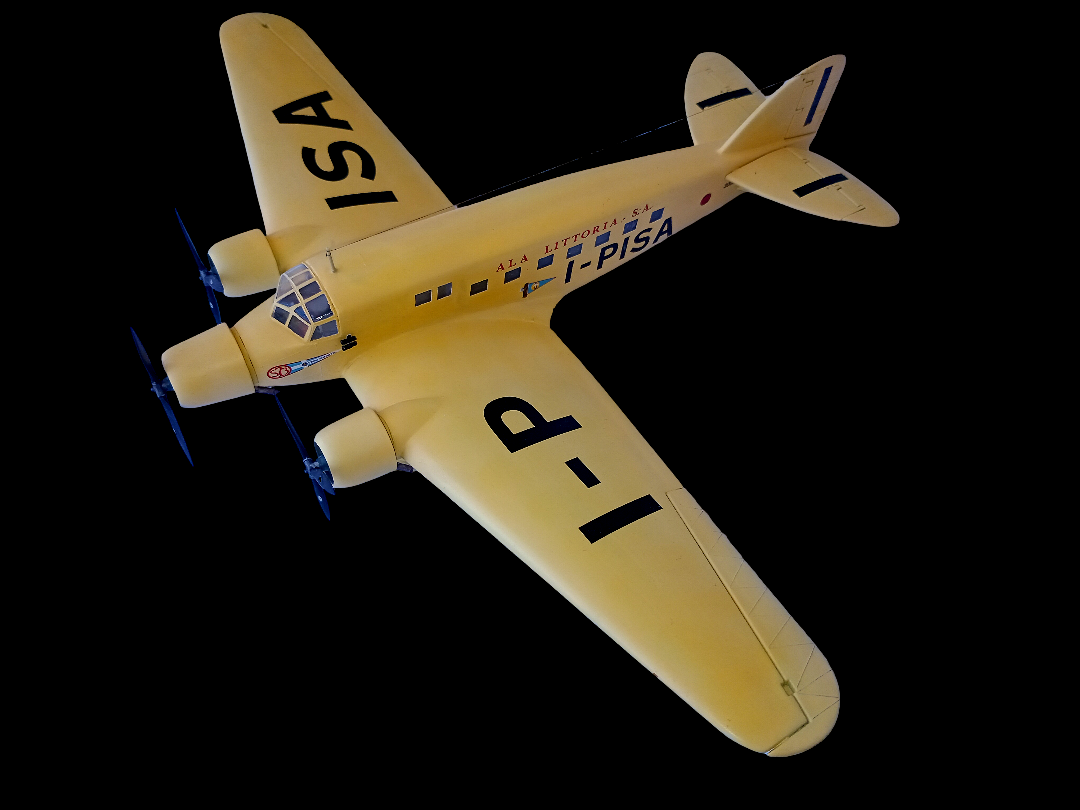
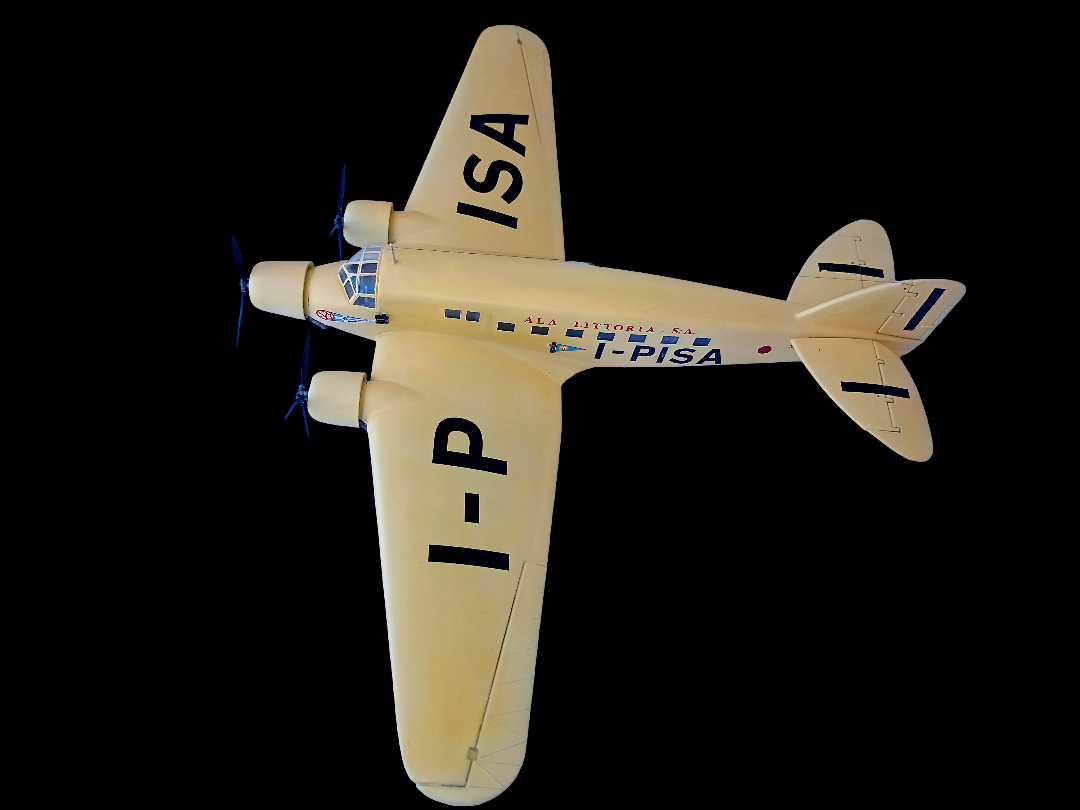
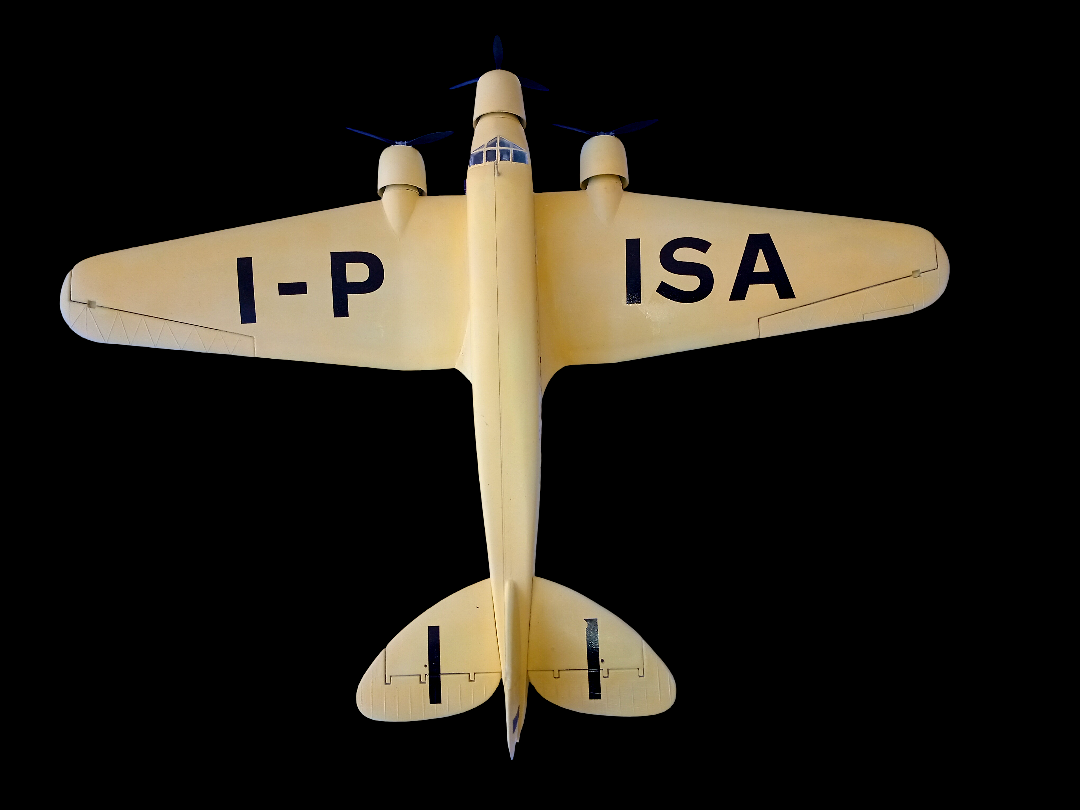
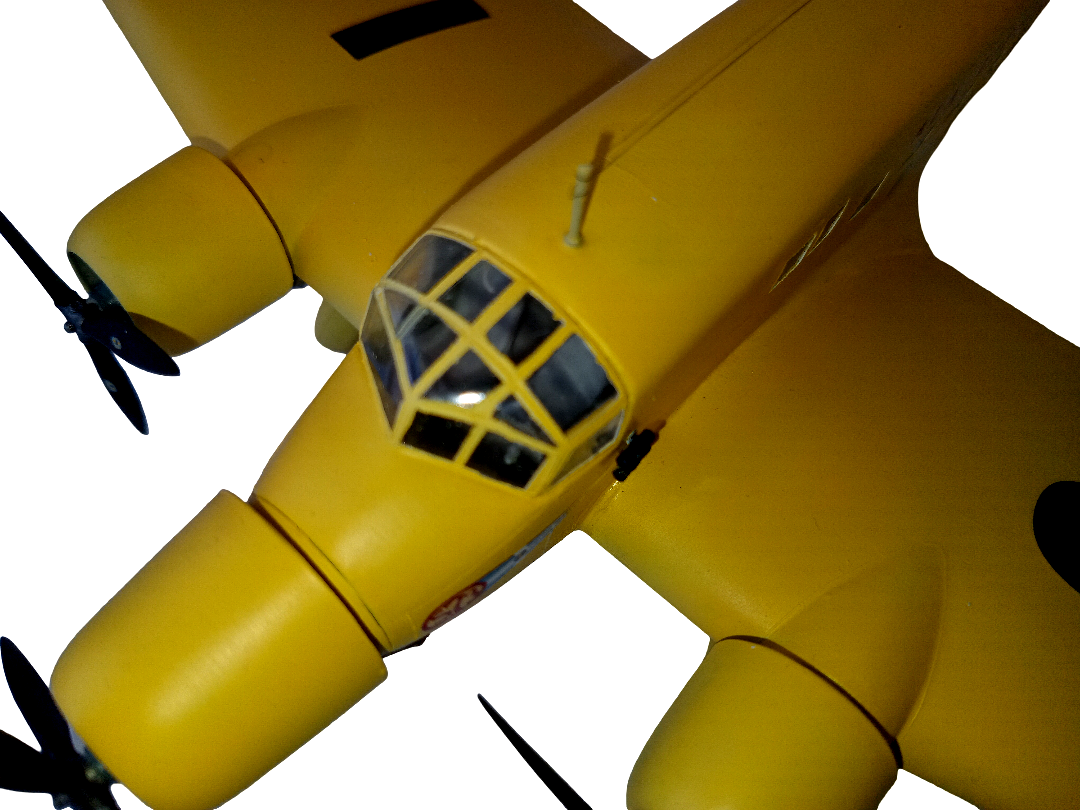
I did this conversion several years ago, but had forgotten about it. As I had it in a different registration, I decided to do it in the proper registration. I started with the Italeri (Supermodel) 1/72 S.81 base kit. The kit came with a stand, which was fortunate because I would use the clear plastic as the cabin windows. After examining some photos, I measured where the windows were to be located. I drew a line on the fuselage larger than needed and removed the plastic. I then cut the necessary size of plastic from the base of the stand to fill the opening I had cut. I used superglue to glue the edges of the clear parts into the opening I had cut. I allowed this piece to protrude slightly. When it dried, I sanded the clear parts so that it would be flush with the surface. I then filled the voids with filler and sanded again making sure that all voids are filled. Next, I glued thin pieces of plastic to the inside of the gun positions. When dried, I glued the halves together. Milliput was placed into the depressions where the gun positions were. I let this to dry overnight. Next session, these positions were sanded to the proper contours. I now had to sand and polish the clear plastic which would be the windows. Starting with 400 grit, I progressed up to 4000 grit. Next was to polish with Novus polish to get a beautiful, smooth clear finish to be the windows. Next was cutting tape to size for windows. Now It was the job of spacing the masks evenly. Now I could assemble the parts to complete the airframe. With this done, it was given a coat of Mr Hobby white primer. Two coats of Mr.Paint Bianco Avorio were applied. Decals by Tauro 72/529 were applied. These were bought from Super Hobby in Poland. This sheet also has the decals for my Italian registered Ju 52 I-BALI.
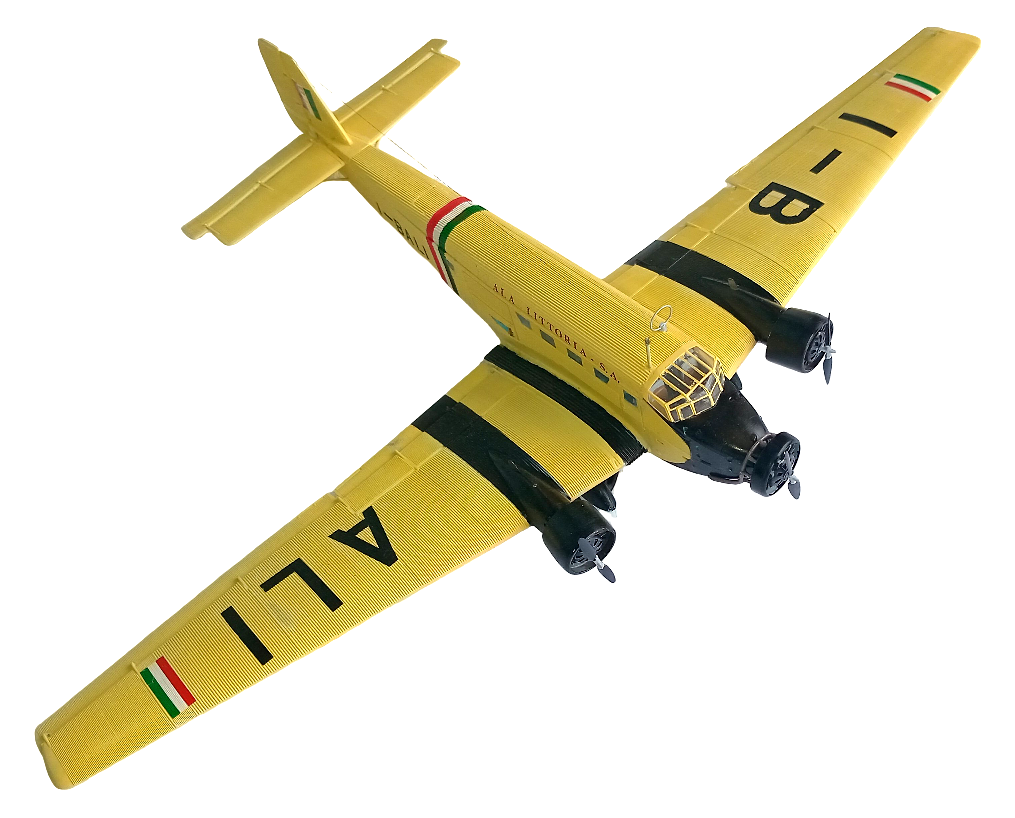
Heller 1/72 Junkers Ju.52/3m Civil Transport I-BALI
|
Aircraft: SIAI-Marchetti SM.73 Manufacturer: SIAI-Marchetti Type: Civil Transport Year: 1934 Engine: Three Alfa Romeo 126 RC 34, 9-cylinder R radial, air-cooled, 750 hp each Wingspan: 78 ft 9 in (24.00 m) Length: 57 ft 3 in (17.44 m) Height: 15 ft 1 in (4.59m) Weight: 23,800 lb (10,800 kg) Cruising speed:174 mph (280 km/h) Ceiling: 23,000 ft (7,000 m) Range: 620 mile (1,000 km) Crew: 4-5 Passengers: 18 |
|
|
|
|
|
|
|
|
|
|


|
|

|
|

|
|
|


|


|
|
|
|
February, 2025 STORMO! © 2025 |